
Embarking on a career in security in the Golden State can be a fulfilling path, offering diverse opportunities from protecting private property to ensuring safety at bustling tourist destinations. At the heart of this career lies the California Guard Card, an essential credential mandated by the state. This card is not merely a piece of identification; it signifies that an individual has met the stringent requirements set forth by the California Bureau of Security and Investigative Services (BSIS) to work as a security guard. For anyone considering this profession, understanding the comprehensive process to obtain and maintain this card is the crucial first step. Whether you envision yourself safeguarding luxury resorts, contributing to the safe operations of major attractions, or providing executive protection, the journey begins with securing this vital certification. This guide will walk you through every aspect, from eligibility and training to application and career prospects, painting a clear picture of what it takes to join the ranks of security professionals in California.

Navigating the Path to Becoming a Licensed Security Guard
The process of obtaining a guard card in California is structured to ensure that all licensed security personnel possess a foundational understanding of their responsibilities, legal limitations, and ethical obligations. It’s a multi-step journey designed to vet candidates thoroughly, ensuring public safety and maintaining professional standards within the industry. From the initial educational requirements to the final background checks, each stage plays a critical role in shaping competent and reliable security professionals.
Eligibility Requirements: Laying the Foundation
Before delving into the training and application specifics, it’s imperative to confirm you meet the basic eligibility criteria set by the BSIS. These foundational requirements are non-negotiable and serve as the gateway to the security profession in California.
First and foremost, applicants must be at least 18 years of age. This age requirement ensures that individuals are deemed mature enough to handle the responsibilities and potential challenges that come with security work. Furthermore, applicants must have the legal right to work in the United States. This typically means being a U.S. citizen or a legal permanent resident with a valid work permit. Proof of legal residency and authorization to work will be required as part of the application process.
Perhaps one of the most critical eligibility aspects is the criminal background check. California law mandates that all security guard applicants undergo a thorough criminal history review through the Department of Justice (DOJ) and the Federal Bureau of Investigation (FBI). This process involves submitting fingerprints via a Live Scan service, which digitally captures and transmits your prints to these agencies. Certain criminal convictions, especially those involving violent crimes, felonies, or crimes of moral turpitude, can disqualify an applicant from obtaining a guard card. The BSIS evaluates each case on an individual basis, considering the nature of the crime, the time elapsed since the conviction, and any evidence of rehabilitation. Transparency is key here; it is always advisable to disclose any past convictions upfront, as failure to do so can lead to an immediate denial or revocation of your license.
Comprehensive Training: The Core of Your Qualification
Once eligibility is confirmed, the next significant hurdle is completing the required training. The BSIS mandates specific courses designed to equip aspiring guards with the knowledge and skills necessary for effective and lawful security operations. This training is divided into three phases, totaling 40 hours of instruction, which must be completed through a BSIS-approved training facility.
The initial phase of training consists of an eight-hour course that is absolutely mandatory for all applicants before they can even submit their guard card application. This eight-hour segment is typically split into two critical components:
- Power to Arrest (4 hours): This foundational module is paramount, as it educates prospective guards on the legal limitations and responsibilities concerning making arrests. It covers topics such as the difference between a citizen’s arrest and a peace officer’s arrest, the conditions under which an arrest can be made, the use of reasonable force, and the importance of documenting incidents. Understanding the “Power to Arrest” is crucial for preventing liability issues and ensuring that guards act within the bounds of the law, protecting both themselves and the public.
- Weapons of Mass Destruction (WMD) and Terrorism Awareness (4 hours): In today’s global landscape, security professionals must be vigilant against a wide range of threats. This module provides essential knowledge on identifying potential indicators of terrorist activity, understanding various types of WMDs, and the appropriate response protocols in such emergencies. It emphasizes the guard’s role in observation, reporting, and acting as a first line of defense, contributing significantly to national security efforts and public safety at various sites, from corporate offices to major travel hubs.
Following the submission of your guard card application and receipt of your temporary permit (or after obtaining your full guard card), the remaining 32 hours of training must be completed. This segment is divided into two parts: 16 hours completed within 30 days of initial employment or application, and the final 16 hours completed within six months. This phased approach allows new guards to apply their initial learning while continuing to expand their skill set.
The 32 hours of training delve into a variety of elective courses, allowing for some specialization or a broader understanding of diverse security scenarios. Common topics covered in these electives include:
- Public Relations (Community & Customer Relations): Essential for guards who interact with the public, especially in high-traffic areas like major tourist attractions, event venues, or hotels. This training focuses on effective communication, de-escalation techniques, and maintaining a professional demeanor.
- Observation and Documentation: Sharpening a guard’s ability to notice anomalies, suspicious behavior, and accurately record incidents. This skill is invaluable whether working at a retail complex or an exclusive resort.
- Patrol Techniques: Covering effective patrolling methods, surveillance, and risk assessment for various environments.
- Communication Skills & Report Writing: Emphasizing clear, concise, and legally defensible report writing, which is a core duty for all security personnel.
- Legal Aspects of Security: Further exploration of laws pertinent to security operations, including trespass, search and seizure, and liability.
- First Aid/CPR/AED: Basic life-saving skills are critical for any professional responsible for public safety.
- Handling Difficult People: Strategies for managing confrontational individuals or volatile situations peacefully and professionally.
- Arson and Fire Prevention: Understanding fire safety protocols, common causes of fires, and emergency response.
- Emergency Procedures: Developing robust plans for various emergencies, from natural disasters to active shooter scenarios.
Choosing a reputable and BSIS-approved training provider is crucial. Many institutions across California, from Los Angeles to San Francisco and San Diego, offer these courses, sometimes even online for the initial 8 hours. Researching different providers to find one that fits your schedule, learning style, and budget is recommended.
The Application Process: From Forms to Full Licensure
With your eligibility confirmed and the initial 8 hours of training under your belt, the next step is the formal application to the BSIS. This phase involves meticulous attention to detail and understanding the required documentation and fees.
Submitting Your Application
The BSIS strongly encourages applicants to submit their applications online through its BreEZe system, a user-friendly platform designed to streamline the licensing process. This method is generally faster and allows for real-time tracking of your application status. Alternatively, you can download the application forms from the BSIS website and mail them in, although this typically results in longer processing times.
Regardless of the submission method, you will need to provide:
- Completed Application Form: Ensure all sections are filled out accurately and truthfully.
- Proof of Training: A copy of the Certificate of Completion for the initial 8 hours of training (Power to Arrest and WMD/Terrorism Awareness).
- Application Fee: The fee for a guard card varies and is subject to change, so always check the current fee schedule on the BSIS website.
- Live Scan Service Request Form: This form, provided by your training facility or downloadable from the BSIS site, is essential for your fingerprinting.
Fingerprinting via Live Scan
Once you have your Live Scan Service Request Form, you will need to visit an authorized Live Scan provider. These facilities are located throughout California in cities like Sacramento, Long Beach, and Anaheim, making it convenient for applicants to complete this step. The Live Scan operator will digitally capture your fingerprints and submit them directly to the DOJ and FBI for the necessary background checks. There is a separate fee for the Live Scan service, payable directly to the Live Scan operator. Ensure that the “Applicant Type” and “ORI” codes on your Live Scan form are correct, as errors can delay your application significantly.
The Waiting Game and Temporary Permits
After submitting your application and completing your Live Scan, a waiting period ensues while the BSIS processes your application and reviews your background check results. This period can range from a few weeks to several months, depending on the volume of applications and the complexity of any background issues.
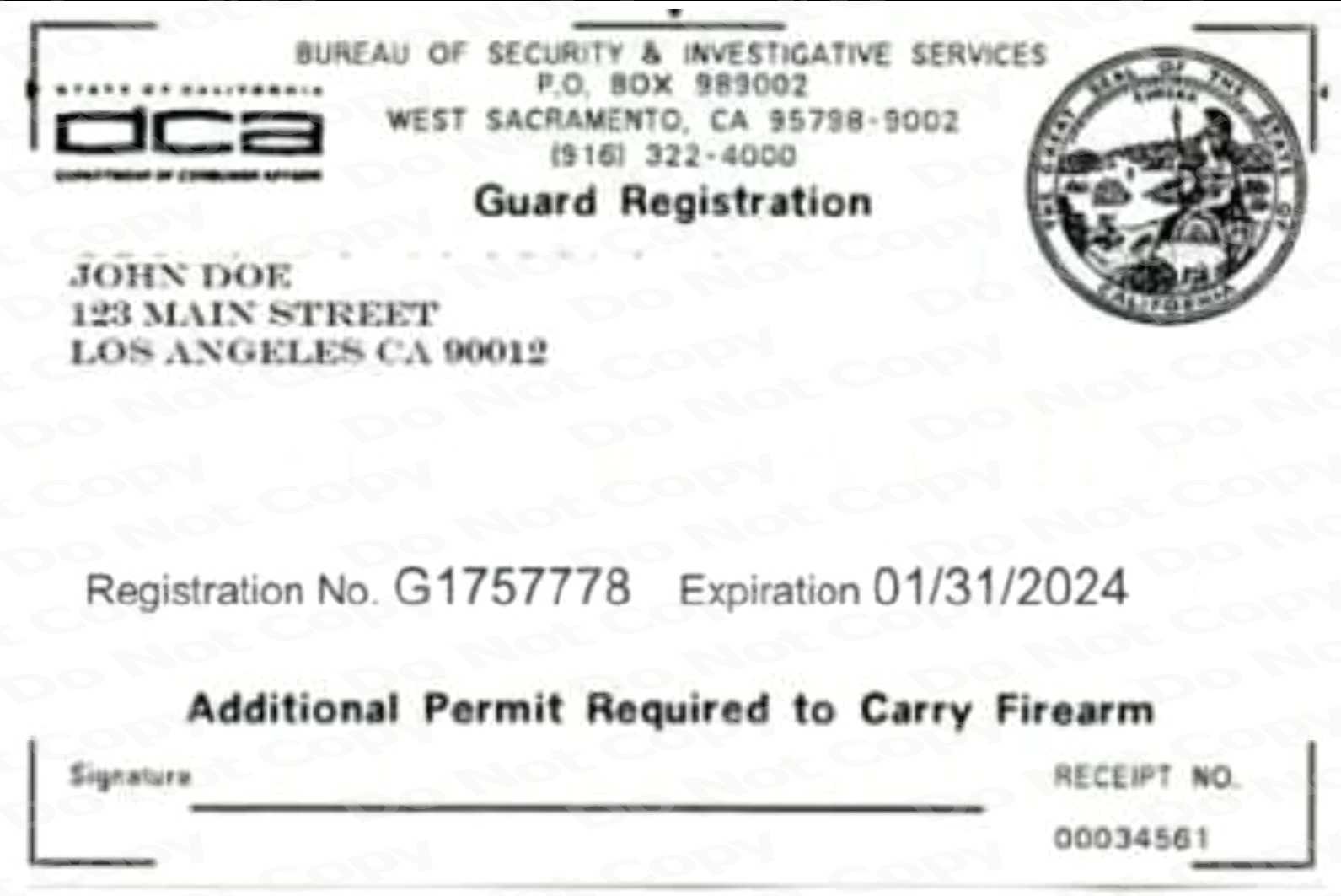
During this waiting period, if your application is otherwise complete and your background check comes back clear, the BSIS may issue a temporary guard card. This allows you to begin working while your permanent card is being processed. It’s crucial to understand the limitations of a temporary card and to carry it with you at all times while on duty.
Maintaining Your Guard Card
A guard card is not a lifetime credential. It must be renewed every two years. To renew, you must submit a renewal application, pay the renewal fee, and complete an additional 8 hours of continuing education training, known as “refresher training.” This ongoing education ensures that security guards remain current with laws, regulations, and best practices in the evolving security landscape. Keeping track of your card’s expiration date and fulfilling renewal requirements promptly is essential to avoid lapses in your license and potential interruptions to your employment.
Career Opportunities and Lifestyle Integration
Obtaining a guard card in California opens the door to a vast array of career opportunities, spanning various industries and environments. The demand for qualified security professionals is consistently high, reflecting the diverse needs for protection and safety across the state’s economy.
Many guard card holders find themselves working in corporate environments, providing security for office buildings, tech campuses in Silicon Valley, or financial institutions. Others may be drawn to the retail sector, safeguarding merchandise and customers in shopping centers in Los Angeles or San Francisco. The healthcare industry also relies heavily on security guards to maintain order and protect patients and staff in hospitals and clinics.
For those with an interest in the travel and tourism sectors, a guard card is an invaluable asset. Security guards are integral to the safe operation of airports, train stations, and bus terminals, ensuring smooth transit for countless travelers visiting destinations like the Golden Gate Bridge or exploring the vibrant culture of San Diego. Many iconic landmarks and tourist attractions, from the bustling Santa Monica Pier to the world-renowned Disneyland Resort in Anaheim, require dedicated security teams to manage crowds, deter crime, and respond to emergencies, ensuring a pleasant experience for visitors.
The hospitality industry, with its focus on guest experience, offers numerous roles for security professionals. High-end hotels, luxury resorts in areas like Palm Springs or Napa Valley, and boutique accommodations rely on skilled guards to protect guests, property, and maintain an exclusive atmosphere. This can involve everything from monitoring surveillance systems and conducting patrols to responding to guest concerns and managing access control. The lifestyle associated with these roles can be quite dynamic, offering opportunities to work in prestigious environments and interact with a diverse clientele from around the globe.
Beyond traditional security roles, the guard card can be a stepping stone to more specialized fields. Executive protection, for instance, involves safeguarding high-profile individuals, celebrities in Hollywood and Beverly Hills, or business executives, often requiring travel and a keen understanding of discreet security measures. Event security is another exciting avenue, with guards ensuring safety at concerts, sporting events, festivals, and conferences across the state. These roles often provide flexible schedules, which can appeal to individuals seeking a lifestyle that allows for personal travel or other pursuits.
Furthermore, a career in security offers a unique perspective on the evolving landscape of safety and risk management. Professionals are often at the forefront of implementing new technologies, refining emergency protocols, and contributing to the overall well-being of communities. The training received, particularly in areas like public relations and emergency procedures, provides valuable life skills applicable far beyond the confines of a security post. For those who value contributing to public safety and maintaining order, a guard card offers a tangible way to make a difference, fostering a sense of purpose and responsibility. It’s a career choice that, while demanding, can be incredibly rewarding, especially in a state as vibrant and diverse as California, where the need for dedicated and professional security services continues to grow.
Conclusion
Obtaining a guard card in California is a structured and rigorous process designed to uphold high standards within the security industry. From meeting initial eligibility requirements and completing comprehensive training to navigating the application and background check procedures, each step is crucial for aspiring security professionals. The investment in time and effort not only grants you the legal authority to work as a security guard but also equips you with essential skills in legal powers, emergency response, and public relations.
Beyond the procedural steps, a California Guard Card unlocks a spectrum of career paths, allowing individuals to contribute to the safety and security of diverse environments, from the iconic landmarks and bustling tourist attractions that draw millions of visitors to the luxury hotels and corporate campuses that define California‘s dynamic economy. This profession offers more than just a job; it provides a pathway to a lifestyle characterized by responsibility, vigilance, and continuous learning, enabling you to play a vital role in maintaining peace and order across this vibrant state. For anyone committed to public safety and seeking a meaningful career with ample opportunities for growth, securing your guard card is the indispensable first stride.
LifeOutOfTheBox is a participant in the Amazon Services LLC Associates Program, an affiliate advertising program designed to provide a means for sites to earn advertising fees by advertising and linking to Amazon.com. Amazon, the Amazon logo, AmazonSupply, and the AmazonSupply logo are trademarks of Amazon.com, Inc. or its affiliates. As an Amazon Associate we earn affiliate commissions from qualifying purchases.