
Navigating the Sunshine State, whether you’re a new resident or a visitor planning an extended stay, often involves understanding the nuances of local regulations. One common query for those settling in or spending a significant amount of time in Florida is how to obtain a license plate. This process, while straightforward, requires a clear understanding of the necessary documentation and procedures. This guide will walk you through the essential steps to acquire your Florida license plate, ensuring you’re street-legal and ready to explore all the wonders the state has to offer, from the theme parks of Orlando to the pristine beaches of the Florida Keys.

Understanding the Florida License Plate Process
The Florida Department of Highway Safety and Motor Vehicles (FLHSMV) is the governing body responsible for issuing license plates and vehicle registrations in the state. The process primarily involves proving your identity, residency, and ownership of the vehicle. Whether you’ve purchased a new or used car, or are bringing a vehicle from out of state, the core requirements remain consistent.
Essential Documentation for Vehicle Registration
Before you even step foot into a Florida tax collector’s office or a private tag agency, gathering the correct documentation is paramount. Missing a single item can lead to delays and multiple trips. The specific documents you’ll need depend slightly on whether your vehicle is new or used, and if it’s coming from out-of-state. However, a core set of documents is universally required.
Proof of Identity and Social Security Number
You will need to present a valid form of identification. Accepted forms typically include:
- A Florida driver license or identification card.
- A valid driver license from another U.S. state or territory.
- A valid U.S. passport.
- A U.S. Certificate of Citizenship or Naturalization.
- A valid Permanent Resident Card.
- A valid employment authorization document.
In addition to identification, you will likely need to provide your Social Security number. This is typically done by presenting your Social Security card or a W-2 form that clearly displays your number.
Proof of Florida Residency
Establishing residency is a key component of the Florida registration process. The state has specific requirements for what constitutes proof of residency. You will typically need one of the following:
- A Florida driver license or identification card.
- A Florida Voter’s Registration Card.
- A declaration of domicile filed in Florida.
- A Florida homestead exemption.
- A tax receipt from a Florida property tax assessment.
- A utility bill with your Florida address.
- A lease agreement or deed for a Florida property.
- A letter from a Florida homeless shelter, social service agency, or religious institution.
For those who own property or are on longer stays, such as those considering a villa in Miami or an apartment in Tampa for an extended period, a lease agreement or deed will be your strongest proof. If you’re considering a longer-term stay at a resort like the Ritz-Carlton Orlando, ensure you retain any documentation that can serve as proof of your established presence in the state.
Proof of Vehicle Ownership
This is arguably the most critical piece of documentation. It verifies that you are the legal owner of the vehicle you are attempting to register.
- For New Vehicles: You will need the Manufacturer’s Statement of Origin (MSO) or Manufacturer’s Certificate of Origin (MCO), along with a bill of sale from the dealership.
- For Used Vehicles Purchased in Florida: You will need the vehicle’s title, properly assigned to you by the seller. The title must be clean and free of any liens, or if there is a lien, you will need the lien release.
- For Used Vehicles Purchased Out-of-State: You will need the out-of-state title, properly assigned to you. If there was a lien on the vehicle, you will also need the lien release. Some states might have different titling documents, which the FLHSMV can typically process.
Proof of Insurance
Florida requires all drivers to have a minimum level of Personal Injury Protection (PIP) and Property Damage Liability (PDL) insurance. You must present proof of this insurance, typically in the form of an insurance card or policy declaration page, issued by a Florida-licensed insurance provider. The policy must be in your name and cover the vehicle you are registering.
Vehicle Identification Number (VIN) Inspection
For vehicles being registered in Florida for the first time, particularly those coming from out-of-state, a VIN inspection is usually required. This inspection is conducted by law enforcement officers or authorized personnel to verify that the vehicle’s VIN matches the documentation provided. This helps prevent the registration of stolen vehicles. You can typically get this inspection done at local law enforcement agencies or authorized inspection stations.
The Registration Process: Where to Go and What to Expect
Once you have all your documentation in order, the next step is to visit an authorized office to complete the registration and obtain your license plate.
Choosing Your Registration Location
Florida offers several options for vehicle registration:
- County Tax Collector Offices: These are the most common places for Florida residents to handle their vehicle registration and titling needs. Each county operates its own tax collector’s office, and they are equipped to handle all aspects of the process.
- Private Tag Agencies: Many private businesses are licensed by the state to perform vehicle registration services. These can sometimes offer more convenient hours or locations, though they may charge an additional service fee.
- Online Services (Limited): While the FLHSMV offers some online services for renewals, initial registrations typically require an in-person visit. However, some counties may have specific online portals for certain parts of the process.
What to Expect at the Office
Upon arrival at your chosen location, you will typically:
- Fill Out an Application: You’ll complete an application for certificate of title and registration (Form HSMV 82040). This form will ask for details about you, the vehicle, and its ownership.
- Submit Documentation: Present all the required documents to the clerk. They will review everything for accuracy and completeness.
- Pay Fees and Taxes: You will be required to pay various fees, including title fees, registration fees, and sales tax on the vehicle (if applicable and not already paid at the time of purchase). The amount of sales tax will depend on the purchase price of the vehicle and any trade-in value.
- Receive Your License Plate and Registration: Once all paperwork is processed and payments are made, you will be issued your Florida license plate, registration certificate, and title (or a copy if a lienholder is involved).
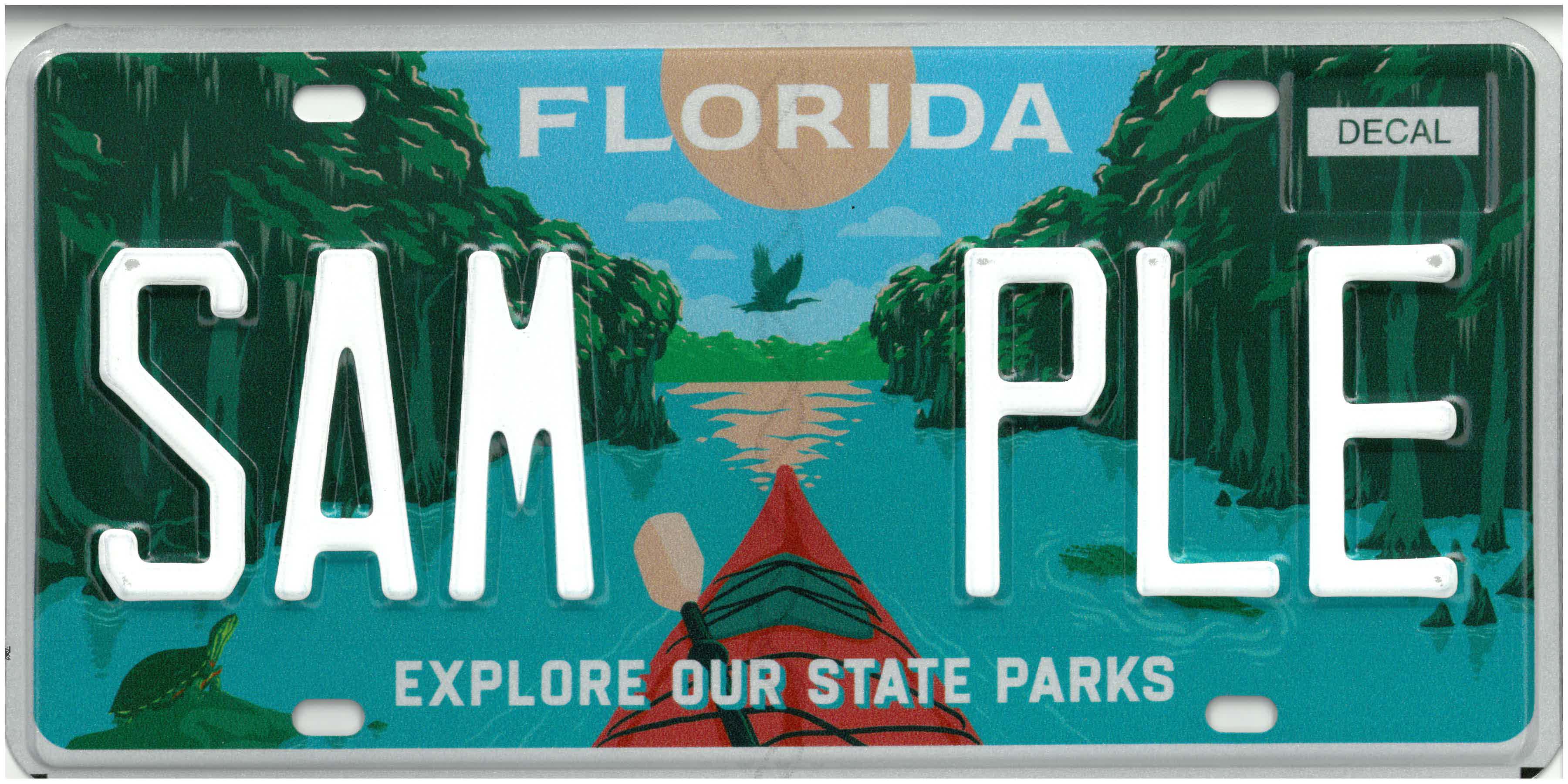
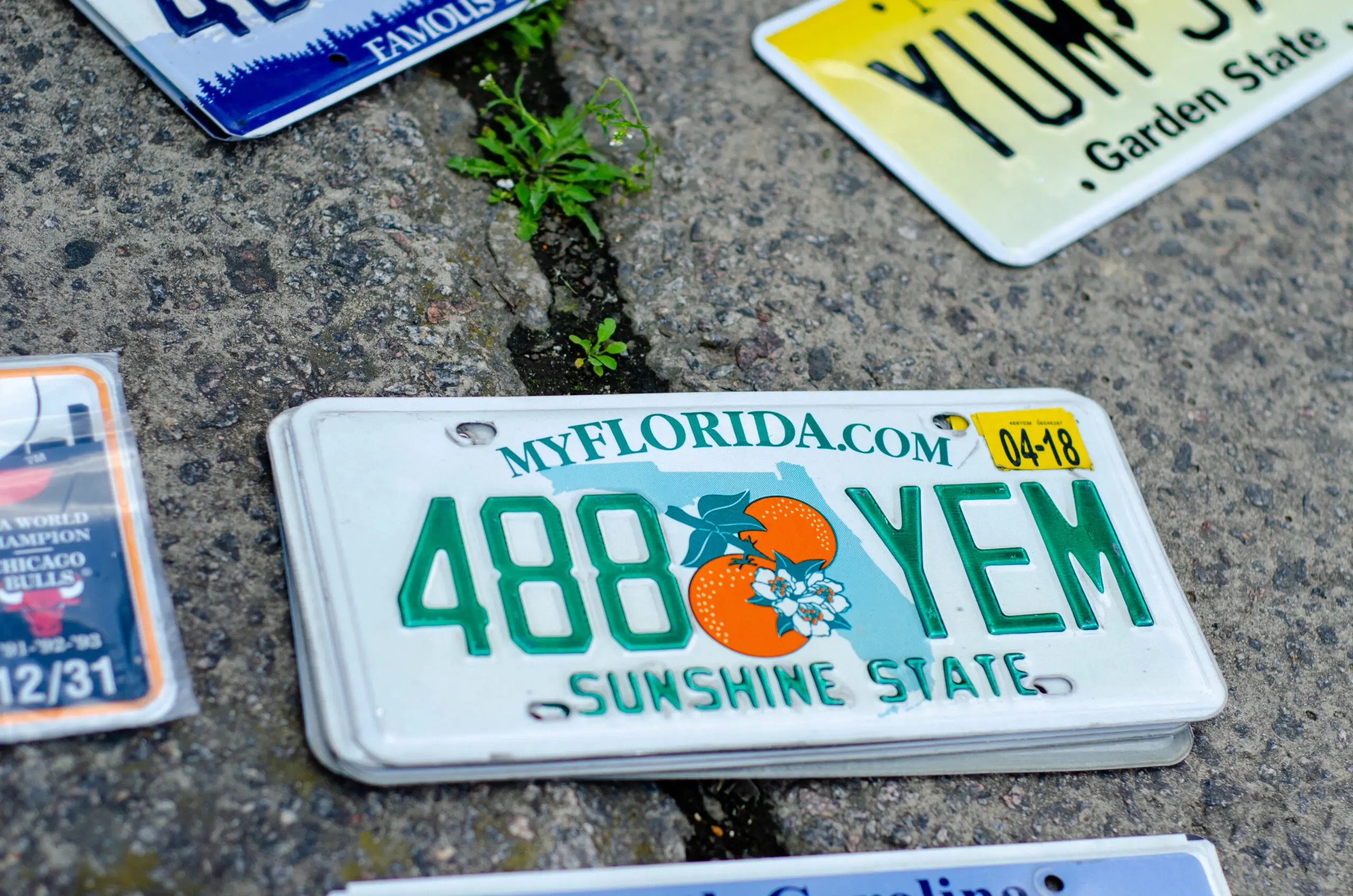
The license plate you receive will be a standard Florida plate, but Florida also offers a wide variety of specialty plates that allow you to support causes, organizations, or express your interests. These often come with an additional annual fee.
Specialty Plates and Other Considerations
Beyond the standard plate, Florida provides numerous options for customization and support of various initiatives.
Exploring Specialty License Plates
Florida is well-known for its diverse selection of specialty license plates. These plates often feature unique designs and contribute to specific funds or organizations. For example, you might find plates supporting:
- Universities like the University of Florida or Florida State University.
- Environmental causes such as protecting sea turtles or the Everglades.
- Charitable organizations and community initiatives.
- Specific interests like the military, first responders, or even motorsports.
When you apply for your registration, you can inquire about the available specialty plates and choose one that resonates with you. Remember that these plates typically have an additional annual cost on top of the standard registration fees.
Renewing Your Registration
Florida vehicle registrations are valid for one year, typically expiring on your birthday. You will receive a renewal notice by mail or email from the FLHSMV prior to your expiration date. You can renew your registration online, by mail, or in person at a county tax collector’s office or a private tag agency. It’s crucial to renew your registration on time to avoid late fees and penalties.
Special Circumstances: Visitors and Snowbirds
For visitors who are staying in Florida for an extended period, such as snowbirds spending several months during the winter, understanding Florida‘s residency rules is important. If you are staying in Florida for more than six months, you may be required to obtain a Florida driver license and register your vehicle in the state, especially if you are employed or operating a business in Florida. If you own property in Florida or have a lease agreement, these can be strong indicators of your intent to reside, even temporarily. Many individuals enjoying the sunshine and attractions like Walt Disney World or Universal Studios Florida choose to establish temporary residency to simplify vehicle registration.
Getting a Florida license plate is a necessary step for enjoying the freedom of the open road in the Sunshine State. By preparing the required documents and understanding the process, you can efficiently navigate the system and get back to enjoying all that Florida has to offer, from the bustling streets of Miami to the tranquil landscapes of the Everglades National Park. Whether you’re seeking a new adventure in Key West or settling into a comfortable villa in Orlando, your Florida license plate is your ticket to experiencing it all legally and without hassle.