
Embarking on a career as a contractor in the vibrant state of Florida opens up a world of opportunity, from contributing to the iconic architectural landscapes of Miami to building dream homes in the picturesque suburbs of Orlando. However, to legally operate as a contractor in the Sunshine State, obtaining the appropriate contractor license is not just a formality; it’s a crucial step that ensures professionalism, safety, and consumer trust. This guide will navigate you through the comprehensive process of acquiring your Florida contractor license, ensuring you are well-equipped to contribute to the state’s thriving construction industry.
The journey to becoming a licensed contractor in Florida involves understanding the requirements, preparing thoroughly, and meticulously following the application procedures. The Florida Department of Business and Professional Regulation (DBPR) oversees the licensing of contractors through its Construction Industry Licensing Board (CILB). This body is dedicated to protecting the public by regulating and licensing qualified individuals and businesses engaged in the construction industry. Whether you aspire to build towering structures or manage intricate renovation projects, a solid understanding of the licensing landscape is paramount.
Understanding the Florida Contractor Licensing Process
The process of obtaining a contractor license in Florida is structured and requires adherence to specific regulations. The Florida DBPR offers two primary types of contractor licenses: the Registered Contractor license and the Certified Contractor license. Understanding the distinction between these two is the first critical step in your licensing journey.
Registered Contractor vs. Certified Contractor
The choice between a Registered Contractor license and a Certified Contractor license depends largely on the scope of your intended work and geographical reach.
-
Registered Contractor License: This license allows you to perform contracting work only within a specific local jurisdiction (county or municipality) where you have registered and met their local requirements. If you plan to operate solely within a particular city or county, this might be a suitable starting point. However, it limits your ability to undertake projects outside that designated area. The requirements for a registered license can vary significantly from one local government to another, making it essential to research the specific ordinances of the area where you intend to practice. This often involves local building codes, zoning laws, and sometimes separate local examinations.
-
Certified Contractor License: This license, on the other hand, is recognized statewide. A certified contractor can perform contracting work anywhere in Florida without needing to obtain separate local registrations. This offers significantly more flexibility and opens up a broader market for your services. The examinations for a certified license are standardized across the state and are generally more rigorous, covering both technical and business knowledge. The state recognizes several categories of certified contractor licenses, including General Contractor, Building Contractor, Residential Contractor, and various specialized certifications like Alarm System Contractor, Air Conditioning Contractor, and Plumbing Contractor.
The Florida DBPR categorizes these licenses based on the type and scale of work that can be performed:
-
General Contractor (GC): This is the broadest license. A General Contractor is qualified to engage in the construction and development of any project that requires the services of more than two unrelated building trades. This includes everything from single-family homes to commercial buildings and public works projects.
-
Building Contractor (BC): A Building Contractor can construct, repair, remodel, or improve any single-family dwelling or duplex. They are qualified to perform work that involves more than two unrelated building trades, but their scope is limited to residential structures up to two units.
-
Residential Contractor (RC): This license is specifically for contractors who build, repair, remodel, or improve single-family dwellings and other structures for residential use that are not more than two stories in height. This license is a more focused version of the Building Contractor license.
-
Specialty Contractor Licenses: For those focusing on specific trades, Florida offers numerous specialty licenses. These include, but are not limited to, Air Conditioning Contractors, Electrical Contractors, Plumbing Contractors, Pool Contractors, and Roofing Contractors. Each specialty license has its own set of requirements and examination scope.
The choice of license type should align with your career aspirations and the market you intend to serve. For those seeking broader opportunities, the Certified Contractor license, particularly the General Contractor designation, is often the ultimate goal.
Eligibility Requirements and Application Steps
Before diving into the application, it’s crucial to understand the eligibility criteria for obtaining a Florida contractor license. These requirements are designed to ensure that licensees possess the necessary skills, experience, and financial stability to operate responsibly.
Key Eligibility Criteria
The Florida DBPR has established several key eligibility criteria that applicants must meet. These generally include:
- Age: Applicants must be at least 18 years old.
- Financial Stability: This is a critical component. You will be required to provide a credit report, and your credit score will be assessed. The Florida DBPR uses credit scores to gauge an applicant’s financial responsibility. Typically, a minimum credit score of 680 is required, though this can vary. Applicants with lower scores may need to secure a larger surety bond to offset the perceived financial risk. This requirement underscores the importance of responsible financial management in the construction business.
- Experience: A significant amount of relevant experience is mandatory. The exact number of years required depends on the type of license you are applying for and whether you have a college degree in a related field. For a Certified Contractor license, applicants generally need at least four years of experience as a contractor, a supervisor, or a foreman in the specific discipline for which they are seeking licensure. This experience must be hands-on and verifiable. For Registered Contractor licenses, the experience requirements are typically set by the local jurisdiction.
- Examination: Passing a comprehensive examination is a non-negotiable step for both Registered and Certified licenses, though the content and administration differ. For Certified licenses, applicants must pass both a business and finance examination and a technical examination specific to their chosen contractor classification. These exams are designed to test knowledge of Florida building codes, laws, business practices, and the technical aspects of the trade.
- Surety Bond: Depending on your credit history and the type of license, you may be required to obtain a surety bond. This bond serves as a guarantee to the public that you will complete projects according to contracts and pay your suppliers and subcontractors. The bond amount can range from $5,000 to $50,000 or more, depending on the license type and financial assessment.
- Insurance: While not always a prerequisite for the license itself, proof of Workers’ Compensation Insurance and Liability Insurance is usually required before you can actually begin practicing and must be maintained throughout your licensure.
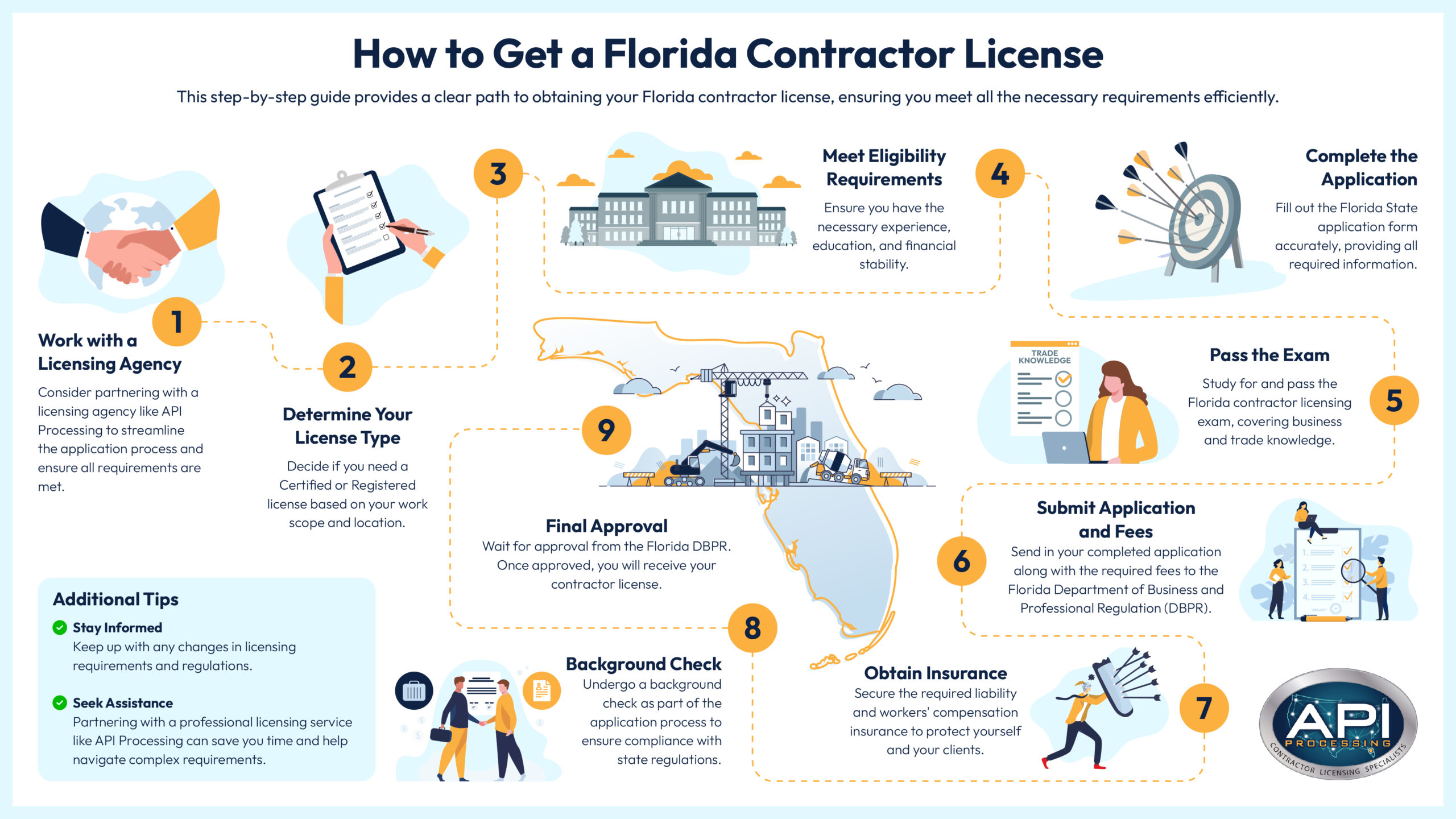
The Application Process: Step-by-Step
The application process, while detailed, is manageable if approached systematically. Here’s a general breakdown of the steps involved in applying for a contractor license in Florida:
- Determine Your License Type: As discussed earlier, identify whether you need a Registered or Certified license and what specific classification (General, Building, Residential, or Specialty) best suits your intended work.
- Gather Required Documentation: This is arguably the most time-consuming part. You will need to collect all supporting documents, including proof of experience (detailed work history, reference letters from employers or clients), financial statements, and credit reports. Ensure all experience is well-documented and verifiable.
- Complete the Application Form: The Florida DBPR provides application forms on its website. Fill out the chosen application form completely and accurately. Any omissions or errors can lead to delays or rejection. Be prepared to provide personal information, business details, and a detailed account of your experience.
- Submit Your Application and Fees: Once the application is complete, submit it along with the required application fees. These fees cover the cost of processing your application, background checks, and examinations. Payment methods and specific fee amounts can be found on the DBPR website.
- Examination Scheduling: Upon approval of your application, you will receive authorization to schedule your examinations. This typically involves contacting an approved testing center, such as Professional Testing, Inc. (PTI), which administers the Florida contractor licensing exams.
- Pass the Examinations: Prepare thoroughly for both the business and finance and the technical examinations. Many applicants benefit from taking review courses designed to cover the exam content comprehensively. These courses can provide valuable insights into exam strategies and key areas of knowledge.
- Provide Surety Bond and Insurance (if applicable): If required, secure your surety bond and provide proof of insurance before your license is issued. Work with a reputable insurance provider and a surety bond agency to obtain these crucial financial instruments.
- License Issuance: Once all requirements are met, including passing the exams and submitting all necessary documentation and fees, your Florida contractor license will be issued. Congratulations! You are now authorized to operate as a licensed contractor in Florida.
Remember to always refer to the official Florida DBPR website for the most up-to-date forms, fees, and requirements, as these can be subject to change.
Maintaining and Renewing Your Contractor License
Obtaining your Florida contractor license is a significant achievement, but it’s not the end of the journey. Like many professional licenses, Florida contractor licenses require ongoing maintenance and periodic renewal to remain valid. Adhering to these requirements ensures you can continue to legally practice your trade and maintain a good standing with the Florida DBPR.
Continuing Education Requirements
One of the most important aspects of maintaining your license is fulfilling the continuing education (CE) requirements. The Florida DBPR mandates that licensed contractors complete a specific number of continuing education hours during each licensing renewal period. The exact number of hours and the specific course content requirements can vary depending on your license classification.
For most Certified and Registered contractor licenses, the requirement typically includes:
- General Subjects: A certain number of hours dedicated to topics relevant to all contractors, such as business management, ethics, workers’ compensation laws, and labor law.
- Specialty Subjects: Additional hours focusing on technical aspects specific to your trade or license classification. This might include updates on building codes, safety regulations, or new construction techniques.
- Florida Laws and Rules: A mandatory module covering Florida-specific construction laws and regulations.
It is crucial to complete your CE courses through an approved continuing education provider. The Florida DBPR maintains a list of approved providers and courses on its website. Keeping track of your CE credits and ensuring they are reported correctly to the DBPR is your responsibility. Failure to meet these requirements will prevent your license renewal.
The Renewal Process
Contractor licenses in Florida are typically renewed every two years. The renewal process generally involves the following steps:
- Check Your Renewal Date: Licenses have specific expiration dates. It’s essential to be aware of your renewal deadline and begin the process well in advance to avoid any lapses.
- Complete Continuing Education: As mentioned above, ensure you have completed all required continuing education hours by the deadline.
- Submit Renewal Application and Fees: The Florida DBPR will typically mail a renewal notice to your address on file. You can also renew online through the DBPR’s online portal. You will need to submit a renewal application and pay the renewal fees. These fees are subject to change and are outlined on the DBPR website.
- Proof of Insurance: You will need to provide updated proof of your required insurance policies, including Workers’ Compensation and General Liability.
- Surety Bond (if applicable): If you are required to maintain a surety bond, you will need to provide proof that it is still active and in good standing.
Timely renewal is critical. If you miss the renewal deadline, your license will become delinquent. After a certain period as delinquent, the license will become null and void, meaning you will have to reapply and go through the entire initial licensing process again, which can be time-consuming and costly. It’s always advisable to renew your license as soon as you receive the renewal notice to avoid last-minute issues.
Maintaining your license diligently ensures you remain a credible and legal professional in the Florida construction industry, allowing you to continue building and contributing to the state’s dynamic landscape.
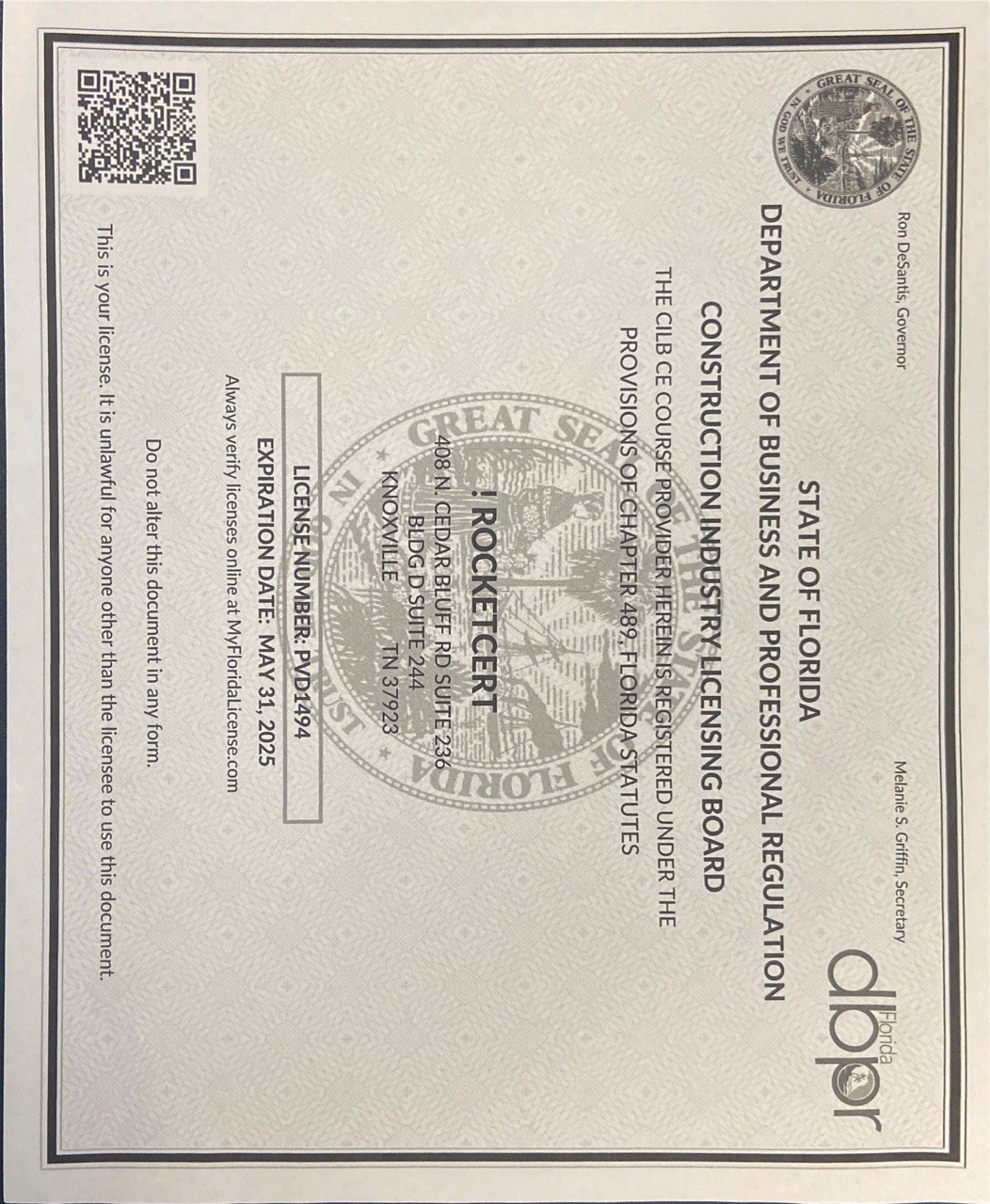
Navigating the Industry Beyond Licensing
While the contractor license is your entry ticket, success in the Florida construction industry also hinges on other factors. As you build your business, consider the following:
- Business Acumen: Beyond technical skills, strong business management is vital. This includes understanding project management, bidding, marketing, client relations, and financial planning. Many continuing education courses are designed to enhance these business skills.
- Networking: Connecting with other professionals in the industry – architects, engineers, suppliers, and fellow contractors – can lead to valuable opportunities and partnerships. Attending industry events and joining professional organizations like the Florida Home Builders Association (FHBA) can be highly beneficial.
- Staying Updated: The construction industry is constantly evolving with new technologies, materials, and building codes. Staying abreast of these changes through workshops, seminars, and trade publications is crucial for maintaining your competitive edge and ensuring compliance.
- Ethical Practices: Upholding the highest ethical standards is paramount. This includes transparent dealings with clients, fair treatment of employees and subcontractors, and adherence to all safety and environmental regulations. Reputation is a contractor’s most valuable asset.
By focusing on these aspects alongside your licensing, you can build a sustainable and successful contracting business in Florida, contributing to its growth and development for years to come. Whether you are dreaming of building a resort in the Florida Keys or a new home in Tampa, a valid contractor license is your foundation for a thriving career.