
Navigating the Golden State with a disability can be made significantly easier with the proper accessibility permits. For those with mobility challenges or other qualifying conditions, obtaining a handicap placard, often referred to as a disabled person parking permit, in California is a crucial step towards ensuring independence and convenience when traveling, exploring attractions, or simply running errands. This comprehensive guide will walk you through the entire process, from understanding eligibility requirements to submitting your application and utilizing your new placard effectively. Whether you’re a long-term resident or a visitor planning an extended stay, knowing how to secure this essential permit will enhance your experience across California’s diverse landscapes, from its bustling cities like Los Angeles to its stunning natural wonders like Yosemite National Park.
The ability to park closer to your destination, whether it’s a luxurious resort like the Ritz-Carlton Bacara, Santa Barbara, a charming boutique hotel in San Francisco, or a family-friendly attraction like Disneyland Park, can transform a potentially arduous journey into a comfortable one. This permit is not just about parking; it’s about granting access to the experiences that California has to offer, from exploring the historic streets of San Diego to enjoying the vibrant culinary scene in Napa Valley. Understanding the nuances of obtaining a handicap placard in California ensures that these opportunities remain open and accessible.
Understanding Eligibility and Application Requirements
Before embarking on the application process, it’s essential to understand who qualifies for a handicap placard in California and what documentation will be needed. The California Department of Motor Vehicles (DMV) is the governing body responsible for issuing these permits, and their criteria are designed to ensure that the placards are granted to individuals who truly need them. Eligibility is based on specific physical or medical conditions that substantially limit a person’s ability to ambulate or pose a significant risk of injury if they attempt to walk long distances.
Qualifying Disabilities
California law outlines several categories of disabilities that qualify an individual for a disabled person parking permit. These include, but are not limited to:
- Conditions Affecting Ambulation: This is the most common category, encompassing individuals who have a disease, impairment, or physical issue that prevents them from walking 200 feet without stopping to rest. This could be due to lung disease, cardiac conditions, a specific neurological disorder, or severe orthopedic issues.
- Severe Lung Disease: Individuals with a forced expiratory volume (FEV) of one liter or less when measured by an spirometer, or whose arterial oxygen tension is less than 55 mmHg (millimeters of mercury) at rest, breathing room air, qualify.
- Severe Cardiac Condition: Those who have been diagnosed with functional class III or IV cardiac disease by a physician also meet the criteria.
- Disability Requiring Use of a Wheelchair, Cane, Crutches, or Other Assistive Device: If a person’s mobility is significantly impaired and they rely on such aids to move around, they are generally eligible.
- Significant Visual Impairment: While not solely related to walking, certain severe visual impairments that impact an individual’s ability to navigate public spaces safely and effectively can also be a qualifying factor.
It’s important to note that temporary disabilities can also qualify for a temporary disabled person parking placard. These are typically issued for conditions that are expected to resolve within a specified timeframe, such as after surgery or during a period of rehabilitation. The application process for a temporary placard is similar to that of a permanent one, but the duration of validity is limited.
The Role of a Licensed Medical Professional
The cornerstone of obtaining a handicap placard in California is the certification from a qualified medical professional. You cannot self-certify your condition. You will need to have a licensed physician, surgeon, podiatrist, chiropractor, or optometrist (for specific visual impairments) complete a portion of the application form. This medical professional must be licensed to practice in California. They will assess your condition and determine if it meets the state’s eligibility criteria for a disabled person parking permit.
The medical professional will need to clearly indicate the nature of your disability and explain how it impacts your ability to ambulate or poses a significant risk. This detailed information is crucial for the DMV to process your application accurately. The accuracy and completeness of the medical certification are paramount to the success of your application.
Necessary Documentation
The primary document you’ll need is the Application for Disabled Person/Veterans Plates (REG 195). This form is available on the California DMV website. You will need to fill out your personal information accurately. The applicant, or their legal guardian, must sign the form.
The crucial section is the “Medical Information” portion, which must be completed and signed by your licensed medical professional. Additionally, if you are applying for a disabled person parking placard for the first time, you will need to provide proof of identity, such as a California driver’s license or identification card, a U.S. passport, or a foreign passport. If you are not a U.S. citizen, you may need to provide proof of lawful presence in the United States.
Fees Associated with the Placard
While the application for the placard itself is generally free, there might be a nominal fee if you are also applying for special disabled person license plates in conjunction with your placard. However, for just the placard, which is a removable hanging tag, there is typically no charge. It is always advisable to check the latest fee schedule on the California DMV website as these can be subject to change.
The Application Process: Step-by-Step
Once you have gathered all the necessary documentation, including the completed application form with the medical certification and your proof of identity, you can proceed with submitting your application to the California DMV. The process is designed to be straightforward, but attention to detail is key to avoiding delays.
Completing the Application Form (REG 195)
The REG 195 form requires accurate personal information from the applicant. This includes your name, address, date of birth, and driver’s license or ID card number. Ensure that all fields are filled out legibly. If you are applying on behalf of someone else, such as a minor child or an incapacitated adult, you will need to indicate your role as a legal guardian or representative and provide appropriate documentation to support this.
Medical Certification
As mentioned, the medical professional plays a vital role. They will need to diagnose your condition, explain its impact on your mobility, and determine if it meets the state’s criteria. The form has specific sections for the doctor to sign and provide their license number. It’s a good idea to schedule your appointment with your doctor well in advance, especially if you are planning a trip to a popular California destination like the Golden Gate Bridge or looking to book accommodations in a resort area.
Submitting Your Application
There are several ways to submit your completed application to the California DMV:
- By Mail: You can mail your completed application form to the DMV. The mailing address is provided on the REG 195 form and on the California DMV website. This is a convenient option if you prefer to handle the process from home.
- In Person: You can visit any California DMV field office to submit your application in person. This allows for immediate assistance if you have any questions or encounter issues with your paperwork. It’s often recommended to schedule an appointment online to minimize your waiting time, especially at busy offices in cities like Sacramento.
- Through a Local Agency: In some cases, you may be able to submit your application through authorized local agencies, such as certain city or county offices that handle disability services. Check with your local government resources for more information.
Processing Time and Receiving Your Placard
Once your application is received by the DMV, it will be reviewed for completeness and accuracy. The processing time can vary, but typically, you can expect to receive your placard within 4 to 6 weeks. If your application is approved, the placard will be mailed directly to the address you provided on the form.
If there are any issues with your application, such as missing information or an incomplete medical certification, the DMV will contact you to request the necessary corrections. It is important to respond promptly to any communication from the DMV to avoid further delays.
Utilizing Your Handicap Placard: Rules and Regulations
Obtaining a handicap placard is only the first step. Understanding how to use it correctly and adhering to the associated rules and regulations is crucial to avoid penalties and ensure that parking spaces remain available for those who genuinely need them. The placard allows you to park in designated disabled person parking spaces, which are marked with the International Symbol of Access (wheelchair symbol).
Where You Can Park
The placard permits you to park in any disabled person parking space. This includes spaces in public parking lots, on public streets, and in private parking lots (such as those at shopping malls, airports, or hotels like the Four Seasons Hotel Los Angeles at Beverly Hills). These spaces are strategically located to provide convenient access to destinations.
placard Usage and Display
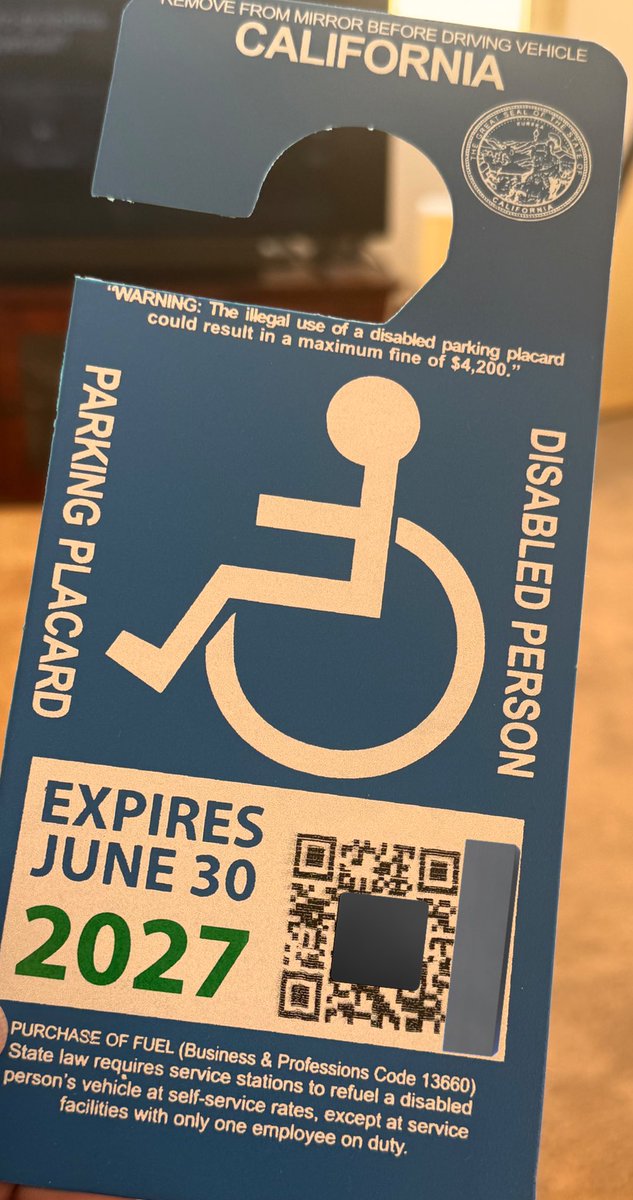
The disabled person parking placard is designed to be displayed hanging from the rearview mirror when the vehicle is parked. When you are driving, the placard should be removed from the rearview mirror and stored securely. Improper display can lead to citations. The placard is issued to an individual, not to a vehicle, meaning you can use it in any vehicle you are traveling in.
Placard Validity and Renewals
Permanent disabled person parking placards are typically valid for two years. You will receive a renewal notice from the DMV before your placard expires. It is your responsibility to renew your placard in a timely manner. Temporary placards have a shorter validity period, usually up to six months, and cannot be renewed. If you still require parking privileges after the temporary placard expires, you will need to reapply for a new one, including a new medical certification.
Penalties for Misuse
Misusing a disabled person parking placard is a serious offense in California and can result in significant fines and penalties. This includes using a placard that is expired, belongs to someone else, or is displayed improperly. It is illegal to park in a disabled person parking space without a valid placard. Law enforcement officers actively monitor these parking spaces, and citations can be issued. Fines can range from several hundred dollars to over a thousand dollars, and in some cases, repeated offenses can lead to the suspension of driving privileges.

Traveling with Your Placard
The California disabled person parking placard is recognized throughout the United States and in many other countries. If you are traveling outside of California, you can generally use your placard in other jurisdictions. However, it’s always a good idea to familiarize yourself with the specific regulations of the state or country you are visiting, as there might be minor differences in display requirements or parking enforcement. For instance, when visiting national parks or major tourist destinations like San Francisco’s Pier 39, your California placard will be accepted.
For those planning extended stays or seeking long-term accommodation in various Californian cities, understanding these parking privileges is integral to enjoying a comfortable and accessible lifestyle. From finding accessible apartments in Oakland to booking accessible suites in a resort, the handicap placard is a key enabler of independent travel and exploration throughout the diverse offerings of California.