
Navigating the journey to independence on the open roads of the Lone Star State is an exciting milestone for any young driver. For residents of Texas, obtaining a learner’s permit is the crucial first step in this adventure. This guide will walk you through the entire process, ensuring you’re well-prepared to head to the Texas Department of Public Safety (DPS) and officially begin your driving education. From understanding the eligibility requirements to acing the knowledge test, we’ve got you covered.
Obtaining a learner’s permit in Texas is not just a formality; it’s a foundational step that emphasizes safety and responsible driving. The program is designed to equip new drivers with the necessary knowledge and skills before they are allowed to operate a vehicle unsupervised. This process ensures that young drivers understand traffic laws, road signs, and safe driving practices, contributing to safer roads for everyone. The journey involves several key stages, each designed to assess your readiness and knowledge.

Eligibility Requirements and Preparations
Before you even think about visiting a Texas DPS office, it’s essential to understand who is eligible for a learner’s permit and what documentation you’ll need. The Texas graduated driver license (GDL) program has specific age requirements that must be met.
Age and Residency
To apply for a learner’s permit in Texas, you must be at least 15 years old. However, if you are under 18, there are additional requirements that must be fulfilled. You also need to be a resident of Texas. This means you must have established a primary residence in the state. Proof of residency is a critical part of the application process, so be prepared to provide documentation.
Required Documentation
Gathering the correct documents is paramount to a smooth application process. Missing even one item can lead to a denied application, requiring you to reschedule and revisit the DPS office. Here’s a comprehensive list of what you’ll likely need:
- Proof of Identity: This can be a certified copy of your birth certificate, a valid U.S. Passport, or a Texas identification card.
- Proof of Social Security: Your Social Security card or a W-2 form with your Social Security number is generally accepted.
- Proof of Texas Residency: Two documents are typically required to prove you live in Texas. Acceptable documents include utility bills, bank statements, school records, or a lease agreement. Ensure these documents are recent and clearly display your name and Texas address.
- Proof of Citizenship or Lawful Presence: This can be your birth certificate, U.S. Passport, or lawful immigration documents.
- Certificate of Completion for the Impact Texas Teen Drivers (ITTD) Program: This is a mandatory online video course that educates young drivers about the dangers of distracted driving. You must complete this program no more than 90 days before you apply for your learner’s permit. You will receive a certificate of completion that you must bring with you.
- Certificate of Completion for a Texas-Approved Driver Education Program: If you are under 18, you must have completed a driver education course from a Texas-approved provider. This can be either a classroom-based course or an online program. You will need to present the corresponding certificate of completion.
It is always advisable to check the official Texas DPS website for the most up-to-date list of required documents, as requirements can change. Having all your paperwork in order before your appointment will save you considerable time and frustration.
The Application and Testing Process
Once you have all your documentation ready, the next step is to visit a Texas DPS driver license office. Appointments are highly recommended to minimize wait times. You will go through an application process, have your photograph taken, and then face the crucial knowledge test.
Completing the DL-44 Application Form
You will need to complete the Texas Driver License application form, known as the DL-44. This form will ask for personal information, including your name, address, date of birth, and other relevant details. It’s important to fill this out accurately and legibly. You can often download and fill out the DL-44 form in advance to save time at the DPS office.
The Vision and Knowledge Tests
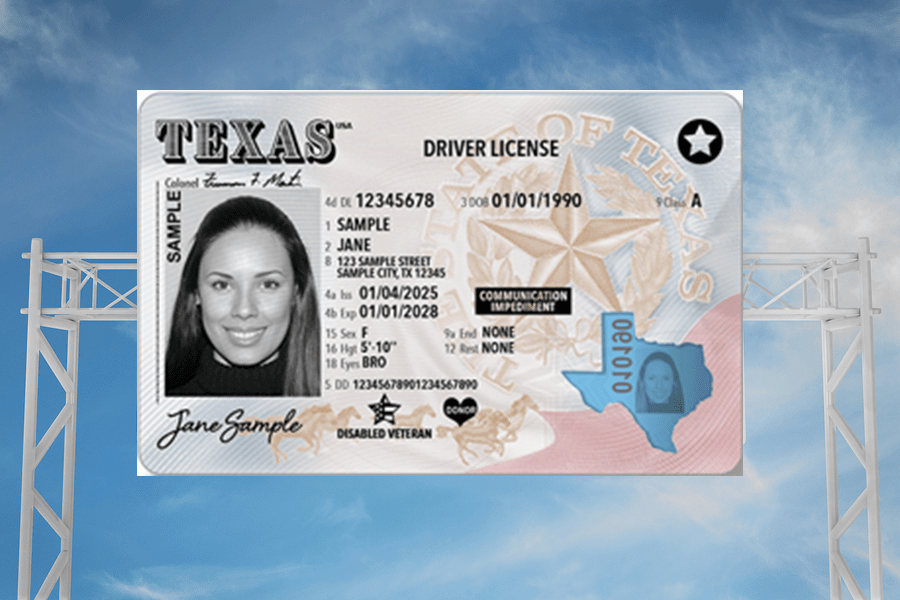
At the DPS office, you will first undergo a vision screening to ensure your eyesight meets the minimum requirements for driving. This is a quick and standard procedure.
Following the vision test, you will take the learner’s permit knowledge test. This exam assesses your understanding of Texas traffic laws, road signs, and safe driving practices. The test typically consists of multiple-choice questions. To pass, you need to answer a certain percentage correctly. The official Texas Driver Handbook is your ultimate resource for studying for this test. It covers everything you need to know, from speed limits and right-of-way rules to the consequences of driving under the influence. Familiarizing yourself thoroughly with the handbook is the key to success.
The Texas Driver Handbook is available online for free on the Texas DPS website. It’s a comprehensive guide that covers all aspects of driving in Texas, including traffic signs, signals, road markings, speed limits, right-of-way rules, and safe driving techniques. Dedicate ample time to studying this handbook, perhaps even taking practice tests available online or through driver education programs. Understanding the material thoroughly will not only help you pass the knowledge test but also lay a strong foundation for safe driving habits.
Receiving Your Learner’s Permit
Upon successfully passing both the vision and knowledge tests, and after all your documentation has been verified, you will be issued your Texas learner’s permit. This permit will allow you to begin supervised driving practice.
Rules and Restrictions of a Texas Learner’s Permit
Holding a learner’s permit is a privilege that comes with specific rules and restrictions designed to ensure your safety and the safety of others. Understanding and adhering to these regulations is crucial for progressing through the GDL program.
Supervision and Driving Hours
While holding a learner’s permit, you are not allowed to drive alone. You must always be accompanied by a licensed driver who is at least 21 years old and has at least one year of driving experience. This supervising driver must be in the front passenger seat.
There are also restrictions on when you can drive. For the first six months after obtaining your learner’s permit, you cannot drive between midnight and 5 a.m. This restriction is lifted after the initial six-month period, but there are still limitations on driving with passengers.
Passenger and Electronic Device Restrictions
To minimize distractions and potential hazards, there are strict rules regarding passengers. During the first six months of holding your learner’s permit, you cannot drive with more than one passenger under the age of 21 who is not a family member. After this initial period, you can have up to three passengers under the age of 21 who are not family members.
Furthermore, Texas law strictly prohibits the use of wireless communication devices, including cell phones, by learner’s permit holders while driving, except in case of an emergency. This includes texting, talking, or using any function that takes your attention away from the road.

The Road Test and Beyond
Once you have held your learner’s permit for at least six months and have completed all the required driver education components, including the ITTD program, you will be eligible to take the driving test to obtain your provisional driver’s license. This is the next significant step in the GDL program. The provisional license has its own set of restrictions, which gradually lessen as you gain more experience and reach the age of 18.
The journey to obtaining your Texas learner’s permit is a structured process that prioritizes safety and education. By understanding the eligibility requirements, preparing your documents diligently, studying the Texas Driver Handbook, and adhering to the permit’s restrictions, you’ll be well on your way to enjoying the freedom and responsibility of driving. Remember, safe driving starts with knowledge and practice, so make the most of this learning phase. This structured approach ensures that new drivers are well-prepared to navigate the roads of Texas responsibly and safely.
LifeOutOfTheBox is a participant in the Amazon Services LLC Associates Program, an affiliate advertising program designed to provide a means for sites to earn advertising fees by advertising and linking to Amazon.com. Amazon, the Amazon logo, AmazonSupply, and the AmazonSupply logo are trademarks of Amazon.com, Inc. or its affiliates. As an Amazon Associate we earn affiliate commissions from qualifying purchases.