
Embarking on the open road with the wind in your hair is an undeniable allure, and in the vibrant state of Florida, this dream often involves a motorcycle. Whether you envision cruising along the scenic Tamiami Trail or exploring the bustling streets of Miami, obtaining the proper motorcycle permit is the essential first step. This guide will navigate you through the entire process, ensuring you’re fully prepared to ride legally and safely across the Sunshine State.
The journey to acquiring your motorcycle permit in Florida is a straightforward process designed to equip new riders with the necessary knowledge and skills. It involves understanding the requirements, preparing for the knowledge test, and mastering the road skills test. Let’s break down each stage to make your path to becoming a licensed motorcycle rider as smooth as possible.

Understanding Florida Motorcycle Permit Requirements
Before you even think about hitting the throttle, it’s crucial to understand the prerequisites for obtaining a motorcycle permit in Florida. These requirements are in place to ensure that all aspiring riders have a foundational understanding of motorcycle operation and traffic laws.
Eligibility Criteria
To be eligible for a motorcycle permit, you must meet certain age and residency requirements.
- Age: Applicants under 18 years of age must complete a Florida motorcycle safety course approved by the Department of Highway Safety and Motor Vehicles. Those 18 and older are not mandated to complete a safety course to obtain their permit, but it is highly recommended.
- Residency: You must be a legal resident of Florida to apply for a Florida motorcycle permit. Proof of residency, such as a utility bill or lease agreement, will be required.
- Existing License: If you hold a valid Florida driver’s license, your motorcycle permit will be added as an endorsement to your existing license. If you don’t have a driver’s license, you’ll need to obtain a learner’s permit first, which involves passing a vision and written test.
Essential Documentation
Gathering the correct documentation is a critical step. You will need to present several forms of identification and proof of eligibility at your local Florida Department of Highway Safety and Motor Vehicles (DHSMV) office.
- Proof of Identity: This can include a U.S. passport, birth certificate, or Certificate of Citizenship.
- Proof of Social Security Number: Your Social Security card or a W-2 form will suffice.
- Proof of Residential Address: Two documents are typically required, such as a utility bill, bank statement, or lease agreement, with your name and Florida address.
- Proof of Legal Presence: If you are not a U.S. citizen, you will need documentation such as a permanent resident card or visa.
- Medical Examination Form (if applicable): Certain medical conditions may require a physician’s statement.
It’s always a good idea to visit the official Florida DHSMV website or contact your local office to confirm the most up-to-date list of required documents, as requirements can sometimes change.
Preparing for and Passing the Motorcycle Knowledge Test
The knowledge test is designed to assess your understanding of motorcycle operation, traffic laws, and safe riding practices specific to Florida. A thorough understanding of the material will significantly increase your chances of passing on the first attempt.
The Official Motorcycle Handbook
The cornerstone of your preparation should be the official Florida Motorcycle Operator Manual. This comprehensive guide is provided by the DHSMV and contains all the information you need to pass the knowledge test. You can download it from the DHSMV website or pick up a physical copy at your local driver licensing office.
Key topics covered in the manual include:
- Motorcycle Operation: Understanding basic controls, starting and stopping, and riding techniques.
- Traffic Laws and Regulations: Rules of the road, speed limits, and right-of-way.
- Hazard Perception: Identifying and responding to potential dangers on the road.
- Riding Strategies: Lane positioning, cornering, and braking techniques.
- Riding in Various Conditions: Riding in rain, at night, and in heavy traffic.
- Protective Gear: The importance of helmets, eye protection, and protective clothing.
Familiarize yourself thoroughly with each section. Don’t just skim; aim for a deep comprehension of the principles and rules.
Practice Tests and Study Aids
To gauge your readiness, taking practice tests is highly beneficial. Many websites offer free Florida motorcycle permit practice tests that mimic the format and difficulty of the official exam. These tests can help you identify areas where you need further study and familiarize you with the question style.
Consider using flashcards or creating your own study guides to reinforce key concepts and terminology. The more you engage with the material, the better you will retain it.
Taking the Knowledge Test

Once you feel confident in your preparation, you can schedule your knowledge test at a DHSMV office. On the day of your test, arrive early to complete any necessary paperwork. The test typically consists of 20 multiple-choice questions, and you need to answer at least 16 correctly to pass. The test is administered on a computer at most locations.
If you do not pass the knowledge test, you will have to wait a certain period before you can retake it. Reviewing the manual and focusing on your weak areas will be crucial for your next attempt.
Completing the Motorcycle Road Skills Test
The road skills test is the final hurdle to obtaining your motorcycle endorsement. This practical assessment evaluates your ability to safely operate a motorcycle in various real-world scenarios.
Preparing for the Road Skills Test
There are two primary pathways to fulfilling the road skills test requirement in Florida:
- Official Skills Test: You can take the test at a DHSMV driver licensing office. You will need to provide your own registered and insured motorcycle for the test.
- Waiver through a Motorcycle Safety Course: Successfully completing an approved motorcycle safety course, such as the Florida Rider training Program (FRTP), will waive the requirement for the road skills test. This is often the preferred route for new riders as it provides valuable hands-on training and instruction from certified professionals. The FRTP courses are highly recommended for building confidence and essential riding skills, and graduates receive a certificate that exempts them from the DHSMV road test.
If you opt for the official skills test, practice the maneuvers outlined in the Motorcycle Operator Manual until they become second nature. These typically include:
- Cone Weave: Navigating through a series of cones to demonstrate control at low speeds.
- Turning: Executing smooth and controlled turns.
- Stopping: Executing controlled stops from various speeds.
- Obstacle Swerve: Safely maneuvering around an obstacle.
- U-Turn: Performing a controlled U-turn.
Ensure your motorcycle is in good working order, with functioning lights, brakes, and tires. Wear appropriate protective gear, including a helmet, eye protection, and sturdy clothing.
The Road Skills Test Day
On the day of your road skills test at a DHSMV office, arrive punctually. The examiner will assess your ability to perform the required maneuvers safely and proficiently. They will be looking for smooth control, proper speed, and adherence to traffic laws throughout the test.
If you successfully complete the road skills test or present your waiver certificate from an approved safety course, you will then proceed to finalize your application and pay the necessary fees.
Finalizing Your Motorcycle Permit and License
Once you’ve successfully navigated the knowledge and road skills tests (or obtained your waiver), the final steps involve completing the administrative tasks to officially get your motorcycle permit or endorsement.
Issuance of Your Permit/License
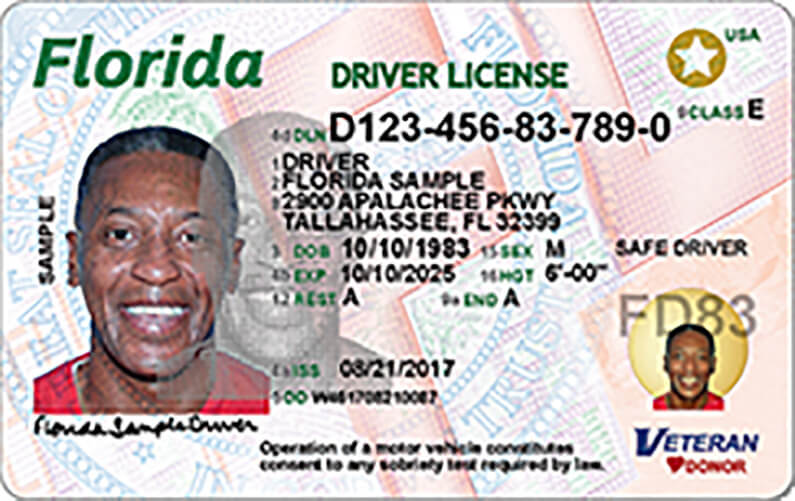
After passing your tests or presenting your waiver, you will be issued a temporary motorcycle permit or endorsement. Your permanent motorcycle license or updated driver’s license with the motorcycle endorsement will be mailed to you within a few weeks.
Remember, a motorcycle permit in Florida is a learner’s permit. This means there are specific restrictions associated with it. For instance, permit holders under the age of 21 cannot ride after dark or carry passengers. Riders 21 and older with a permit cannot carry passengers. These restrictions are in place to allow new riders to gain experience under controlled conditions.
Understanding Permit Restrictions and Progression to a Full License
The restrictions on your motorcycle permit are designed to help you gradually build your riding experience safely. It’s crucial to understand and adhere to these rules to avoid citations.
To obtain a full, unrestricted motorcycle license (often referred to as a motorcycle endorsement on your driver’s license), you generally need to:
- Hold your motorcycle permit for a specified period (this varies, but it’s often six months for those under 21, and sometimes waived for those 21+ who complete a safety course).
- Be at least 18 years old.
- Pass another knowledge test and road skills test if you haven’t completed an approved safety course. However, completing an FRTP course typically waives these requirements and allows for a direct endorsement issuance after meeting age and residency criteria.
The process of getting your motorcycle permit in Florida is a rewarding journey that opens up a world of adventure. By understanding the requirements, preparing diligently for the tests, and embracing the learning process, you’ll be well on your way to enjoying the freedom and exhilaration of riding a motorcycle legally and safely across the beautiful state of Florida. Whether you’re planning a scenic ride along the Atlantic coast or exploring the unique ecosystems of the Everglades, your motorcycle permit is your ticket to unforgettable experiences.