
Receiving a jury summons can often feel like an unexpected detour on the road of life, especially for those who cherish their travel plans, lifestyle flexibility, or professional commitments. While serving as a juror is a cornerstone of civic duty in the United States, the timing isn’t always convenient. For residents of California, a state known for its vibrant tourism, iconic landmarks, and diverse lifestyle opportunities, the prospect of an extended period in a courtroom can disrupt everything from a meticulously planned Europe itinerary to a crucial business trip or simply a much-needed staycation at a local resort.

This guide aims to demystify the process of jury duty in California, offering insights into legitimate ways to be excused or defer service, all while emphasizing the importance of honesty and adherence to legal guidelines. Whether you’re a digital nomad planning your next global adventure, a professional with an inflexible schedule, or someone facing genuine personal hardship, understanding the system is your first and best defense.
Understanding Your Summons: The First Step
The journey to potentially getting out of jury duty begins the moment that official envelope lands in your mailbox. Ignoring it is never an option, as it carries serious legal consequences. Instead, understanding its contents and your obligations is paramount.
The Call to Civic Duty in the Golden State
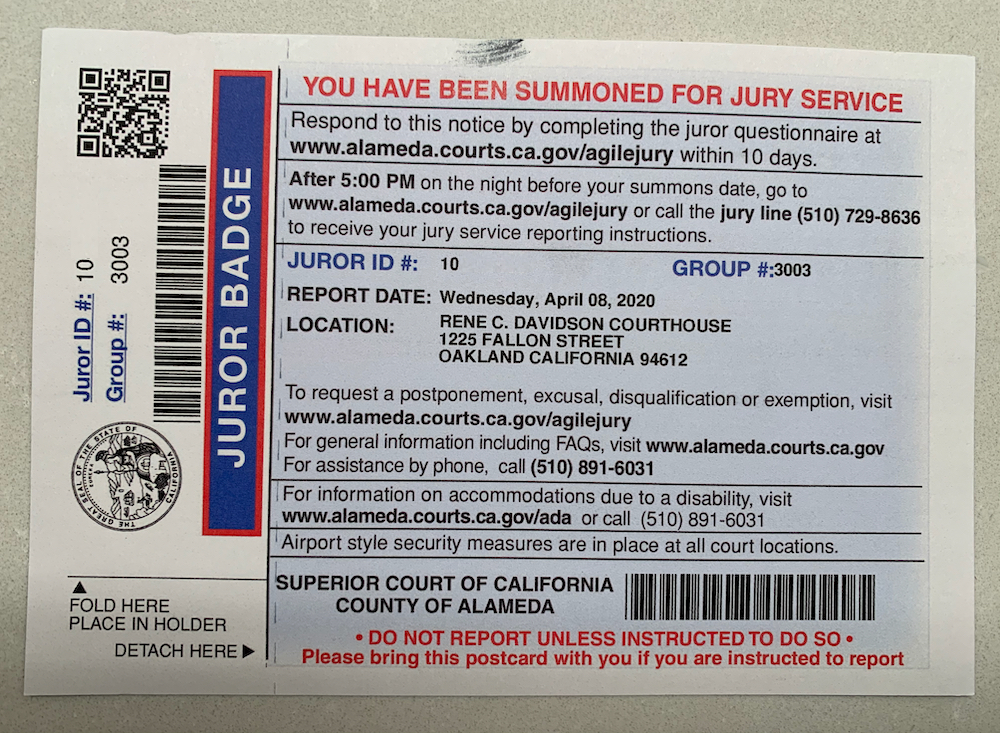
In California, like all other states, the right to a jury trial is enshrined in the constitution, and it relies on citizens fulfilling their role in the justice system. When you receive a summons, it typically directs you to report to a specific Superior Court in your county, such as the Superior Court of Los Angeles County or San Francisco County. The summons will provide details about the date you need to call in or report, the expected length of service, and instructions for how to respond.
Many people dread jury duty because of the perceived disruption. Imagine having booked a luxurious stay at a hotel near Lake Tahoe, or an exciting tour of Yosemite National Park, only to have it jeopardized by a court date. While these frustrations are valid, it’s crucial to approach the situation with respect for the legal system. Your goal should be to find a legitimate, legally permissible way to manage your service, not to evade it unlawfully.
Eligibility Requirements in California
Before even considering an excuse, it’s essential to confirm you meet the basic eligibility criteria for jury service in California. If you don’t meet these, you might be automatically disqualified. To be eligible, you must:
- Be a citizen of the United States.
- Be at least 18 years of age.
- Be a resident of the county that issued the summons (e.g., Orange County residents serve in Orange County courts).
- Be able to understand the English language sufficiently.
- Be mentally competent to understand the proceedings.
- Not have been convicted of a felony or be currently on parole, post-release community supervision, or probation for a felony.
- Not be serving as a grand or trial juror in any court of this state.
Reviewing these criteria is the first, simplest step. If you fall short on any of them, you may be able to be excused directly without much further effort.
Legitimate Avenues for Exemption and Deferral
California law provides specific reasons why an individual may be excused or have their service postponed. These aren’t loopholes but rather acknowledgments of life’s complexities and genuine hardships.
Automatic Disqualifications: When You Simply Can’t Serve
Some conditions automatically disqualify you from serving on a jury in California. These are often straightforward and, if applicable, typically only require you to communicate the information back to the court.
- Non-citizenship: If you are not a United States citizen, you are not eligible.
- Age (under 18): Minors cannot serve on a jury. While rare to be summoned, it can happen due to administrative error.
- Residency outside the summoning county: If you’ve recently moved out of Los Angeles County and your summons is from there, you are disqualified.
- English language proficiency: If you cannot understand English well enough to comprehend court proceedings, you can be excused. This isn’t about being bilingual but about the ability to participate effectively in a legal context.
- Mental competence: Individuals who are not mentally competent to serve are disqualified.
- Felony convictions: Anyone currently incarcerated in prison or jail, or on parole, post-release community supervision, or probation for a felony conviction, is disqualified.
When any of these apply, it’s crucial to respond to your summons promptly, indicating the disqualifying factor and providing any requested documentation. This is a legitimate and often swift way to be removed from the jury pool.
Requesting a Hardship Excuse: Navigating Your Circumstances
If you meet the basic eligibility requirements but face circumstances that would make jury service an extreme hardship, California courts are typically willing to consider an excuse or deferral. Common reasons for hardship include:
- Medical conditions: If you have a physical or mental disability or medical condition that would prevent you from serving effectively or would be significantly exacerbated by service, you can request an excuse. This usually requires a doctor’s note verifying the condition and stating why it interferes with jury duty. For instance, if you have chronic pain that makes sitting for long periods difficult, or a condition that requires frequent medical attention.
- Caregiving responsibilities: If you are solely responsible for the care of a child (under a certain age, often 12) or a severely ill, physically, or mentally disabled person, and alternate care is not readily available or would cause extreme financial or emotional burden, you may be excused. The court understands that disrupting essential care can have serious consequences.
- Financial hardship: For some, missing work can lead to severe financial strain. This is particularly true for self-employed individuals, small business owners, or those in roles where income is directly tied to presence (e.g., freelance consultants, gig workers, or even tour guides planning local tourism experiences). You’ll need to demonstrate that jury service would result in a substantial financial sacrifice that you cannot reasonably bear. This might involve submitting pay stubs, tax returns, or a detailed letter explaining your financial situation.
- Student status: While not an automatic excuse, full-time students can often defer service until a school break. The disruption to studies, especially during critical exam periods, can be a compelling reason for postponement.
- Business necessity: For individuals whose absence would cause extreme and unavoidable financial hardship to a business, particularly small businesses or sole proprietorships where the individual’s presence is indispensable, an excuse or deferral may be granted. This requires a strong explanation of the impact.
When requesting a hardship excuse, clarity and documentation are key. Be honest, concise, and provide any supporting documents the court requests. The initial response to your summons will usually have a section for explaining such hardships.
The Power of Deferral: Postponing Your Service

One of the most common and often successful strategies for managing jury duty is to request a deferral. This doesn’t get you out of service entirely but pushes it back to a more convenient time. California courts are generally quite accommodating with deferral requests, especially for a first-time request.
- Travel plans: This is particularly relevant for the demographic interested in travel and tourism. If you have pre-booked flights, non-refundable accommodation at a hotel in Paris, Rome, or Tokyo, a cruise to Mexico, or a family vacation to Hawaii, a deferral is a strong possibility. You’ll typically need to provide proof of your bookings (e.g., flight itineraries, hotel confirmations). Courts understand that cancelling pre-arranged trips can result in significant financial loss and inconvenience.
- Scheduled medical appointments or procedures: If you have an important doctor’s appointment or surgery scheduled during your service period, you can request a deferral.
- Work commitments: While not a guarantee, if you have a critical work deadline, a major conference, or an essential business trip (e.g., to Canada or Asia) that cannot be rescheduled, you can explain this and request a deferral.
- Personal events: Sometimes, significant life events like weddings (your own or a close family member), graduations, or funerals may warrant a deferral.
Most California courts allow you to request a deferral online or by mail, often up to 90 days or even a year out. Be specific about your reasons and provide dates when you would be available to serve. This allows you to plan your jury service around your lifestyle and travel commitments.
Navigating the Voir Dire Process: Your Moment in Court
If your requests for excuse or deferral are denied, or if you choose to report, the next stage is voir dire, the jury selection process. This is where prospective jurors are questioned by the judge and attorneys to determine their suitability to serve on a particular case. This is arguably the most common and effective point for many to be excused, but it requires honesty and careful communication.
Understanding Jury Selection in the California Courts
During voir dire, you will join a panel of potential jurors in the courtroom. The judge will introduce the case, the parties involved, and the attorneys. Then, both the judge and the attorneys will ask questions designed to uncover biases, prejudices, or hardships that might prevent you from being a fair and impartial juror. Questions can range from your occupation and family status to your opinions on specific legal issues or experiences with the justice system.
The goal of the attorneys is to select jurors who will be favorable to their side, while the judge’s role is to ensure a fair and unbiased jury. Jurors can be dismissed “for cause” (meaning there’s a specific, legally recognized reason they can’t serve impartially) or through “peremptory challenges” (where attorneys can dismiss a limited number of jurors without needing to state a reason).
Communicating Your Perspective (Without Lying)
It’s crucial to stress: never lie during voir dire. Perjury is a serious crime with severe penalties. Your goal should be to honestly and respectfully articulate any biases, strong opinions, or genuine hardships that would truly prevent you from serving fairly or make your service impossible.
Here are some honest ways to approach voir dire if you genuinely wish to be excused:
- Highlighting strong, unshakeable opinions: If you have strong, deeply held opinions about a particular type of crime, law enforcement, specific legal concepts (like self-defense or presumption of innocence), or certain groups of people, and you genuinely believe these opinions would prevent you from impartially weighing the evidence, state this clearly. For example, if the case involves a specific type of fraud and you’ve been a victim of similar fraud, and you feel you couldn’t set that experience aside, say so.
- Reiterating genuine hardship: If you disclosed a hardship in your initial response (like being the sole caregiver for an elderly parent or having a pre-booked, non-refundable travel itinerary for South America or Africa), and it was not accepted for a deferral, this is your opportunity to politely and clearly explain the daily impact this hardship would have on your ability to focus on the trial, if it were to last several days or weeks. For instance, explaining the logistical nightmare of finding daily specialized care, or the substantial financial loss of forfeited accommodation and flights.
- Expressing difficulty with specific trial aspects: If the trial is expected to be very long (weeks or months), and you have legitimate reasons why a prolonged absence from your job or family would be devastating, you can express this. Or if the nature of the evidence (e.g., graphic content) would genuinely be too distressing for you to handle without it affecting your judgment, state this.
- Demonstrating inability to conform: The core requirement is to follow the judge’s instructions and apply the law as given. If, due to deeply held beliefs, you truly feel you could not, for instance, convict someone based solely on circumstantial evidence, or if you couldn’t award damages in a specific type of civil case, even if the law allowed it, this is a legitimate reason for dismissal.
Remember, the goal is not to trick anyone, but to reveal to the court why you genuinely cannot be a fair and impartial juror for that specific case, or why your service would create an insurmountable hardship that would distract you from your duties.
The Broader Implications: Travel, Lifestyle, and Legal Compliance
For many, managing jury duty is directly tied to preserving their chosen lifestyle, which often includes frequent travel or the demands of a specific profession. Understanding the system responsibly ensures you can continue to explore destinations from Australia to Asia without legal repercussions.
Protecting Your Travel Plans and Lifestyle Commitments
The most common reason people want to get out of jury duty is often a conflict with pre-existing commitments, especially travel. Whether it’s a long-awaited cruise, a business trip vital for your income, or a family reunion across the country, these plans represent significant investments of time and money, and often irreplaceable experiences.
By using the deferral option or presenting your travel plans as a hardship during the initial response phase, you are utilizing a legitimate channel. Providing documentation like flight confirmations, hotel bookings, or tour reservations strengthens your case. Courts understand the financial and emotional impact of canceling such plans. The key is proactive communication and being prepared to offer alternative dates when you can serve, demonstrating your willingness to fulfill your duty, just at a more opportune time. This approach allows you to maintain your lifestyle and travel while respecting your civic obligations.
Consequences of Ignoring a California Jury Summons
While this guide focuses on legitimate ways to be excused or defer, it is crucial to understand the severe consequences of simply ignoring a jury summons in California. Failure to respond to a jury summons is a serious matter and can result in:
- Fines: Courts can impose substantial monetary fines.
- Contempt of court charges: This is a serious legal offense that can lead to further fines or even jail time.
- Bench warrants: In some cases, a judge may issue a bench warrant for your arrest for failing to appear.
These consequences are far more disruptive and costly than serving jury duty or going through the process of requesting an excuse or deferral. It is never advisable to neglect your summons. Even if you believe you are ineligible or have a valid excuse, you must communicate with the court as instructed.
Conclusion
Jury duty in California is a fundamental civic responsibility. While it may clash with your travel aspirations, professional demands, or personal lifestyle, there are legitimate and ethical ways to manage your service. By understanding eligibility requirements, leveraging options for deferral, and honestly communicating genuine hardships or biases during voir dire, you can navigate the system responsibly. Always remember that open, honest, and timely communication with the court is your best strategy. By following these guidelines, you can fulfill your civic duty without unduly sacrificing your precious travel plans or personal commitments, ensuring your life’s adventures, whether exploring new destinations or enjoying the comforts of a fine hotel, can continue unimpeded once your obligations are met.
LifeOutOfTheBox is a participant in the Amazon Services LLC Associates Program, an affiliate advertising program designed to provide a means for sites to earn advertising fees by advertising and linking to Amazon.com. Amazon, the Amazon logo, AmazonSupply, and the AmazonSupply logo are trademarks of Amazon.com, Inc. or its affiliates. As an Amazon Associate we earn affiliate commissions from qualifying purchases.