
California, often referred to as the Golden State, is a land of unparalleled beauty, diverse landscapes, and vibrant cultures. From the sun-drenched beaches of Southern California to the majestic redwood forests of Northern California, its allure is undeniable. For anyone planning an extended visit, a move, or even a desire for greater independence during their travels, obtaining a permit in California – specifically a learner’s permit – is a crucial step towards unlocking the full breadth of experiences this iconic state offers.
Imagine cruising down the Pacific Coast Highway, with the shimmering Pacific Ocean on one side and dramatic cliffs on the other, heading towards a charming coastal town like Carmel-by-the-Sea or a bustling metropolis like Los Angeles. Picture yourself driving through the historic streets of San Francisco, exploring the Golden Gate Bridge, or venturing into the serene wilderness of [Yosemite National Park](https://lifeoutofthebox.com/yosemite-national park). All these adventures, and many more, become infinitely more accessible and enjoyable when you have the freedom to drive.
This comprehensive guide will walk you through the process of obtaining your learner’s permit in California, detailing every step from application to preparation. We’ll connect this journey to the broader themes of travel, tourism, accommodation, and lifestyle, illustrating how this essential document can transform your experience of the Golden State. Whether you dream of a luxurious road trip staying in boutique hotels and resorts, an adventurous budget travel expedition, or simply settling into a new home, understanding the permit process is your first gear shift towards an incredible Californian adventure.
Navigating California’s Roads: Why a Permit Matters for Travelers and Residents
The freedom of movement is paramount when exploring a destination as vast and varied as California. While public transportation is available in major urban centers like San Francisco and Los Angeles, many of the state’s most breathtaking attractions, from the vineyards of Napa Valley to the deserts around Palm Springs, are best accessed by car. For visitors, especially those on extended stays, and certainly for new residents, getting a learner’s permit is often the initial gateway to securing a full California driver’s license, allowing for true independence.
The Golden State’s Call: Freedom on Four Wheels
Think about the myriad travel experiences that become possible with the ability to drive. You could spontaneously visit Disneyland or Universal Studios Hollywood in Southern California, or embark on a culinary tour through San Diego’s vibrant neighborhoods, sampling diverse local cuisine. A permit allows you to start your journey towards renting a car for a scenic drive along the coast or through mountainous national parks, giving you the flexibility to deviate from planned routes, discover hidden gems, and truly immerse yourself in the local culture at your own pace. This level of autonomy is a significant aspect of both luxury travel and budget travel, as it empowers you to choose your accommodations, from quaint bed and breakfasts to sprawling resorts, based on your personal preferences rather than their proximity to a transit hub.
For new residents, the permit isn’t just about tourism; it’s about integrating into daily life. Commuting to work, taking children to school, running errands, or simply exploring your new local environment all become significantly easier with a driver’s license. The permit is the foundation upon which this vital skill is built, ensuring that new drivers learn the rules of the road under supervision before taking to the highways independently.
Understanding Permit Types: Who Needs What?
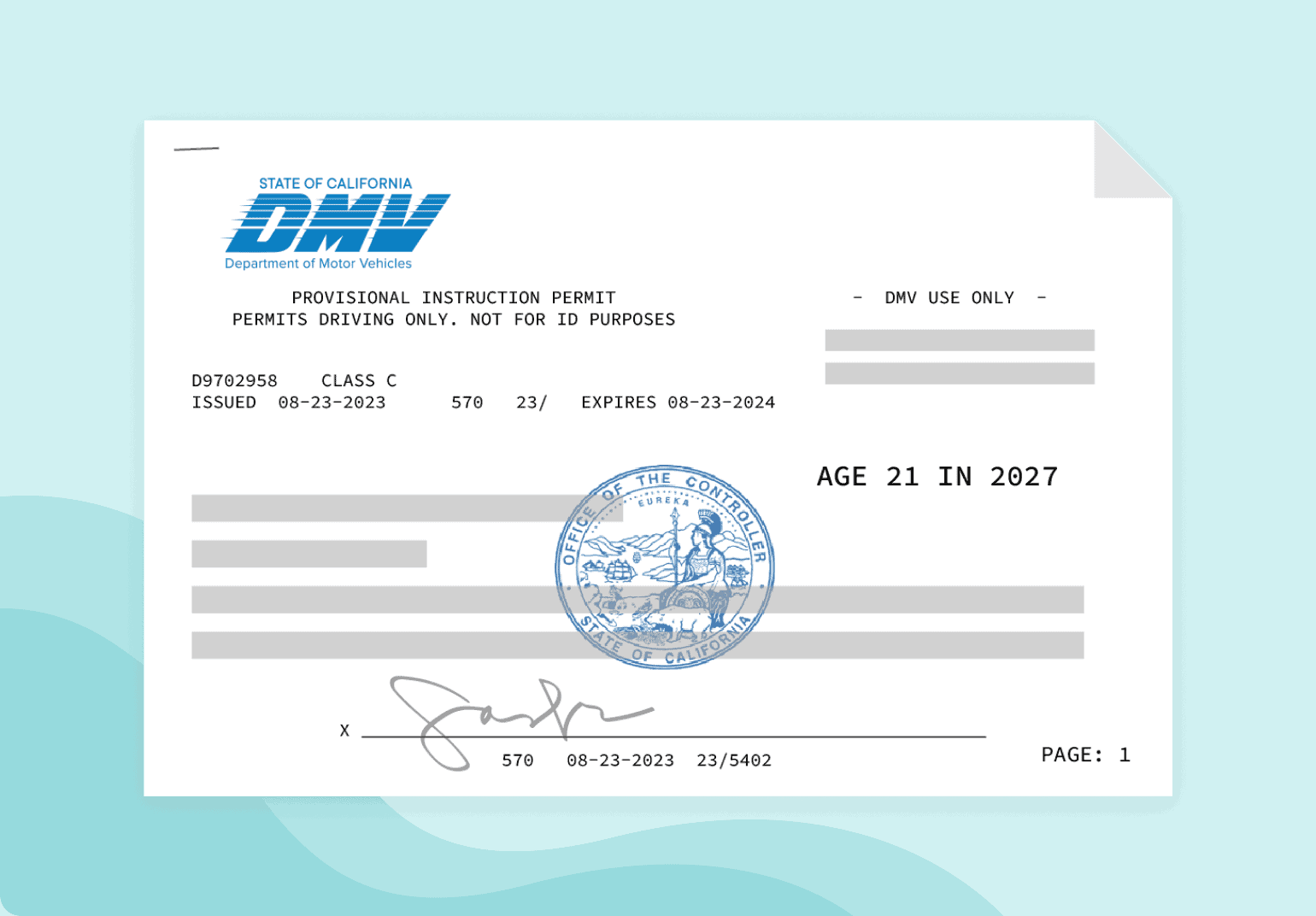
In California, when most people refer to a “permit,” they are talking about a learner’s permit (also known as an instruction permit). This permit allows individuals to drive a motor vehicle when accompanied by a licensed driver who is at least 18 years old and holds a valid California driver’s license. The supervising driver must also be seated close enough to take control of the vehicle if necessary. This permit is typically the first step for anyone applying for an original California driver’s license, especially for new residents or teenagers.
It’s important to differentiate this from other types of “permits” that might exist in the travel context, such as special permits for accessing certain wilderness areas or event permits. While those are also relevant for specific travel plans, the learner’s permit is fundamental for personal mobility on public roads. For international visitors, a valid foreign driver’s license can generally be used for up to one year in California. However, if you plan to stay longer or wish to obtain a California license, the learner’s permit process is where you begin.
The Essential Steps: Your Guide to Obtaining a California Learner’s Permit
The process for obtaining a learner’s permit in California is managed by the California Department of Motor Vehicles, commonly known as the DMV. While it might seem daunting, breaking it down into manageable steps makes it straightforward.
Application Process: Getting Started with the DMV
Your journey begins with an application. It is highly recommended to schedule an appointment with the DMV online before visiting. Walk-ins are accepted, but wait times can be exceptionally long, potentially eating into precious vacation or moving time.
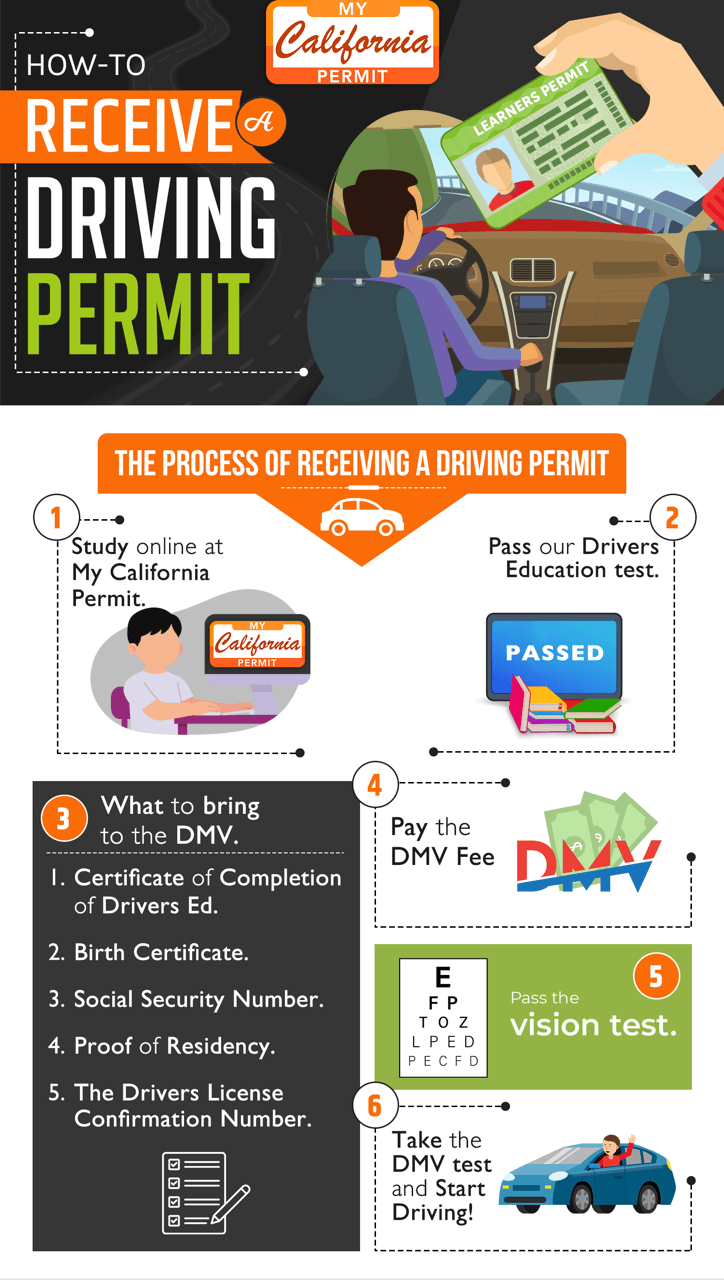
- Complete the Driver’s License Application Form (DL 44): This form can be filled out online in advance at the DMV website, which can save time during your visit. You’ll need to provide personal information, including your full name, date of birth, Social Security Number (SSN) if you have one, and residency details.
- Pay the Application Fee: There is a non-refundable application fee that covers the cost of the permit and subsequent driving tests. Check the current fee schedule on the DMV website, as it can change.
- Provide Proof of Identity and Residency: This is a crucial step. You’ll need to present various documents to establish your identity, date of birth, legal presence, and California residency. For a REAL ID compliant permit (which is recommended for future air travel within the U.S.), you’ll need one document proving identity (e.g., U.S. birth certificate, valid U.S. passport, foreign passport with a valid I-94), one document proving your Social Security Number (e.g., SSN card, W-2), and two documents proving California residency (e.g., utility bills, rental agreement, bank statements). More details on required documents will be covered in a later section.
The Knowledge Test: What to Expect
Once your application and documents are processed, you’ll move on to the written knowledge test. This test assesses your understanding of California’s traffic laws and road signs.
- Format: The test consists of multiple-choice questions. For applicants 18 years and older, you’ll answer 36 questions and must get at least 30 correct (an 83% pass rate). For applicants under 18, there are 46 questions, and you must get at least 38 correct.
- Language: The test is available in multiple languages. If English is not your first language, you can request the test in another language.
- No Electronic Devices: You are not allowed to use electronic devices, including phones, during the test. All answers must come from your own knowledge.
Vision Screening: A Clear View Ahead
A vision test is mandatory to ensure you meet the minimum vision requirements for safe driving. This is a simple test conducted at the DMV counter. You’ll be asked to read letters and numbers on an eye chart. If you wear corrective lenses (glasses or contact lenses), be sure to wear them for the test. If you pass with corrective lenses, this will be noted on your permit and future license, meaning you must always wear them while driving.
Fingerprinting and Photo: Personalizing Your Permit
After successfully passing the knowledge and vision tests, and having your documents verified, the final administrative steps involve capturing your biometric data.
- Thumbprint: You will provide a thumbprint. This is a standard security measure for identification purposes.
- Photo: A photograph will be taken for your permit. This image will also be used for your eventual driver’s license, so try to look your best!
Once these steps are completed, and the fee is paid, you will typically be issued a temporary permit on the spot. The official, card-style permit will then be mailed to you within a few weeks.
Preparing for Your Journey: Documents, Tests, and Appointments
Thorough preparation is key to a smooth and successful visit to the DMV. Rushing or arriving unprepared can lead to multiple trips, wasted time, and unnecessary frustration.
Gathering Required Documents: Your Essential Checklist
The specific documents you’ll need depend on whether you’re applying for a standard or a REAL ID compliant permit. Given the increasing importance of REAL ID for domestic air travel, it’s generally advisable to aim for the REAL ID compliant version.
Here’s a general checklist, but always refer to the official DMV website for the most up-to-date and specific requirements:
- Proof of Identity/Legal Presence:
- U.S. Birth Certificate (original or certified copy)
- U.S. Passport or Passport Card
- Foreign Passport with a valid U.S. visa and an approved I-94 form
- Permanent Resident Card (Green Card)
- Certificate of Naturalization
- (For minors) Proof of enrollment in driver education/training programs.
- Proof of Social Security Number (SSN):
- Social Security Card
- W-2 Form or pay stub with full SSN
- Proof of California Residency (Two different documents for REAL ID):
- Utility bills (electricity, gas, water, cell phone)
- Rental agreement or lease
- Mortgage statements
- Bank statements
- Insurance documents (car, health)
- Tax returns
- School documents
- Application Fee: Be prepared to pay the fee with cash, check, debit card, or money order.
Pro-Tip: Make photocopies of all your documents, but bring the originals for verification. Ensure all names on your documents match perfectly. If there are discrepancies (e.g., due to marriage), bring additional documents like a marriage certificate or court order to explain the name change.
Studying for Success: Mastering the California Driver Handbook
The single most important resource for preparing for your knowledge test is the official California Driver Handbook. This comprehensive guide contains all the information you need to pass the test and become a safe driver in California.
- Availability: The handbook is available for free download on the DMV website in English and several other languages. You can also pick up a physical copy at any DMV office.
- Key Topics: Focus on chapters covering traffic laws, road signs, safe driving practices, drug and alcohol laws, and special situations (e.g., driving in fog, emergency vehicles). Pay close attention to sections on right-of-way rules, speed limits, and pedestrian safety.
- Practice Tests: Many online resources offer practice tests that mimic the format and content of the actual DMV exam. Utilizing these can significantly boost your confidence and help you identify areas where you need more study.
Devoting dedicated time to studying the handbook will not only help you pass the test but also equip you with crucial knowledge for navigating California’s diverse driving environments, from busy city streets to winding mountain roads.
Scheduling Your Visit: Tips for a Smooth DMV Experience
As mentioned, appointments are your best friend.
- Online Appointment System: Use the DMV website to schedule an appointment for “Original Driver’s License/ID Card.” This allows you to pick a specific date and time, significantly reducing your wait.
- Best Times to Visit: If an appointment isn’t possible, early mornings (right when the DMV opens) or mid-week (Tuesday, Wednesday, Thursday) are generally less crowded than Mondays or Fridays. Avoid lunch hours if possible.
- Be Prepared for the Wait: Even with an appointment, be prepared for some waiting time. Bring a book, a fully charged phone, or anything to keep you occupied.
- Review Your Application: Double-check that your online application (if you filled one out) is complete and accurate before you arrive. This minimizes potential delays at the counter.
Beyond the Permit: Exploring California with Confidence
Obtaining your learner’s permit is a fantastic achievement, but it’s just the beginning of your journey towards independent driving in California. The next steps involve practice and eventually, securing your full driver’s license, which will truly unlock the Golden State for you.
Practice Makes Perfect: Gaining On-Road Experience
With your learner’s permit in hand, you are now legally allowed to drive, but only under specific conditions. Remember, you must always be accompanied by a licensed driver who is at least 18 years old and holds a valid California driver’s license. This supervising driver must be in the passenger seat, ready to take control if necessary.
- Supervised Driving: Make the most of this supervised practice time. Drive in various conditions: city streets, highways, during the day and at night, and in different weather conditions (though heavy rain or fog might be best avoided for initial learners).
- Diverse Environments: California offers an incredible array of driving challenges. Practice navigating bustling urban areas like downtown San Diego or Hollywood, experiencing freeway driving, and tackling scenic routes that may have sharp turns or steep inclines.
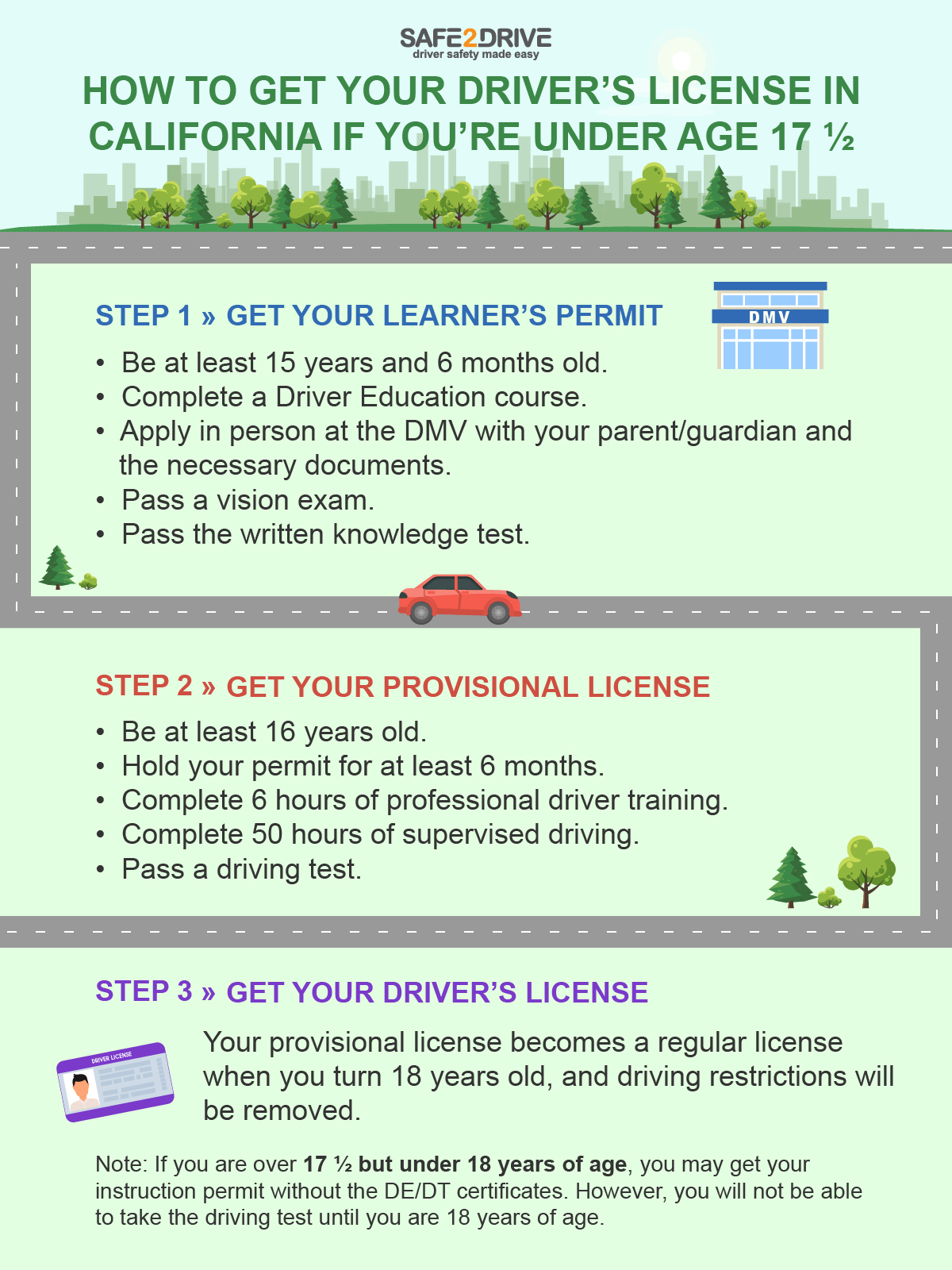
- Driver Education/Training (for minors): If you are under 18, completing a driver education course and six hours of professional driver training is a mandatory prerequisite before you can take your driving test. This structured learning is invaluable.
The goal of this practice period is to build confidence, hone your driving skills, and internalize California’s traffic laws, ensuring you become a safe and responsible driver.
From Permit to License: Your Next Steps
Once you’ve gained sufficient driving experience and met any age or holding period requirements (for minors, typically a minimum of six months with the permit), you can schedule your driving test (also known as the Behind-the-Wheel test).
- Scheduling the Driving Test: Like your permit application, schedule this test online at the DMV website.
- Vehicle Requirements: You must provide a vehicle for the test that is safe, properly registered, and insured. The vehicle will be inspected by the DMV examiner before the test begins.
- The Test Itself: The driving test evaluates your ability to safely operate a vehicle and follow traffic laws. An examiner will ride with you, giving directions and observing your driving habits. Common mistakes include unsafe lane changes, failure to check mirrors, rolling through stop signs, or hitting curbs.
- Passing the Test: If you pass, you’ll be issued a temporary driver’s license on the spot. Your permanent license will be mailed to you within a few weeks. If you don’t pass, you’ll need to reschedule and pay a retest fee.
Exploring California with Your Newfound Freedom
With a full California driver’s license, the entire state truly opens up. Your travel and lifestyle options expand exponentially, allowing you to curate experiences that perfectly match your desires.
- Unrestricted Travel: Imagine planning a multi-day road trip from San Francisco down to San Diego, stopping at picturesque coastal towns, sampling local cuisine in various cities, and experiencing the distinct vibes of Orange County.
- Diverse Accommodation Choices: You’re no longer limited to accommodations near public transport. You can book a secluded villa in Laguna Beach, a charming apartment in Santa Monica with ocean views, or a luxurious resort near Lake Tahoe for a winter sports getaway. The ability to drive gives you the flexibility to compare booking options and choose based on amenities, reviews, and your preferred travel style, whether it’s for a long-term stay or a quick weekend escape.
- Access to Landmarks and Attractions: Drive to the base of the Hollywood Sign, wander through the Santa Monica Pier, explore the hidden beaches of Malibu, or embark on an adventure to Joshua Tree National Park. Famous places and historical sites across the state become easily reachable destinations.
- Enhanced Lifestyle: For residents, a driver’s license signifies complete independence. It impacts everything from career opportunities to social engagements and family trips. It enables a lifestyle where exploring new destinations, discovering local activities, and enjoying the vast recreational opportunities of California are simply part of daily life.
The journey to getting your permit in California is a foundational step. It’s an investment in your independence, your ability to explore, and your potential to fully embrace the vibrant lifestyle that the Golden State offers. With careful preparation and a commitment to safe driving practices, you’ll soon be navigating California’s roads with confidence, ready for whatever adventure awaits around the next bend.