
Colorado, a state renowned for its breathtaking natural beauty, vibrant cities, and diverse lifestyle, has long captured the imagination of travelers and those seeking a permanent slice of its majestic landscape. From the snow-capped peaks of the Rocky Mountains to the bustling urban core of Denver, Colorado offers an unparalleled blend of outdoor adventure, cultural richness, and economic opportunity. For many, the allure of Colorado extends beyond its tourism appeal, making it a highly desirable place to live, work, and invest. This inherent demand fuels a robust real estate market, presenting an exciting career path for those passionate about connecting people with their ideal properties and lifestyles.
Becoming a licensed real estate agent in Colorado is not just about facilitating property transactions; it’s about becoming a trusted advisor in a journey that often intertwines with significant life decisions, travel aspirations, and the pursuit of a desired lifestyle. Whether you dream of helping families find their perfect home in the suburbs of Colorado Springs, assisting investors with lucrative vacation rental properties in Vail or Aspen, or guiding individuals to explore the unique urban living options in Boulder, a real estate license opens doors to a dynamic and rewarding profession. This comprehensive guide will walk you through every step of the process, from understanding the initial requirements to excelling in your new career, all while highlighting how a real estate career in Colorado is intrinsically linked to the very essence of travel, accommodation, and diverse lifestyles that define this remarkable state.
Why Colorado’s Real Estate Market is a Gateway to Lifestyle and Opportunity
Colorado’s real estate market is unique, driven by a powerful combination of factors that make it a perpetually attractive location for both residents and investors. Its appeal as a top travel destination naturally translates into a strong demand for various types of accommodation, from luxurious mountain resorts to charming city apartments and sprawling suburban homes. Understanding these dynamics is crucial for aspiring real estate professionals.
The Allure of Colorado Living
The state’s stunning natural landscapes are a primary draw. The Rocky Mountains provide year-round recreational opportunities, from skiing and snowboarding in Breckenridge to hiking and mountain biking near Estes Park. This outdoor-centric lifestyle is a significant selling point for many buyers. Families seeking adventure, retirees looking for a vibrant community, or remote workers desiring a scenic backdrop all contribute to a diverse buyer pool. As an agent, your knowledge of local attractions, parks, and recreational guides will be invaluable in helping clients envision their life in a new home.
Furthermore, Colorado’s major cities, such as Denver, Boulder, and Fort Collins, boast thriving economies, innovative industries, and rich cultural scenes. Denver is a hub for technology, aerospace, and healthcare, attracting professionals from across the globe. Boulder is renowned for its entrepreneurial spirit and progressive lifestyle. These urban centers offer diverse accommodation options, from sleek downtown condos to historic homes, catering to varied lifestyle preferences and budgets. Agents who understand the nuances of urban living, including proximity to cultural landmarks, culinary hotspots, and transportation, can better serve their clients.
Investment Potential and Tourism
Beyond primary residences, Colorado’s robust tourism industry fuels a significant market for investment properties, particularly vacation rentals. Popular destinations like Aspen, Vail, and Breckenridge see a constant influx of visitors, many of whom prefer the unique experience of staying in a private villa, apartment, or resort-style suite over traditional hotels. Real estate professionals in these areas often specialize in helping clients identify properties with strong rental income potential, advising on amenities that attract tourists, and understanding the local regulations for short-term accommodation.
This also extends to commercial real estate, where demand for hotel development, boutique resorts, and specialized tourism accommodations remains high in key areas. For an agent, this means opportunities to not only facilitate residential sales but also to delve into commercial ventures, connecting investors with properties that align with Colorado’s booming tourism sector. The ability to compare different accommodation types and understand their market value is a key skill in this dynamic environment.
The Path to Becoming a Licensed Colorado Real Estate Broker
Obtaining your real estate license in Colorado involves a structured process designed to ensure that all licensees are knowledgeable, ethical, and prepared to serve the public. Unlike some states that have separate salesperson and broker licenses, Colorado issues only a “Broker” license, which encompasses the responsibilities of both. This streamlines the process and immediately grants you broader capabilities.
Step 1: Meet the Eligibility Requirements
Before embarking on your educational journey, ensure you meet the basic eligibility criteria set by the Colorado Real Estate Commission. These are standard for most states but worth confirming:
- Age: You must be at least 18 years old.
- Education: You must possess a high school diploma or its equivalent (GED).
- Legal Presence: You must be lawfully present in the United States.
- Honesty and Integrity: You must demonstrate honesty, trustworthiness, and good moral character. This will be assessed through a background check.
A criminal background check is a mandatory part of the application process. Disqualifying offenses typically include felonies, certain misdemeanors, or any convictions that directly relate to your ability to practice real estate honestly and competently. While a past issue doesn’t automatically disqualify you, it’s essential to be transparent and provide all requested documentation to the Colorado Real Estate Commission for review.
Step 2: Complete the Required Pre-Licensing Education
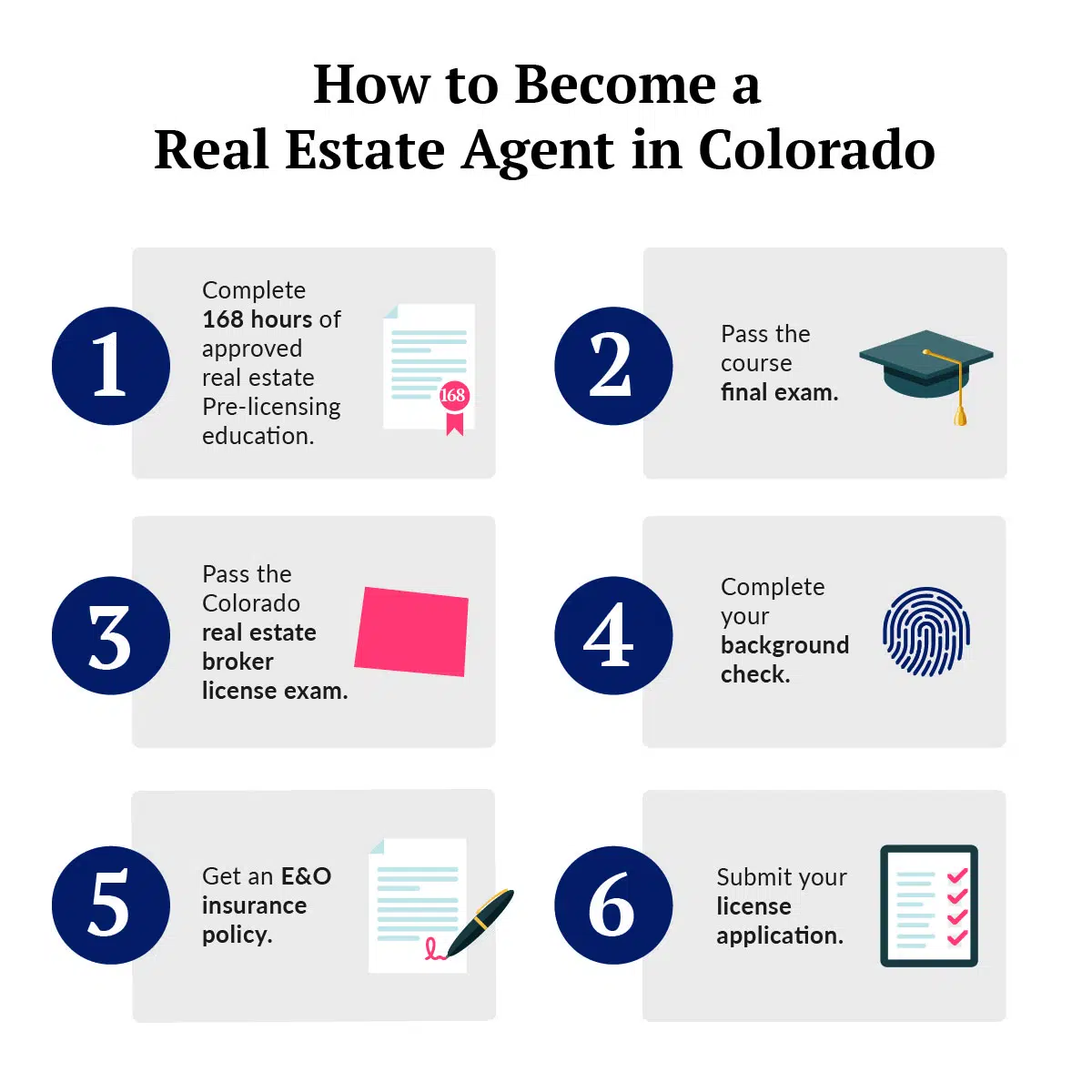
This is arguably the most substantial step. Colorado requires a total of 168 hours of approved pre-licensing education. This curriculum is designed to provide you with a comprehensive understanding of real estate principles, practices, laws, and ethics. The 168 hours are broken down into specific courses:
- Real Estate Principles & Practices (48 hours): This foundational course covers the basics of real estate, including property ownership, types of estates, agency relationships, contracts, and property valuation. It’s the bedrock of your understanding of how real estate transactions work.
- Colorado Real Estate Law & Contracts (48 hours): This section is crucial, as it dives deep into the specific laws and regulations governing real estate in Colorado. You’ll learn about the Colorado Real Estate Commission, license law, disclosures, and the intricacies of Colorado-approved contracts.
- Trust Accounts & Record Keeping (8 hours): Understanding how to manage client funds and maintain proper records is paramount for ethical practice and avoiding legal pitfalls.
- Current Legal Issues (8 hours): This course keeps you abreast of recent changes and evolving legal landscapes in the real estate industry, ensuring your knowledge is current.
- Closings (24 hours): Mastering the closing process is essential. This segment covers all aspects of bringing a transaction to completion, including settlement statements, title insurance, and deed preparation.
- Real Estate Finance (24 hours): Understanding different financing options, mortgage types, and the role of lenders is vital for advising clients effectively on their purchasing power and investment strategies.
- Practical Applications (8 hours of electives/review): Some courses integrate practical scenarios and review sessions to solidify your learning.
You can complete these hours through various approved real estate schools, which offer online courses, in-person classes, or a hybrid format. Online learning provides flexibility, allowing you to study at your own pace, which can be ideal for those balancing other commitments. When choosing a school, consider factors like instructor experience, course materials, student support, and pass rates for the state exam. A good school will not only teach you the material but also prepare you for the specific format and types of questions you’ll encounter on the state exam.
Step 3: Pass the Colorado Real Estate Broker Exam
Once you’ve completed all 168 hours of pre-licensing education, the next major hurdle is passing the Colorado Real Estate Broker Exam. This exam is administered by a third-party testing service, usually PSI.

The exam consists of two parts:
- National Portion: This section covers general real estate principles and practices that are common across most states. It tests your knowledge on topics like property ownership, contracts, agency, financing, and valuation.
- State Portion: This section focuses specifically on Colorado real estate laws, rules, and regulations. It’s crucial to have a strong grasp of the [Colorado](https://lifeoutofthebox.com/colorado]-specific material from your pre-licensing coursework.
You must pass both portions of the exam. If you pass one part but fail the other, you typically only need to retake the failed portion within a specified timeframe. The exam is challenging, so thorough preparation is key. Many pre-licensing schools offer exam prep courses, practice tests, and study guides, which are highly recommended. Focus on understanding concepts rather than rote memorization, and practice applying your knowledge to scenario-based questions.
Step 4: Complete Your Background Check and Apply for Your License
After successfully passing both parts of the exam, you’ll need to complete a fingerprint and background check. This usually involves scheduling an appointment with an approved vendor for fingerprinting, which will then be submitted to the Colorado Bureau of Investigation (CBI) and the Federal Bureau of Investigation (FBI).
Once your background check is clear, you can submit your official license application to the Colorado Real Estate Commission. The application will require proof of your pre-licensing education, your exam score reports, and details from your background check. Be meticulous in filling out the application to avoid delays. The commission will review your application and, upon approval, issue your Colorado Real Estate Broker license.
Step 5: Find a Sponsoring Broker
Unlike some other professions, newly licensed real estate brokers in Colorado cannot operate independently. You must “hang your license” with an actively licensed managing broker. This means you will work under the supervision and guidance of an experienced broker who is responsible for your compliance with real estate laws and ethical practices.
Choosing the right sponsoring broker is a critical decision that can significantly impact your career trajectory. Consider factors such as:
- Training and Mentorship: Does the brokerage offer comprehensive training programs, mentorship opportunities, and ongoing professional development? This is especially important for new agents.
- Company Culture: Does the brokerage’s culture align with your values and work style? Some are highly competitive, while others foster a more collaborative environment.
- Support and Resources: What kind of administrative support, marketing tools, technology, and office amenities do they provide? Access to good CRM software, lead generation systems, and professional photography can make a huge difference.
- Commission Splits: Understand the financial arrangement. How are commissions split between you and the brokerage? This can vary widely.
- Specialization: Does the brokerage specialize in areas that interest you, such as luxury homes, commercial properties, land, or vacation rentals in popular tourist destinations like Aspen or Breckenridge?
- Location: While much real estate work can be done remotely, having access to an office in a key market like Denver or Colorado Springs can be beneficial for client meetings and team collaboration.
Interview several brokers to find the best fit. This relationship is foundational to your success in the real estate world.
Beyond the License: Building a Thriving Real Estate Career in Colorado
Obtaining your license is just the beginning. The real journey lies in building a successful and sustainable career. The dynamic nature of Colorado’s market, intertwined with its lifestyle and tourism appeal, offers numerous avenues for specialization and growth.
Continuous Learning and Specialization
The real estate industry is constantly evolving, with new technologies, market trends, and legal updates. Colorado requires licensed brokers to complete continuing education (CE) hours to renew their licenses, ensuring you stay current and competent. Beyond mandatory CE, proactively seeking out opportunities for specialized training can set you apart.
Consider specializing in niches that align with Colorado’s unique characteristics:
- Luxury Real Estate: With destinations like Aspen and Vail attracting high-net-worth individuals, specializing in luxury homes and estates can be highly rewarding. This often involves understanding the nuances of exclusive communities, high-end amenities, and serving clients with sophisticated lifestyle needs, perhaps even those seeking a private resort-like experience.
- Investment Properties & Vacation Rentals: Given Colorado’s strong tourism sector, helping clients acquire properties for short-term rentals (like Airbnb or other booking platforms) can be a lucrative niche. This requires knowledge of local zoning laws, property management, and market analysis for rental income potential.
- Relocation Services: Many people move to Colorado from other states or countries, drawn by its lifestyle and job opportunities. Agents specializing in relocation can assist clients not just with finding a home but also with understanding local culture, school districts, and community resources.
- Land and Ranch Sales: Outside the metropolitan areas, Colorado’s vast landscapes offer opportunities in land, ranch, and agricultural property sales, appealing to buyers looking for a connection to nature and a distinct lifestyle.
- Commercial Real Estate: If you’re passionate about business and development, commercial real estate can involve transactions related to retail spaces, office buildings, industrial properties, or even the sale of hotels and resorts.
Networking and Building Your Brand
Success in real estate is heavily dependent on your network. Attend local real estate association meetings, community events, and industry conferences. Connect with lenders, inspectors, appraisers, and other professionals who can be valuable referral sources. Building relationships within the local community, whether it’s in Denver, Boulder, or Grand Junction, will be crucial.
Develop a strong personal brand that highlights your expertise and personality. In a state as visually stunning as Colorado, leverage high-quality photography and virtual tours to showcase properties. Create compelling online content that not only promotes your listings but also offers valuable insights into Colorado living, highlighting local attractions, unique neighborhood features, and lifestyle opportunities. Your online presence can serve as a guide to both properties and the broader Colorado experience.

Embracing Technology and Marketing
The modern real estate landscape is highly digital. Utilize Customer Relationship Management (CRM) systems to manage leads and client communications effectively. Master online listing platforms and social media to market properties and connect with potential buyers and sellers. Virtual tours, drone photography showcasing proximity to natural landmarks or ski resorts, and interactive floor plans are no longer luxuries but expectations. Understanding how to leverage these tools to present homes as ultimate accommodation experiences will be a significant asset.
Ultimately, getting your real estate license in Colorado is an investment in a career that promises both financial reward and immense personal satisfaction. It’s a journey that allows you to contribute to the growth of vibrant communities, help individuals achieve their dreams of homeownership, and play a vital role in connecting people with the unique lifestyle that only Colorado can offer. Whether it’s a bustling downtown apartment, a peaceful mountain retreat, or a long-term stay accommodation for a growing family, you’ll be an indispensable guide in the diverse and exciting real estate landscape of the Centennial State. Your expertise will become a local guide to homes, neighborhoods, and the rich tapestry of experiences that make Colorado a world-class destination for both travel and permanent residence.