
For many, the idea of a career that combines independence, flexibility, and the opportunity to truly shape one’s lifestyle is incredibly appealing. If you’ve ever considered a profession that allows you to explore diverse locales, engage with vibrant communities, and help individuals find their dream homes or lucrative investment properties, then a real estate license in Texas might just be your next great adventure. The Lone Star State, with its expansive landscapes, booming cities, and rich cultural tapestry, presents an unparalleled environment for real estate professionals. Whether you dream of helping families settle into charming suburban homes, guiding investors through the thriving commercial markets of major metropolises, or assisting vacationers in finding their perfect seasonal retreat, obtaining your real estate license in Texas is the first step toward a fulfilling and dynamic career.
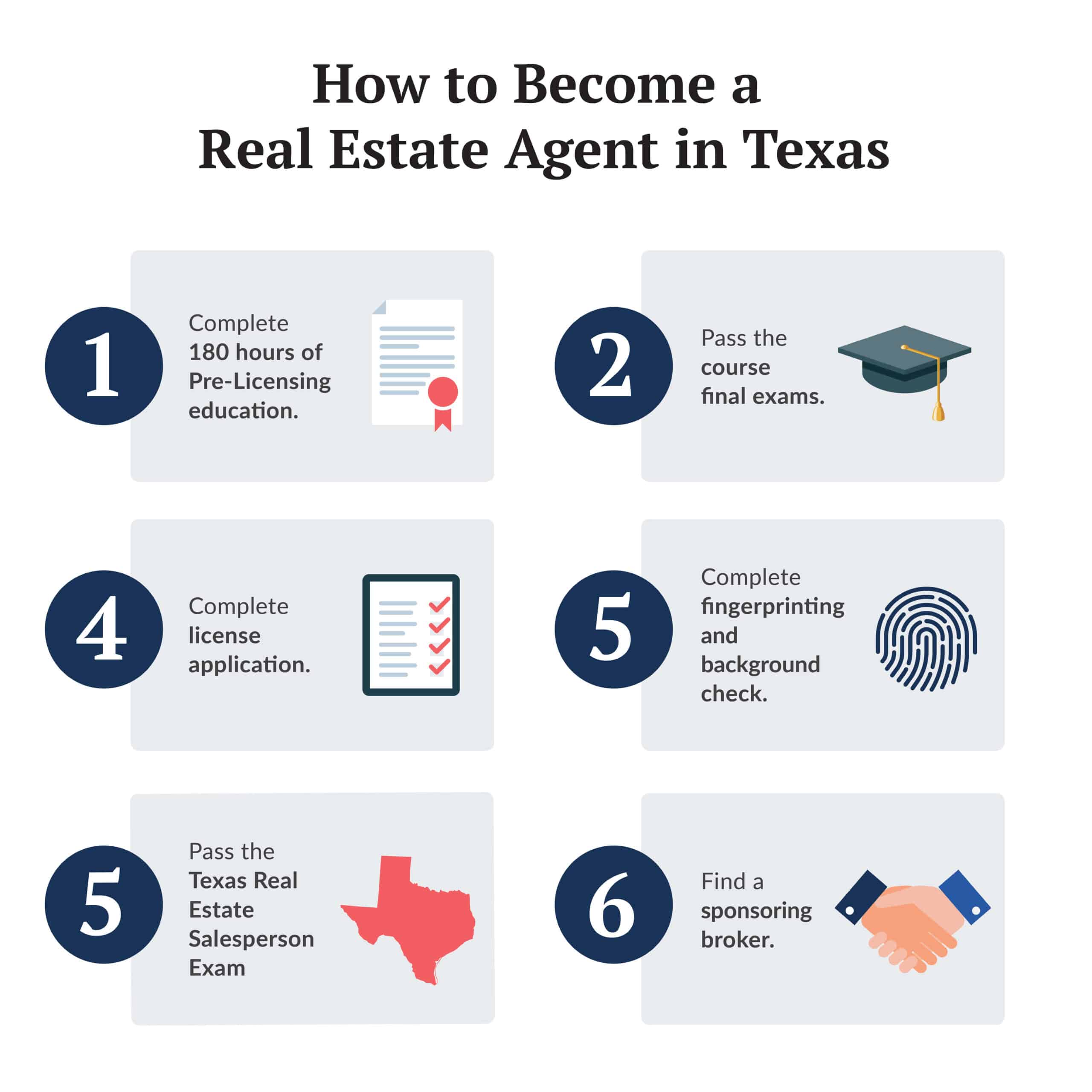
This guide will walk you through every essential step of the licensing process, offering insights tailored to help you understand not just the ‘how-to,’ but also the incredible lifestyle and travel opportunities that this path can unlock.
Embarking on Your Real Estate Journey in the Lone Star State
Imagine a career where your office could be a charming bungalow in Austin, a luxury high-rise in Dallas, a historic property in San Antonio, or even a beachfront condo on South Padre Island. Real estate in Texas offers this kind of diversity, merging the professional with the personal, and often blurring the lines between work and an enriching lifestyle.
Why Texas? A State of Opportunity and Diverse Lifestyles
Texas isn’t just a state; it’s a collection of distinct regions, each with its unique charm and real estate demands. From the bustling urban cores of Houston and Fort Worth, offering world-class dining, arts, and corporate opportunities, to the serene beauty of the Hill Country with its wineries and natural attractions, and the coastal allure of Corpus Christi, the real estate market here is as varied as its geography.
For those with a passion for travel, a real estate license in Texas can be a gateway to exploring every corner of this magnificent state. Understanding local markets means spending time in them – experiencing the unique culture of El Paso, discovering hidden gems in small towns, or even specializing in vacation rentals in popular tourist destinations. This career path isn’t just about selling properties; it’s about becoming an expert on local culture, amenities, and what makes each community special, a skill invaluable to any travel enthusiast or lifestyle blogger.
Beyond exploration, a real estate career offers the flexibility to design a life that aligns with your passions. Imagine the freedom to schedule your work around travel plans, to take extended trips, or to live in the locations you love most. It’s a career path that champions independence and allows you to be your own boss, setting your hours and charting your course, much like the independent spirit that drives many to explore new destinations and experiences.
Essential Eligibility Requirements
Before you can dive into the exciting world of Texas real estate, there are a few foundational requirements set by the Texas Real Estate Commission (TREC), the governing body for all real estate activities in the state. These ensure that all licensed professionals meet a basic standard of maturity and integrity.
To be eligible for a real estate salesperson license in Texas, you must:
- Be a United States citizen or a lawfully admitted alien: This is a standard requirement across many professional licenses.
- Be at least 18 years of age: While you might be eligible at 18, many aspiring agents find that gaining some life experience before entering this client-facing profession can be beneficial.
- Be a resident of Texas: You’ll need to establish residency in the state.
- Meet TREC’s qualifications for honesty, trustworthiness, and integrity: This is a critical component. TREC conducts a thorough background check. Any criminal history, particularly involving felonies or crimes of moral turpitude, could impact your eligibility. If you have concerns about your background, it’s highly recommended to submit a “Fitness Determination” form to TREC before investing time and money in the pre-licensing education. This allows TREC to assess your eligibility proactively, potentially saving you from a significant disappointment later.
These initial steps are crucial for laying a strong foundation for your future career. Think of it as the preliminary planning stage for any great journey – ensuring you have the right passport and necessary visas before booking your flight.
Navigating the Pre-Licensing Education and Application Process
Once you’ve confirmed your eligibility, the next phase involves acquiring the specialized knowledge required to competently serve clients in the Texas real estate market. This educational journey is designed to equip you with the legal, ethical, and practical understanding necessary for success.
Understanding Your Educational Commitments
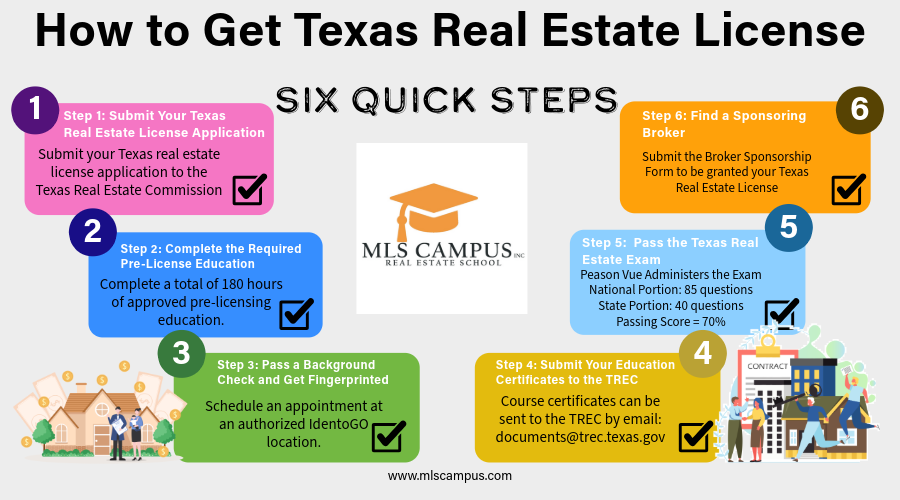
Texas mandates a specific number of pre-licensing education hours to ensure all new agents are well-prepared. This involves completing 180 hours of approved real estate courses. These hours are typically broken down into six 30-hour courses:
- Principles of Real Estate I (30 hours): Covers the basics of real estate law, agency, contracts, and property rights.
- Principles of Real Estate II (30 hours): Continues with topics like financing, valuation, and governmental regulations.
- Law of Agency (30 hours): Focuses on the legal relationships between agents, brokers, and clients, emphasizing fiduciary duties.
- Law of Contracts (30 hours): Dives deep into the intricacies of real estate contracts, from offer to closing.
- Promulgated Contracts Forms (30 hours): Concentrates on the specific contract forms approved and required by TREC for real estate transactions in Texas.
- Real Estate Finance (30 hours): Explores financing options, loan types, and the role of financial institutions in real estate.
These courses can be completed through various approved providers, including traditional classroom settings, online platforms, or hybrid models. The flexibility of online learning, in particular, caters to a lifestyle-focused approach, allowing you to study at your own pace, from anywhere – perhaps even while enjoying a stay at a charming Texas resort or a Houston apartment rental, blending your education with exploration. Choosing a flexible learning path means your journey to a real estate license doesn’t have to interrupt your desire for travel or other life pursuits; it can seamlessly integrate with them.
The TREC Application: Your Gateway
With your pre-licensing education underway or completed, the next critical step is to submit your application to TREC. This formal submission kicks off the official review process and initiates your background check.
- Submit Your Application: The application can be completed online through the TREC website. You’ll need to provide personal information, declare any past criminal history (if applicable), and submit the required application fee.
- Fingerprinting and Background Check: After TREC receives your application and fee, they will send you instructions for fingerprinting. You must get fingerprinted through a specific vendor approved by TREC. These fingerprints are then used for a criminal background check through the FBI and the Texas Department of Public Safety. This step is non-negotiable and essential for verifying your eligibility regarding honesty, trustworthiness, and integrity. It’s crucial to complete this promptly, as processing times can vary.
- Course Completion Certificates: You will need to submit certificates of completion for all 180 hours of pre-licensing education. Many online providers automatically submit these to TREC on your behalf, but always verify this with your chosen school.
Timely completion of these steps is vital. Think of it as securing your accommodation bookings well in advance – prompt action ensures a smooth journey without unexpected delays.
Conquering the Exam and Launching Your Career

After the coursework and application, the final hurdle before licensure is the state exam. This comprehensive test assesses your understanding of all the material you’ve learned.
Preparing for the Texas Real Estate Exam
The Texas Real Estate Salesperson Exam is divided into two parts: a national portion and a state-specific portion.
- National Portion: This section covers general real estate principles, laws, and practices applicable across the United States.
- State Portion: This focuses specifically on Texas real estate laws, rules, and promulgated contract forms.
Both sections are critical, and you must pass both to obtain your license. You will typically have a specific time limit for each section.
Tips for Success:
- Review Course Material Thoroughly: Revisit your textbooks, notes, and any study guides provided by your education provider.
- Practice Exams: Utilize practice exams, often available through your school or third-party providers. These help you familiarize yourself with the format, question types, and time constraints.
- Focus on Weak Areas: Identify subjects where you feel less confident and dedicate extra study time to them.
- Understand Key Terms: Real estate has its own language. A strong grasp of terminology is essential.
Passing the exam is a significant achievement, marking the culmination of your dedicated study. It’s a moment of triumph, much like reaching a renowned landmark after a challenging hike – a rewarding view awaits.
Finding Your Brokerage Home: Sponsorship and Beyond
Once you pass the exam, you’re not quite ready to operate independently. In Texas, all licensed real estate salespersons must be sponsored by a licensed Texas real estate broker. This sponsorship is more than a formality; it’s a mentorship, providing you with essential guidance, support, and access to the resources needed to succeed.
How to Find a Sponsoring Broker:
- Networking: Attend local real estate association meetings, open houses, and career fairs.
- Interviews: Interview with several brokers to find a brokerage that aligns with your professional goals, work style, and ethical values. Consider their training programs, commission splits, office culture, and whether they specialize in areas that interest you (e.g., residential, commercial, luxury, vacation properties).
- Consider Your Niche: If your lifestyle aspirations include focusing on destination properties in places like the Gulf Coast or unique accommodation options, look for a broker with experience in those specific markets.
Once you secure a sponsoring broker, they will submit a sponsorship form to TREC. Upon approval, your license will be officially issued and active. This step transforms your hard work into a tangible career, ready for launch.
Sustaining Your Success: Continuing Education and Professional Growth
Obtaining your license is just the beginning. The real estate landscape is constantly evolving, requiring continuous learning and adaptation to maintain relevance and success.
Post-Licensing and Ongoing Requirements
Texas has specific requirements for continuing education to ensure agents remain knowledgeable and compliant.
- Sales Apprentice Education (SAE): If you obtained your license on or after January 1, 2016, you must complete an additional 90 hours of SAE courses during your first two-year license period. These courses are designed to build upon your pre-licensing education and provide more practical skills. In addition to the SAE, you will also need to complete 8 hours of Legal Update I and II courses. In total, you’ll need 270 hours of qualifying real estate courses and 8 hours of TREC Legal Update I & II to renew your license for the first time.
- Continuing Education (CE): After your first renewal, all active real estate license holders must complete 18 hours of approved continuing education every two years to renew their license. This includes 4 hours of Legal Update I, 4 hours of Legal Update II, and 10 hours of elective CE courses. This ongoing education is crucial for staying current with legal changes, market trends, and best practices.
These requirements ensure that Texas real estate professionals are always equipped with the most up-to-date information, providing a high level of service to clients, whether they are buying a new home or investing in a vacation rental.
The Financial Investment: What to Expect
Pursuing a real estate license involves several costs. While it’s an investment in your future, it’s wise to budget accordingly.
Typical expenses include:
- Pre-Licensing Education: Costs can range from $300 to $1,000+, depending on the provider and format (online vs. classroom).
- TREC Application Fee: Around $50 to $100.
- Fingerprinting Fee: Approximately $40 to $50.
- Exam Fee: Each attempt typically costs around $50 to $75.
- Post-Licensing Education (SAE) / Continuing Education (CE): These will incur additional costs over time.
- Brokerage Fees: Once licensed, you might encounter fees associated with your chosen brokerage, such as desk fees, E&O insurance, and local association dues.
While the initial investment is tangible, the potential returns in terms of career flexibility, financial independence, and lifestyle alignment make it a worthwhile pursuit for many.
Obtaining a real estate license in Texas is a structured process that demands dedication and attention to detail. However, for those passionate about people, property, and the diverse opportunities that the Lone Star State offers, it is a journey well worth taking. It’s a path that can lead to not just a successful career, but a lifestyle rich with exploration, personal growth, and the freedom to truly make your mark. Imagine connecting clients with their perfect holiday home, managing charming boutique hotels as an investment, or even advising on prime locations for new tourism ventures. The possibilities, much like the vast expanse of Texas itself, are endless.
LifeOutOfTheBox is a participant in the Amazon Services LLC Associates Program, an affiliate advertising program designed to provide a means for sites to earn advertising fees by advertising and linking to Amazon.com. Amazon, the Amazon logo, AmazonSupply, and the AmazonSupply logo are trademarks of Amazon.com, Inc. or its affiliates. As an Amazon Associate we earn affiliate commissions from qualifying purchases.