
Florida’s booming construction industry offers a wealth of opportunities for skilled professionals. For those aspiring to lead construction projects, obtaining a general contractor license is a crucial step. This license signifies not only a commitment to professional standards but also unlocks the ability to undertake a wider range of projects and establish a reputable business. This guide will navigate you through the comprehensive process of becoming a licensed general contractor in the Sunshine State, ensuring you are well-equipped to embark on your construction career.
Understanding the Licensing Landscape
Before diving into the specifics of application, it’s essential to grasp the different types of contractor licenses available in Florida and the governing body responsible for their issuance. The Florida Department of Business and Professional Regulation (DBPR), specifically the Construction Industry Licensing Board (CILB), oversees the licensing of all contractors within the state. They ensure that individuals possess the necessary knowledge, skills, and experience to protect the public’s interest.
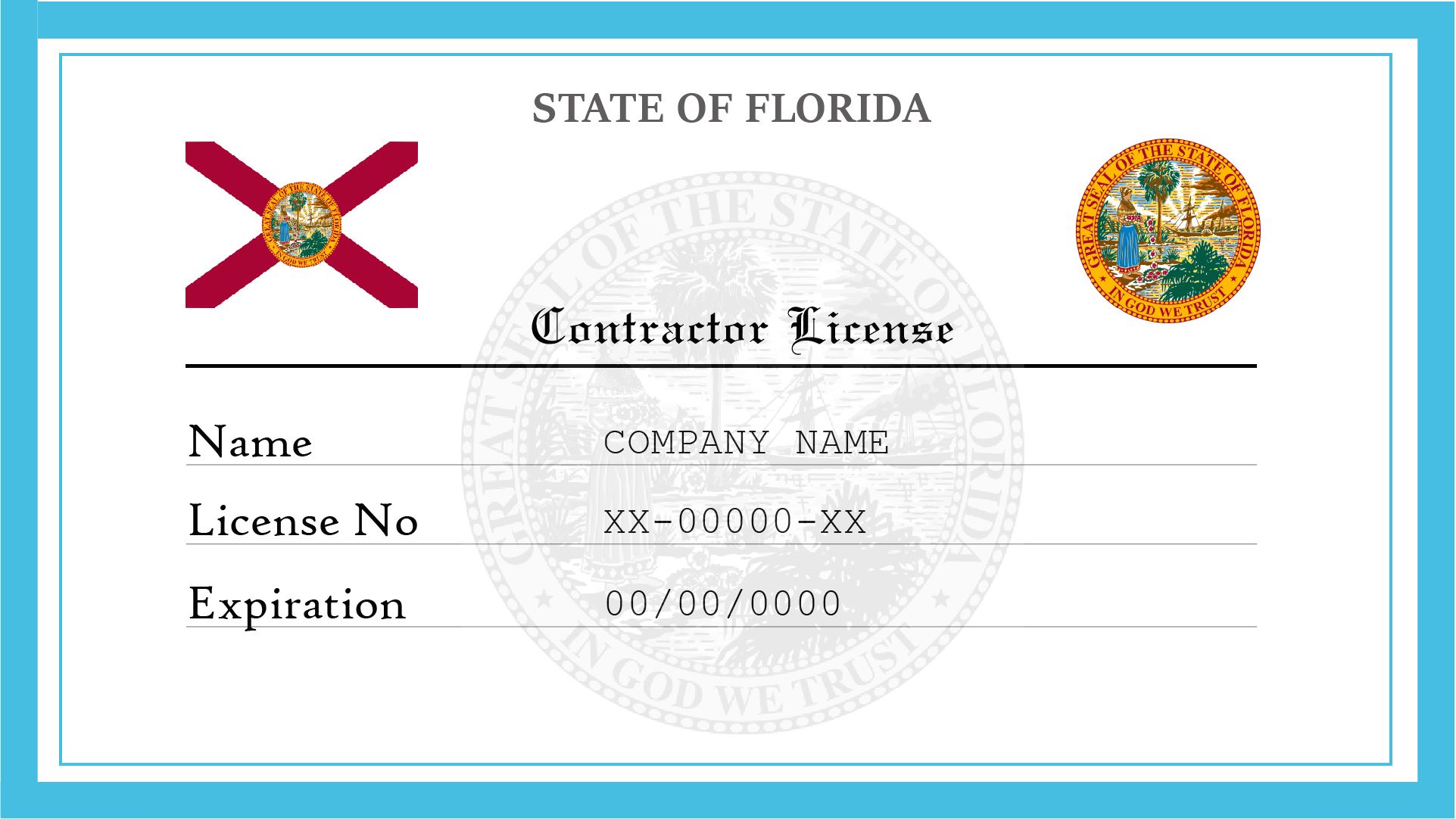
Types of Contractor Licenses
In Florida, contractor licenses are categorized based on the scope of work an individual is qualified to perform. The most sought-after for aspiring leaders is the General Contractor license. However, it’s important to be aware of other classifications:
-
Certified Contractor: Certified contractors are licensed to practice in any county or municipality in Florida. This is the highest level of licensure and requires passing a statewide examination covering technical and business knowledge. There are several types of certified licenses, including:
- General Contractor (GC): This license allows the holder to construct or supervise the construction, repair, or improvement of any structure, including those that are more than two stories in height, regardless of whether they are of the usual frame or fabricated construction, and to do work on any building or structure. This encompasses all phases of construction, from initial site preparation to final completion, including structural elements, finishes, and systems.
- Building Contractor (BC): This license permits the holder to construct or supervise the construction, repair, or improvement of any structure that is two stories or less in height, of any type of construction. This is a more limited scope than a General Contractor license.
- Residential Contractor (RC): This license allows the holder to construct or supervise the construction, repair, or improvement of residential buildings, two stories or less in height, of any type of construction. This is specifically for single-family homes, townhouses, and similar residential structures.
- Specialty Contractor: This category covers specific trades such as air conditioning, electrical, plumbing, roofing, and more. These contractors are licensed to perform work only within their specialized field.
-
Registered Contractor: Registered contractors are licensed by local jurisdictions (cities or counties) and are generally permitted to practice only within that specific geographical area. To become a registered contractor, an individual must meet the qualifications of the local examining board. While convenient for local work, this type of license limits mobility across the state.
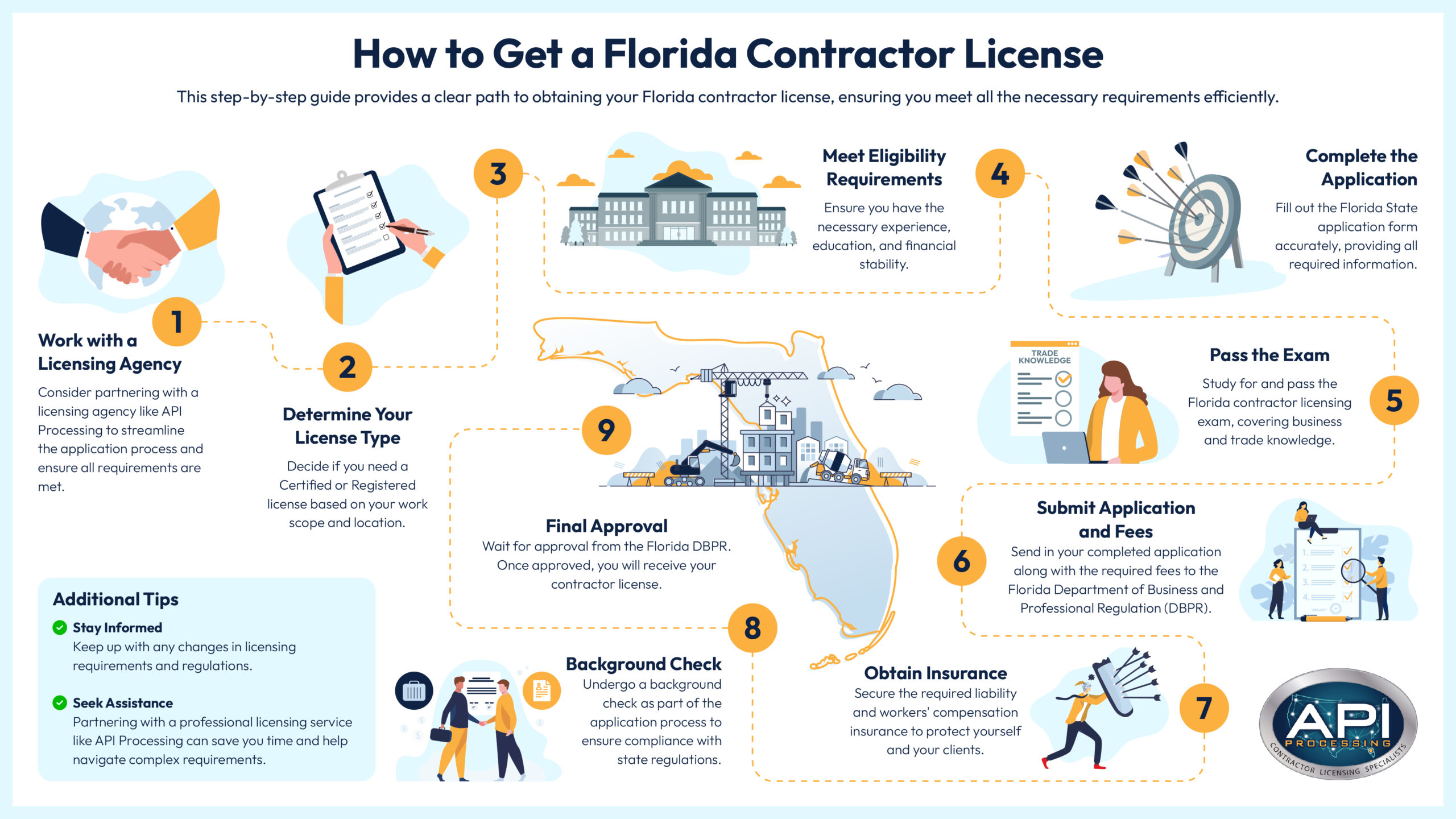
For the purpose of this guide, we will focus on obtaining a Certified General Contractor license, as it offers the broadest professional reach and is often the ultimate goal for those seeking to establish a significant presence in the Florida construction market.
Meeting the Eligibility Requirements
The path to becoming a Certified General Contractor in Florida is structured to ensure that only qualified individuals gain this esteemed license. Several key areas must be addressed before you can even consider submitting an application. These include your financial standing, your professional experience, and your educational background.
Experience and Education
The CILB places significant emphasis on practical, hands-on experience. Applicants are typically required to demonstrate a minimum of four years of experience within the last ten years. This experience must be as a contractor, a construction supervisor, a foreman, a draftsperson, or an engineer, with at least one year of this experience being in a supervisory capacity. The nature of this experience will be thoroughly scrutinized to ensure it directly relates to the scope of work a General Contractor performs.
Alternatively, a degree in construction management, engineering, or architecture from an accredited institution can substitute for some of the experience requirement. For instance, a bachelor’s degree in one of these fields might waive two years of the required experience, leaving you needing to prove two additional years of practical application. A master’s degree might waive even more, but it’s crucial to verify the exact equivalency with the CILB, as specific course requirements can apply.
Financial Responsibility and Competency
Beyond experience, Florida law mandates that applicants demonstrate financial responsibility and competency. This is typically achieved by providing financial statements that are reviewed by an independent Certified Public Accountant (CPA). These statements must show evidence of financial stability and the ability to meet financial obligations, including sufficient working capital. The exact requirements for the financial statements, including the net worth and working capital thresholds, can vary, so consulting the latest guidelines from the CILB is vital.
Furthermore, applicants must pass both a business and finance examination and a technical examination administered by the Florida DBPR. These exams are rigorous and designed to test a candidate’s understanding of construction methods, materials, building codes, project management, business practices, financial management, and relevant laws and regulations. Preparation for these exams is a significant undertaking and often involves dedicated study courses or comprehensive review materials.
The Application and Examination Process
Once you have confirmed your eligibility and gathered all necessary documentation, the formal application and examination process can commence. This multi-step procedure requires meticulous attention to detail to ensure a smooth progression.

Submitting Your Application
The application for a Certified General Contractor license in Florida is submitted to the DBPR. It’s crucial to complete the application accurately and thoroughly. Any omissions or errors can lead to significant delays or even rejection of your application. Along with the completed application form, you will need to submit supporting documents, including:
- Proof of Experience: Detailed resumes, letters of recommendation from former employers or clients, and any other verifiable documentation that substantiates your claimed experience.
- Financial Statements: The reviewed financial statements prepared by a CPA, as mentioned earlier.
- Proof of Education: Transcripts or diplomas if you are using educational qualifications to meet experience requirements.
- Background Check Information: You may be required to undergo a background check.
- Application Fee: A non-refundable fee is required at the time of application submission.
The DBPR will review your application for completeness and eligibility. If approved, you will be granted permission to schedule your examinations.
Preparing for and Taking the Exams
The examinations are a critical hurdle in obtaining your license. Florida uses standardized tests developed by third-party testing services, such as Professional Testing, Inc. (PTI), which develops and administers the Florida Construction Industry Licensing Board (FCILB) examinations.
- The Business and Finance Examination: This exam covers topics such as business organization, bidding and estimating, project management, contracts, financial management, lien laws, tax laws, and employment laws. It is designed to assess your understanding of the business aspects of running a construction company.
- The Technical Examination: This exam focuses on the technical aspects of general contracting. It delves into building codes (such as the Florida Building Code), construction methods, materials, safety regulations, surveying, plans and specifications, and project management from a technical perspective.
Thorough preparation is paramount. Many candidates find success by enrolling in specialized contractor exam preparation courses. These courses often provide study guides, practice exams, and insights into the exam structure and content. Familiarizing yourself with the Florida Building Code is particularly important, as it is a cornerstone of the technical exam. The CILB provides references for the exams, which outline the specific books and materials that may be used during the examination.
Upon successful completion of both examinations, your results will be submitted to the DBPR. Once all requirements are met, including passing the exams and submitting any final documentation, your license will be issued.
Maintaining and Renewing Your License
Obtaining your General Contractor license is a significant achievement, but it is not the end of your responsibilities. To ensure you can continue practicing legally and ethically, you must adhere to ongoing maintenance and renewal requirements.
Continuing Education Requirements
Florida requires licensed contractors to complete a certain number of continuing education (CE) hours to maintain their licenses. These CE hours are crucial for keeping your knowledge current with evolving building codes, industry best practices, safety regulations, and legal requirements. The specific number of CE hours and the types of courses required can vary, but typically include modules on:
- Florida Laws and Rules: Updates on state statutes and administrative rules governing the construction industry.
- Building Code: New editions or amendments to the Florida Building Code.
- Workers’ Compensation: Training related to workers’ compensation insurance and requirements.
- Business Practices: Courses on ethics, risk management, or other business-related topics.
It is your responsibility to track your CE hours and ensure you are taking approved courses from accredited providers. Failure to meet these requirements can result in penalties or the suspension of your license.
License Renewal
Contractor licenses in Florida are issued for a specific period and must be renewed periodically. The DBPR will typically send out renewal notices before your license expires. The renewal process generally involves:
- Completing Required CE Hours: Ensuring you have fulfilled your continuing education obligations.
- Paying Renewal Fees: Submitting the required renewal fees to the DBPR.
- Submitting Any Updated Information: Providing any changes to your business information, such as address or contact details.
Renewing your license on time is critical to avoid lapses in your ability to practice legally. Operating with an expired license can lead to severe penalties, including fines and disciplinary actions.
By diligently adhering to these ongoing requirements, you can ensure your Certified General Contractor license remains active and that you can continue to contribute to Florida‘s vibrant construction sector. This license is not just a piece of paper; it’s a testament to your expertise, your commitment to quality, and your ability to manage complex construction projects, paving the way for a successful and fulfilling career.
LifeOutOfTheBox is a participant in the Amazon Services LLC Associates Program, an affiliate advertising program designed to provide a means for sites to earn advertising fees by advertising and linking to Amazon.com. Amazon, the Amazon logo, AmazonSupply, and the AmazonSupply logo are trademarks of Amazon.com, Inc. or its affiliates. As an Amazon Associate we earn affiliate commissions from qualifying purchases.