
Florida, often lauded for its sun-drenched beaches, vibrant theme parks, and thriving cultural scenes, is also an increasingly attractive destination for entrepreneurs. The state’s business-friendly climate, coupled with a robust economy, makes it an ideal location to establish a new venture. For those looking to formalize their business operations and gain legal protections, forming a Limited Liability Company (LLC) is a popular and practical choice. This comprehensive guide will walk you through the essential steps and considerations for opening an LLC in the Sunshine State, ensuring you navigate the process smoothly and efficiently.
Understanding the Benefits of an LLC in Florida
Before diving into the procedural aspects, it’s crucial to understand why an LLC is a favored business structure. Unlike sole proprietorships or general partnerships, an LLC provides its owners, known as members, with liability protection. This means that the personal assets of the members are generally shielded from business debts and lawsuits. If the LLC incurs debt or faces litigation, creditors and claimants can typically only pursue the assets of the LLC itself, not the personal bank accounts, homes, or vehicles of the individuals involved. This separation is a significant advantage for any business owner seeking peace of mind and financial security.
Furthermore, LLCs offer flexibility in terms of taxation. By default, an LLC is taxed as a pass-through entity, meaning that the business itself does not pay federal income taxes. Instead, the profits and losses are passed through to the members’ personal income tax returns. This avoids the “double taxation” that can occur with C-corporations, where profits are taxed at the corporate level and then again when distributed to shareholders as dividends. Members of an LLC can also elect to be taxed as an S-corporation or a C-corporation, providing further tax planning opportunities to suit specific business needs.
The operational structure of an LLC is also notably less complex than that of a traditional corporation. While corporations require a board of directors, regular board meetings, and extensive record-keeping, LLCs have fewer formal requirements. They can be managed by their members (member-managed) or by appointed managers (manager-managed), offering adaptable operational frameworks. This simplicity often translates into lower administrative burdens and costs, making it an attractive option for small to medium-sized businesses, startups, and even individuals operating businesses alongside their other ventures, perhaps while managing vacation rentals in Orlando or planning tours in the Florida Keys.
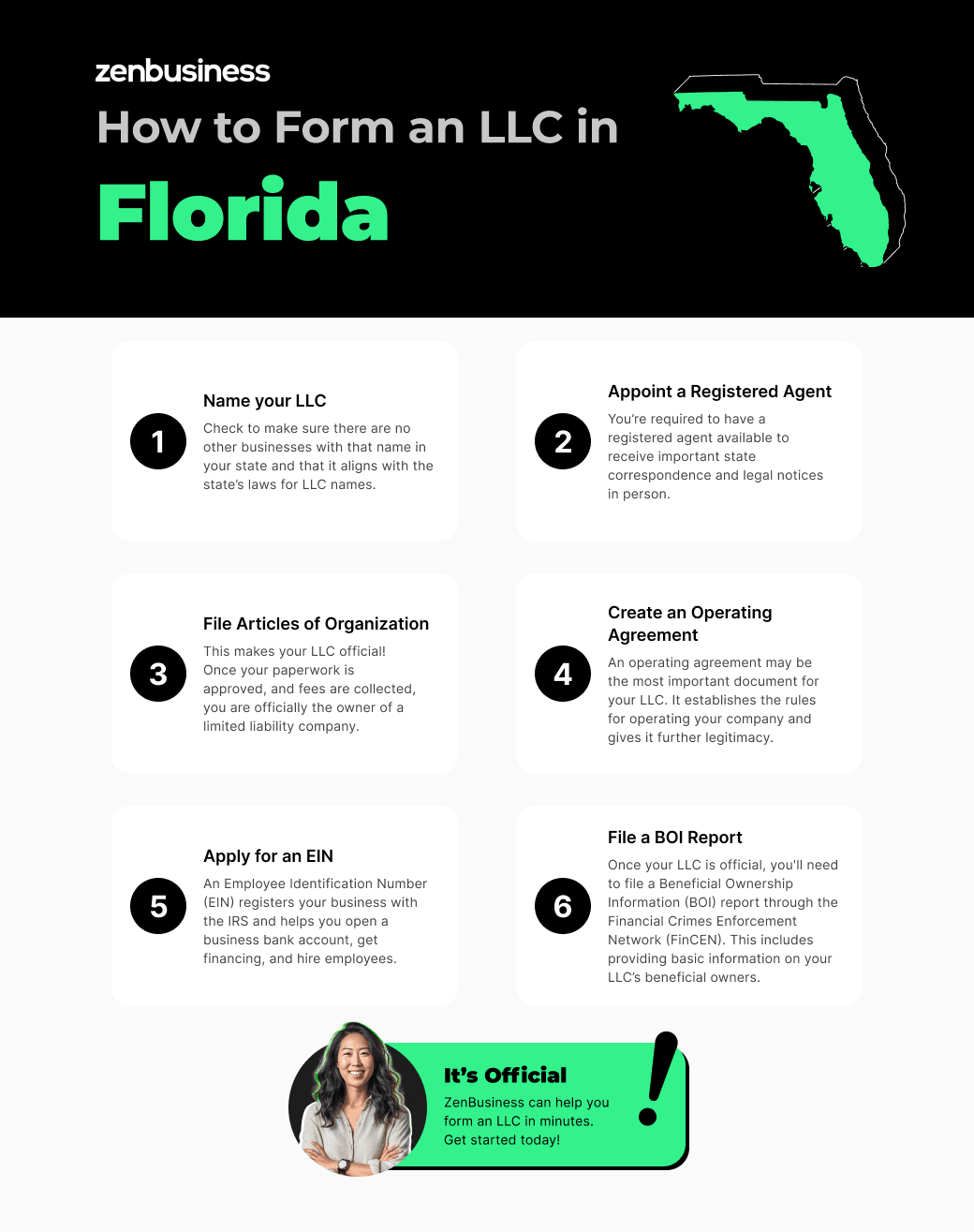
Step-by-Step Guide to Forming Your Florida LLC
1. Choose a Distinctive and Available Business Name
The first foundational step in forming your Florida LLC is selecting a name. This name must be unique and distinguishable from any other business registered with the Florida Division of Corporations. It’s highly recommended to brainstorm several options, as your first choice might already be taken.
Your chosen name must include a designator indicating that it is a limited liability company. Acceptable designators include “Limited Liability Company,” “LLC,” or “L.L.C.” You must avoid using words that could be misleading about the nature of your business or suggest it’s a government agency, such as “Bank,” “Credit Union,” “Trust,” or “Insurance.”
To ensure your desired name is available, you can conduct a free business name search on the Florida Division of Corporations website. This search will reveal if any other entity has already registered a similar name. Once you’ve identified an available name, you can reserve it for a period of 120 days by filing a “Name Reservation Request” with the state, although this step is optional. It can provide peace of mind that your chosen name won’t be taken while you complete the other formation requirements.
2. Appoint a Registered Agent
Every Florida LLC is required by law to maintain a registered agent. This individual or business entity serves as the official point of contact for the LLC, responsible for receiving important legal and tax documents, such as service of process, official government correspondence, and any legal notices.
The registered agent must have a physical street address within the state of Florida (a P.O. Box is not sufficient). They must be available during normal business hours to accept these critical communications. You can appoint yourself as the registered agent, provided you meet the address and availability requirements. Alternatively, you can designate another individual within your business or hire a professional registered agent service.
Using a professional registered agent service can be particularly beneficial if you are forming an LLC from out of state, plan to travel frequently, or simply wish to ensure that no important documents are ever missed. These services offer a reliable and professional solution, often at a reasonable annual fee, and can help maintain the privacy of your personal address.
3. File Articles of Organization
The cornerstone of forming your Florida LLC is filing the “Articles of Organization” with the Florida Division of Corporations. This document officially creates your LLC. You can typically file this online through the Florida Division of Corporations website, by mail, or via fax.
The Articles of Organization require specific information, including:
- The Name of Your LLC: This must be the exact name you’ve chosen and confirmed as available.
- The Principal Office Address: This is the primary physical address of your business, which can be the same as your registered agent’s address, but does not have to be.
- The Name and Address of Your Registered Agent: As discussed in the previous step, this is the designated person or entity responsible for receiving official correspondence.
- Management Structure: You will need to indicate whether the LLC will be managed by its members or by appointed managers.
- The Name and Address of the Organizer: This is the person filing the document.
There is a filing fee associated with submitting the Articles of Organization. The current fee can be found on the Florida Division of Corporations website, and it’s subject to change. It’s important to ensure all information provided is accurate and complete to avoid delays in the processing of your filing. Once approved, your LLC is officially formed.
4. Create an Operating Agreement

While not a mandatory filing with the state of Florida, creating an Operating Agreement is a highly recommended internal document for all LLCs. This agreement outlines the ownership structure, operating procedures, and member responsibilities of your LLC. It serves as a crucial blueprint for how your business will function internally and can prevent future disputes among members.
Key elements typically included in an Operating Agreement are:
- Member Contributions: Details of the initial capital contributions made by each member.
- Profit and Loss Distribution: How profits and losses will be allocated among members.
- Voting Rights: The voting power and rights of each member.
- Management Duties and Responsibilities: Clarifies the roles and responsibilities of members or managers.
- Procedures for Adding or Removing Members: Outlines the process for bringing in new members or for existing members to leave the LLC.
- Dissolution of the LLC: Specifies the conditions under which the LLC can be dissolved and how assets will be distributed.
A well-drafted Operating Agreement provides clarity and structure, especially for multi-member LLCs. It demonstrates the seriousness with which you’re running your business and can be invaluable if disagreements arise or if you plan to seek financing. It can be adapted to various business models, from a boutique hotel in Miami to a tour operator specializing in eco-tourism near the Everglades National Park.
Post-Formation Essentials for Your Florida LLC
1. Obtain an Employer Identification Number (EIN)
If your LLC plans to hire employees, operate as a corporation for tax purposes, or file certain tax returns, you will need an Employer Identification Number (EIN) from the Internal Revenue Service (IRS). Often referred to as a Federal Tax Identification Number, it’s like a Social Security number for your business.
Obtaining an EIN is a free and straightforward process. You can apply for it online directly through the IRS website. You will need to provide information about your business, including its name, address, and the name of the responsible party. An EIN is crucial for opening business bank accounts, filing taxes, and hiring employees. Even if your LLC is a single-member LLC and not required to have an EIN for federal tax purposes, it’s often beneficial to obtain one for practical reasons, such as opening a dedicated business bank account.
2. Open a Business Bank Account
Once your LLC is officially formed and you have your EIN, it is imperative to open a separate business bank account. Commingling personal and business funds is a common mistake that can jeopardize the liability protection your LLC provides. If your personal and business finances are not clearly separated, a court could disregard the LLC structure, making your personal assets vulnerable.
A dedicated business bank account offers several advantages:
- Maintains Liability Protection: Clearly separates personal and business finances.
- Simplifies Accounting: Makes it easier to track business income and expenses for tax purposes.
- Professionalism: Presents a more professional image to clients, suppliers, and lenders.
- Easier Record Keeping: Streamlines the process of managing your business finances and preparing financial statements.
When opening the account, you’ll typically need your Articles of Organization, your EIN, and identification for the authorized signatories. Choosing a bank that understands the needs of small businesses can be beneficial.
3. Understand Florida State Tax Obligations
Beyond federal tax obligations managed by the IRS, your Florida LLC will also have state tax responsibilities. Florida has a unique tax landscape, notably lacking a state income tax for individuals and most businesses. However, other taxes may apply depending on your business activities.
- Sales and Use Tax: If your LLC sells tangible personal property or provides taxable services, you will likely need to register with the Florida Department of Revenue to collect and remit sales tax. This applies to a wide range of businesses, from retail shops in Tampa to businesses offering services like event planning for destination weddings.
- Reemployment Tax (formerly Unemployment Tax): If your LLC has employees, you are generally required to pay reemployment tax to the Florida Department of Economic Opportunity.
- Corporate Income Tax: While Florida does not have a broad-based corporate income tax for LLCs, certain specific types of businesses might be subject to other forms of state taxation.
It’s essential to familiarize yourself with Florida’s tax laws and consult with a qualified tax professional or accountant to ensure compliance. They can help you understand your specific obligations based on your industry and business activities, whether you’re running a luxury resort management company or a local artisan shop.

4. Comply with Ongoing Requirements
Maintaining your Florida LLC requires ongoing compliance with state regulations. The most significant ongoing requirement is the filing of an annual report with the Florida Division of Corporations. This report is due by May 1st each year and serves to update the state on your LLC’s information, such as your principal office address and registered agent. There is a filing fee associated with the annual report.
Failure to file the annual report can lead to administrative dissolution of your LLC by the state, which means your business would cease to legally exist. Timely submission ensures your LLC remains in good standing.
Additionally, remember to keep your registered agent information current and accessible. If your registered agent changes, you must file an updated document with the state. Regular review and updating of your Operating Agreement, especially as your business grows or ownership changes, is also a wise practice.
Forming an LLC in Florida is a significant step toward establishing a formal and protected business entity. By diligently following these steps, from choosing a name to managing ongoing compliance, you can lay a strong foundation for your entrepreneurial journey in the vibrant economic landscape of Florida, allowing you to focus on your business’s growth and success, whether that involves developing new tourism experiences or managing iconic landmarks.