
Navigating the financial obligations of your Limited Liability Company (LLC) in the Sunshine State is a crucial aspect of maintaining a compliant and thriving business. While Florida doesn’t impose a traditional “annual fee” on LLCs in the same way some other states do, there are other essential financial responsibilities to be aware of, particularly the annual report. Understanding these requirements and how to fulfill them efficiently ensures your business operates smoothly and avoids potential penalties. This guide will delve into the nuances of these obligations, focusing on the Florida Annual Report and related fees, all within the broader context of business operations that often intersect with lifestyle and travel considerations.
Understanding Florida’s LLC Financial Obligations
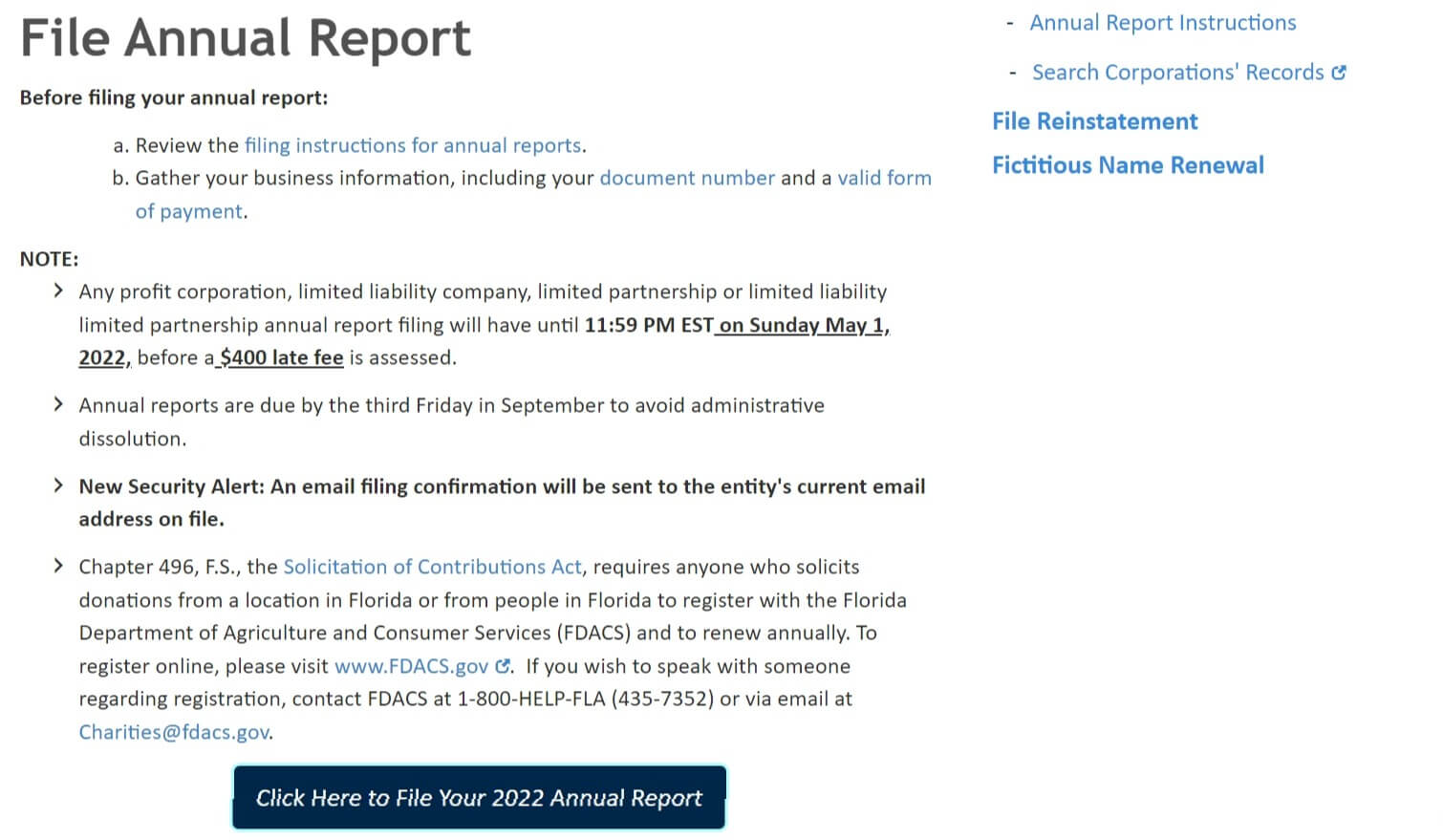
When you establish an LLC in Florida, the primary recurring financial obligation you’ll encounter is the filing of an annual report with the Florida Department of State. This report serves as an update to the state on your company’s basic information. It’s not a tax, but a compliance requirement. Failure to file this report on time can lead to administrative dissolution of your LLC, meaning your business entity will no longer be recognized by the state, which can have significant legal and operational consequences.
The Florida Annual Report: What It Is and Why It Matters
The Florida Annual Report is a straightforward document that requires you to confirm or update information such as your LLC’s principal address, mailing address, the names and addresses of its managers or managing members, and the registered agent’s information. It’s a vital tool for the state to maintain an accurate record of all registered businesses within its borders.
Key information typically required in the Florida Annual Report includes:
- LLC Name: The exact legal name of your LLC as registered with the state.
- FEIN (Federal Employer Identification Number): If applicable, your business’s tax identification number.
- Principal Place of Business: The main physical address where your business operates.
- Mailing Address: The address where the LLC receives official correspondence.
- Registered Agent Information: The name and physical street address of your registered agent in Florida. This agent is legally responsible for receiving service of process and official government notifications on behalf of your LLC.
- Management Structure: Whether your LLC is member-managed or manager-managed, and the names and addresses of all members or managers.
The due date for filing the Florida Annual Report is May 1st of each year. The filing period opens on January 1st of each year. It is advisable to file as early as possible to avoid any last-minute rushes or potential technical issues with the online filing system.
Fees Associated with LLC Annual Reporting
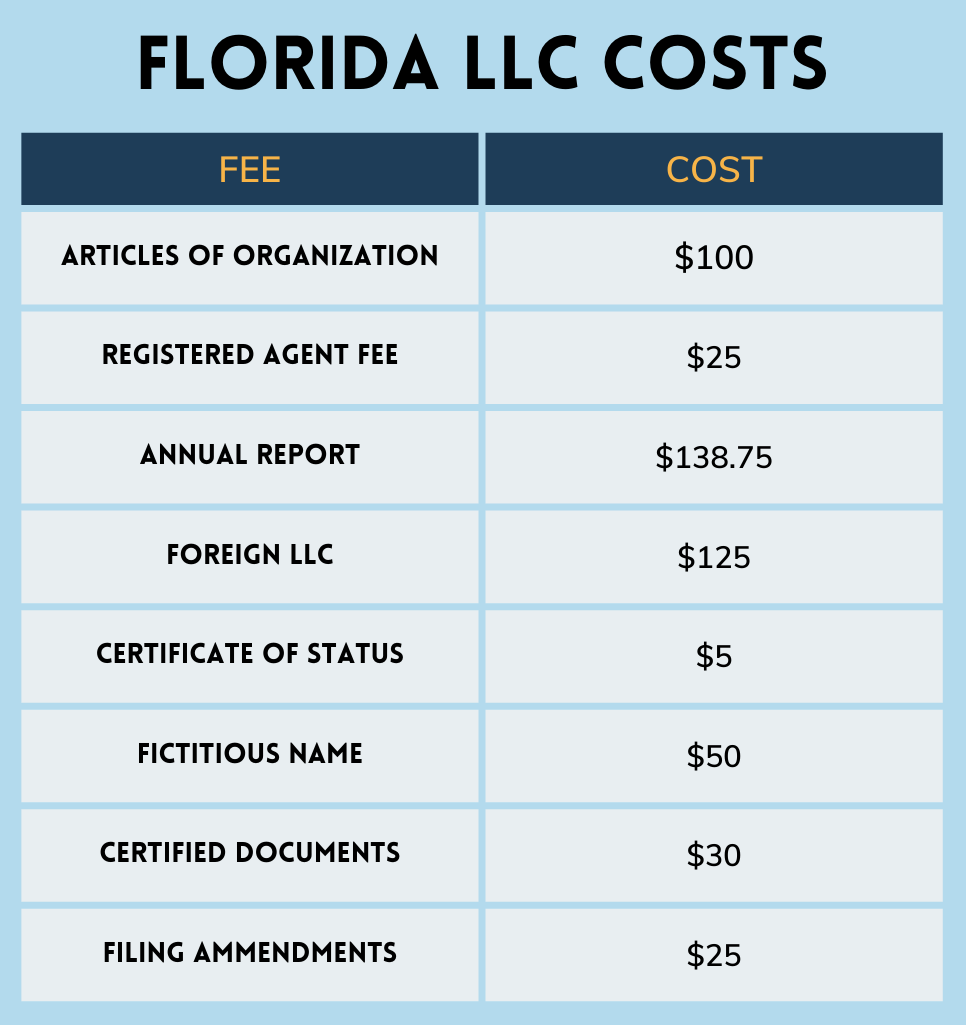
While there isn’t a direct “LLC annual fee” in the traditional sense, there is a filing fee associated with submitting your Florida Annual Report. This fee is modest and is subject to change by the Florida Department of State. As of recent guidelines, the filing fee for the annual report is $150.
Payment can typically be made through various methods:
- Online: The Florida Department of State’s Division of Corporations offers an online portal for filing and payment. This is generally the most convenient and recommended method.
- Mail: You can also mail in your annual report along with a check or money order. However, online filing is significantly faster and provides immediate confirmation.
It’s crucial to verify the current filing fee on the official Florida Department of State website to ensure you are submitting the correct amount. Ignoring this filing or paying the incorrect fee can lead to the same consequences as not filing at all.
Navigating the Filing Process Online
The Florida Department of State has streamlined the process of filing the annual report through its online platform. This digital approach not only simplifies the task but also offers real-time confirmation and record-keeping. For business owners who are frequently on the go, perhaps traveling for leisure or business, the ability to manage this obligation remotely is invaluable.
Step-by-Step Guide to Online Filing
-
Access the Florida Department of State Website: Navigate to the official website of the Florida Department of State, Division of Corporations. Look for the section dedicated to business filings and specifically for the “Annual Report” filing.
-
Search for Your LLC: You will typically need to search for your LLC using its name or its document number. This helps the system pull up your existing company information.
-
Review and Update Information: Once your LLC is located, you will be presented with a form pre-populated with your current information. It is imperative to carefully review each field for accuracy. Any changes to your principal address, mailing address, registered agent, or management structure must be updated at this time. This is also the point where you confirm the continuity of your registered agent. If you have recently changed your registered agent, ensure this new information is accurately reflected.
-
Confirm Management Structure: For manager-managed LLCs, you’ll need to list the names and addresses of all managers. For member-managed LLCs, you’ll list the names and addresses of all members.
-
Proceed to Payment: After confirming all information is accurate and up-to-date, you will move to the payment section. The system will display the total filing fee required.
-
Select Payment Method: You can typically pay using a credit card (Visa, MasterCard, American Express, Discover) or by electronic check. Ensure you have the necessary payment details readily available.
-
Submit and Receive Confirmation: Once your payment is processed, you will receive a confirmation of your filing. It is highly recommended to save or print this confirmation for your records. The state may also send a confirmation email.
The entire process can often be completed in a matter of minutes, especially if you have all your business details organized. This efficiency is a significant benefit for entrepreneurs who are juggling various aspects of their business and personal lives, which might include planning an escape to the beaches of the Emerald Coast or exploring the vibrant arts scene in Miami.
Tips for a Smooth Online Filing Experience
- File Early: Don’t wait until the last minute. Filing in January or February allows ample time to address any issues that may arise.
- Keep Login Information Secure: If you create an account on the state’s portal, store your login credentials securely.
- Have Business Details Ready: Before you start, have all necessary information at your fingertips, including addresses, names, and FEIN.
- Check for Typos: Even with pre-populated information, double-check every detail for any unintended errors.
- Understand Registered Agent Requirements: Ensure your registered agent is still active and their contact information is current. If you use a commercial registered agent service, they will likely prompt you for the necessary information to file your report.
- Consider the Impact on Lifestyle and Travel: For those who travel extensively, whether for business or leisure, setting a recurring reminder on your digital calendar for early March or April is a wise strategy. This ensures that even while you might be enjoying a relaxing stay at a luxury resort in the Florida Keys or exploring historical sites in St. Augustine, you won’t miss this crucial deadline. Being prepared for these administrative tasks allows for a more seamless experience, whether you’re planning a business trip to Orlando or a family vacation to Walt Disney World.
Alternative Scenarios and Related Considerations
While the annual report is the primary recurring financial obligation for Florida LLCs, there are other situations and considerations that might involve payments or affect your LLC’s financial standing. Understanding these can prevent unexpected costs and ensure continued compliance.
Changes to Your LLC and Associated Fees
If you make significant changes to your LLC’s structure or information outside of the annual report filing, there might be separate filing fees involved. For instance:
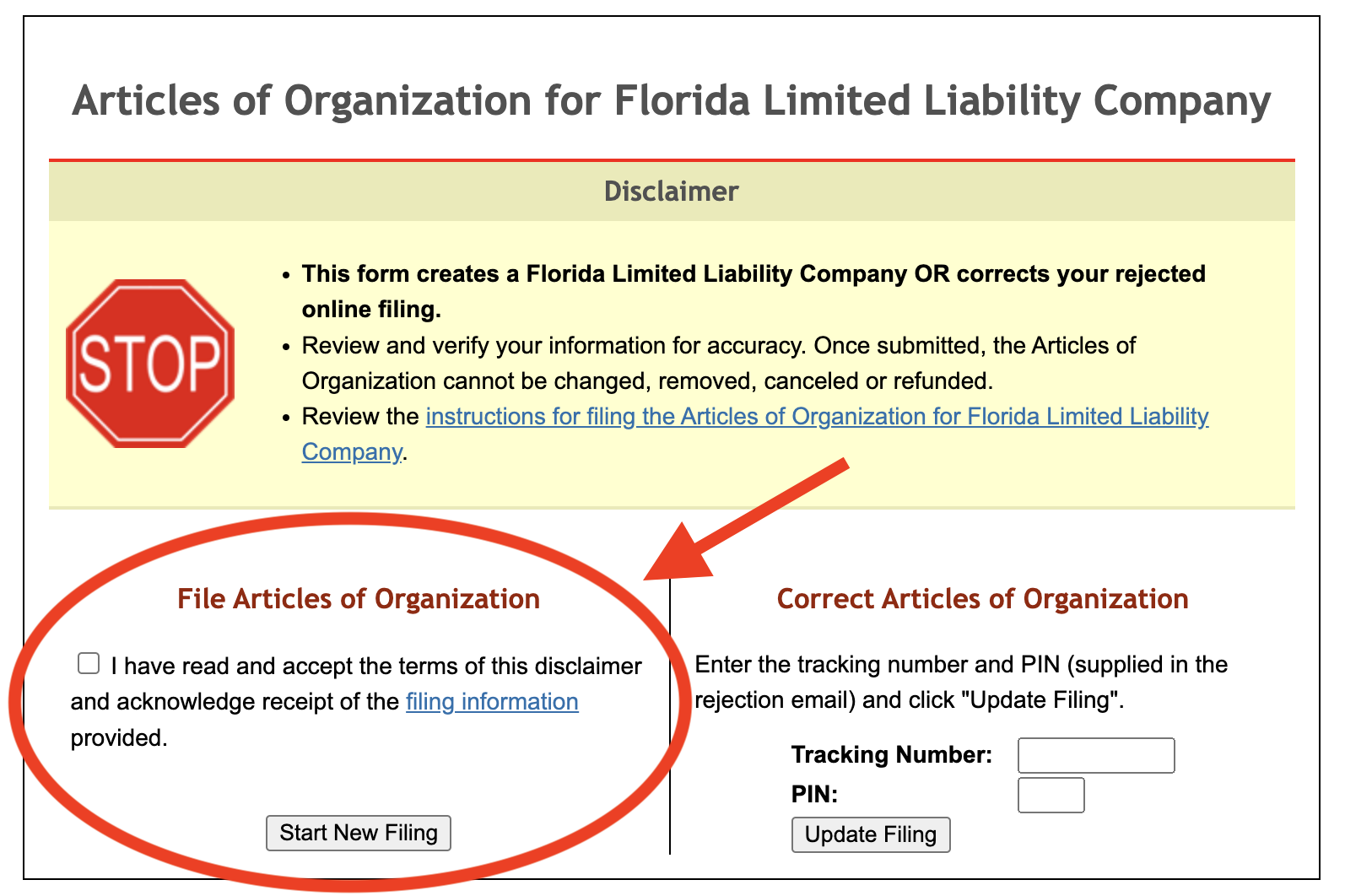
- Amendment to Articles of Organization: If you need to change your LLC’s name, its purpose, or other fundamental details listed in its formation document, you’ll need to file an Amendment to the Articles of Organization. This typically incurs a separate filing fee.
- Registered Agent Change: While a registered agent change might be updated on the annual report, in some cases, you might need to file a separate notification of a registered agent change, which could also have a fee.
It’s always best to consult the Florida Department of State’s website or contact them directly if you are unsure about the filing requirements and associated fees for specific changes.
Business Licenses and Permits
Depending on the nature of your business and the specific city or county in Florida where you operate, your LLC may be required to obtain various business licenses and permits. These are separate from state-level LLC requirements and can involve annual renewal fees. For example:
- Local Business Tax Receipts (formerly Occupational Licenses): Many cities and counties require businesses to obtain a local business tax receipt, which needs to be renewed annually and involves a fee.
- Industry-Specific Licenses: Certain industries, such as construction, real estate, or food service, require specialized state or local licenses. These often have renewal fees.
Thorough research into the licensing requirements for your specific business activities in your operating locality is essential. This diligence is similar to researching the best time to visit Key West or understanding the local customs of a new destination; it ensures a smoother experience and avoids potential fines.
Maintaining Good Standing
Paying the annual report fee and filing on time are critical for maintaining your LLC’s “good standing” with the state of Florida. Being in good standing means your business is compliant with all state requirements. This is important for several reasons:
- Legal Protections: Maintaining good standing ensures your LLC continues to benefit from the limited liability protection it offers, shielding your personal assets from business debts and lawsuits.
- Business Operations: Many vendors, partners, and lenders may require proof of good standing before engaging in business with your LLC.
- Funding and Investment: Investors and financial institutions will typically check a company’s good standing before providing capital.
- Expansion and Growth: If you plan to expand your business to other states or seek additional funding, a strong record of compliance is essential.
Understanding these financial and administrative obligations is just as important as understanding the best strategies for marketing your services or planning a memorable travel experience. Whether you’re focused on growing your business or enjoying the diverse attractions Florida offers, from the theme parks of Tampa to the natural beauty of the Everglades, staying on top of your LLC’s compliance ensures a stable foundation for all your endeavors.
LifeOutOfTheBox is a participant in the Amazon Services LLC Associates Program, an affiliate advertising program designed to provide a means for sites to earn advertising fees by advertising and linking to Amazon.com. Amazon, the Amazon logo, AmazonSupply, and the AmazonSupply logo are trademarks of Amazon.com, Inc. or its affiliates. As an Amazon Associate we earn affiliate commissions from qualifying purchases.