
Embarking on the journey to establish a corporation in the Golden State of California is an exciting, albeit intricate, endeavor. While the core of California is renowned for its sun-drenched beaches, iconic landmarks, and vibrant culture, its business landscape is equally compelling. For entrepreneurs and aspiring business owners, understanding the process of registering a corporation is paramount. This guide aims to demystify the steps involved, ensuring a smooth and successful launch for your enterprise in this dynamic economic hub.
Laying the Foundation: Pre-Registration Essentials
Before diving into the official registration process, several crucial preparatory steps will set your corporation on a solid footing. These preliminary actions are vital for ensuring compliance and future operational efficiency.

Choosing Your Business Structure and Name
The first and most fundamental decision is selecting the appropriate business structure. While this article focuses on corporations, it’s worth noting that California offers other options like Limited Liability Companies (LLCs) and sole proprietorships. For the purpose of forming a corporation, you will be choosing between a C-corporation or an S-corporation. A C-corporation is a separate legal entity taxed independently from its owners, offering greater flexibility for reinvesting profits and issuing stock. An S-corporation, on the other hand, allows profits and losses to be passed through directly to the owners’ personal income without being subject to corporate tax rates. The choice between these two will depend on your specific financial goals and tax considerations.
Equally important is selecting a unique and legally available business name. Your corporation’s name must be distinguishable from any other existing corporate name registered in California. This means conducting a thorough search to avoid any potential conflicts. You can perform a name availability search through the California Secretary of State’s website. It’s also advisable to consider checking for federal trademark availability and domain name availability to protect your brand identity across various platforms. Once you have a name in mind, you can reserve it for a limited period, giving you ample time to complete the registration process without the fear of someone else claiming it.
Identifying Your Registered Agent
A registered agent is a crucial component of any corporate structure. This individual or entity is designated to receive official legal documents and government correspondence on behalf of your corporation. The registered agent must have a physical street address in California (not a P.O. Box) and be available during normal business hours to accept service of process. This role ensures that your corporation remains legally compliant and can be properly notified of any legal actions. You can appoint yourself as the registered agent if you meet the requirements, or you can hire a professional registered agent service, which is often a preferred choice for its convenience and reliability, especially for businesses located outside of California.
Appointing Your Initial Directors
Every California corporation must have an initial board of directors. These individuals are responsible for overseeing the corporation’s affairs and making significant decisions. While the exact number of directors can vary, California law generally requires at least one director. The initial directors are typically appointed by the incorporator(s) at the time of formation or during the first organizational meeting. Their responsibilities include adopting corporate bylaws, issuing stock, and appointing officers to manage the day-to-day operations. It’s important to select individuals who are committed, knowledgeable, and capable of guiding your corporation towards its goals.
The Registration Process: Filing with the State
With the foundational elements in place, you can now proceed with the official registration of your corporation with the California Secretary of State. This is the legal act that brings your corporation into existence.
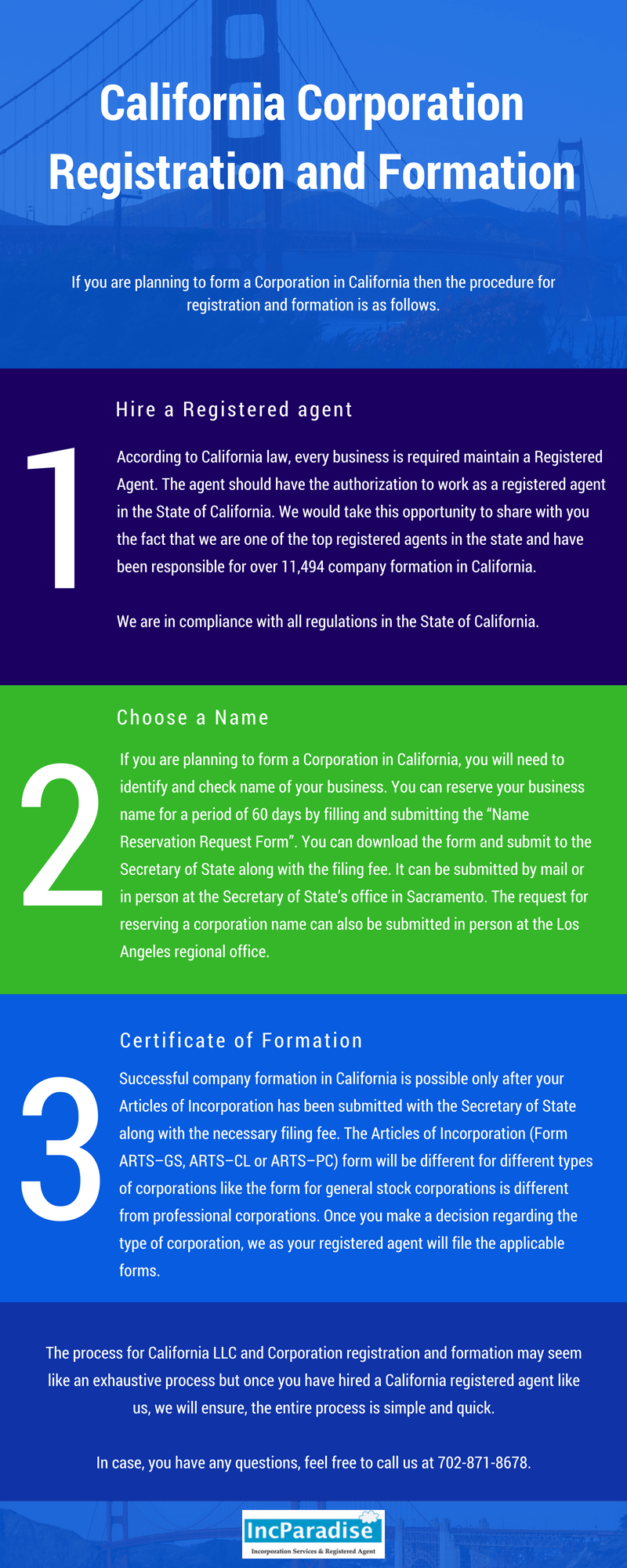
Filing the Articles of Incorporation
The primary document for registering a corporation in California is the Articles of Incorporation. This document formally establishes your corporation as a legal entity. It requires specific information, including:
- The name of your corporation: This must be the exact name you’ve chosen and confirmed as available.
- The purpose of the corporation: A general statement about the nature of your business is usually sufficient, but you can be more specific if needed.
- The name and address of the registered agent: As discussed earlier, this is a mandatory requirement.
- The total number of shares the corporation is authorized to issue: This includes the par value of each share, if applicable.
- The name and address of the incorporator(s): The person or persons filing the Articles of Incorporation.
The Articles of Incorporation can typically be filed online through the California Secretary of State’s website, by mail, or in person. There is a filing fee associated with this process, which varies. Once the Secretary of State approves and files your Articles of Incorporation, your corporation is officially registered and recognized by the state of California.

Obtaining an Employer Identification Number (EIN)
After your corporation has been successfully registered, the next critical step is to obtain an Employer Identification Number (EIN) from the Internal Revenue Service (IRS). An EIN, also known as a Federal Tax Identification Number, is like a Social Security number for your business. It is essential for various business activities, including:
- Opening a business bank account.
- Filing federal taxes.
- Hiring employees.
- Applying for business licenses and permits.
You can apply for an EIN online through the IRS website, and it is a free process. It typically takes only a few minutes to receive your EIN once your application is submitted.
Complying with State and Local Requirements
Beyond federal and state registration, your corporation may need to comply with various state and local regulations. This can include:
- State Tax Registration: You will need to register with the California Franchise Tax Board (FTB) and potentially the California Department of Tax and Fee Administration (CDTFA) for sales and use tax permits, depending on your business activities.
- Business Licenses and Permits: Depending on your industry and location within California, you may need to obtain specific business licenses and permits from city or county governments. For instance, a restaurant in Los Angeles might require different permits than a tech startup in San Francisco. Researching the requirements specific to your business operations and geographic area is crucial.
- Statement of Information: Within 90 days of filing your Articles of Incorporation, and annually thereafter, you must file a Statement of Information with the California Secretary of State. This document updates information about your corporation, including its officers, directors, and registered agent.
Post-Registration: Essential Corporate Governance
The registration is just the beginning. To maintain your corporation’s legal standing and ensure smooth operations, adherence to corporate governance principles is vital.
Holding Organizational Meetings and Adopting Bylaws
Following the filing of the Articles of Incorporation, the initial directors must hold an organizational meeting. During this meeting, key decisions are made, including:
- Adopting Corporate Bylaws: Bylaws are the internal rules and regulations that govern the corporation’s operations. They outline how the board of directors will function, how meetings will be conducted, the duties of officers, and other essential operational procedures.
- Electing Corporate Officers: The board of directors will typically elect officers such as a President, Vice President, Secretary, and Treasurer to manage the daily business of the corporation.
- Authorizing the Issuance of Stock: The initial issuance of stock to the founders or initial investors is authorized.
It is imperative to keep thorough minutes of these meetings, as they serve as important legal records of the corporation’s early decisions.
Maintaining Corporate Records
Meticulous record-keeping is fundamental to corporate governance. This includes:
- Keeping all legal documents: This encompasses the Articles of Incorporation, bylaws, meeting minutes, stock certificates, and any amendments to these documents.
- Maintaining accurate financial records: This is crucial for tax purposes, investor relations, and overall financial health.
- Ensuring compliance with ongoing filings: Regularly filing the Statement of Information and any other required state or federal reports is essential to avoid penalties and maintain active status.
By diligently following these steps, you can successfully register and establish your corporation in California, paving the way for your business to thrive in one of the nation’s most vibrant economic environments. From the allure of Disneyland to the innovation hubs in Silicon Valley, California offers a fertile ground for entrepreneurial success. The structure and compliance required for a corporation, while demanding, ultimately provide a robust framework for growth and protection.