
The journey of life is often filled with unexpected turns, and sometimes, those turns lead to new responsibilities, like inheriting a vehicle. While the emotional weight of such an event can be profound, the practicalities that follow, like registering an inherited truck in Texas, can seem daunting. Yet, once properly handled, this inherited vehicle can unlock a world of possibilities, from exploring the vast landscapes of the Lone Star State to facilitating everyday adventures. Imagine hitting the open road, perhaps heading to the vibrant streets of Austin for a music festival, or embarking on a rugged adventure through Big Bend National Park with your newly acquired, fully registered truck. This guide aims to demystify the process, transforming what might seem like a bureaucratic hurdle into a clear path toward new memories and horizons, aligning perfectly with a lifestyle of freedom and exploration.
Inheriting a truck in Texas isn’t just about paperwork; it’s about connecting with a legacy and preparing for your next adventure. Whether the truck represents cherished memories or simply a practical asset, securing its legal status is the first step toward embracing its potential. From carrying camping gear to a secluded spot in the Texas Hill Country to helping move furniture for a new chapter in Houston, a registered truck offers unparalleled utility and freedom. The process, while requiring attention to detail, is straightforward once you understand the key steps, the necessary documentation, and where to go. This comprehensive guide will walk you through everything you need to know, ensuring a smooth transition and empowering you to hit the road with confidence.
Navigating the Initial Steps After Inheritance
The moment you realize you’ve inherited a vehicle, a whirlwind of emotions and questions can arise. Before you can even think about the thrill of a road trip to Galveston or a weekend getaway to a lakeside cabin, there are crucial initial steps that must be addressed. These foundational actions will set the stage for a smooth registration process and ensure you understand the legal framework surrounding your inheritance in Texas.
Understanding the Texas Inheritance Process for Vehicles
Texas law provides clear pathways for handling inherited property, including vehicles. The specific route you take often depends on whether the deceased individual left a will, the value of their estate, and the number of heirs involved. It’s a critical distinction that dictates the type of documentation you’ll need to present.
If the deceased left a valid will, the probate process typically comes into play. A will specifies who inherits what, and once validated by a Probate Court, it grants the executor the authority to transfer ownership of assets, including the truck, to the designated heir(s). This is often the most straightforward scenario from a legal standpoint, as the court’s decree provides an irrefutable directive. The executor will typically sign the title over to you, usually with a certified copy of the court order, or the court may issue an order directing the Texas Department of Motor Vehicles (TxDMV) to issue a new title.

However, many individuals pass away without a will, a situation known as dying “intestate.” In such cases, Texas intestacy laws dictate how property is distributed among surviving family members. For vehicles, if the estate is small and doesn’t require formal probate, an Affidavit of Heirship can often be used. This sworn statement, signed by disinterested witnesses and notarized, identifies the legal heirs of the vehicle. It’s designed to simplify the transfer of title for smaller estates, bypassing the need for a full probate court proceeding. It’s important to confirm with your local County Tax Assessor-Collector’s office if an Affidavit of Heirship is sufficient in your specific situation, as requirements can vary slightly depending on the total value of the estate and other factors.
Another scenario involves a transfer-on-death (TOD) designation, though less common for vehicles in Texas compared to other assets. If the original owner had set up a TOD beneficiary, the vehicle would directly transfer to that individual upon their death, outside of probate. This is the simplest transfer method, but it requires proactive planning by the deceased.
Understanding these different legal avenues is the first critical step. It determines which forms you’ll need to gather and the process you’ll follow, ultimately impacting how quickly you can get that truck ready for your next adventure, perhaps a road trip along the scenic coast near Corpus Christi.
Gathering Essential Documentation
Once you’ve identified the legal pathway for inheritance, the next crucial step is to meticulously gather all required documents. Think of this as preparing your travel passport; without the right credentials, your journey to legal ownership will face delays. Having everything organized and ready before visiting the County Tax Assessor-Collector’s office will save you time and frustration, allowing you to focus on planning your next Texas excursion.
Here’s a breakdown of the essential documents you’ll likely need:
- Original Vehicle Title: This is paramount. The title, often referred to as the “pink slip,” is the legal document proving ownership. It will ideally be signed over to you by the executor (if there’s a will and probate) or presented as part of the Affidavit of Heirship process. If the title is lost, you’ll need to apply for a duplicate title, which adds another step to the process. This can be done by the legal representative of the estate or, once you establish heirship, by you.
- Certified Copy of the Death Certificate: This document confirms the passing of the original owner and is a fundamental requirement for any inheritance process.
- Proof of Inheritance:
- If there’s a Will: A certified copy of the will and the court order admitting it to probate, appointing an executor, and authorizing the transfer of the vehicle. The executor will then sign the title over to you.
- If there’s No Will (Intestate): A completed and notarized Affidavit of Heirship for a Motor Vehicle. This form specifically helps transfer a vehicle title when there’s no will and no formal probate. Make sure it’s correctly filled out, detailing all heirs and signed by two disinterested witnesses.
- Small Estate Affidavit: In some cases where the estate is very small (below a certain threshold set by Texas law) and there’s no will, a Small Estate Affidavit approved by a court might be necessary.
- Proof of Identity: Your valid government-issued photo ID (e.g., Texas Driver’s License or state ID) is required to verify your identity.
- Proof of Texas Residency: Documents like a utility bill, lease agreement, or another official document showing your current Texas address.
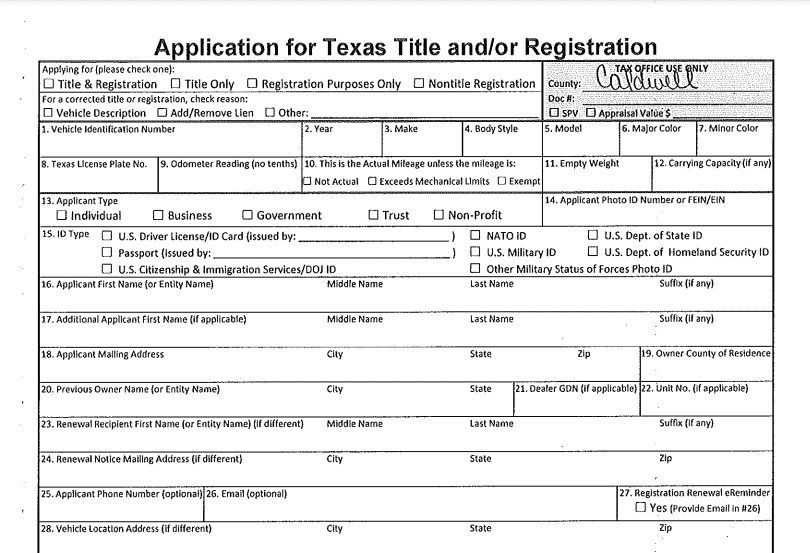
- Form 130-U, Application for Texas Title and/or Registration: This is the universal form for applying for a new title and registration. You will fill out sections pertaining to the vehicle and the new owner.
- Proof of Insurance: Texas law mandates liability insurance for all registered vehicles. You’ll need to obtain an insurance policy for the truck in your name before you can complete the registration. More on this later.
- Inspection Report: A passing vehicle inspection report, issued within the last 90 days. We’ll delve deeper into this below.
- Odometer Disclosure Statement: For vehicles less than 10 years old, an odometer disclosure statement is often required on the title or a separate form, indicating the mileage at the time of transfer.
Having these documents meticulously prepared will not only expedite the registration process but also instill confidence as you embark on this new chapter with your inherited truck, ready to explore destinations like Palo Duro Canyon State Park or the historic streets of San Antonio.
Preparing Your Inherited Truck for Registration
Once the legal groundwork of inheritance is understood and the necessary documents are being gathered, your attention can shift to the physical vehicle itself. Before you can officially register your inherited truck and set off on adventures, there are a couple of crucial practical steps that need to be addressed: ensuring any outstanding financial obligations are settled and that the vehicle meets Texas’ safety and environmental standards. These preparations are non-negotiable and essential for a smooth registration process.
Addressing Liens and Encumbrances
A lien on a vehicle means that there’s an outstanding debt, typically a car loan, for which the vehicle serves as collateral. Before you can fully transfer the title into your name and register the truck, any existing liens must be satisfied. This is a critical step because the lienholder (usually a bank or credit union) legally holds a claim to the vehicle until the debt is paid in full.
Here’s how to navigate this:
- Check for Liens: The first thing to do is to check the existing vehicle title for any listed lienholders. This information is typically printed on the face of the title. If the deceased person had a loan on the truck, it will almost certainly be listed here.
- Contact the Lienholder: Reach out to the financial institution listed as the lienholder. You’ll need to inform them of the owner’s passing and inquire about the outstanding balance of the loan.
- Satisfy the Debt:
- Paid Off by the Estate: Ideally, the deceased’s estate will have sufficient funds to pay off the remaining balance of the loan. This is the cleanest way to clear the lien. The executor of the will or the administrator of the estate would handle this.
- You Pay the Debt: As the heir, you might choose to pay off the remaining balance yourself, especially if you intend to keep the truck. This is an important financial decision that needs careful consideration.
- Negotiate with the Lienholder: In some situations, especially if the estate is complex or there are financial difficulties, it might be possible to negotiate with the lienholder.
- Obtain a Lien Release: Once the loan is fully paid, the lienholder will issue a “Lien Release” document. This is a crucial piece of paper that legally declares the debt satisfied and their claim on the vehicle relinquished. The lien release should be a notarized document on the lienholder’s official letterhead. Without this, the Texas Department of Motor Vehicles (TxDMV) will not transfer the title into your name free and clear.
- Remove Lien from Title: With the lien release in hand, you’ll typically submit it along with your other registration documents. The County Tax Assessor-Collector will then process a new title that shows no lienholder, making you the sole legal owner.
Addressing liens is a non-negotiable step. Overlooking it can lead to significant complications down the road, including potential repossession, making it impossible to truly call the truck your own and take it on those coveted trips through Texas State Parks.
Ensuring Your Truck Meets Texas Standards (Inspection and Insurance)
Before any vehicle can be registered in Texas, it must meet specific safety and emissions standards, and it absolutely must be insured. These requirements are in place to ensure public safety and environmental responsibility across the state, from the bustling highways of Dallas to the quiet roads leading to Padre Island National Seashore.
-
Vehicle Inspection:
- Safety Inspection: Every vehicle registered in Texas must pass an annual safety inspection. This check includes brakes, lights, tires, steering, horn, mirrors, seatbelts, window tint, and exhaust system.
- Emissions Inspection: In many of the larger metropolitan areas and surrounding counties in Texas, an emissions inspection is also required. These areas are typically designated by the Texas Commission on Environmental Quality (TCEQ) to combat air pollution. Counties like Harris County (Houston), Dallas County, Tarrant County (Fort Worth), Travis County (Austin), and Bexar County (San Antonio) are among those that require emissions tests.
- Where to Go: You can get your truck inspected at any official Texas Vehicle Inspection Station, which are typically auto repair shops or dealerships. Look for the blue star shaped sign.
- Documentation: Once your truck passes, you will receive a Vehicle Inspection Report (VIR). This report will be electronically transmitted to the state, but it’s always good practice to keep a physical copy or printout for your records and to present during registration if requested. The inspection must be current, usually within 90 days of registration.
- Fix if Necessary: If your truck fails the inspection, you will need to get the necessary repairs made and have it re-inspected until it passes. This ensures the vehicle is safe and roadworthy for all your future travels, whether for daily commutes or an extended tour of West Texas.
-
Proof of Insurance:
- Minimum Coverage: Texas law requires all drivers to carry at least minimum liability insurance. The current minimum coverage amounts are often referred to as 30/60/25: $30,000 for bodily injury per person, $60,000 for bodily injury per accident, and $25,000 for property damage per accident.
- Obtaining a Policy: Before you visit the County Tax Assessor-Collector’s office, you must secure an insurance policy for the inherited truck in your name. Contact an insurance provider to get quotes and set up coverage.
- Documentation: You’ll need to present proof of this active insurance policy at the time of registration. This could be an insurance card, a copy of your policy, or an electronic verification. Without valid insurance, you simply cannot register the vehicle.
Completing both the inspection and securing insurance are vital preparations. They not only fulfill legal requirements but also provide peace of mind, knowing that your inherited truck is safe to drive and adequately covered, ready for any journey across the diverse landscape of Texas.
The Registration Process: Step-by-Step Guide
With all your documents in order and your truck having passed its necessary inspections and secured insurance, you’re now ready for the final leg of the journey: physically registering your inherited truck. This involves a visit to a specific government office and understanding the associated costs and timelines. While it may seem like the last hurdle, it’s actually the gateway to enjoying your truck without legal impediments, opening up possibilities for memorable road trips or simply hassle-free daily commutes.
Visiting Your Local County Tax Assessor-Collector
In Texas, vehicle registration is primarily handled by your local County Tax Assessor-Collector’s office, not directly by the Texas Department of Motor Vehicles (TxDMV) in all instances. The TxDMV sets the statewide policies and provides the forms, but the actual processing of titles and registrations occurs at the county level. This decentralized system means that while the core requirements are uniform, the specific office you visit will be determined by your county of residence.
Here’s what to expect and how to prepare for your visit:
- Locate Your Office: Use the official Texas Department of Motor Vehicles (TxDMV) website or a quick online search to find the County Tax Assessor-Collector’s office in your county. For example, if you live in El Paso, you’d visit the El Paso County Tax Assessor-Collector office. It’s often advisable to check their website for specific hours, appointment requirements, or any temporary closures before heading out.
- Organize Your Documents: Bring ALL the documents you’ve gathered in the previous steps. This includes:
- Original Vehicle Title (with any necessary signatures from executor/heirs)
- Certified Copy of Death Certificate
- Proof of Inheritance (Will & Court Order OR Affidavit of Heirship)
- Lien Release (if applicable)
- Your Government-Issued Photo ID
- Proof of Texas Residency
- Completed Form 130-U, Application for Texas Title and/or Registration
- Proof of Insurance (e.g., insurance card)
- Vehicle Inspection Report (VIR)
- Odometer Disclosure Statement (if applicable)
It’s a good idea to have both original documents and a set of photocopies, just in case.
- The Application Process:
- Submission: Present all your documents to the clerk. They will review everything to ensure it’s complete and correct.
- Verification: The clerk will verify the VIN (Vehicle Identification Number) on your documents against the vehicle details.
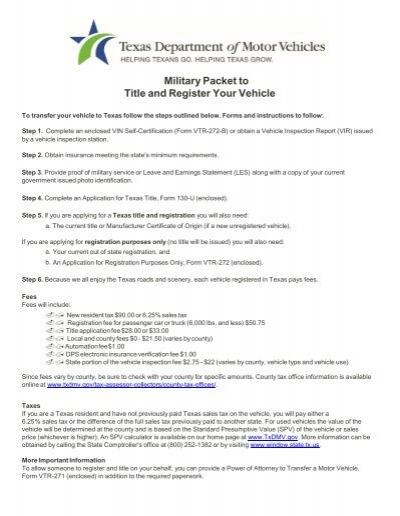
- Payment: You will pay the necessary fees and taxes.
- Temporary Plate/Sticker: Once everything is processed and fees are paid, you will receive a temporary registration permit or sticker to place on your vehicle. Your new official license plates and registration sticker will typically be mailed to you within a few weeks. In some cases, depending on the county and their inventory, you might receive the plates on the spot.
- New Title: The new vehicle title, listing you as the sole owner (or co-owner, if applicable), will also be mailed to you separately, usually within a few weeks.
Be prepared for potential waiting times, especially during peak hours. Going early in the morning or mid-week can sometimes help avoid longer queues. Patience and preparation are key to a smooth experience.
Understanding Fees, Taxes, and Timelines
Registering an inherited truck in Texas involves various fees and taxes that contribute to state and local revenues. Understanding these costs beforehand will help you budget and avoid any surprises, allowing you to focus on the joy of owning your truck, perhaps planning a visit to a Texas State Park or exploring a historic site.
Key Fees and Taxes You’ll Encounter:
- Sales Tax (Motor Vehicle Tax): This is often the most significant cost. In Texas, the motor vehicle sales tax is 6.25% of the vehicle’s sales price or standard presumptive value (SPV), whichever is greater.
- Inheritance Exception: Crucially, if you are directly inheriting the truck from a deceased family member and not purchasing it, you may be exempt from paying this sales tax, or it might be significantly reduced. This is a vital point to confirm with the County Tax Assessor-Collector. Often, when ownership is transferred via an Affidavit of Heirship or probate, it’s considered a gift or inheritance, not a sale, and thus avoids sales tax. However, there might be a nominal “gift tax” or processing fee (e.g., $10) instead of the full sales tax. Ensure you clarify this.
- Title Application Fee: A standard fee for processing the transfer of the vehicle title into your name. This is a relatively small, fixed amount.
- Registration Fee: This is the annual fee for the vehicle’s registration, allowing it to be driven legally on public roads. The base registration fee for trucks is typically higher than for passenger cars, depending on the vehicle’s gross weight. There are also usually small additional fees, such as local option fees and a processing and handling fee.
- Inspection Fee: While paid directly to the inspection station, this is a prerequisite cost.
- Licensing Plates: Standard license plates are included in the registration fee. If you opt for specialty plates (e.g., those supporting Texas Parks and Wildlife Department or a university), there will be an additional annual cost.
- Probate/Legal Fees: If you had to go through formal probate or engage legal counsel for the Affidavit of Heirship, those costs would be separate from the vehicle registration fees.
It’s always best to contact your specific County Tax Assessor-Collector’s office or visit the Texas Department of Motor Vehicles (TxDMV) website for the most current and accurate fee schedule, as these can change.
Timelines:
- Application Submission: The law generally requires you to apply for a title and registration within 30 days of becoming the legal owner (e.g., after the probate court order or the signing of the Affidavit of Heirship). Failing to do so can result in penalties.
- Receiving Plates/Sticker: As mentioned, you often receive a temporary permit immediately. Your official license plates and registration sticker are usually mailed within 2-3 weeks, though it can vary.
- Receiving New Title: The new title, updated with your name, is typically mailed separately within 3-4 weeks.
Once all these steps are complete, and you have your new title and registration in hand, your inherited truck is officially yours and ready to embark on its new life with you at the wheel. Whether it’s for practical utility or embarking on a long-awaited road trip to the scenic Big Bend Ranch State Park, the journey begins with proper registration.
Beyond Registration: Embracing Your Truck’s New Journey
Registering an inherited truck is more than just fulfilling a legal obligation; it’s the official starting point for a new chapter. This vehicle, now legally yours, carries not only the memories of its previous owner but also the promise of countless new experiences for you. From practical daily use to grand adventures across the diverse landscapes of Texas, your truck is now a fully enabled tool for your lifestyle. To truly make the most of this inheritance, considering its long-term care and recognizing its potential for travel and exploration are key.
Maintenance Tips for Your Inherited Vehicle
An inherited truck, particularly if it’s an older model or has been sitting for a while, will benefit significantly from some proactive maintenance. Ensuring its reliability will not only prolong its life but also provide peace of mind when you’re far from home, perhaps exploring a remote corner of Texas or embarking on a cross-country journey. Think of this as preparing a seasoned traveler for new expeditions.
Here are essential maintenance tips:
- Full Inspection by a Trusted Mechanic: Even if it passed the state inspection, a thorough check by a mechanic you trust is highly recommended. They can identify potential issues that might not be part of the standard state inspection, such as worn belts, hoses, fluid leaks, suspension issues, or transmission concerns.
- Fluid Checks and Changes:
- Engine Oil: Change the oil and oil filter, especially if you’re unsure when it was last done.
- Coolant: Check the coolant level and condition. Flush and refill if necessary. This is crucial for engine health, especially in the Texas heat.
- Brake Fluid, Power Steering Fluid, Transmission Fluid: Have these checked and topped off or replaced as needed.
- Tire Assessment: Inspect tire tread depth, pressure, and overall condition. Replace tires if they are old, cracked, or worn unevenly. Proper tires are paramount for safety and fuel efficiency, whether you’re driving on city streets or off-road trails near Kerrville.
- Brake System Check: Have the brake pads, rotors, and fluid lines inspected. Reliable brakes are non-negotiable for safety.
- Battery Health: Test the battery. Extreme Texas temperatures can be hard on batteries, and a dead battery can quickly derail any travel plans.
- Belts and Hoses: Inspect all belts for cracks or fraying and hoses for bulges or leaks. These are often overlooked but critical components.
- Air Filters: Replace the engine air filter and cabin air filter. Clean filters improve engine performance and interior air quality, enhancing comfort during long drives.
- Lights and Wipers: Ensure all exterior and interior lights are functioning correctly and replace wiper blades if they are streaking. Good visibility is crucial in all weather conditions.
- Documentation and History: If available, review the truck’s service history. This can provide valuable insights into its past care and potential future needs. Start your own service log for future reference.
By investing a little time and effort into these maintenance checks, you’ll ensure your inherited truck is not just registered, but also road-ready, reliable, and capable of taking you on countless journeys across Texas and beyond, making it a true companion for your lifestyle.
Exploring Texas with Your Newly Registered Truck
With your inherited truck now fully registered, inspected, and maintained, a world of possibilities opens up. Texas, with its immense size and incredible diversity, is a playground for truck owners. This is where your newly acquired asset truly shines, empowering a lifestyle of adventure, discovery, and practical utility.
Consider the freedom a truck offers for various travel experiences:
- Road Trips and Scenic Drives: Texas boasts some breathtaking scenic routes. Imagine cruising along the River Road near Big Bend National Park, where the rugged beauty of the desert meets the mighty Rio Grande. Or perhaps a drive through the blooming wildflowers of the Texas Hill Country in springtime, visiting charming towns like Fredericksburg and Luckenbach. Your truck can handle various terrains, allowing access to hidden gems that smaller vehicles might miss.
- Camping and Outdoors Adventures: A truck is an invaluable asset for outdoor enthusiasts. Load up your camping gear, mountain bikes, kayaks, or fishing equipment and head to one of Texas’ numerous State Parks like Caprock Canyon State Park for hiking and stargazing, or Mustang Island State Park for beach camping. The bed of your truck offers ample space for all your necessities, transforming weekend getaways into seamless experiences.
- Urban Exploration and Cultural Immersion: Even in the vibrant cities, a truck can be useful. Venture into Dallas or Houston to explore world-class museums, art districts, and diverse culinary scenes. A truck can handle city driving and is perfect for hauling unique finds from antique shops or supporting local businesses with larger purchases. In San Antonio, park your truck and stroll along the historic Riverwalk or visit The Alamo.
- Practicality for a Dynamic Lifestyle: Beyond leisure, a truck offers incredible utility for a dynamic lifestyle. Moving to a new apartment in Austin, hauling supplies for a home improvement project, or even helping friends with their moves becomes effortless. It’s an investment in your personal independence and capability.
- Supporting Hobbies and Interests: If you’re into boating, ATV riding, or equestrian sports, your truck becomes your primary transport for trailers and equipment, opening up opportunities to pursue passions across the state, from the lakes of East Texas to the equestrian ranches near Fort Worth.
An inherited truck is more than just a vehicle; it’s a testament to resilience and adaptation, a practical companion that facilitates a life lived to the fullest. By understanding and completing the registration process in Texas, you not only honor the legacy of the vehicle but also empower yourself to create new stories, new adventures, and new memories across the magnificent landscapes and vibrant communities of the Lone Star State. So, buckle up, chart your course, and enjoy the ride!
LifeOutOfTheBox is a participant in the Amazon Services LLC Associates Program, an affiliate advertising program designed to provide a means for sites to earn advertising fees by advertising and linking to Amazon.com. Amazon, the Amazon logo, AmazonSupply, and the AmazonSupply logo are trademarks of Amazon.com, Inc. or its affiliates. As an Amazon Associate we earn affiliate commissions from qualifying purchases.