Navigating a bustling metropolis like [New York City] can seem daunting, but thankfully, the city boasts one of the most extensive and efficient public transportation systems in the world: the [New York Metro], more commonly known as the subway. For both seasoned travelers and first-time visitors, mastering the subway is key to unlocking the full potential of a [New York City] adventure. It’s not just a means of transport; it’s an integral part of the local culture and lifestyle, offering an unparalleled glimpse into the rhythm of daily life in the Big Apple. Whether you’re on a luxury travel excursion, a budget travel exploration, a family trip, or a business stay, the subway will be your most reliable ally for reaching iconic landmarks, hidden gems, and everything in between.
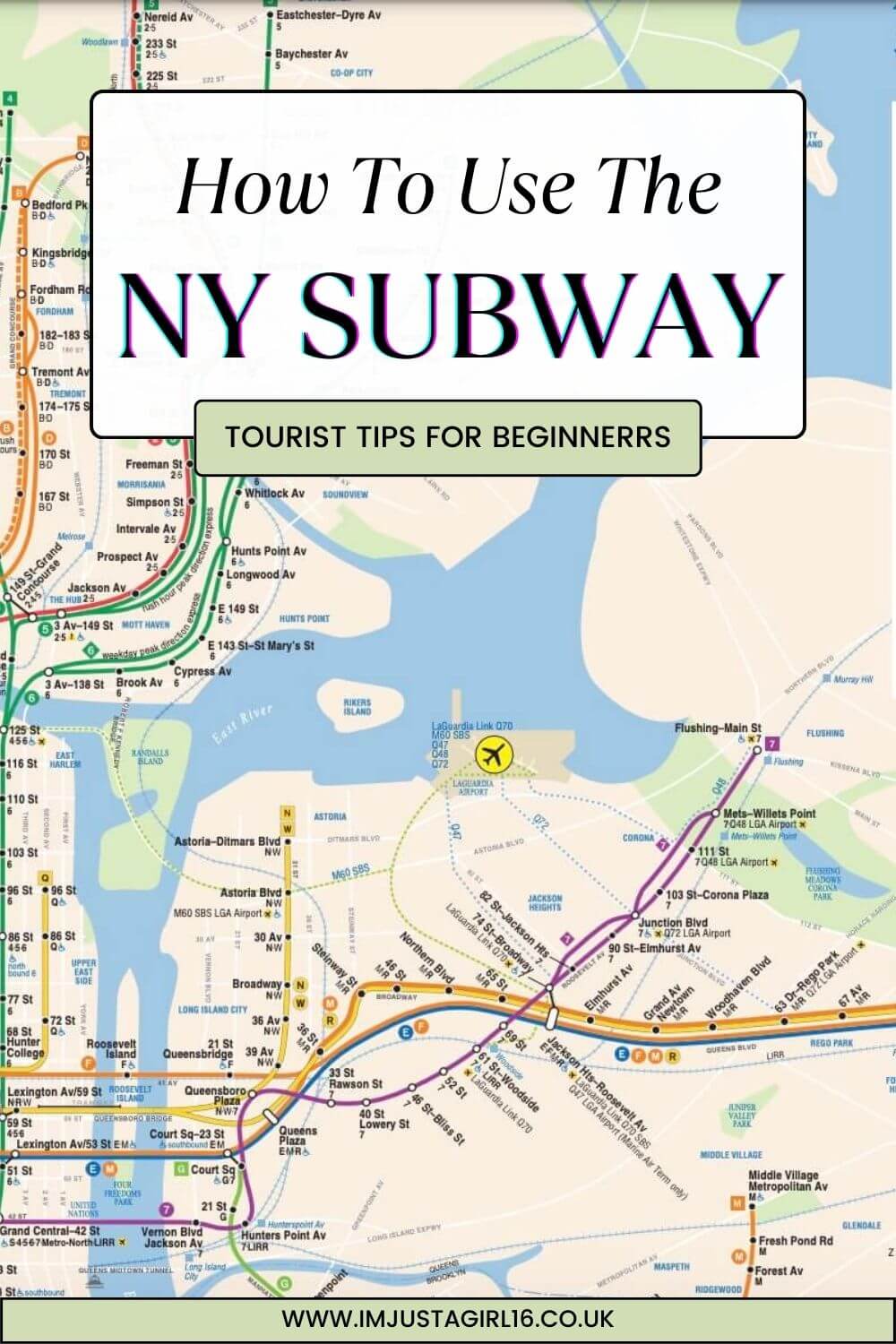
The [New York Metro] operates 24 hours a day, seven days a week, serving all five boroughs: [Manhattan], [Brooklyn], [Queens], the [Bronx], and [Staten Island] (though [Staten Island] has its own railway that connects to the subway system via ferry). With hundreds of stations and dozens of lines, it can whisk you from the vibrant energy of [Times Square] to the tranquil expanses of [Central Park], from the historic streets of the [Financial District] to the artistic enclaves of [Greenwich Village] and [SoHo]. Understanding how to use this vast network is not only practical but also immensely satisfying, turning potential logistical headaches into seamless exploration. This comprehensive guide will equip you with all the knowledge you need to confidently ride the [New York Metro], ensuring your visit is as smooth and exciting as possible.
Getting Started: Navigating the Subway System
Before you can embark on your subway adventures, you need to understand the basics of payment and how to read the city’s unique transportation language. The system has evolved over the years, introducing new technologies while maintaining some classic elements. Familiarizing yourself with these foundational aspects will make your first few rides significantly less stressful and more enjoyable.
Understanding the [MetroCard] and OMNY
For decades, the physical [MetroCard] has been the primary way to pay for subway and bus fares in [New York City]. However, the Metropolitan Transportation Authority (MTA) is transitioning to a new contactless payment system called OMNY (One Metro New York), which is rapidly becoming the preferred and most convenient option.
- The [MetroCard]: If you prefer a physical card or don’t have a contactless payment method, the [MetroCard] is still available. You can purchase a new [MetroCard] or add value to an existing one at vending machines located in every subway station. These machines accept cash, credit cards, and debit cards.
- Single Ride: A single ride [MetroCard] costs a little more than a standard fare and is valid for two hours. It’s generally not the most cost-effective option for multiple rides.
- Pay-Per-Ride [MetroCard]: You can load any dollar amount onto a reusable [MetroCard]. Each ride deducts the standard fare. This is great for those who will take several rides but not enough for an unlimited pass.
- Unlimited Ride [MetroCard]: These cards offer unlimited rides for a fixed period, typically 7-day or 30-day passes. If you plan to use the subway frequently throughout your stay, especially for more than 13 rides in a week, a 7-day unlimited [MetroCard] is often the most economical choice. Keep in mind that once activated, you cannot swipe the same unlimited [MetroCard] at the same station or bus route for about 18 minutes, preventing multiple people from using a single unlimited card simultaneously.
- OMNY (One Metro New York): This modern tap-and-go system allows you to pay your fare directly at the turnstile using your contactless credit or debit card, smartphone, or wearable device (like a smartwatch) linked to a digital wallet (e.g., Apple Pay, Google Pay). Simply tap your card or device on the OMNY reader, and the fare is deducted.
- Benefits of OMNY: It’s incredibly convenient, eliminates the need to purchase or refill a [MetroCard], and automatically caps your weekly spending at the equivalent of a 7-day unlimited pass once you hit a certain number of rides. This means you get the benefits of an unlimited pass without having to commit to buying one upfront. For most tourists, OMNY is now the easiest and most flexible option. Just be sure to use the same contactless payment method for all your taps to ensure the fare capping works correctly.
Decoding the [Subway Map] and Station Signs
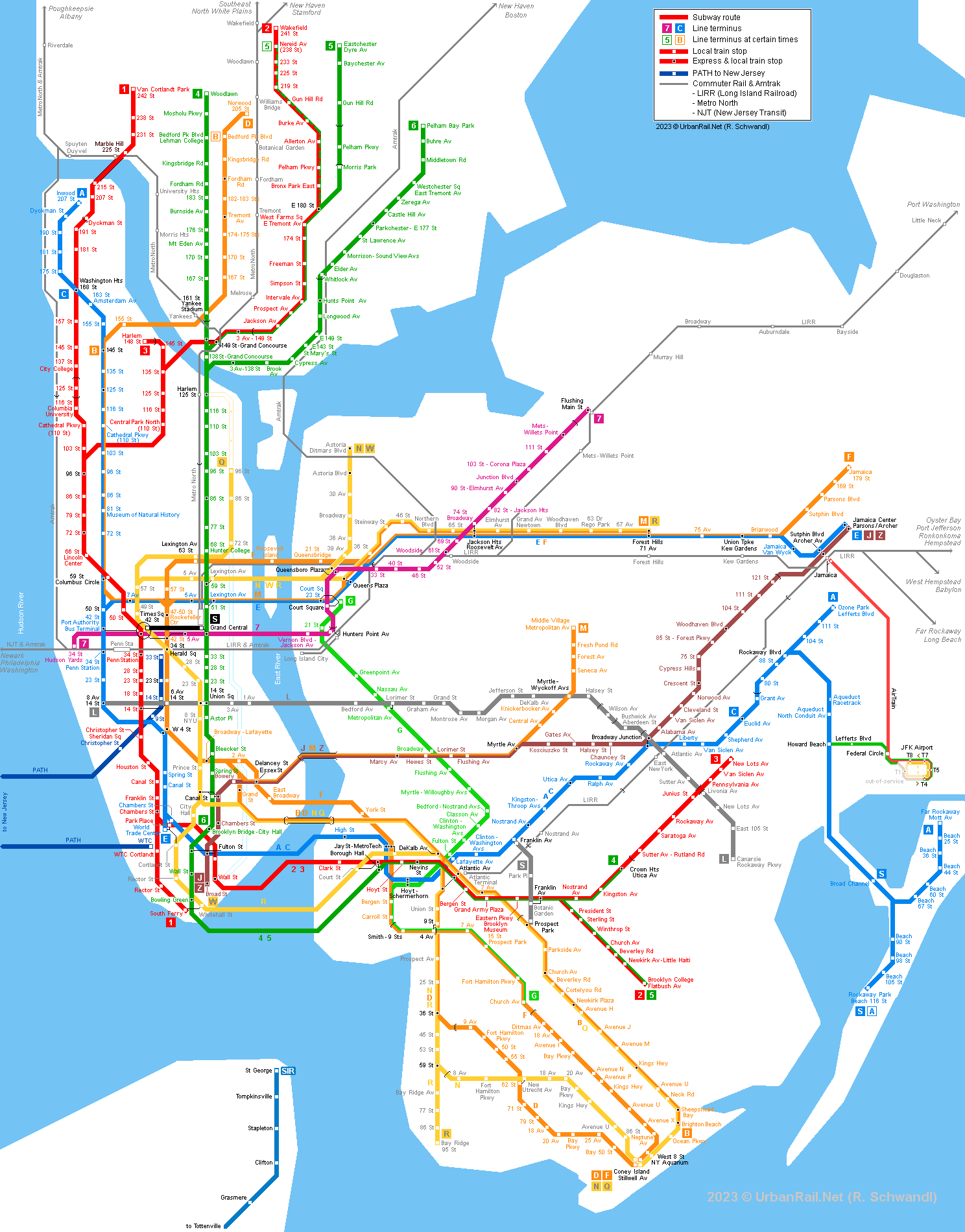
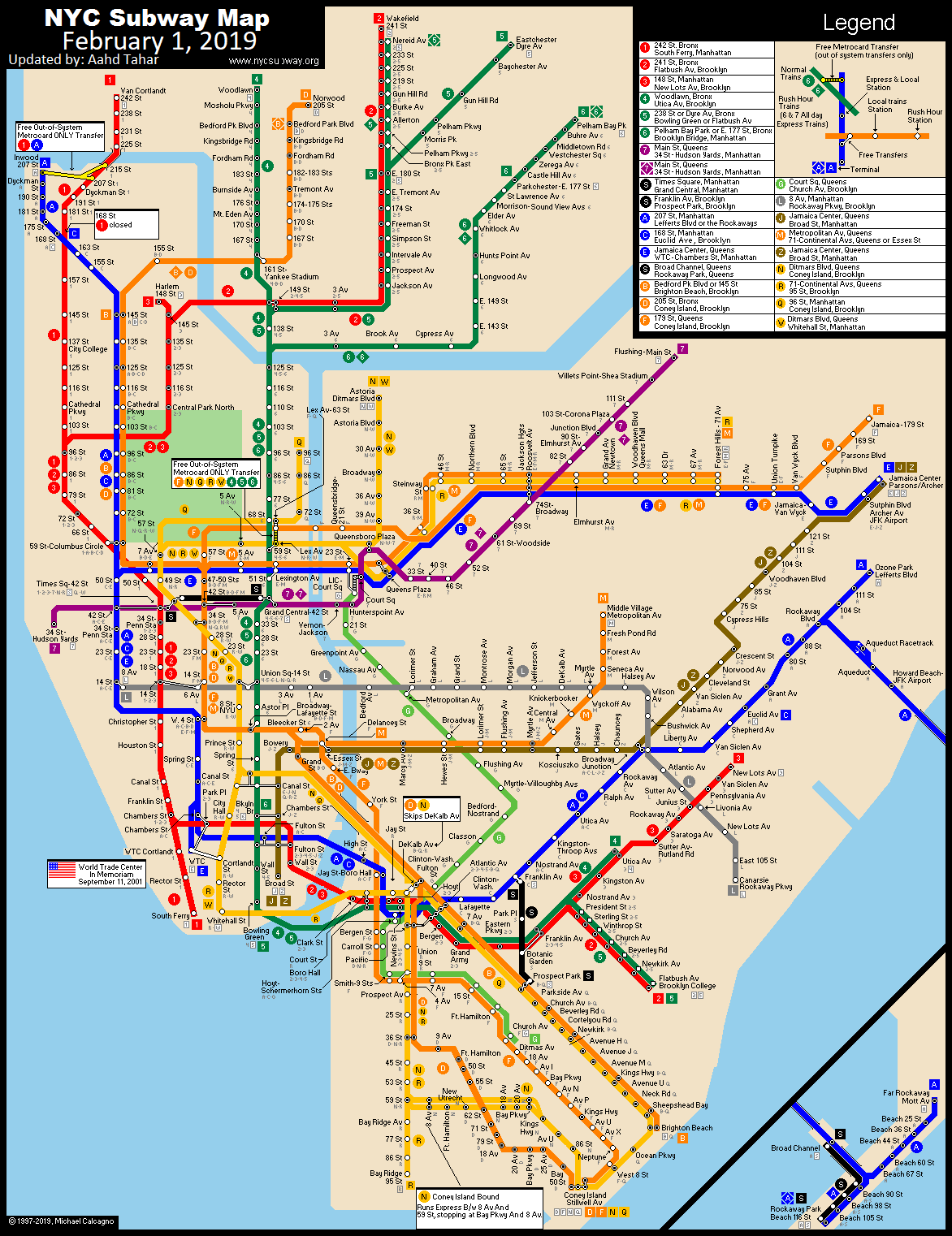
The [New York City] [Subway Map] can look like a colorful bowl of spaghetti at first glance, but once you understand its logic, it becomes an indispensable tool. You can find physical maps in stations, but it’s often more convenient to use digital maps on your smartphone via apps like Google Maps, Apple Maps, or dedicated subway apps, which provide real-time updates and directions.
- Lines and Colors: Different subway lines are represented by letters (A, B, C, etc.) or numbers (1, 2, 3, etc.) and color-coded. The color indicates the “trunk line” or the main artery that multiple services might share. For example, the 4, 5, and 6 trains all run on the “Lexington Avenue Line,” which is green on the map.
- Local vs. Express: This is a crucial distinction.
- Local trains (often indicated by a circle on the map) stop at every station along their route.
- Express trains (indicated by a diamond on the map) skip certain stations, making fewer stops and traveling faster between major hubs. Always double-check if your desired station is served by a local or express train. Many stations have separate platforms for local and express services.
- Uptown/Downtown: This terminology is used to describe the direction of travel, particularly in [Manhattan].
- Uptown trains generally travel north (higher numbered streets, towards [Harlem], [Bronx]).
- Downtown trains generally travel south (lower numbered streets, towards [Financial District], [Brooklyn]).
- In [Brooklyn], [Queens], and the [Bronx], trains are typically designated by their final destination or the direction relative to [Manhattan] (e.g., “Towards [Coney Island]” or “Towards [Jamaica Center]”).
- Entrances and Exits: Subway stations often have multiple entrances and exits. Pay attention to the signs, as some entrances might only lead to one direction (uptown or downtown) or to specific train lines. Look for the iconic green globe lamp posts (indicating 24-hour entry) or red globe lamp posts (indicating entrance during certain hours or exit-only).
- Transfers: You can transfer between different subway lines at designated stations without paying an additional fare, provided you don’t exit the system (go through the turnstile) between transfers. The [Subway Map] clearly shows transfer points.
Riding the Rails: Tips for a Smooth Journey
Once you’ve got your payment method and map in hand, you’re ready to dive into the authentic [New York City] experience. Here are some essential tips for a pleasant and efficient ride:
- Stand Clear of the Closing Doors, Please: This is a phrase you’ll hear often. Respect it. Do not attempt to force doors open or rush onto a closing train.
- Mind the Gap: Be aware of the space between the platform and the train.
- Hold On: Trains can accelerate and brake suddenly. Use the poles and straps for stability.
- Etiquette:
- Offer Seats: Be courteous and offer your seat to the elderly, pregnant individuals, or those with disabilities.
- Keep Baggage Out of the Way: Don’t block the aisle with large backpacks or luggage.
- Volume Control: Keep music, phone conversations, and general chatter at a respectful volume.
- No Littering: Use trash cans in stations.
- Rush Hour: The subway is busiest during peak commuting hours (roughly 7-9 AM and 4-7 PM on weekdays). Trains will be crowded, and platforms packed. If you can, try to travel outside these times.
- Safety: While generally safe, especially during the day, always be aware of your surroundings. Keep valuables secure and out of sight. If something feels off, move to a different car or platform. Uniformed police officers and MTA personnel are often present in stations and on trains.
- Announcements: Listen to train announcements for service changes, delays, or emergency information. Many stations also have digital signs displaying upcoming train times and service alerts.
Connecting with [New York City]’s Top Attractions
One of the greatest advantages of the [New York Metro] is its ability to connect you effortlessly with nearly every major landmark and attraction across the city. Forget expensive taxis or the frustration of traffic; the subway is your express ticket to exploration.
Iconic [Manhattan] Landmarks by Subway
[Manhattan] is a treasure trove of world-famous sites, and the subway lines crisscross the borough, bringing you within steps of them all.
- [Times Square]: The heart of the Theater District, accessible by numerous lines (N, Q, R, W, S, 1, 2, 3, 7, A, C, E trains to [Times Square] – 42nd Street). Immerse yourself in the bright lights and vibrant atmosphere.
- [Empire State Building]: A short walk from the 34th Street – Herald Square station (B, D, F, M, N, Q, R, W trains) or 34th Street – Penn Station (1, 2, 3, A, C, E trains).
- [Central Park]: Spanning many blocks, you can access different parts of the park from various stations. For the southern end (near [Columbus Circle]), use the A, B, C, D, 1 trains. For the [American Museum of Natural History] and the west side, use the B, C trains to 81st Street. The [Metropolitan Museum of Art] on the east side is near the 4, 5, 6 trains to 86th Street.
- [Statue of Liberty] & [Ellis Island]: Take the 4 or 5 train to Bowling Green, or the 1 train to South Ferry. From there, it’s a short walk to [Battery Park] to catch the ferry to these historic landmarks.
- Museum of Modern Art: Easily reached by the E, M trains to 53rd Street / 5th Avenue or the B, D, F trains to 47-50th Streets / [Rockefeller Center].
- [Grand Central Terminal]: An architectural marvel and a major transit hub. Accessible by 4, 5, 6, 7, S trains to 42nd Street – [Grand Central Terminal].
- [9/11 Memorial & Museum]: Take the A, C, J, Z, 2, 3, 4, 5 trains to Fulton Street or the E train to World Trade Center.
- [The High Line]: An elevated park built on former railway lines. Access points are available from stations like 14th Street (A, C, E, L, F, M trains) or 23rd Street (C, E trains).
- [Wall Street] & [Financial District]: Dive into the history of finance with the 2, 3, 4, 5, J, Z trains to [Wall Street] or Broad Street.
- Neighborhoods: Explore diverse neighborhoods like [Chinatown] (J, N, Q, R, W, Z, 6 trains to Canal Street), [Little Italy] (N, Q, R, W, Z, 6 trains to Canal Street), [SoHo] (N, Q, R, W, C, E, 1 trains), and [Greenwich Village] (A, B, C, D, E, F, M, 1 trains).
Exploring Beyond [Manhattan]: [Brooklyn], [Queens], and The [Bronx]
The subway isn’t just for [Manhattan]. It provides excellent access to the unique character of [New York City]’s other boroughs, offering a different perspective on the city’s vibrant culture and attractions.
- [Brooklyn]:
- [Brooklyn Bridge]: Walk across this iconic structure for stunning views of the [Manhattan] skyline. Access from the A, C trains to High Street – [Brooklyn Bridge], or the 4, 5, 6 trains to [Brooklyn Bridge] – City Hall.
- [Dumbo]: (Down Under the [Manhattan] Bridge Overpass) Known for its cobblestone streets, art galleries, and waterfront parks. Take the F train to York Street or the A, C trains to High Street.
- [Coney Island]: For a classic seaside amusement park experience, hop on the D, F, N, Q trains to [Coney Island] – Stillwell Avenue. This is a longer ride but a quintessential [New York City] summer day trip.
- [Queens]:
- [Flushing Meadows-Corona Park]: Home to the iconic Unisphere, [Citi Field] (home of the Mets), and the [Queens Museum]. Take the 7 train to Mets – Willets Point or [Flushing Meadows-Corona Park]. The 7 train itself is a cultural journey, running through many diverse neighborhoods.
- Long Island City (LIC): With its thriving arts scene, waterfront parks, and incredible views of the [Manhattan] skyline, LIC is easily accessible by the 7, N, W, E, M, G trains.
- The [Bronx]:
- [Yankee Stadium]: For baseball fans, catch a game! Take the 4, B, D trains to 161st Street – [Yankee Stadium].
- [Bronx Zoo] & [New York Botanical Garden]: Explore one of the largest metropolitan zoos and a stunning botanical garden. Accessible via the 2 or 5 trains to [Bronx] Park East or Fordham Road.
Airport Connections and Transfers
Getting to and from [New York City]’s airports can be a significant part of your travel planning. The subway system, combined with dedicated airport transit lines, offers cost-effective and often efficient ways to reach the city center.
From [JFK Airport] to the City
[JFK Airport] is well-connected to the subway system via the [AirTrain JFK].
- [AirTrain JFK]: This automated rail system operates 24/7, connecting all [JFK Airport] terminals with two major transit hubs: [Jamaica] Station and Howard Beach Station.
- To [Manhattan] (via [Jamaica] Station): From any [JFK Airport] terminal, take the [AirTrain JFK] to [Jamaica] Station. At [Jamaica] Station, you can transfer to the E, J, or Z subway lines, which will take you directly into [Manhattan]. The E train is generally the most direct route to midtown [Manhattan]. You’ll need to pay an [AirTrain JFK] fare in addition to your subway fare (which can be paid with a [MetroCard] or OMNY at [Jamaica] Station).
- To [Brooklyn] (via Howard Beach Station): From any [JFK Airport] terminal, take the [AirTrain JFK] to Howard Beach Station. From there, you can transfer to the A subway line, which serves downtown [Manhattan] and [Brooklyn].
Accessing [LaGuardia Airport]
LaGuardia Airport currently does not have direct subway service. However, it’s easily accessible via a combination of subway and bus.
- Subway + Bus Combination: Take the 7, E, F, M, R trains to 74th Street-Roosevelt Avenue station in [Jackson Heights], [Queens]. From there, transfer to the M60 SBS (Select Bus Service) bus, which goes directly to all [LaGuardia Airport] terminals. Alternatively, you can take the N or W trains to Astoria-Ditmars Blvd and transfer to the Q70 SBS “LaGuardia Link” bus. The Q70 offers express service to [LaGuardia Airport] terminals. You can use your [MetroCard] or OMNY for both the subway and the bus.
[Newark Liberty International Airport] via [PATH]
Newark Liberty International Airport is located in [New Jersey] but serves as a major airport for [New York City]. It’s accessible via a combination of [AirTrain Newark] and either [NJ Transit] trains or the [PATH] train.
- [AirTrain Newark] + [NJ Transit] + Subway: Take the [AirTrain Newark] from your terminal to the [Newark Liberty International Airport] Rail Station. From there, take a [NJ Transit] commuter train to [Newark] Penn Station. At [Newark] Penn Station, you can transfer to the [PATH] train to [Manhattan]. The [PATH] train connects to various subway lines in [Manhattan], including the A, C, E, 1, 2, 3, N, R, W, 4, 5, 6 trains, depending on your destination. Note that [PATH] fares are separate from the MTA subway fares (though a [MetroCard] can be used for [PATH], OMNY is not yet compatible with [PATH] for tap-and-go payments).
- [AirTrain Newark] + [PATH] (Direct to WTC): Alternatively, from [Newark Liberty International Airport] Rail Station, you can take [NJ Transit] to [Newark] Penn Station and then the [PATH] train that goes directly to the World Trade Center Transportation Hub in downtown [Manhattan].
Practical Advice for Subway Riders
Beyond simply knowing how to ride, a few extra tips can enhance your overall experience and ensure a stress-free journey through the city.
Safety and Accessibility
While the [New York Metro] is generally safe, particularly during the day and in well-trafficked areas, it’s always wise to exercise caution, especially late at night. Stay aware of your surroundings, keep your phone and valuables secure, and avoid empty cars if possible. If you encounter any issues, most stations have emergency call boxes, and uniformed police officers regularly patrol the system.
Accessibility for travelers with mobility challenges is an ongoing effort. While many newer or renovated stations are ADA compliant with elevators and ramps, a significant number of older stations are not. Look for the wheelchair icon on the [Subway Map] or check the MTA’s website or app for accessible stations and real-time elevator/escalator outages. Planning your route using accessible stations is crucial if you require an elevator or ramp.
Comparing Subway to Other Transport Options
The subway is often the fastest and most cost-effective way to get around [New York City], especially for longer distances or during rush hour when street traffic can be notoriously slow. However, it’s not always the only option, and sometimes other modes of transport might be preferable:
- Buses: [New York City]’s bus network complements the subway, reaching areas the subway doesn’t, especially for shorter distances or when connecting to airports without direct subway access. Buses are also a good option for sightseeing above ground. You can pay with a [MetroCard] or OMNY.
- Taxis & Ride-Shares (Uber/Lyft): Convenient for door-to-door service, especially with luggage or late at night. However, they can be expensive, especially in heavy traffic, and often slower than the subway during peak hours.
- Walking: For exploring specific neighborhoods or short distances between attractions, walking is often the best choice. It allows you to discover hidden gems and soak in the city’s atmosphere at your own pace. Many [Manhattan] avenues and streets are perfect for leisurely strolls.
- Ferries: For scenic routes, especially between boroughs or to attractions like [Governors Island], [New York City] ferries offer breathtaking views of the skyline and the [Statue of Liberty]. The [Staten Island] Ferry is even free!
In conclusion, the [New York Metro] is more than just a transportation system; it’s a vital artery of [New York City] life, offering an unparalleled way to experience the city’s diverse culture, iconic landmarks, and vibrant neighborhoods. By understanding its payment methods, reading the map, and following some basic etiquette, you’ll find that navigating [New York City] becomes an exciting part of your travel adventure. From the moment you swipe your [MetroCard] or tap your OMNY-enabled device, you’re not just taking a ride; you’re becoming part of the pulse of one of the world’s greatest cities. Embrace the journey, and enjoy everything the Big Apple has to offer, seamlessly connected by its legendary subway.