
Navigating the sprawling metropolis of New York City can seem daunting, but at its heart lies an efficient, albeit sometimes chaotic, system that empowers millions of residents and visitors daily: the New York City Subway. As the most extensive rapid transit system in the world by number of stations, the subway is more than just a means of transportation; it’s an immersive experience, a living artery that connects diverse neighborhoods, iconic landmarks, and countless attractions. For anyone planning to travel to NYC, mastering the subway is not just a convenience—it’s an essential skill that unlocks the city’s true potential, offering a unique glimpse into its vibrant lifestyle.
Forget the endless traffic jams and expensive taxi fares; the subway offers a fast, affordable, and authentic way to explore. From the bustling streets of Manhattan to the artistic enclaves of Brooklyn, the diverse communities of Queens, and even parts of the Bronx, the subway blankets the city, bringing every destination within reach. This comprehensive guide will equip you with all the knowledge needed to confidently navigate the NYC Subway system, ensuring your tourism experience is as smooth and enjoyable as possible, whether you’re a first-time visitor or seeking to refine your urban exploration skills.
Navigating the NYC Subway System: Getting Started
The first step to confidently using the New York City Subway is to demystify its structure. While its sheer size can initially overwhelm, understanding a few core principles will quickly make it feel intuitive.
Understanding the Basics: Maps, Lines, and Directions
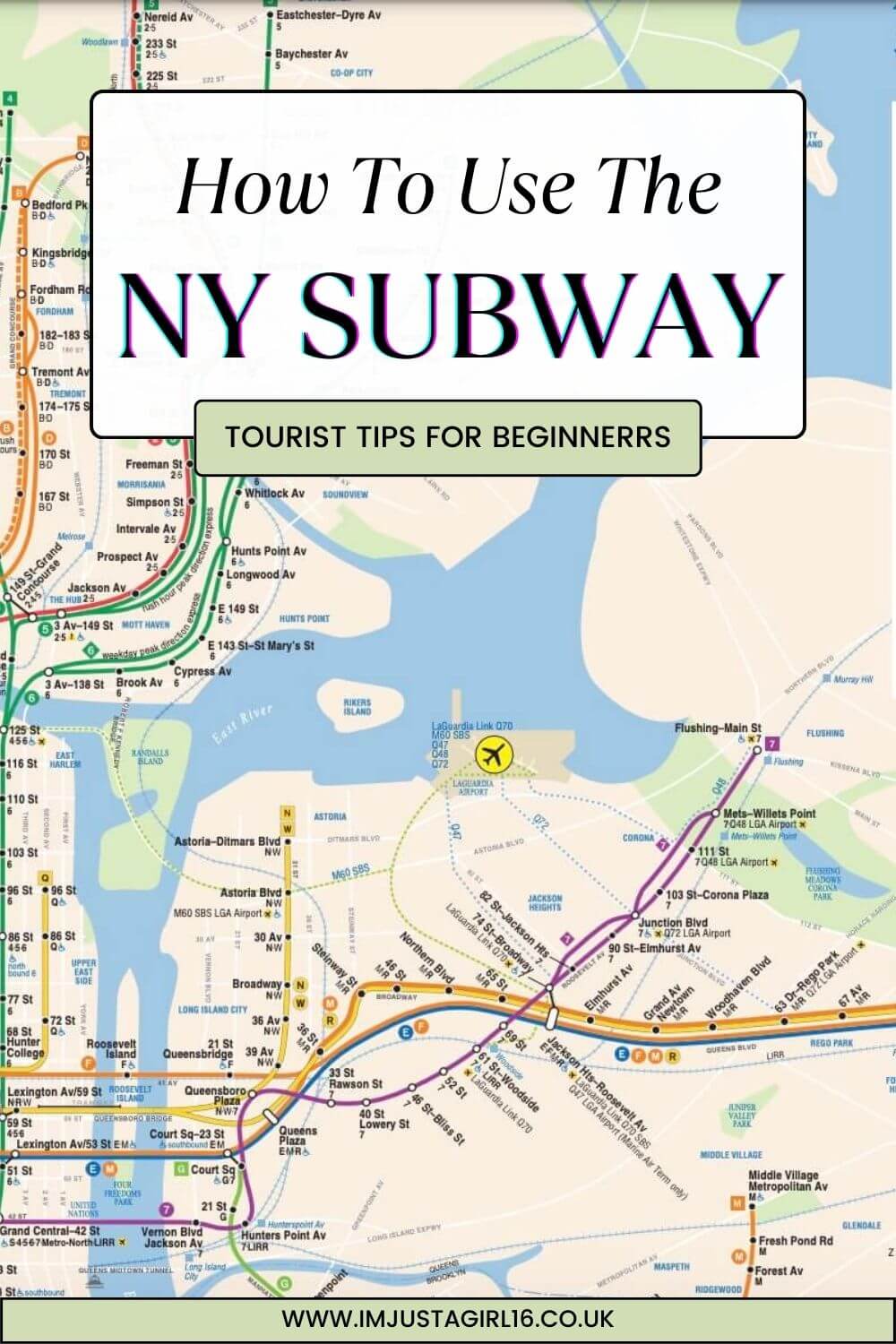
The New York City Subway system is characterized by its network of numbered and lettered lines, each color-coded for easier identification on maps. Learning to read these maps is paramount. You’ll find detailed maps posted in every station, inside every train car, and readily available online or through mobile apps.
- Color-Coded Lines: Each line group (e.g., A, C, E trains are blue; 1, 2, 3 trains are red) shares a common route for a significant portion of its journey, simplifying transfers and navigation. However, it’s crucial to pay attention to the specific letter or number, as trains within the same color group can diverge to different final destinations.
- Local vs. Express Trains: A critical distinction to grasp is between local and express trains. Local trains stop at every station along their route, indicated by solid black circles on the subway map. Express trains, marked by white circles, skip several stops to move faster between major hubs. Always check whether your intended station is served by local or express trains. If you accidentally board an express, you might need to ride to the next express stop and transfer back to a local train heading in the correct direction.
- Uptown/Downtown & Northbound/Southbound: Unlike many European metro systems, NYC Subway platforms are typically designated by direction rather than destination. In Manhattan, trains heading north are generally “Uptown” or “Northbound,” while those heading south are “Downtown” or “Southbound.” In the outer boroughs, these directions might be referred to by the borough name (e.g., “Towards Brooklyn” or “Towards Queens”). Always confirm the direction before descending to a platform, as platforms for opposing directions can sometimes be on different levels or even separate entrances.
Fares and Payment: Your MetroCard and OMNY Options
Paying for your ride is straightforward, with two primary methods available: the traditional MetroCard and the newer, more modern OMNY system.
- The MetroCard: The iconic yellow MetroCard has been the standard for decades. You can purchase a new MetroCard for a small fee ($1) and load it with value at any station vending machine or booth.
- Pay-Per-Ride: Load a specific dollar amount onto your card. Each ride costs $2.90. This is suitable for infrequent travelers.
- Unlimited Ride: For tourists or those planning extensive subway use, an unlimited 7-day or 30-day MetroCard offers incredible value. The 7-day unlimited pass, for instance, allows for unlimited rides for a fixed price, quickly paying for itself after just 13 trips. This is a quintessential budget travel tip for exploring NYC.
- OMNY (One Metro New York): OMNY is the MTA’s contactless payment system, representing the future of subway fares. With OMNY, you can simply tap your contactless credit/debit card, smartphone, or wearable device directly on the turnstile reader.
- Convenience: No need to buy or refill a physical card. Your contactless payment method acts as your fare.
- Fare Capping: A significant benefit of OMNY is “fare capping.” After 12 paid taps using the same payment method within a 7-day period (Monday to Sunday), all subsequent rides for the remainder of that week become free. This effectively gives you an unlimited pass without having to purchase one upfront, making it ideal for those who aren’t sure how much they’ll use the subway.
- Availability: OMNY is available at all subway stations and on all MTA buses.
Whether you opt for the classic MetroCard or the modern OMNY system, both provide seamless access to the entire subway network.
Practical Tips for a Smooth Subway Journey
Beyond understanding the map and payment methods, a few practical tips can significantly enhance your subway experience and help you navigate like a true New Yorker.
Entering and Exiting Stations: Etiquette and Safety
Subway stations can be bustling, especially during peak hours. Observing proper etiquette and safety measures is crucial.
- Swiping/Tapping In: When using a MetroCard, swipe it quickly and smoothly through the slot. If using OMNY, simply tap your payment method on the reader. Wait for the “GO” message on the turnstile screen before pushing through. Don’t tailgate!
- Turnstiles: If carrying luggage or a stroller, look for the emergency exit gate, which can sometimes be opened by an attendant (or used by tapping your card and walking through if it allows).
- Platform Safety: Always stand behind the yellow safety line on the platform edge. Trains enter stations quickly, and the air currents can be strong. Never attempt to retrieve items that fall onto the tracks; notify a station attendant.
- Escalator Etiquette: If an escalator is present, stand on the right to allow others to walk on the left. This unwritten rule keeps traffic flowing smoothly.
Riding the Train: What to Expect Onboard
Once on the platform, waiting for your train requires a bit of awareness.
- Checking Signs: Confirm the train number/letter and its direction (Uptown/Downtown, Northbound/Southbound, or borough destination) on the digital signs on the platform and on the train itself before boarding.
- Door Etiquette: When a train arrives, always let passengers exit before attempting to board. This courtesy speeds up the process for everyone.
- Finding a Seat: During rush hour, finding a seat can be a challenge. If you do get one, consider giving it up for elderly passengers, pregnant individuals, or those with disabilities.
- Personal Space: New York City subways can get crowded. Be prepared for close quarters, especially during peak commute times (roughly 7-9 AM and 5-7 PM on weekdays). Keep bags on your lap or between your feet rather than on adjacent seats.
- Announcements: Pay attention to onboard announcements for service changes, delays, or station closures. The MTA website and apps also provide real-time updates.
- Safety Onboard: Keep an eye on your belongings. While generally safe, petty theft can occur. Avoid displaying expensive items prominently.
Essential Apps and Resources
Modern technology makes navigating the subway easier than ever.
- Google Maps: Google Maps is an indispensable tool, offering real-time subway directions, estimated travel times, and service alerts.
- Citymapper: Many New Yorkers swear by Citymapper, an app known for its highly accurate real-time data, detailed transit options, and sometimes even humor.
- MTA’s Official App: The MTA also offers its own official apps that provide service status, schedules, and maps.
- Offline Maps: Download subway maps or use apps with offline capabilities in case you lose signal underground.
Exploring New York’s Landmarks by Subway
One of the greatest advantages of the New York City Subway is its unparalleled access to virtually every major landmark and attraction in the city. It’s an integral part of the tourism fabric, enabling visitors to immerse themselves in local culture and history without breaking the bank.
Iconic Destinations Just a Ride Away
The subway connects you directly to the heart of New York’s most famous sights:
- Times Square: The Crossroads of the World is served by numerous lines (1, 2, 3, N, Q, R, W, S, 7, A, C, E trains) converging at the Times Square-42nd Street complex. Step out of the station directly into the dazzling lights.
- Statue of Liberty & Ellis Island: To visit these historic sites, take the 1 train to South Ferry or the R/W train to Whitehall Street in Lower Manhattan. From there, it’s a short walk to Battery Park where ferries depart for the Statue of Liberty and Ellis Island.
- Central Park: This urban oasis is accessible from multiple points. The A, B, C, D trains stop along its western edge (Columbus Circle for the southwestern entrance, or stations along Central Park West to reach the American Museum of Natural History), while the N, R, W, Q trains serve the southeastern entrance. The 4, 5, 6 trains run along the eastern side, near the Metropolitan Museum of Art.
- Empire State Building: Take the B, D, F, M, N, Q, R, W trains to 34th Street–Herald Square or the 1, 2, 3 trains to 34th Street–Penn Station. The iconic skyscraper is just a few blocks away.
- Grand Central Terminal: This architectural marvel is a major transportation hub itself, served by the 4, 5, 6, 7, and S (Shuttle) trains. You’ll emerge directly into its magnificent main concourse.
- Brooklyn Bridge: To walk across the Brooklyn Bridge, take the J or Z train to Chambers Street in Manhattan for the pedestrian entrance, or the A or C train to High Street-Brooklyn Bridge on the Brooklyn side.
- World Trade Center & Financial District: The E train to World Trade Center or the A, C, J, Z, 2, 3 trains to Fulton Street will bring you to the heart of the Financial District, including the 9/11 Memorial & Museum and Wall Street.
Beyond Manhattan: Boroughs to Explore
While Manhattan holds many famous landmarks, the subway system extends its reach to truly explore the diverse culture and unique atmospheres of the other boroughs.
- Brooklyn: Ride the D, F, N, Q trains to Coney Island for amusement parks and beach fun. The L train takes you to the trendy neighborhoods of Williamsburg and Bushwick, known for their art scenes, food, and nightlife. The 2, 3 trains can take you to Brooklyn Heights for stunning skyline views.
- Queens: The 7 train, known as the “International Express,” takes you through incredibly diverse neighborhoods like Jackson Heights and Flushing, offering an incredible culinary journey and a glimpse into varied immigrant cultures. The N and W trains serve Long Island City, an emerging hub for arts and waterfront parks.
- The Bronx: Take the 4, B, or D trains to reach the Bronx Zoo or the New York Botanical Garden, two of the city’s premier natural attractions.
Subway Travel for Different Lifestyles
The New York City Subway is not just a mode of transport; it’s a versatile tool that caters to various lifestyle needs, making it an ideal choice for different types of travelers.
Budget-Friendly Exploration
For those pursuing budget travel in New York City, the subway is an absolute game-changer. Compared to the escalating costs of taxis, ride-sharing services, or even private car rentals, the subway offers unparalleled affordability. An unlimited 7-day MetroCard or utilizing OMNY’s fare capping ensures that you can explore every corner of the city without constantly worrying about transportation expenses. This allows travelers to allocate more of their budget towards local food, unique experiences, or perhaps even an upgrade in their accommodation, turning a potentially expensive trip into an accessible adventure. It’s also a fantastic way to connect with the city’s pulse, blending in with daily commuters and observing the authentic rhythm of New York life.

Family Travel Considerations
Traveling with a family often involves unique challenges, and the subway presents both advantages and considerations. For families seeking family trips and memorable experiences in NYC, the subway can be an exciting part of the adventure.
- Accessibility: While some stations are equipped with elevators and ramps, many older stations are not, which can pose a challenge for strollers or wheelchairs. Plan your routes using accessibility filters on apps like Google Maps or the MTA website.
- Safety with Children: Always hold children’s hands firmly on platforms and ensure they stay behind the yellow safety line. Onboard, keep them close and teach them basic subway etiquette. The crowds can be overwhelming for young children, so consider traveling during off-peak hours if possible.
- Engagement: Turn the subway ride into an educational activity by pointing out different lines, colors, and the destinations. It’s a great way to introduce them to urban transit systems. Children under 44 inches tall ride free when accompanied by a paying adult.
Business Travelers and Efficiency
For business travelers with tight schedules and critical appointments, the NYC Subway is often the most reliable option for getting around.
- Reliability: Despite occasional delays, the subway generally offers predictable travel times, especially compared to surface traffic which can be highly unpredictable. This makes it ideal for reaching meetings in the Financial District, Midtown, or beyond without the stress of being stuck in a taxi.
- Avoiding Traffic: At peak hours, when Manhattan streets are gridlocked, the subway moves swiftly underground, allowing business professionals to maximize their time and arrive promptly.
- Cost-Effectiveness: For companies or individuals managing travel expenses, the subway is a cost-effective alternative to continuous taxi or ride-share use, aligning with principles of smart business stays.
- Connectivity: Major business hubs like Midtown East (Grand Central Terminal), Midtown West (Penn Station), and Lower Manhattan are exceptionally well-served by multiple subway lines, providing seamless access from various hotels and residential areas.
The New York City Subway, with its vast network and continuous operation, is undeniably the backbone of urban mobility in the city. Mastering its use transforms a potentially confusing visit into an empowering journey, allowing you to explore New York’s incredible destinations with confidence and ease. Embrace the rumble, the crowds, and the unique energy of the subway – it’s an unforgettable part of the authentic New York experience. With these tips and guides in hand, you’re ready to dive into the adventure and uncover the magic of New York City, one subway stop at a time.
LifeOutOfTheBox is a participant in the Amazon Services LLC Associates Program, an affiliate advertising program designed to provide a means for sites to earn advertising fees by advertising and linking to Amazon.com. Amazon, the Amazon logo, AmazonSupply, and the AmazonSupply logo are trademarks of Amazon.com, Inc. or its affiliates. As an Amazon Associate we earn affiliate commissions from qualifying purchases.