
The vast, sprawling landscapes of Texas in the post-Civil War era were home to millions of longhorn cattle, hardy creatures that roamed freely, multiplying in number and representing an untapped economic bounty. Meanwhile, across the burgeoning Eastern United States, a rapidly growing population and industrial expansion created an insatiable demand for beef. The disconnect was stark: an abundance of cattle in the West met by a desperate need in the East. Bridging this immense geographical and logistical gap was one of the most iconic and challenging endeavors in American history: the cattle drives.
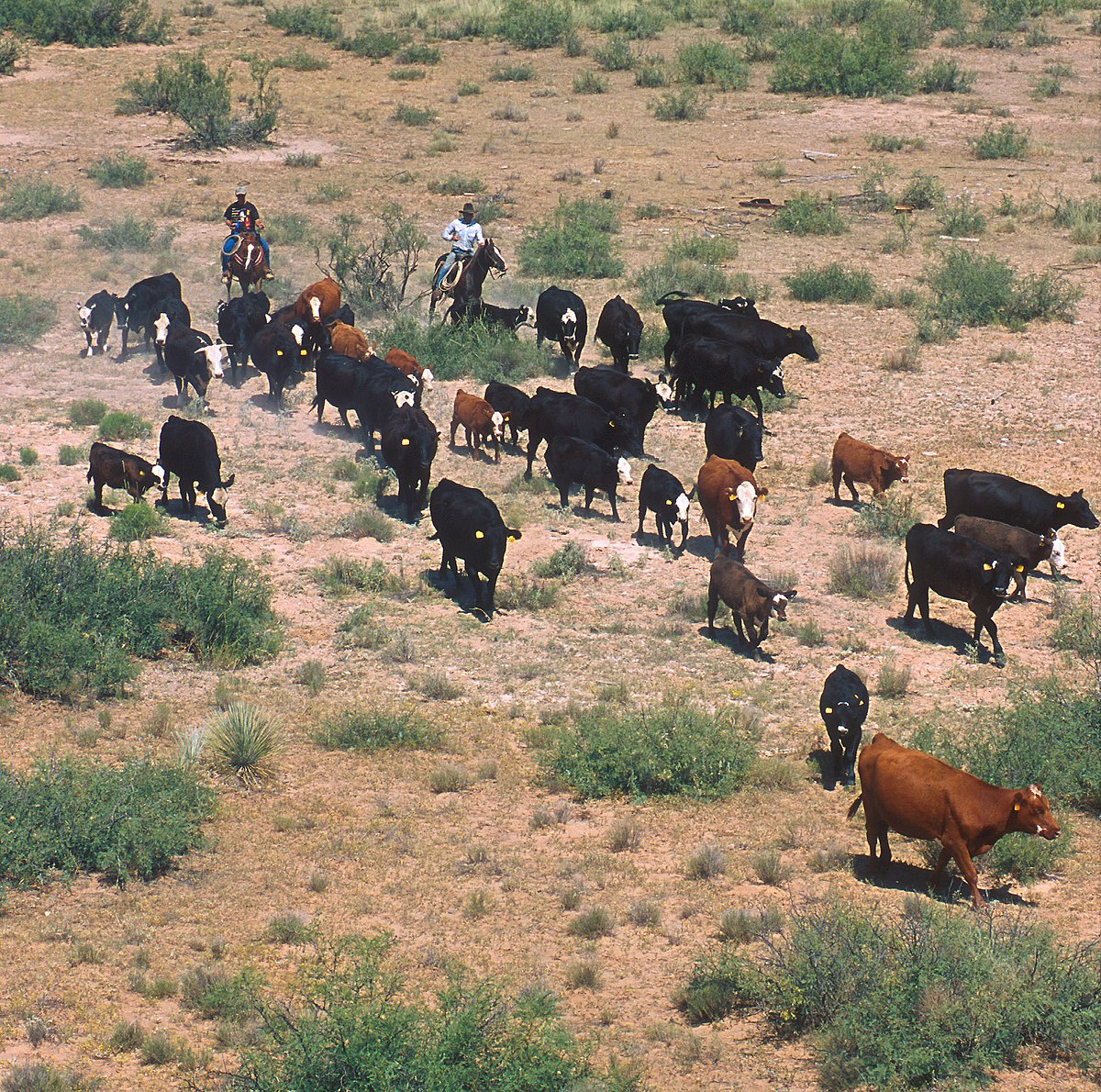
These epic journeys, undertaken by dedicated cowboy crews, were far more than simple treks. They were complex logistical operations, fraught with danger, demanding extraordinary skill, resilience, and an intimate understanding of the land. For roughly two decades, from the mid-1860s to the mid-1880s, these drives became the primary method of transporting millions of Texas longhorns from their natural grazing grounds to the burgeoning railheads in Kansas and other Midwestern states. From these points, the “iron horses” of the nascent railroads would then carry the livestock swiftly to processing centers and hungry markets in the East. This era not only shaped the economic future of the United States but also forged the enduring mythos of the cowboy and the Wild West, a lifestyle that continues to captivate imaginations worldwide. Understanding how these drives functioned offers a fascinating glimpse into a pivotal period of American history and a unique form of historical travel that redefined a nation.
The Dawn of the Cattle Drives: Necessity and Opportunity
The catalyst for the great cattle drives was a confluence of economic factors, geographic realities, and historical events. Post-Civil War Texas found itself with an estimated five million longhorn cattle, many of them feral or semi-wild, roaming vast unfenced ranges. These animals, descendants of Spanish stock brought to North America centuries earlier, were remarkably tough, resistant to disease, and capable of surviving on sparse forage. They were, however, worth little in Texas, perhaps only $3 to $5 a head. In contrast, the rapidly expanding industrial cities of the North and East, recovering from the war and experiencing a population boom, clamored for meat. A single longhorn could fetch $30 to $50, sometimes even more, at a northern railhead. This staggering profit margin was the driving force behind the arduous journeys.
Texas Longhorns and Eastern Markets: A Supply and Demand Story
The Texas longhorn was perfectly suited for the task. Its lean, muscular build, long legs, and hard hooves enabled it to cover long distances without undue fatigue. Their inherent toughness meant they could withstand the rigors of the trail, from blazing sun to torrential rains and icy winds. Furthermore, their gregarious nature meant they herded well, a crucial factor when managing thousands of animals simultaneously. The primary challenge, then, was not merely moving the cattle, but finding a viable route to the northern markets. Earlier attempts, particularly before the Civil War and the Mexican-American War, had seen some cattle drives to Missouri or New Orleans, but these were limited in scope and fraught with difficulties, including hostile Native American territories and early rail lines that didn’t yet reach far enough West.
The critical breakthrough came with the expansion of the railroads into Kansas following the Civil War. Towns like Abilene in Kansas became the vital link, transforming from sleepy frontier outposts into bustling “cow towns” overnight. These towns represented the culmination of the long journey for the cowboys and the beginning of a new phase for the cattle. They were the key logistical hubs, offering a nexus for trade, rudimentary accommodation for exhausted drovers, and the facilities needed to load thousands of head onto trains.
The Birth of the Cattle Trails
With the economic incentive firmly established and railheads extending further West, a network of legendary cattle trails began to emerge. These weren’t paved roads or clearly marked paths in the modern sense; rather, they were well-worn routes carved by millions of hooves over years.
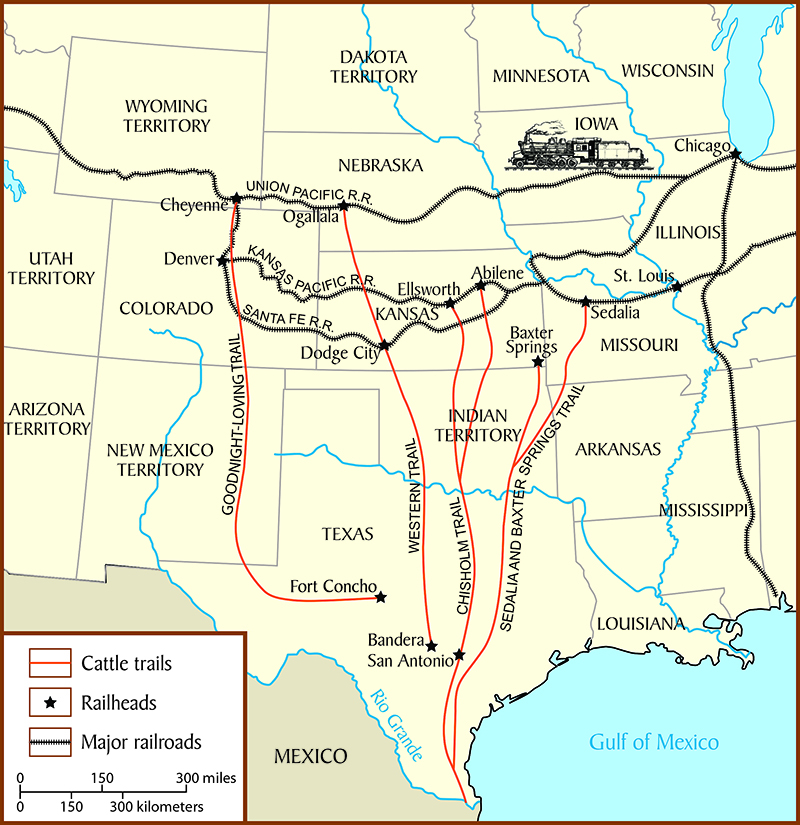
The first significant post-war trail was the Sedalia Trail, also known as the Missouri Trail. It originated in South Texas and stretched northeast through East Texas and Indian Territory (modern-day Oklahoma) into Missouri. However, this route quickly became problematic due to conflicts with settlers who resented the cattle trampling their crops and potentially spreading disease, leading to “quarantine laws” prohibiting Texas cattle.
This pushed drovers further West, giving rise to the most famous of all: the Chisholm Trail. Named after Jesse Chisholm, a part-Cherokee trader who blazed a wagon road through Indian Territory, the trail stretched for over 1,000 miles from South Texas to Abilene, Kansas. Between 1867 and 1884, an estimated 4 to 5 million cattle made this epic journey, making it a monumental artery of commerce and a quintessential symbol of the American West.
As settlements and fences encroached on the Chisholm Trail, and railheads pushed even further West, other routes emerged. The Western Trail, also called the Dodge City Trail, became prominent in the late 1870s and early 1880s. Originating in central Texas, it passed through Fort Worth, Texas, then into Indian Territory, and on to Dodge City, Kansas, and sometimes even further north to Ogallala, Nebraska, or even into Wyoming and Montana. Each of these trails represented a Herculean feat of navigation and endurance, a testament to the adventurous spirit of the cowboy. Today, these historic routes are recognized as significant landmarks, attracting tourism and offering a glimpse into the lifestyle of a bygone era.
Life on the Trail: The Grit and Glory of the Cowboy
The romantic image of the cowboy is largely derived from the reality of the cattle drives. These men, often young, from diverse backgrounds, signed up for meager wages and the promise of adventure, embarking on journeys that could last anywhere from two to four months. It was a lifestyle defined by hardship, relentless work, and an unbreakable camaraderie forged in the face of constant danger. A typical crew for a herd of 2,000 to 3,000 cattle would consist of 10-12 cowboys, a trail boss who commanded the operation, a cook, and a wrangler to manage the remuda (string of spare horses).
Daily Routines and Rhythms of the Drive
Life on the trail followed a demanding, predictable rhythm dictated by the needs of the herd. Before dawn, the cook would rise to prepare breakfast, often coffee, beans, bacon, and biscuits, cooked over an open fire. Cowboys would eat quickly, saddle their horses, and begin to spread the herd out, allowing them to graze as they moved. The goal was to move the cattle steadily, but not too fast, ensuring they gained or at least maintained weight. An average day saw the herd cover 10-15 miles.
The trail boss was the undisputed leader, responsible for navigation, managing the crew, and making critical decisions. Cowboys held various positions around the herd: “point” riders at the front guided the herd, “flank” riders on the sides kept them moving, and “drag” riders at the rear, often the least experienced, endured the dust and heat. Communication was essential, often using hand signals, whistles, or calls to avoid spooking the herd. Evenings were spent around the campfire, where the cook, in his chuck wagon, was the heart of the camp. After a long day, a simple meal and perhaps a song provided the only respite before the dreaded “night watch,” where cowboys rode around the sleeping herd, singing to them to keep them calm and alert to any signs of trouble. This constant presence and careful management ensured the herd’s well-being and security.
Navigating Nature’s Challenges: Rivers, Weather, and Wildlife
The trail was a relentless test against the forces of nature. River crossings were perhaps the most dangerous and challenging obstacles. Major rivers like the Red River or the Canadian River could be wide, swift, and treacherous, especially after heavy rains. The cattle had to be carefully coaxed or driven across, often swimming, while cowboys risked their lives guiding them or rescuing stragglers. Many men and animals were lost during these crossings.

Weather extremes were another constant threat. Blazing summer heat, dust storms, hailstorms, and sudden torrential downpours could turn the trail into a quagmire. Lightning, in particular, was feared, as it could trigger a terrifying stampede. A stampede, where thousands of panicked cattle bolted in unison, was the most dreaded event for cowboys. It could lead to severe injuries or death for the riders caught in their path, scatter the herd for miles, and cost the drover valuable time and money.
Beyond natural elements, cowboys also faced threats from rustlers, who sought to steal cattle, and occasionally, conflicts with Native American tribes, whose lands the trails often traversed. While many tribes eventually established treaties for passage, early drives faced significant resistance. Even mundane elements could be problematic; thorny brush, rattlesnakes, and fatigue were daily companions. The resilience required to overcome these challenges made the cowboy a legendary figure. For modern tourists exploring these historical destinations, imagining the harsh conditions while staying in comfortable hotels or resorts offers a vivid contrast and appreciation for the past.
The Chisholm Trail and Other Legendary Routes
As mentioned, the Chisholm Trail stands as the epitome of the cattle drive era. Originating near San Antonio and Cuero, Texas, it stretched northward through the Cross Timbers of Texas, across Indian Territory (present-day Oklahoma), and into Kansas, terminating at railheads in Abilene, Ellsworth, or Newton. This 1,000-mile artery alone saw over four million head of cattle pass through its dusty paths. The journey wasn’t a straight line; it meandered, following rivers, seeking out water sources, and avoiding rough terrain or hostile areas.
Other trails, like the Great Western Trail (or Western Trail) and the Goodnight-Loving Trail, served different purposes and destinations. The Western Trail, becoming active later than the Chisholm Trail, guided cattle further West to Dodge City, Kansas, and beyond, extending into Nebraska, Wyoming, and Montana to stock ranches in those nascent states. The Goodnight-Loving Trail was famous for supplying beef to military outposts and Indian reservations in New Mexico and Colorado. Each trail had its unique challenges and landmarks, but all shared the common thread of rugged individual determination and an incredible spirit of enterprise.
The Economic and Cultural Impact of the Cattle Drives
The cattle drives were not merely a means of transportation; they were a powerful engine of economic growth and cultural formation. They transformed the American economy, particularly in the burgeoning West, and cemented enduring images of American identity. The vast profits generated by moving cattle from Texas to the East spurred investment, stimulated trade, and created a new cattle industry that extended from ranch to railhead, and from processing plant to dinner table.
Trail Towns and Boomtowns: Hubs of Commerce and Culture
The arrival of the cattle drives at their railhead destinations caused an explosion of activity and commerce. Towns like Abilene, Dodge City, and later Wichita in Kansas, and even further north like Ogallala in Nebraska, transformed almost overnight into bustling, sometimes lawless, boomtowns. These places were the end of the line for the cattle and the cowboys, offering the first taste of civilization after months on the open range.
Here, cowboys finally received their pay and had the opportunity to spend it. Saloons, dance halls, general stores, and rudimentary hotels or boarding houses sprang up to cater to their needs. These towns became melting pots of cultures, attracting merchants, gamblers, saloon keepers, and lawmen. They were centers of trade where cattle were bought and sold, often for cash, creating a vibrant, if chaotic, economic ecosystem. For many, these towns offered a glimpse into the raw, untamed lifestyle of the Wild West, a cultural touchstone that continues to draw tourism today. Visitors can explore museums and historical sites that tell the stories of these iconic locations, often with options for modern accommodation that blends historical charm with contemporary amenities.
Shaping the American West and Beyond
The cattle drives played a crucial role in the development and settlement of the American West. They created new industries, facilitated the movement of goods and people, and helped establish transportation networks that would eventually be replaced by the very railroads they fed. The trails opened up vast stretches of the Great Plains to ranching and subsequent settlement. The enduring figure of the cowboy, with his rugged individualism, self-reliance, and connection to the land, became an iconic symbol of American national identity and culture, inspiring countless books, films, and legends. This cultural legacy continues to thrive, visible in rodeos, western wear, and the romanticized view of the open range.
The End of an Era: The Rise of the Railroads
The era of the great cattle drives, though intense and impactful, was relatively short-lived. By the mid-1880s, the economic and logistical landscape of the United States had fundamentally changed, rendering the long-distance trail drives obsolete. The very technology they initially relied upon – the railroads – ultimately spelled their demise.
Iron Horses Transform Transportation
The expansion of the railroads was relentless. Companies like the Union Pacific Railroad and the Santa Fe Railroad pushed their tracks further and further into Texas and the Southwest, reaching closer to the cattle’s grazing grounds. This meant that cattle no longer needed to be driven hundreds or even thousands of miles to distant railheads in Kansas. Instead, they could be loaded onto trains much closer to their origin points, drastically reducing travel time, cattle loss, and the immense labor required. Towns like Fort Worth became major railheads, replacing the traditional cow towns of Kansas.
Furthermore, the proliferation of barbed wire fences across the Great Plains by homesteaders and ranchers, seeking to protect their land and crops, began to crisscross and block the traditional cattle trails. The open range, once boundless, was steadily being enclosed. This, combined with severe winters in 1886 and 1887 that devastated many herds, dealt a final blow to the profitability and practicality of the long drives. The efficiency and speed of the railroads for mass transport simply couldn’t be matched by even the most skilled cowboy crew.
Legacy and Enduring Romance
While the great cattle drives faded into history, their legacy continues to shape our understanding of the American West. The very act of moving cattle from Texas to the East solidified the economic backbone of a burgeoning nation and fostered the quintessential American image of the rugged individual facing the vast wilderness. The cowboys, the trail bosses, the chuck wagon cooks, and the hardy longhorns all became intertwined in a narrative of perseverance and adventure.
Today, while direct cattle drives are largely a thing of the past, their influence remains evident. Many of the old cattle trails are now commemorated as historical routes, serving as tangible landmarks for tourism. Visitors can explore museums, historic districts in former cow towns, and even participate in reenactments or ranch experiences that offer a taste of the cowboy lifestyle. The spirit of the cattle drives lives on in the culture of the West, in the music, literature, and films that celebrate this unique chapter of American history, reminding us of a time when the path to prosperity was literally carved by millions of hooves across an untamed landscape. From the dusty trails to modern transportation hubs, the story of how cattle were transported from Texas to the East is a testament to ingenuity, endurance, and the transformative power of a simple economic need.