
One of the most common questions travelers heading to the Windy City ask, particularly those hailing from the East Coast or planning a multi-city United States itinerary, is about its time zone. Getting this seemingly simple detail right is crucial for seamless travel, accurate meeting schedules, timely attraction visits, and generally staying on track during your trip. So, let’s set the record straight: Is Chicago in the Eastern Time Zone?
The direct and unequivocal answer is no. Chicago is firmly situated within the Central Time Zone (CT). This fact carries significant implications for anyone planning to visit or conduct business in the city, impacting everything from flight arrivals to dining reservations and the optimal timing for a sunset cruise on Lake Michigan. Understanding this distinction is the first step toward a well-organized and stress-free Chicago experience, allowing you to maximize your time exploring its iconic landmarks, savoring its renowned culinary scene, and immersing yourself in its vibrant culture.
Understanding Time Zones in the United States
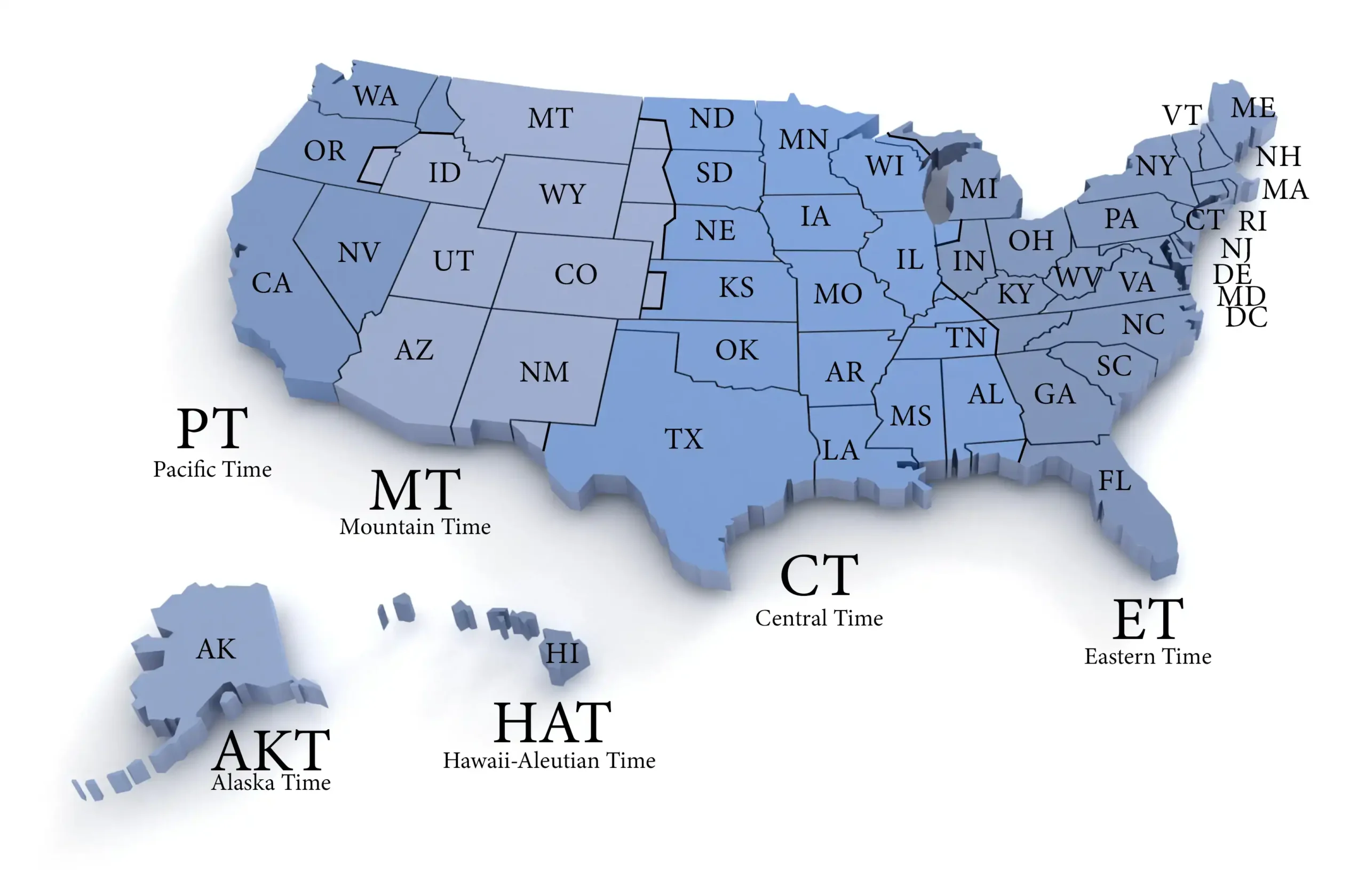
The vast expanse of the United States necessitates a system of multiple time zones to ensure that noon generally aligns with the sun’s highest point across the country. This system helps standardize daily life, business operations, and travel schedules from coast to coast. For travelers and residents alike, knowing which time zone you’re in, and which you’re heading to, is fundamental to daily planning.
The Four Contiguous US Time Zones
The contiguous United States is divided into four primary time zones, each differing by one hour from its neighbor:
- Pacific Time Zone (PT): This is the westernmost zone, encompassing states like California, Nevada, Oregon, and Washington state. It operates at UTC-8 during standard time and UTC-7 during Daylight Saving Time. Cities like Los Angeles and San Francisco fall into this zone.
- Mountain Time Zone (MT): East of Pacific Time, this zone covers states such as Colorado, Arizona (mostly, as Arizona observes DST inconsistently), Utah, and Montana. It’s UTC-7 during standard time and UTC-6 during Daylight Saving Time. Denver is a prominent city here.
- Central Time Zone (CT): Moving eastward, we arrive at the zone relevant to Chicago. This expansive zone includes states like Illinois, Texas, Missouri, and parts of Florida. Its standard time is UTC-6, shifting to UTC-5 during Daylight Saving Time. Key cities include Houston, Dallas, New Orleans, and of course, Chicago.
- Eastern Time Zone (ET): The furthest east, this zone covers the highly populated East Coast states, including New York, Florida (most of it), Georgia, and Massachusetts. It operates at UTC-5 during standard time and UTC-4 during Daylight Saving Time. Major cities like New York City, Miami, and Washington D.C. are in this zone.
Understanding this progression from west to east, and the one-hour jump between each, is fundamental for anyone engaging in cross-country travel or communication.
Daylight Saving Time: An Additional Consideration
Adding another layer of complexity to the time zone discussion is Daylight Saving Time (DST). Most of the United States observes DST, moving clocks forward by one hour in the spring (“spring forward”) and back by one hour in the fall (“fall back”). This means that during DST, the offset from Coordinated Universal Time (UTC) changes. For example, Central Standard Time (CST) is UTC-6, but Central Daylight Time (CDT) is UTC-5. Similarly, Eastern Standard Time (EST) is UTC-5, while Eastern Daylight Time (EDT) is UTC-4.
This seasonal shift is important to remember, especially when planning travel or scheduling activities around the spring and fall transitions. Always confirm whether a time is standard or daylight saving time, particularly when looking at schedules far in advance or across different regions that may start or end DST on slightly different dates (though this is rare within the contiguous US).
Chicago’s Place on the Time Map: Central Time Zone Explained
Having clarified the broader US time zone landscape, let’s zoom in on Chicago and understand what being in the Central Time Zone truly means for your visit. Illinois, the state where Chicago is located, observes Central Time uniformly across its entirety, ensuring no internal time zone borders to contend with within the state.
What is the Central Time Zone (CT)?
The Central Time Zone (CT) is typically six hours behind Coordinated Universal Time (UTC-6) during standard time, known as Central Standard Time (CST). When Daylight Saving Time is in effect, from early March to early November, the time shifts to UTC-5, becoming Central Daylight Time (CDT). This means that during roughly eight months of the year, Chicago is five hours behind Greenwich Mean Time (GMT).
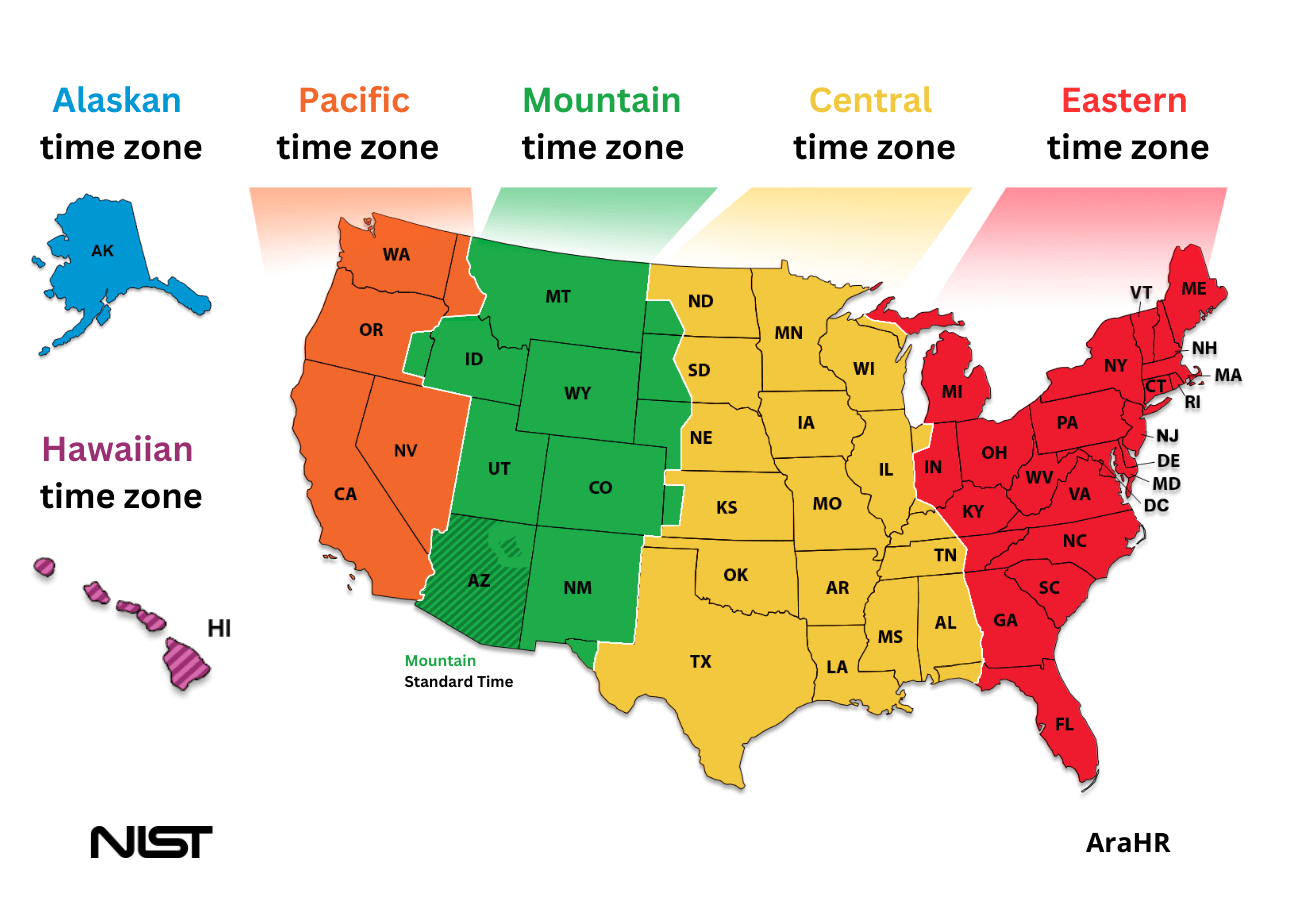
States fully within the Central Time Zone include Illinois, Wisconsin, Minnesota, Iowa, Missouri, Arkansas, Oklahoma, Kansas, Nebraska, North Dakota, and South Dakota. Portions of other states, such as western Indiana, western Kentucky, western Tennessee, western Michigan, and a significant portion of Texas and Florida, also observe Central Time. This broad coverage makes CT a crucial time zone for much of the American heartland.
The Difference Between CT and ET for Travelers
The key takeaway for travelers, especially those from the East Coast, is that Chicago is consistently one hour behind the Eastern Time Zone.
- If it’s 3:00 PM in New York City (ET), it’s 2:00 PM in Chicago (CT).
- If your flight from Boston (ET) is scheduled to land in Chicago at 4:00 PM CT, and you depart at 2:00 PM ET, your flight duration would be 3 hours (2 PM ET is 1 PM CT, so 1 PM CT to 4 PM CT is 3 hours).
This one-hour difference is significant enough to warrant careful attention, particularly when coordinating schedules across time zones. Failing to account for it can lead to missed connections, late arrivals for appointments, or frustrating delays in communication.
Practical Implications for Your Chicago Trip
Understanding Chicago’s time zone isn’t just a trivial detail; it’s a practical necessity for seamless travel and a truly enjoyable experience. From the moment you book your flight to the last souvenir purchase, time zone awareness will be your silent guide.
Navigating Travel Schedules and Logistics
- Flights and Public Transportation: All arrival and departure times for flights at O’Hare International Airport (ORD) and Midway International Airport (MDW), as well as train schedules (e.g., Amtrak to Union Station) and bus services, will be listed in Central Time. Always double-check your booking confirmations and travel apps, ensuring they display local times. If you’re connecting from an ET city like Atlanta or Detroit, remember you’ll “gain” an hour upon arrival in Chicago. Conversely, flying from Chicago to the East Coast means “losing” an hour.
- Time Zone Adjustment: While a one-hour shift isn’t usually enough to cause severe jet lag, travelers coming from the Eastern Time Zone might feel a slight adjustment in their body clock. Plan to arrive with enough buffer time before any critical appointments to allow for this minor shift. Staying hydrated and getting some fresh air can help.
Planning Your Itinerary: Attractions, Dining, and Events
Chicago is a city brimming with world-class attractions, diverse dining options, and a vibrant arts scene. Meticulous planning, with time zones in mind, will help you make the most of your visit.
- Attraction Hours: Whether you’re planning to visit the Art Institute of Chicago, ascend to Skydeck Chicago at Willis Tower (formerly Sears Tower), explore the Field Museum, or wander through Millennium Park to see “The Bean” (Cloud Gate), all opening and closing times will be in Central Time. If you’re booking tickets online in advance from an Eastern Time Zone location, ensure your selected time slot correctly reflects local Chicago time.
- Dining Reservations: Chicago is a foodie paradise, boasting everything from deep-dish pizza joints to Michelin-starred restaurants. Making reservations, especially for popular spots in neighborhoods like River North or the West Loop, is highly recommended. Always confirm your reservation time is in CT to avoid missing your table.
- Live Shows and Sporting Events: Catching a Chicago Cubs game at Wrigley Field, cheering on the Chicago Bears at Soldier Field, or attending a concert at the United Center? All event start times will adhere to Central Time.
- Guided Tours and Experiences: From architectural boat tours along the Chicago River to culinary walking tours, ensure you arrive promptly for your scheduled experience, always verifying the time against the local CT.
Accommodation and Business Considerations
For those traveling for business or making specific accommodation arrangements, the time zone difference is equally important.
- Hotel Check-in/Check-out: Hotel policies, including check-in and check-out times at luxury properties like The Peninsula Chicago, Waldorf Astoria Chicago, or Hyatt Regency Chicago, are strictly based on local time. Arriving too early or checking out too late (due to a time zone miscalculation) could lead to additional fees or unnecessary waits.
- Business Meetings: If you’re in Chicago for work, clear communication about meeting times is paramount, especially if collaborating with colleagues in other time zones. When scheduling a 9:00 AM meeting in Chicago, remember that it will be 10:00 AM for participants in New York or Toronto (ET), and 7:00 AM for those in Los Angeles (PT). Calendar invites should ideally specify the time zone (e.g., “9:00 AM CT”).

Beyond Chicago: Time Zone Tips for Multicity US Travel
For ambitious travelers planning to explore multiple US cities that span different time zones, mastering time zone navigation is a skill that will greatly enhance your trip. Here are a few tips:
- Set Your Devices to Automatic Time: Most smartphones and modern digital devices have a setting to automatically update to the local time zone. Ensure this feature is enabled before you travel. This is the simplest way to keep track.
- Use a World Clock App: Many apps allow you to simultaneously display times in multiple cities, making it easy to see the current time in your current location, your next destination, and your home city at a glance.
- Confirm All Bookings Locally: Whenever you make a booking (flights, hotels, tours, dinner reservations), double-check that the confirmation clearly states the local time zone of the service or event. If it doesn’t, assume it’s local to the service provider’s location, but always clarify if unsure.
- Inform Contacts of Your Location: If you’re frequently communicating with friends, family, or business contacts across different time zones, a quick reminder of where you are (and thus, what time it is for you) can prevent misunderstandings.
- Buffer Time is Your Friend: When crossing time zones, especially by flying, always factor in a buffer. A short delay in one zone can have a compounding effect if you have tight connections or immediate plans upon arrival in another.
In conclusion, while Chicago shares some similarities with East Coast cities in terms of urban vibrancy and cultural depth, it definitively operates on Central Time. This one-hour difference from the Eastern Time Zone is a small detail with big implications for your travel logistics, itinerary planning, and overall enjoyment of this magnificent city. By understanding and accounting for Chicago’s time zone, you’ll be well-prepared to explore its iconic landmarks like the Magnificent Mile, dine in its celebrated restaurants, and experience its unique charm without missing a beat. So go ahead, set your watch (or let your phone do it automatically!), and get ready for an unforgettable Chicago adventure.
LifeOutOfTheBox is a participant in the Amazon Services LLC Associates Program, an affiliate advertising program designed to provide a means for sites to earn advertising fees by advertising and linking to Amazon.com. Amazon, the Amazon logo, AmazonSupply, and the AmazonSupply logo are trademarks of Amazon.com, Inc. or its affiliates. As an Amazon Associate we earn affiliate commissions from qualifying purchases.