
When planning a relocation, considering business expansion, or even just envisioning a long-term stay in a new destination, understanding the local economic and labor landscape is paramount. For many, the question of whether a state operates under “Right-to-Work” laws can significantly influence decisions related to employment, business investment, and even the overall quality of life. Colorado, a state renowned for its majestic Rocky Mountains, vibrant cities, and thriving tourism industry, often sparks curiosity regarding its labor policies. This comprehensive guide aims to demystify Colorado’s labor laws, exploring its stance on “Right-to-Work” legislation and examining how these policies shape the state’s economy, influencing everything from the hospitality sector to the broader lifestyle enjoyed by residents and visitors alike.
Understanding “Right-to-Work”: A National Perspective
Before delving into Colorado’s specific context, it’s essential to grasp the fundamental concept of “Right-to-Work” laws and their nationwide implications. This understanding provides a crucial backdrop for appreciating the unique labor environment found in the Centennial State.
Defining the Concept
At its core, a “Right-to-Work” law prohibits agreements between employers and labor unions that require employees to join a union, pay union dues, or pay agency fees as a condition of obtaining or retaining employment. In states with such laws, individuals have the “right to work” without being compelled to financially support a labor organization, even if that organization engages in collective bargaining on their behalf. Proponents argue that these laws protect individual workers’ freedom of association and choice, preventing forced unionization and fostering economic growth by making states more attractive to businesses seeking lower labor costs and greater flexibility. They believe it empowers employees by giving them the option to opt out of union membership and associated fees, ensuring that employment decisions are based solely on merit and skill, rather than union affiliation. This perspective often highlights the potential for increased competition and innovation in the labor market.
Conversely, opponents of “Right-to-Work” laws argue that they weaken unions, diminish workers’ collective bargaining power, and can lead to lower wages, fewer benefits, and less safe working conditions for all employees, including those who are not union members. They contend that by allowing employees to benefit from union-negotiated wages and benefits without contributing financially, these laws create a “free-rider” problem, undermining the financial stability and effectiveness of unions. From this viewpoint, weakening unions can reduce the overall standard of living for the working class and create a less equitable distribution of wealth. They advocate for stronger unions as a counterbalance to corporate power, believing that collective action is vital for protecting workers’ rights and ensuring fair compensation.
The National Landscape
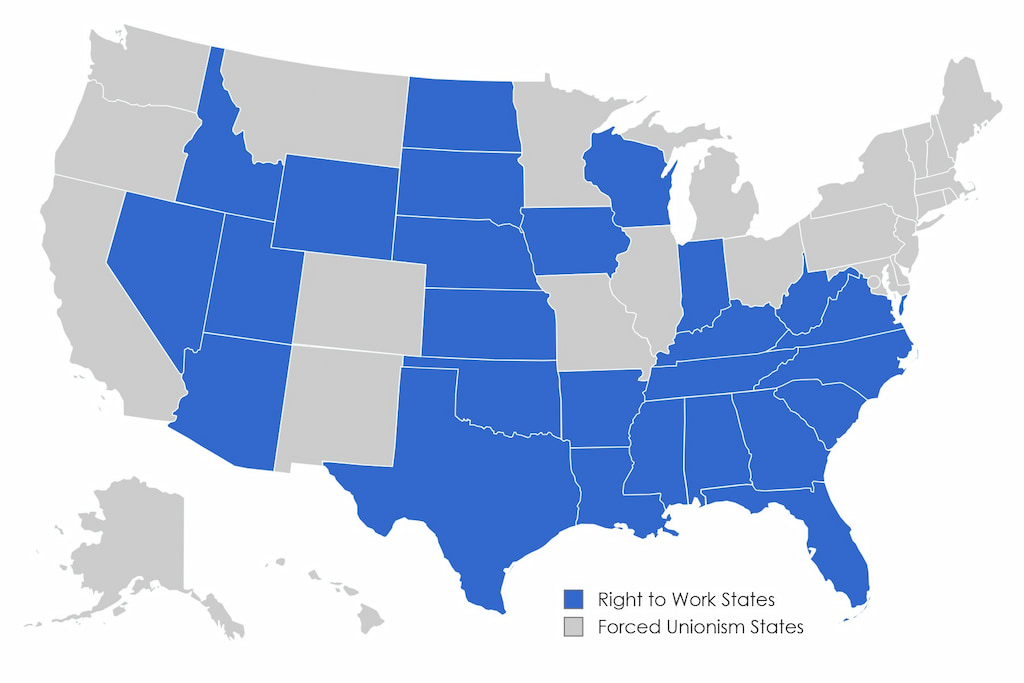
The debate surrounding “Right-to-Work” laws is a long-standing and often contentious one, deeply rooted in American labor history and political philosophy. As of recent counts, a majority of U.S. states have enacted “Right-to-Work” legislation, predominantly in the South and Midwest. These states represent a diverse economic landscape, but they share the common thread of prioritizing individual worker choice over mandatory union financial contributions.
The presence or absence of “Right-to-Work” laws often correlates with various economic indicators and labor market trends. States with these laws typically exhibit lower unionization rates and, in some analyses, may attract certain types of industries or businesses looking for specific labor environments. However, the exact impact on wages, employment growth, and economic development remains a subject of ongoing academic and political debate, with different studies yielding varying conclusions depending on methodology and the specific factors analyzed. For travelers and those considering relocation, understanding this national context is key, as it sheds light on the broader socio-economic framework that shapes local economies, including the service industries vital for tourism and hospitality.
Colorado’s Stance: A Deeper Dive into Labor Laws
Given the national context, the question then narrows: where does Colorado stand on this critical issue? Its reputation as a progressive state with a robust economy and a strong emphasis on outdoor recreation and innovation might lead some to make certain assumptions about its labor policies.
Debunking the Myth: Colorado’s Non-Right-to-Work Status
Contrary to what some might assume, Colorado is NOT a Right-to-Work state. This is a crucial distinction that has significant implications for both employers and employees within its borders. Instead, Colorado operates under labor laws that permit various forms of union security agreements, particularly in the private sector where federal law (the National Labor Relations Act – NLRA) largely governs.
In simple terms, because Colorado does not have a “Right-to-Work” law, private sector employers and unions are generally permitted to negotiate and enforce “union security clauses” in collective bargaining agreements. These clauses can require employees, as a condition of employment, to join the union within a specified period (typically 30 days) or, more commonly, to pay an agency fee (often equivalent to union dues) to cover the costs of collective bargaining and contract administration. This means that while an employee might not be forced to become a full union member, they may still be required to contribute financially to the union that represents their bargaining unit.
It is worth noting that while Colorado is not a “Right-to-Work” state for the private sector, its public sector labor laws are somewhat distinct. Public employees in Colorado generally have the right to form and join unions, but they are not typically required to join or pay agency fees to a union as a condition of employment. This creates a nuanced landscape where different sectors operate under slightly different labor parameters, reflecting the complex interplay between state and federal regulations.
Implications for Workers and Businesses in the Centennial State
Colorado’s non-Right-to-Work status carries various implications for both its workforce and its businesses, contributing to the unique economic and social fabric of the state.
For workers, this means that in many unionized private sector workplaces, joining the union or paying agency fees can be a condition of employment. This can lead to a stronger union presence and, potentially, greater collective bargaining power for employees, which proponents argue can result in better wages, benefits, and working conditions. Workers might find themselves part of a more unified front when negotiating with employers, possibly influencing aspects like healthcare, retirement plans, and workplace safety standards. This environment can foster a sense of solidarity and shared purpose among employees, impacting workplace culture and job satisfaction.
For businesses, particularly those considering establishing or expanding operations in Colorado, the absence of “Right-to-Work” laws means they operate within a framework where unions can potentially play a more significant role in their operations. This requires businesses to be prepared for the possibility of union organizing drives and to engage in collective bargaining where unions are present. While some businesses might view this as a potential challenge due to perceived increased labor costs or reduced flexibility, others recognize the value of a stable, skilled workforce that benefits from strong union representation. The competitive landscape for attracting and retaining talent in a non-Right-to-Work state can mean focusing more on comprehensive compensation packages and positive employee relations. Colorado’s overall business environment, however, remains robust, driven by sectors like technology, aerospace, renewable energy, and, critically, tourism, indicating that its labor laws have not deterred significant economic growth.
The Ripple Effect: How Labor Laws Shape Colorado’s Travel & Lifestyle Scene

The nuances of Colorado’s labor laws, particularly its non-Right-to-Work status, extend beyond the workplace, subtly influencing the broader travel experience, local culture, and lifestyle that define the Centennial State. This interconnectedness is vital for anyone planning a visit, considering a move, or investing in the state’s burgeoning tourism industry.
Impact on Hospitality and Tourism
Colorado’s tourism sector is a cornerstone of its economy, attracting millions of visitors annually to destinations like Denver, Boulder, Aspen, and Vail. The state’s non-Right-to-Work status can have several effects on this vital industry.
For one, it may contribute to a workforce in hotels, resorts, restaurants, and attractions that potentially enjoys stronger wages and benefits, due to the influence of collective bargaining. This, in turn, could lead to higher employee morale, lower turnover rates, and a more experienced, dedicated workforce within the hospitality sector. Travelers might experience higher quality service, as employees are generally more invested and fairly compensated. For example, luxury establishments like The Broadmoor in Colorado Springs or The Ritz-Carlton, Denver rely heavily on exceptional service, and a stable, well-compensated staff is crucial for maintaining such high standards.
Furthermore, the economic stability that can arise from fair labor practices might mean a more robust local economy in general. This, in turn, supports the development and maintenance of tourism infrastructure, from pristine ski resorts to well-maintained hiking trails and vibrant cultural institutions. While it might sometimes translate to slightly higher operational costs for businesses, potentially reflected in pricing for accommodations or services, the overall value often comes in the form of quality, reliability, and a generally thriving community that visitors enjoy. Colorado’s commitment to quality experiences for both its residents and visitors is deeply intertwined with the economic well-being of its service industry workers.
Living and Working in Colorado: A Lifestyle Perspective
Beyond tourism, the state’s labor environment profoundly impacts the lifestyle for those who choose to call Colorado home. The presence of stronger unions in some sectors can contribute to higher average wages and better benefits, influencing the overall cost of living and disposable income for residents. This can impact housing markets, local consumer spending, and the types of amenities and services available across cities like Fort Collins or Grand Junction.
For families, the potential for better healthcare and retirement benefits, often negotiated through collective bargaining, can be a significant factor in relocation decisions. It contributes to a sense of financial security and stability, allowing residents to fully embrace the Colorado lifestyle, which often revolves around outdoor activities, cultural events, and community engagement. Whether it’s enjoying the craft beer scene in Denver, exploring the art galleries in Santa Fe (a common day trip destination from southern Colorado, though in a different state), or simply enjoying the unparalleled natural beauty, the underlying economic stability supports these pursuits.
For business travelers, understanding Colorado’s labor laws means appreciating the regulatory framework that businesses operate within. This can influence everything from contract negotiations to human resource strategies, providing a clearer picture of the local business climate and how it aligns with corporate values and operational goals.
Exploring Colorado’s Diverse Economy and Attractions
Colorado’s economy is incredibly diverse, extending far beyond tourism to include significant contributions from aerospace, biotechnology, clean energy, and advanced manufacturing. The state’s labor laws are one piece of a larger puzzle that attracts and retains talent and businesses in these high-growth sectors.
Iconic landmarks like the Garden of the Gods in Colorado Springs, Mesa Verde National Park‘s ancient cliff dwellings, or the vast expanses of Great Sand Dunes National Park are not just natural wonders; they are supported by communities whose economic well-being is, in part, shaped by the state’s labor policies. The workers who staff these parks, the guides who lead tours, and the local businesses that cater to visitors all operate within this specific labor environment.
The vibrant arts and culture scene in cities like Denver, with its numerous museums and theaters, also benefits from a stable economic base that allows for public and private investment in cultural institutions. Lifestyle choices, from luxury travel to budget-friendly adventures, are all underpinned by the broader economic conditions, which are influenced by the state’s approach to labor relations.
Navigating Colorado: Tips for Visitors and Potential Residents
Understanding Colorado’s labor landscape is a valuable piece of information for anyone engaging with the state, whether for a short vacation or a permanent relocation. It helps paint a clearer picture of the state’s values, economic priorities, and the experience one can expect.
Planning Your Trip: What to Expect
For tourists and short-term visitors, the non-Right-to-Work status generally translates into a consistent and often high-quality service experience, particularly in the hospitality and tourism sectors. Expect competitive pricing for hotels, resorts, and attractions, which reflects the overall cost of doing business in a state with potentially stronger labor protections and wages. When booking accommodation, whether a cozy cabin in Breckenridge, a boutique hotel in Aspen, or a sprawling resort near the Rocky Mountains, you are supporting an economy where workers’ rights and fair compensation are considered significant. Explore the diverse range of hotels, from budget-friendly options to luxurious suites and villas, all operating within this framework. Consider how your travel choices contribute to the local economy and the well-being of its workforce.
When exploring destinations, from the bustling streets of Denver to the tranquil beauty of Rocky Mountain National Park, appreciate the services provided by the people who make these experiences possible. Their working conditions and compensation are, in part, shaped by the state’s labor laws. For those interested in local culture and food, the vibrant restaurant scene and numerous craft breweries are also staffed by a workforce operating under these same conditions, contributing to the unique “flavor” of Colorado culture.

Business and Relocation Insights
For individuals considering a long-term stay, employment, or business relocation to Colorado, the non-Right-to-Work status is a key factor to integrate into your analysis.
- For Job Seekers: Be aware that in some unionized industries, joining a union or paying agency fees might be a condition of employment. Research the prevalence of unions in your specific industry or desired workplace. Colorado’s labor market is dynamic and competitive, especially in high-growth sectors.
- For Businesses and Investors: Understand that unionization is a possibility, and collective bargaining agreements are legally enforceable. While this may mean higher labor costs in some instances, it often comes with the benefit of a stable, skilled, and potentially more experienced workforce. Colorado‘s overall business environment is very favorable, supported by a highly educated population, access to venture capital, and a strong commitment to innovation. The state’s labor laws are just one aspect of a larger picture that includes a progressive regulatory environment and a high quality of life that attracts top talent.
- For Long-Term Accommodation: When looking for apartments, villas, or other long-term accommodations, consider that the cost of living, including housing, is influenced by the state’s economic landscape, including its labor policies and the general wage levels. Reviews and comparisons of different neighborhoods and cities will reflect these underlying economic realities.
In conclusion, Colorado stands out in the national labor landscape as a state that is not “Right-to-Work.” This fundamental distinction has a broad ripple effect, shaping its economy, influencing its thriving tourism industry, and contributing to the distinct lifestyle enjoyed by its residents. For travelers seeking authentic experiences, and for those considering a deeper connection with the Centennial State, understanding this aspect of Colorado’s governance offers valuable insights into what makes this destination truly unique.
LifeOutOfTheBox is a participant in the Amazon Services LLC Associates Program, an affiliate advertising program designed to provide a means for sites to earn advertising fees by advertising and linking to Amazon.com. Amazon, the Amazon logo, AmazonSupply, and the AmazonSupply logo are trademarks of Amazon.com, Inc. or its affiliates. As an Amazon Associate we earn affiliate commissions from qualifying purchases.