
For many prospective travelers envisioning a sun-soaked escape to the Sunshine State, the idea of time zones might seem like a minor detail, easily overlooked amidst the excitement of planning beach days, theme park adventures, or cultural explorations. Yet, a fundamental question often arises for those meticulously charting their itineraries: “Is Florida on Eastern Time?” The straightforward answer, surprisingly, is not a simple yes or no. While the vast majority of Florida proudly operates on Eastern Time, there’s a significant portion of the state, particularly its beautiful westernmost region, that observes Central Time.
Understanding this geographical and temporal divide is more than just an interesting piece of trivia; it’s a crucial detail that can impact every facet of your Florida experience, from booking flights and coordinating hotel check-ins to scheduling your visits to world-renowned attractions and ensuring you don’t miss a spectacular sunset cruise. As a hub for travel, accommodation, and lifestyle insights, we delve into the nuances of Florida’s time zones, providing essential guidance for a seamless and unforgettable journey through this incredibly diverse state.
Unpacking Florida’s Time Zone Reality
Florida’s unique time zone situation is a fascinating aspect of its geography, often surprising first-time visitors and even some seasoned travelers. Stretching across a considerable latitudinal expanse, bordered by the Atlantic Ocean to the east and the Gulf of Mexico to the west, the state’s time zone division is largely influenced by its western boundary with Alabama and Georgia, where the shift from Eastern Time to Central Time naturally occurs.
The Great Divide: Eastern vs. Central Time
The vast majority of Florida, including its most populous cities and iconic tourist destinations, falls within the Eastern Time zone. This includes major metropolitan areas like Miami, Orlando, Tampa, Jacksonville, and the state capital, Tallahassee. From the bustling beaches of South Florida to the magical theme parks of Central Florida and the historic charm of the northeast coast, you’ll be setting your watch to Eastern Time. This simplifies planning for most visitors, as popular guides and travel information typically assume this time zone.
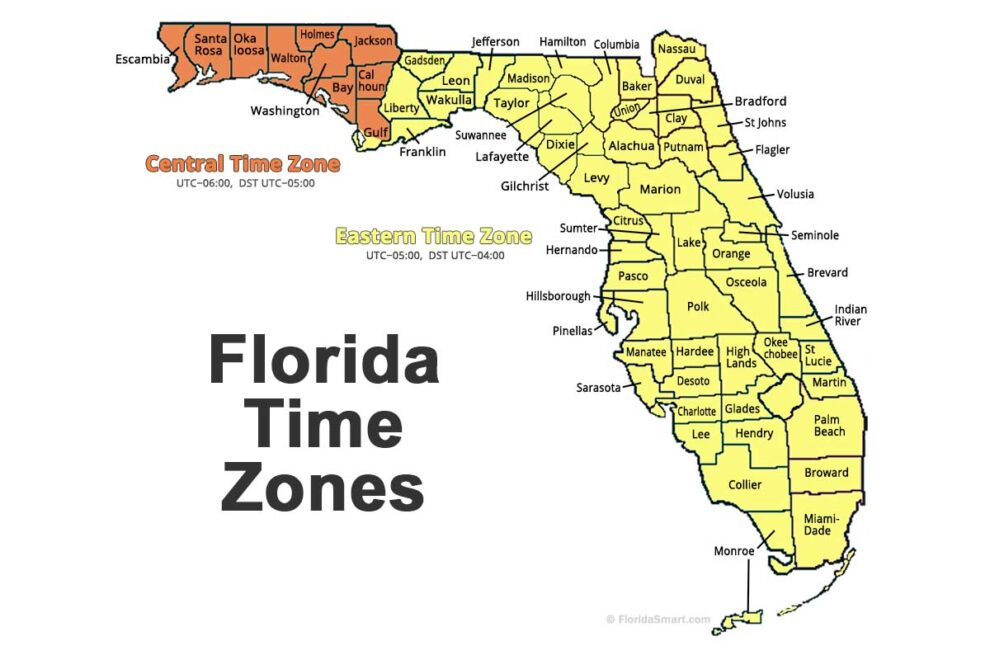
However, the picture changes significantly when you venture into the Florida Panhandle. This distinctive strip of land, famous for its sugar-white sands and emerald waters, adheres to Central Time. The division point is generally understood to be the Apalachicola River, or more precisely, a line that roughly follows its course. To the west of this line, the following counties—and their beloved coastal communities—are on Central Time:
- Escambia County (home to Pensacola and Pensacola Beach)
- Santa Rosa County (including Navarre Beach)
- Okaloosa County (featuring Destin and Fort Walton Beach)
- Walton County (encompassing the popular scenic highway 30A with towns like Seaside and Miramar Beach)
- Bay County (where Panama City Beach is located)
- A significant portion of Gulf County (including Port St. Joe, Mexico Beach, and Cape San Blas, although some eastern parts near Wewahitchka are on Eastern Time)
- Franklin County is split, with the western parts on Central Time and the eastern parts on Eastern Time. Specifically, St. Vincent Island and a narrow strip of the mainland are on Central Time, while Apalachicola and St. George Island are on Eastern Time.
This time difference means that if you’re planning a trip that involves traveling between, say, Orlando and Pensacola, you’ll gain an hour heading west into the Panhandle and lose an hour returning east. This might seem minor, but it can affect arrival times, booking confirmations, and even how early you need to wake up for that morning fishing charter.
Daylight Saving Time in the Sunshine State
Like most of the United States, Florida observes Daylight Saving Time, meaning clocks “spring forward” one hour in the early spring and “fall back” one hour in the autumn. This annual adjustment occurs consistently across both the Eastern Time and Central Time zones within the state. So, while the absolute time might change, the one-hour difference between the two zones remains constant throughout the year.
There has been significant discussion and legislative efforts in Florida to make Daylight Saving Time permanent, essentially keeping the state on what would be “summertime” hours year-round. This initiative, known as the Sunshine Protection Act, has passed the state legislature but requires federal approval to take effect. If implemented, it would mean that Florida would no longer switch its clocks twice a year, providing more evening daylight during the winter months. However, until federal law changes, travelers should continue to account for the biannual time change, particularly if their trip spans these transition periods in March and November.
Why Time Zones Matter for Your Florida Getaway
Understanding Florida’s time zones is far from a trivial concern for travelers; it’s a practical necessity that can significantly influence the smoothness and enjoyment of your trip. From the moment you begin planning your journey, through every booking and activity, time zone awareness plays a critical role in ensuring a stress-free experience.
Seamless Travel Planning and Logistics
Travel to Florida often involves intricate logistics, especially when moving between different parts of the state or coordinating with others. The time zone difference can easily lead to miscommunications or missed connections if not properly considered:

- Flights and Transportation: When booking flights into or out of Panhandle airports like Pensacola International Airport (PNS) or Northwest Florida Beaches International Airport (ECP) in Panama City Beach, always double-check if the arrival/departure times listed are in local time or your home time zone. This is especially vital if you have a connecting flight from an Eastern Time city. Similarly, bus and train schedules will adhere to local time, so factor in the one-hour shift for any overland travel crossing the time zone boundary.
- Hotel and Accommodation Bookings: Most accommodations, whether a luxurious resort in Miami Beach, a family-friendly hotel near Walt Disney World Resort, or a charming rental villa along 30A, operate strictly on their local time. Confirming your check-in and check-out times is paramount. Arriving an hour early or late for a pre-booked room due to a time zone miscalculation can lead to unnecessary stress, especially after a long journey. Long-term stays often require even more precise planning for utility hook-ups or scheduled services.
- Restaurant Reservations and Tour Bookings: Imagine missing out on that coveted waterfront dining reservation in Destin or a once-in-a-lifetime airboat tour in the Everglades simply because you forgot about the time change. All reservations, from fine dining to guided excursions and spa appointments, will be set to the local time of their location. Always verify the time zone for any activity you pre-book to avoid disappointment.
- Business Stays and Meetings: For those traveling to Florida for business, time zone accuracy is non-negotiable. Missing a critical meeting or conference call due to an oversight can have significant repercussions. Ensure all meeting invites and schedules clearly state the applicable time zone, especially if collaborating with colleagues or clients in different parts of the state or country.
Maximizing Your Experience at Attractions and Landmarks
Florida is brimming with iconic attractions, from world-famous theme parks to historic landmarks and breathtaking natural wonders. Enjoying these to their fullest often depends on precise timing:
- Theme Park Adventures: When visiting giants like Walt Disney World Resort or Universal Orlando Resort, you’ll be operating on Eastern Time. Their opening hours, parade schedules, and firework displays are meticulously planned. If you’re driving in from the Panhandle, remember to adjust your internal clock to avoid missing those early morning park openings or late-night entertainment.
- Museums and Historical Sites: Whether exploring the rich history of St. Augustine or immersing yourself in the space race at the Kennedy Space Center Visitor Complex, these attractions have set operating hours. While most are in Eastern Time, if you were to visit a historical museum in Pensacola, for example, you’d need to remember it’s on Central Time.
- Natural Parks and Wildlife Tours: Activities like kayaking through the mangroves of the Florida Keys, airboat rides in the Everglades National Park, or birdwatching tours in the Panhandle will run on local time. Sunset cruises, a popular experience across the state, are particularly sensitive to time zone differences – an hour’s discrepancy could mean the difference between witnessing a glorious sunset and missing it entirely.
- Sporting Events and Concerts: Florida hosts a vibrant array of sporting events, from NFL games in Jacksonville and Miami to spring training baseball across the state, along with numerous concerts and festivals. All published start times will be based on the local time of the venue.
Navigating Florida’s Time Zones: Essential Tips for Travelers
Equipping yourself with the right information and habits can make navigating Florida’s time zones incredibly simple, ensuring your focus remains on enjoying your trip rather than wrestling with logistics. These practical tips are designed for every type of traveler, from families on vacation to solo adventurers and business professionals.
Before You Go: Research and Preparation
The key to a smooth journey starts well before you pack your bags. A little foresight can save a lot of hassle.
- Pinpoint Your Destination’s Time Zone: This is the most crucial step. For any city or town you plan to visit in Florida, do a quick search to confirm its exact time zone. Don’t assume. While most of Florida is Eastern Time, always verify for cities in the Panhandle like Pensacola, Destin, or Panama City Beach, which are on Central Time.
- Communicate Clearly When Booking: When making reservations for hotels, flights, tours, or anything with a timed component, pay close attention to the specified time zone. If booking through third-party sites, they might sometimes default to your current location’s time zone. If there’s any ambiguity, always confirm with the service provider (e.g., the hotel, airline, or tour operator) in their local time. This prevents misunderstandings, particularly for critical check-in times.
- Adjust Your Devices in Advance: Many modern smartphones, smartwatches, and laptops automatically adjust to the local time zone when connected to cellular or Wi-Fi networks. Ensure this feature is enabled on your devices. For traditional watches, plan to manually adjust them as you approach the time zone boundary or upon arrival at your destination.
- Create a Detailed Itinerary with Time Zones: If your trip involves crossing the time zone boundary within Florida (e.g., driving from Orlando to Pensacola), note the time zone for each segment of your journey. A simple note like “Arrive Pensacola (CT) at 3:00 PM local time” can prevent confusion.
On the Ground: Practical Advice
Once you’re in Florida, a few simple habits can help you stay on schedule and enjoy your vacation to the fullest.
- Trust Your Smart Devices: Your smartphone is typically your best friend for timekeeping while traveling. It will automatically update to the correct local time, reducing the need for manual adjustments. Just make sure it has a good signal or Wi-Fi connection.
- Be Mindful When Crossing Boundaries: If you’re driving across the Apalachicola River line, you might notice signs indicating the time zone change. This is your cue to remember the shift. Many GPS systems will also adjust their estimated arrival times accordingly, but it’s always good to be aware.
- Confirm with Local Sources: When in doubt about a specific event time, especially for local businesses or smaller attractions, don’t hesitate to ask. Hotel front desks, tourist information centers, and restaurant staff are excellent resources for confirming local times and schedules.
- Consider Communication with Home: If you’re calling family or friends back home, remember to factor in their time zone, as well as your current one in Florida. A morning call from Key West (Eastern Time) could be an hour earlier for someone in Pensacola (Central Time) or several hours different for those on the West Coast.

The Broader Context: Florida’s Unique Appeal Beyond Time
While understanding Florida’s time zones is undoubtedly practical, it’s important to remember that this logistical detail is merely a small part of what makes the state such an extraordinary travel destination. Florida’s allure lies in its incredible diversity, offering a lifestyle and experience for every taste and budget.
From the vibrant, multicultural energy of Miami to the serene, historic charm of St. Augustine, and the pristine natural beauty of the Florida Keys and the Panhandle beaches, the Sunshine State promises an unforgettable escape. Whether you’re seeking luxury travel at a five-star resort, an adventurous budget travel experience exploring hidden gems, a fun-filled family trip to the theme parks, or a seamless business stay, Florida caters to every desire. The local culture, diverse food scenes, and countless activities—from snorkeling and kayaking to art festivals and golf—create an unparalleled tapestry of experiences.
The time zone difference, rather than being a hindrance, can be seen as just another unique characteristic of a state that truly has it all. It highlights Florida’s expansive geography and the distinct regional identities that coexist within its borders. By being aware and prepared, travelers can easily navigate this minor complexity and fully immerse themselves in the boundless opportunities for exploration, relaxation, and adventure that await.
In conclusion, while the core of Florida indeed operates on Eastern Time, the western Panhandle observes Central Time. This distinction is vital for accurate planning and smooth execution of your travel plans. With a little attention to detail, you can easily account for the one-hour difference and ensure your Florida vacation unfolds precisely as you envisioned it, allowing you to focus on creating cherished memories in this magnificent and welcoming state.