
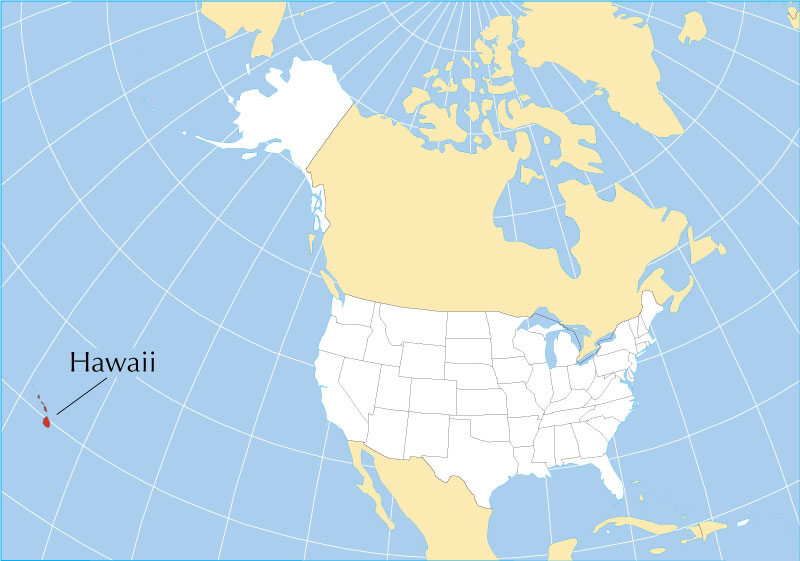
The question of “Is Hawaii in the USA?” might seem straightforward to many, yet it delves into a fascinating aspect of American history and geography. For travelers planning a trip or simply curious about the geopolitical landscape, understanding Hawaii’s status is fundamental. This vibrant archipelago, a tropical paradise in the heart of the Pacific Ocean, is indeed an integral part of the United States. Its journey from an independent kingdom to a U.S. state is a compelling narrative, shaping its unique culture and its place on the global stage as a premier travel destination.
This article aims to clarify Hawaii’s status within the United States, exploring its historical incorporation, its geographical significance, and what this means for visitors. We will delve into the key moments that led to its statehood, examine its strategic importance, and touch upon the cultural richness that makes it such an appealing place to explore. Understanding this context enriches the experience of visiting Hawaii, offering a deeper appreciation for the islands beyond their stunning beaches and volcanic landscapes.
The Historical Path to Statehood
Hawaii’s political evolution is a story of gradual integration, marked by both internal developments and external influences. The islands were once an independent monarchy, a sovereign nation with a rich Polynesian heritage. The path to becoming a U.S. state was a complex process that spanned several decades, involving significant political maneuvering and cultural shifts.
The Hawaiian Kingdom and Early Interactions
For centuries, the Hawaiian Islands existed as a collection of independent kingdoms. The first recorded European contact was in 1778 by Captain James Cook, initiating a period of increasing interaction with Western powers. Missionaries, traders, and whalers from various nations, including the United States, began to establish a presence. This led to profound changes in Hawaiian society, including the introduction of new diseases, technologies, and religious beliefs. The Kingdom of Hawaii, under monarchs like Kamehameha I, who unified the islands, and later Queen Liliʻuokalani, navigated these complex relationships, striving to maintain its sovereignty while adapting to the evolving global landscape. The cultural exchange brought new influences, but also challenges to traditional ways of life and governance.
The Overthrow of the Monarchy and Annexation
A pivotal moment in Hawaiian history was the overthrow of Queen Liliʻuokalani in 1893. This event was orchestrated by a group of American and European businessmen and sugar planters who had amassed significant economic power on the islands. They sought to secure favorable trade relations with the United States and feared that the Queen’s efforts to restore power to native Hawaiians and enact a new constitution would jeopardize their interests. The overthrow was supported by U.S. Marines, though the U.S. government at the time disavowed the action. Following the overthrow, a provisional government was established, and efforts to annex Hawaii to the United States began in earnest. Despite initial resistance and a lack of clear majority support among the Hawaiian people, the United States eventually annexed Hawaii in 1898, during the Spanish-American War, citing strategic importance in the Pacific.
The Road to Statehood: A Fifty-Year Journey
Following annexation, Hawaii was organized as a U.S. territory in 1900. This status meant it was under the jurisdiction of the U.S. Congress, with a governor appointed by the President, but it did not grant the full rights and representation of a state. For the next five decades, the people of Hawaii, including a growing population of American citizens of diverse ethnic backgrounds, advocated for statehood. This push gained momentum after World War II, when Hawaii’s strategic importance was underscored by its role in the Pacific theater. Supporters argued that statehood would grant Hawaii equal representation in Congress, full voting rights for its citizens, and greater autonomy in managing its affairs. Finally, on August 21, 1959, Hawaii was admitted to the Union as the 50th state, a landmark achievement that solidified its place as an indispensable part of the United States.
Geographical Significance and Identity
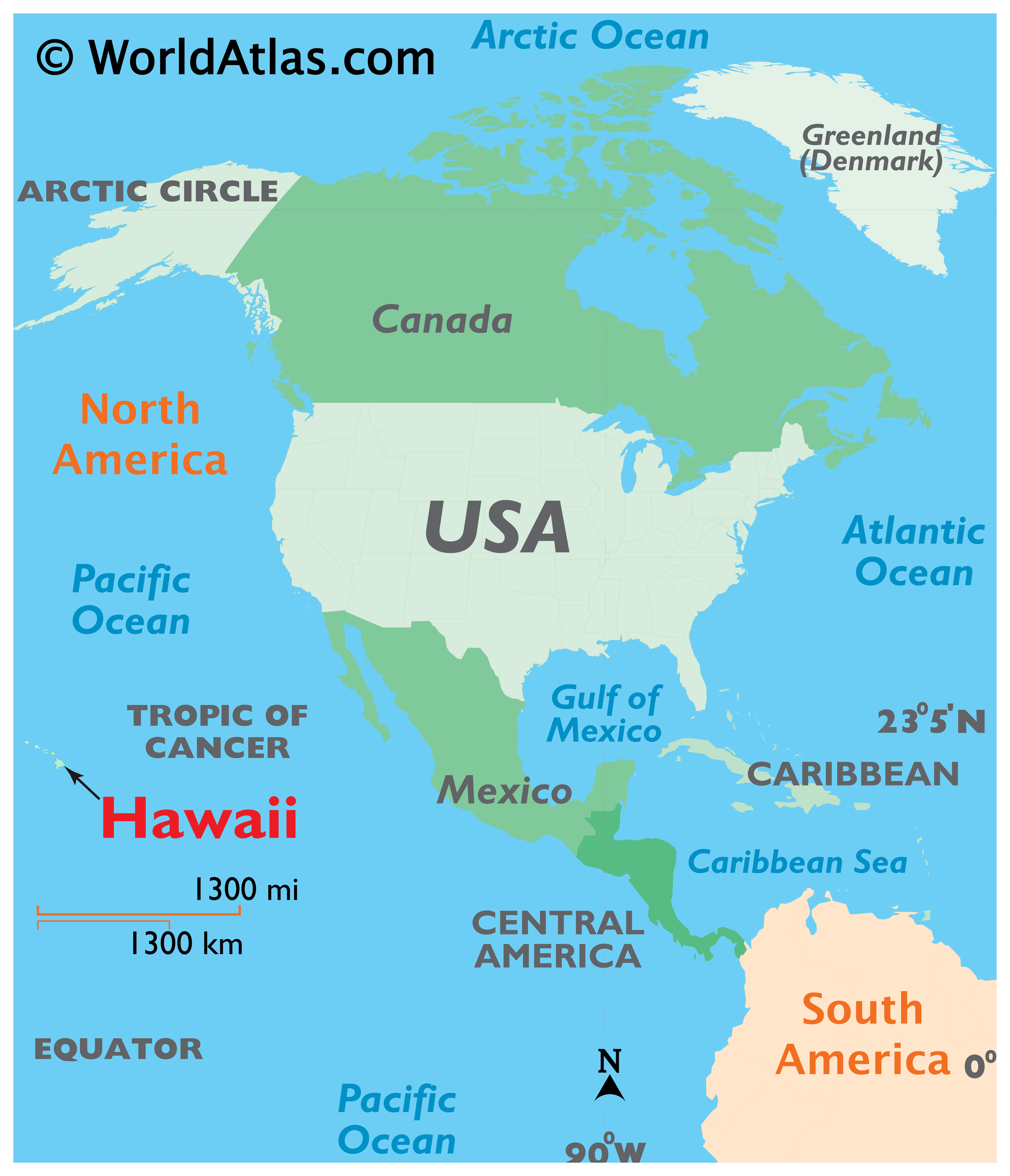
Hawaii’s location in the vast Pacific Ocean is a defining characteristic, influencing its climate, biodiversity, and strategic importance. As a state of the United States, it represents the nation’s presence far from the mainland, bridging the gap between North America and Asia. Its geographical remoteness contributes to its unique cultural tapestry and its role in global affairs.
The Mid-Pacific Archipelago
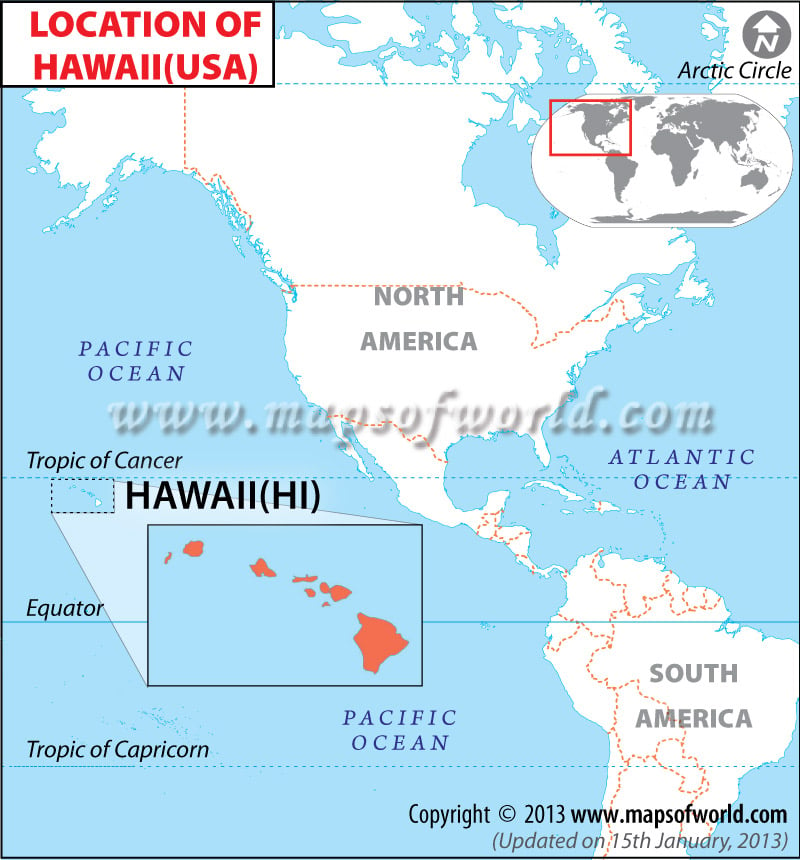
Hawaii is an archipelago, a chain of islands formed by volcanic activity over millions of years. It is located in the Polynesian Triangle, a vast expanse of the Pacific Ocean roughly bounded by Hawaii, New Zealand, and Easter Island. The state comprises eight main islands: Hawaii (the Big Island), Maui, Oahu, Kauai, Molokai, Lanai, Niihau, and Kahoolawe. Each island possesses its own distinct character, shaped by its geology, climate, and history. The sheer scale of the Pacific Ocean means that Hawaii is the most geographically isolated inhabited island group on Earth, contributing to its unique ecosystems and a strong sense of place.
Strategic Importance in the Pacific
The United States’ acquisition of Hawaii was driven, in part, by its strategic military importance. Its central location in the Pacific made it an ideal coaling station for naval vessels and a crucial staging ground for projecting power across the ocean. This strategic value was dramatically highlighted during World War II, particularly with the attack on Pearl Harbor, a naval base on Oahu. Today, Hawaii remains a vital hub for the U.S. military, hosting major installations such as the U.S. Pacific Fleet headquarters at Pearl Harbor and the U.S. Army’s Schofield Barracks. This military presence underscores Hawaii’s ongoing significance in U.S. defense strategy and its role in maintaining regional stability.
A Unique American Identity
Despite its geographical distance from the continental United States, Hawaii embodies a distinct American identity shaped by its unique history and diverse population. The islands are home to a rich mosaic of cultures, a blend of indigenous Hawaiian traditions, and influences from Asian and European immigrants who arrived over the centuries to work on plantations and contribute to the islands’ economy. This cultural fusion is evident in Hawaii’s cuisine, language, music, and social customs. As a U.S. state, Hawaii participates fully in the American democratic system, with its citizens electing representatives to Congress and participating in presidential elections. This dual identity—as a Pacific island paradise and a fully integrated U.S. state—is what makes Hawaii a truly remarkable destination.
Visiting Hawaii: What It Means to Be Part of the USA
For travelers, the fact that Hawaii is part of the USA simplifies many aspects of planning and experiencing a visit. Visitors benefit from familiar legal frameworks, currency, and travel infrastructure, while still immersing themselves in an exotic and captivating environment. The integration of Hawaii into the United States has profound implications for tourism, accessibility, and the visitor experience.
Travel and Entry Requirements
As a U.S. state, Hawaii follows the same travel regulations as the mainland. This means that U.S. citizens and legal permanent residents do not require passports to travel to Hawaii from other U.S. states. The currency used is the U.S. dollar, and all federal laws apply. This ease of access makes planning a trip to Hawaii as straightforward as visiting any other state, removing many of the logistical hurdles associated with international travel. Airlines operate numerous daily flights to major Hawaiian airports, such as Honolulu International Airport (HNL) on Oahu, Kahului Airport (OGG) on Maui, and Ellison Onizuka Kona International Airport at Keahole (KOA) on the Big Island, making it highly accessible from major cities across the continental United States.
Economic and Cultural Integration
Hawaii’s economy is significantly intertwined with the broader U.S. economy, with tourism being a major driver. The state benefits from federal funding for infrastructure, education, and social programs. Culturally, while retaining its unique heritage, Hawaii is also a vibrant part of the American cultural landscape. Visitors can experience traditional Hawaiian culture, such as hula performances and luaus, alongside contemporary American influences in its cities and resorts. This blend allows for a rich and varied experience, offering both the allure of a tropical escape and the comfort of familiar amenities and services. Major hotel chains, such as the Hyatt Regency Waikiki Beach Resort and Spa and the Four Seasons Resort Maui at Wailea, operate within this U.S. framework, providing world-class accommodation and services.
A Unique Blend of Paradise and Patriotism
The question of “Is Hawaii in the USA?” ultimately leads to an appreciation of how a distinct island culture thrives within a larger nation. When you land on islands like Oahu, home to the iconic Diamond Head and the historic Pearl Harbor, or explore the lush landscapes of Kauai, known for its stunning Na Pali Coast, you are experiencing a part of America that is both profoundly exotic and deeply familiar. The integration of Hawaii into the United States has allowed its unique cultural heritage to flourish while ensuring its accessibility and stability as a premier travel destination. It offers a gateway to a world of breathtaking natural beauty, vibrant local traditions, and the warm hospitality of the Hawaiian people, all within the framework of being an integral part of the United States of America.