
The allure of active volcanoes is undeniable. They represent raw, untamed power, a glimpse into the Earth’s fiery heart, and a dynamic force shaping landscapes. For many travelers, witnessing such geological marvels firsthand is a bucket-list experience. When it comes to volcanic activity, the Hawaiian Islands have long captured the world’s imagination, particularly Hawaii Volcanoes National Park. The question that often arises, especially for those planning a trip to the Aloha State, is: “Is Hawaii volcano still erupting?” This is a crucial question for anyone considering a visit, as it directly impacts the accessibility of certain areas, the safety precautions needed, and the overall experience of exploring this unique natural wonder.

The answer, as with many geological phenomena, is not a simple yes or no. Volcanic activity is a continuous, albeit variable, process. Hawaii Volcanoes National Park is home to some of the most active volcanoes on Earth, most notably Kīlauea and Mauna Loa. Their eruptive histories are complex and can change rapidly. Understanding the current state of these volcanoes is essential for planning a safe and rewarding adventure.
Understanding the Dynamics of Hawaii Volcanoes National Park
Hawaii Volcanoes National Park is a living testament to the power of creation and destruction. Established in 1916, it protects two of the world’s most active volcanoes: the shield volcano Mauna Loa, the largest volcano on Earth by volume, and the stratovolcano Kīlauea, known for its persistent and often dramatic eruptions. These volcanoes are part of the Hawaiian hotspot, a plume of magma rising from deep within the Earth’s mantle that has been responsible for creating the entire Hawaiian archipelago.
The park offers visitors a unique opportunity to witness volcanic processes up close. From steaming vents and sulfurous fumes to vast lava fields and crater rims, the landscape is constantly being shaped by the forces beneath the surface. The accessibility of these features, however, is entirely dependent on the volcano’s current activity. When an eruption is underway, certain areas within the park may be closed for safety reasons, while others might become prime viewing spots. Conversely, periods of dormancy, while offering a different kind of beauty, might mean less dramatic displays of molten rock.
The Eruptive History of Kīlauea
Kīlauea is perhaps the most famous of Hawaii’s volcanoes, largely due to its consistent eruptive behavior over several decades. From 1983 to 2018, the volcano experienced a nearly continuous eruption from its summit and rift zones, famously at the Puʻu ʻŌʻō vent. This prolonged eruption dramatically altered the landscape, adding new land to the island and reshaping coastlines. The 2018 lower East Rift Zone eruption was particularly significant, causing widespread destruction in the Leilani Estates and Pāhoa communities.
Following the 2018 events, Kīlauea entered a period of fluctuating activity. While the massive effusive eruptions ceased for a time, the volcano has shown a propensity for renewed summit activity. In recent years, there have been several periods of eruption within the caldera of Kīlauea, characterized by lava lakes forming and subsiding within the Halemaʻumaʻu crater. These summit eruptions, while often less destructive in terms of widespread property damage, offer breathtaking displays of glowing lava and volatile gas emissions.
The question of “is Hawaii volcano still erupting?” in relation to Kīlauea often refers to these more recent summit events. Visitors can frequently witness the glow of the lava lake from safe vantage points, and the park has adapted to guide visitors to these accessible viewing areas. The Hawaiian Volcano Observatory (HVO), operated by the U.S. Geological Survey, plays a critical role in monitoring Kīlauea’s activity, providing real-time updates on seismic activity, gas emissions, and lava flow. This data is invaluable for park management and for informing the public about safe viewing conditions.
The Quiet Giant: Mauna Loa
While Kīlauea often steals the spotlight with its frequent eruptions, Mauna Loa is the undisputed titan of Hawaiian volcanoes. It is the world’s largest active volcano by both mass and volume, rising over 13,679 feet above sea level and extending thousands more feet below the ocean’s surface. Mauna Loa is known for its effusive eruptions, which typically produce large volumes of fluid basaltic lava that can travel long distances down its flanks.
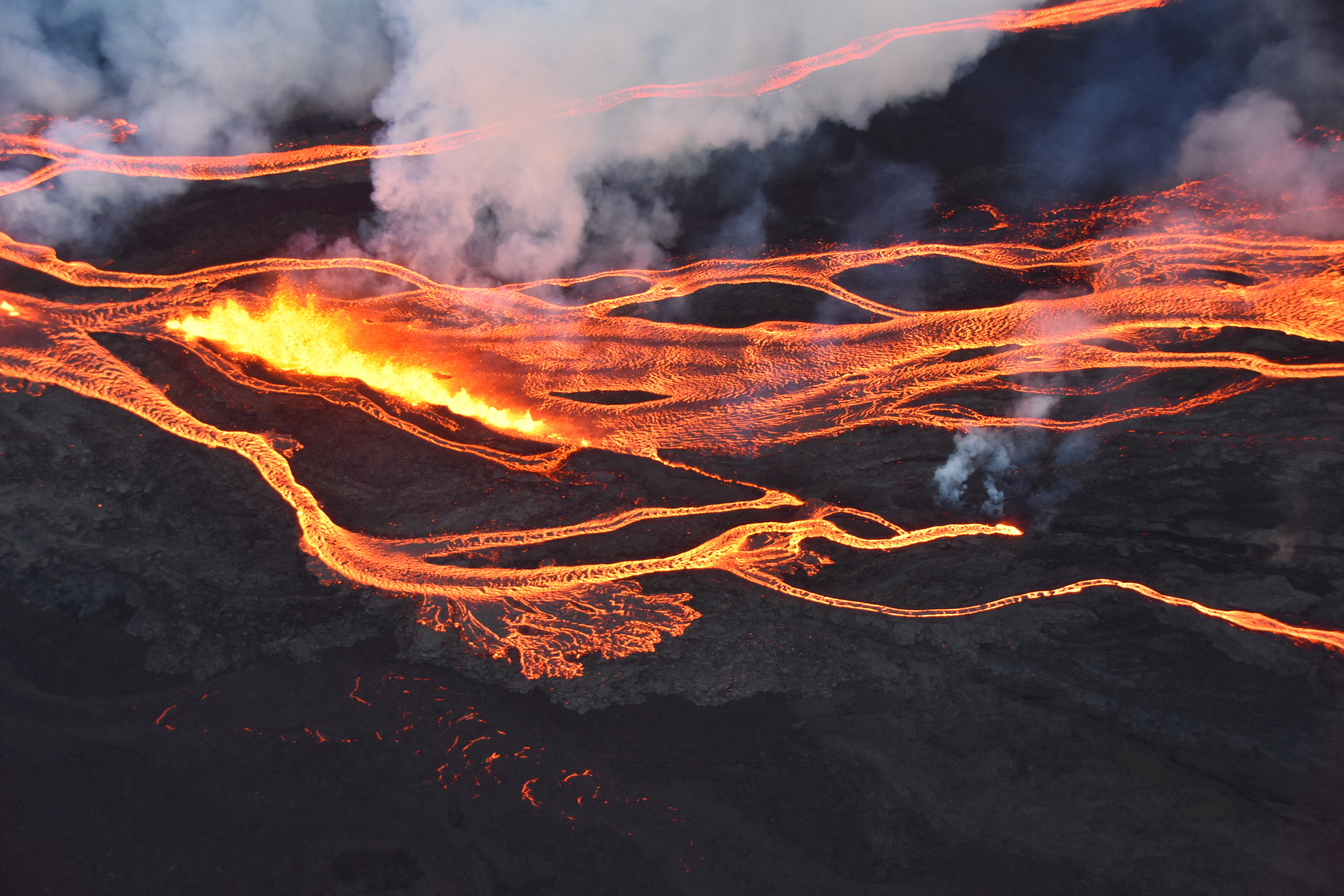
Historically, Mauna Loa has had less frequent, but often more extensive, eruptions compared to Kīlauea. Its last eruption occurred in November and December of 2022, after a nearly 40-year period of dormancy since its last eruption in 1984. This event was closely monitored by the HVO, and while lava flows did occur, they fortunately did not threaten any populated areas. The 2022 eruption of Mauna Loa served as a powerful reminder of its immense power and potential for future activity.

When Mauna Loa is not actively erupting, the park still offers incredible opportunities to explore its immense scale. Hiking trails wind through ancient lava fields, offering a glimpse into past eruptions and the resilient life that begins to colonize these barren landscapes. The stark beauty of Mauna Loa’s vast slopes, often shrouded in mist, provides a different but equally profound connection to the volcanic forces that shaped the island.
Planning Your Visit: Safety and Accessibility
The dynamic nature of volcanic activity in Hawaii Volcanoes National Park necessitates a proactive approach to planning your visit. The most crucial step is to stay informed about the current eruption status and any associated safety advisories. The U.S. Geological Survey’s Hawaiian Volcano Observatory (HVO) is the definitive source for real-time volcanic data and advisories. Their website and social media channels provide up-to-date information on seismic activity, gas levels, and eruption forecasts.
The National Park Service also provides essential information for visitors. Their official website for Hawaii Volcanoes National Park details current conditions, trail closures, and recommended viewing areas. It’s advisable to check these resources in the days leading up to and even on the day of your visit.
What to Expect During an Active Eruption
If Hawaii Volcanoes National Park is experiencing an active eruption, especially from Kīlauea’s summit, the experience can be truly awe-inspiring. Viewing areas are typically established by the park service at safe distances from the eruption site. These might include overlooks along Crater Rim Drive or designated points within the park. Witnessing molten lava glowing in the darkness, the steam and gas plumes rising into the sky, and the sheer power of the Earth releasing energy is an unforgettable spectacle.
During an eruption, it’s important to heed all park ranger instructions and posted signage. Volcanic gases, such as sulfur dioxide, can be present and pose health risks, especially to individuals with respiratory issues. The park may issue advisories regarding air quality, and visitors are encouraged to stay in well-ventilated areas and avoid areas with heavy gas concentrations.
Even when eruptions are not ongoing, the park remains a treasure trove of volcanic wonders. You can explore the otherworldly landscapes of recent lava flows, marvel at the stark beauty of cinder cones, and hike through lush rainforests that have reclaimed older volcanic terrain. The steam vents and sulfur banks at the summit of Kīlauea offer a constant reminder of the geothermal activity beneath the surface, regardless of active lava flows.
Traveling Responsibly and Safely
Beyond the immediate volcanic activity, responsible travel in Hawaii Volcanoes National Park is paramount. This includes respecting the fragile environment, staying on designated trails to prevent erosion and protect native plants, and avoiding the temptation to collect any volcanic rock or ash as souvenirs. These natural elements are integral to the park’s ecosystem and geological history.
For those interested in accommodations, the town of Volcano Village, located just outside the park entrance, offers a range of options from quaint bed and breakfasts to vacation rentals. Further afield, the city of Hilo on the eastern side of the island provides more extensive hotel and resort choices, along with a wider array of dining and shopping experiences. For those seeking a more luxurious or resort-style stay, the southern coast of Big Island offers properties that provide a different perspective on the island’s natural beauty.
When planning any trip to Hawaii, it’s always wise to consider the time of year and any potential weather patterns. While the weather is generally pleasant year-round, occasional vog (volcanic smog) can affect air quality, especially on the leeward sides of the islands, depending on wind patterns.
Ultimately, the question of whether Hawaii Volcano is still erupting is a dynamic one. The Hawaiian Islands, and Hawaii Volcanoes National Park in particular, are places of constant geological change. By staying informed, prioritizing safety, and approaching your visit with a sense of wonder and respect, you can ensure an enriching and unforgettable experience exploring one of Earth’s most active and awe-inspiring natural laboratories. The island of Hawaii is a destination that offers not just the thrill of witnessing volcanic power but also the chance to connect with the profound forces that shape our planet.
LifeOutOfTheBox is a participant in the Amazon Services LLC Associates Program, an affiliate advertising program designed to provide a means for sites to earn advertising fees by advertising and linking to Amazon.com. Amazon, the Amazon logo, AmazonSupply, and the AmazonSupply logo are trademarks of Amazon.com, Inc. or its affiliates. As an Amazon Associate we earn affiliate commissions from qualifying purchases.