
For many, the very thought of Hawaii conjures images of sun-drenched beaches, emerald mountains, and a laid-back island lifestyle. It’s a paradise often topping bucket lists for travelers and dreamers alike. But beneath the allure of aloha spirit and breathtaking landscapes lies a crucial question for anyone contemplating a permanent move: Is it expensive to live in Hawaii? The straightforward answer is a resounding yes, making it one of the most costly places to reside in the United States. Understanding the nuances of this high cost of living is essential for anyone considering making this tropical haven their home.
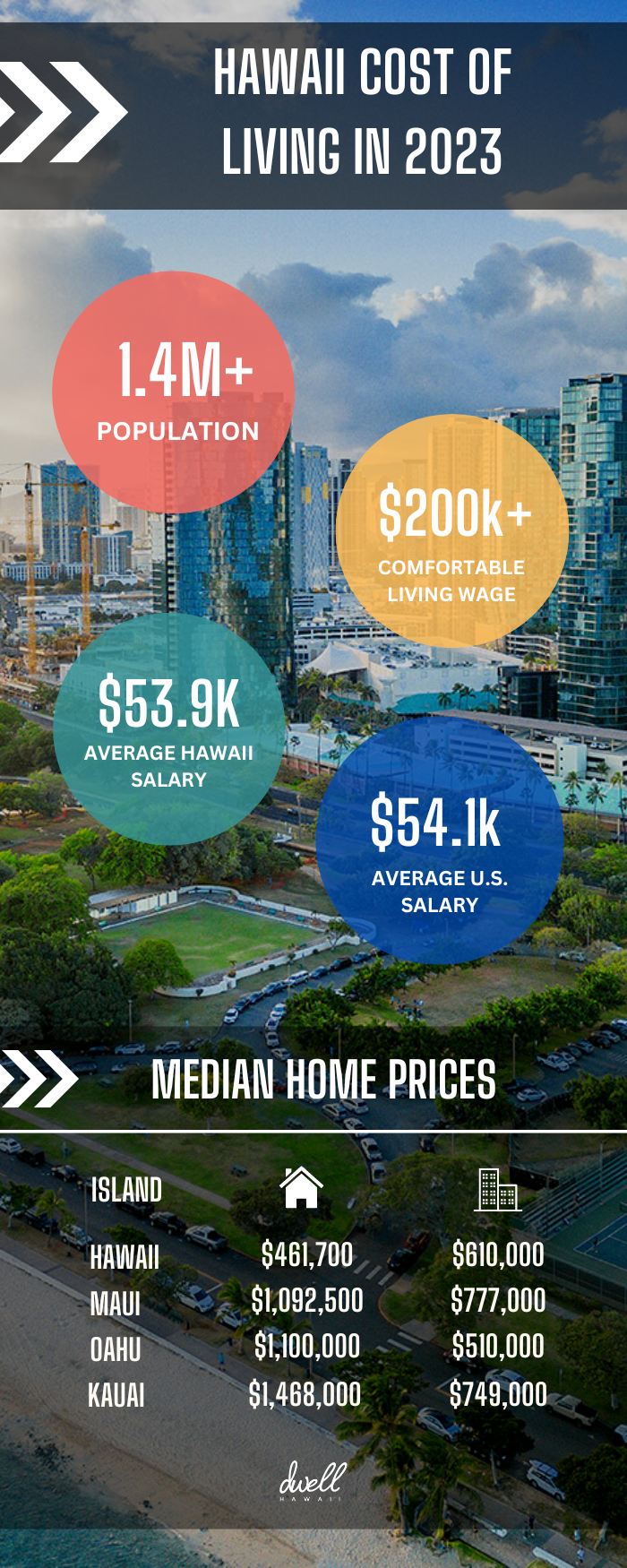
The dream of living in paradise often comes with a significant price tag, one that far exceeds the national average. According to various economic indicators, the overall cost of living in Hawaii can be as much as 84% higher than the national average across the United States. This isn’t just a slight bump; it’s a substantial premium that impacts every facet of daily life, from a gallon of milk to the roof over your head. For a single individual to live comfortably, an annual income upwards of $80,000 is often recommended, while a family might need to clear $120,000 or more just to maintain a reasonable standard of living without constant financial strain. This stark reality often surprises those accustomed to mainland prices, leading to what many locals affectionately, or perhaps resignedly, call the “Hawaii tax” – the inescapable markup on almost everything due to the islands’ remote location and unique economic factors.
The Reality of Paradise: An Overview of Hawaii’s Cost of Living
The magnetic pull of Hawaii as a travel destination is undeniable, drawing millions of visitors each year who flock to its destinations and attractions. This vibrant tourism industry, while a cornerstone of the state’s economy, also contributes significantly to the elevated cost of living for residents. The demand for resources, the scarcity of land, and the logistical challenges of island life all converge to create an economic environment unlike anywhere else in the United States.
Understanding the “Hawaii Tax”
The concept of the “Hawaii tax” permeates discussions about daily expenses. It’s not an actual government levy, but rather the informal term for the higher prices on goods and services across the board. From basic groceries to gasoline, household items to entertainment, expect to pay significantly more than you would on the mainland. This premium is deeply rooted in the islands’ isolated geography. Virtually everything consumed on the islands, apart from some local produce and fish, must be imported. This involves shipping costs from distant places like the United States mainland, Japan, or the Philippines, which are then passed on to the consumer. This isn’t just about consumer goods; even construction materials, vehicles, and medical supplies face the same logistical hurdles, inflating prices throughout the economy.
Why the High Price Tag? Key Contributing Factors
Several interconnected factors converge to make living in Hawaii such an expensive endeavor. Understanding these helps paint a clearer picture of the challenges faced by residents and potential transplants.
-
Geographic Isolation: As mentioned, Hawaii’s mid-Pacific location means that the vast majority of goods must be transported across thousands of miles of ocean. This shipping cost, combined with port fees and local distribution, significantly inflates the price of nearly every imported item, from cars to canned goods.
-
Limited Land and Resources: The total landmass of the Hawaiian islands is relatively small, and a substantial portion of it is protected, volcanic, or otherwise unsuitable for development. This scarcity of buildable land drives up property values and rents astronomically, especially on more developed islands like Oahu and Maui. Local resources, beyond a limited range of agricultural products, are also scarce, further necessitating imports.
-
High Demand and Desirability: Hawaii remains one of the most desirable places to live globally, attracting people willing to pay a premium for its unique lifestyle and natural beauty. This constant demand, from both residents and investors seeking luxury travel opportunities or vacation rental properties, fuels an overheated housing market and contributes to overall inflation. The competition for housing, in particular, is fierce, exacerbated by the presence of a strong tourism industry that often converts residential properties into short-term accommodation for visitors, further tightening supply for long-term residents.
- Local Economy and Wages: While certain sectors, particularly those related to tourism and federal employment, offer competitive wages, many local jobs do not fully compensate for the exorbitant cost of living. This disparity creates a challenging economic environment for many residents, often requiring multiple jobs or creative budgeting strategies.
Decoding the Major Expense Categories
To truly grasp the financial commitment of living in Hawaii, it’s crucial to break down the primary expense categories. These are the areas where the “Hawaii tax” is most acutely felt, particularly when comparing costs to cities like New York City, San Francisco, or Los Angeles, which are themselves considered high-cost areas on the mainland. Hawaii often surpasses even these benchmarks.
Housing: The Dominant Factor
Without a doubt, housing costs are the single largest driver of Hawaii’s high cost of living. This category alone accounts for much of the 200%+ difference compared to the national average.
-
Home Ownership: The median home price in Hawaii consistently hovers around $730,000 to $850,000, and sometimes even higher depending on the island and market conditions. This is more than double the national median home price, which typically sits around $290,000 to $350,000. Even with a high income, affording a home can be an immense challenge, often requiring significant savings for a down payment and substantial monthly mortgage payments. For those interested in buying villas or suites with resort-like amenities, the prices skyrocket further.
-
Rental Market: Renting offers little respite. The median rent for a typical apartment can easily exceed $2,100 per month statewide, compared to a national average closer to $1,100. In desirable areas of Honolulu on Oahu, a one-bedroom apartment can easily command $1,800 to $2,500, with larger units or homes pushing well past $3,000 to $4,000. The competition for long-term rentals is fierce, partly due to the proliferation of short-term vacation accommodation that takes units off the long-term market. This makes securing affordable housing a top priority and often a significant source of stress for residents.
-
Island Variations: While Oahu generally has the highest housing costs due to its population density and being home to the state capital, other islands like Maui are also notoriously expensive, especially in resort-heavy areas. The Big Island (also known as Hawaii Island) often offers slightly more affordable options, particularly in its more rural areas, but still remains significantly above mainland prices. Kauai also presents a high cost, driven by its natural beauty and limited development.
Groceries and Daily Essentials
The cost of food is another shock for newcomers. Groceries in Hawaii can be 45-60% higher than the national average. This is primarily due to the aforementioned shipping costs. Expect staples like milk, bread, eggs, and fresh produce to carry a significant markup. While local produce, especially during peak seasons, can be found at farmers’ markets at more reasonable prices, imported goods dominate supermarket shelves and will strain your budget.
Strategies for mitigating these costs include shopping at bulk retailers like Costco or Sam’s Club if available on your island, embracing local farmers’ markets for fresh produce, and cooking at home rather than frequenting restaurants, which also come with a high price point. Eating out frequently, while a pleasant part of the island lifestyle and tourism experience, can quickly decimate a budget.
Transportation Across the Islands
Navigating the islands presents its own set of financial considerations.
-
Car Ownership: For most residents, especially those living outside of downtown Honolulu, owning a car is a necessity. Public transportation, like TheBus on Oahu, is efficient in urban areas but limited in reach across the island and virtually non-existent or very sparse on neighbor islands. Gasoline prices in Hawaii are consistently among the highest in the nation, often topping $5 or $6 per gallon, well above the national average. Car insurance rates are also higher, and vehicle maintenance costs can be inflated due to parts needing to be shipped in.
-
Inter-Island Travel: For those who work on one island and live on another, or simply wish to explore the beauty of the entire archipelago, inter-island flights are a recurring expense. While not exorbitant for a single trip, these costs can add up if you frequently travel between islands for work, family, or leisure. This is a unique aspect of island living that mainlanders do not typically factor into their budget.
Utilities, Healthcare, and Other Necessities
Beyond housing and food, other essential services also contribute to the high cost of living.
-
Utilities: Electricity rates in Hawaii are the highest in the United States, often two to three times the national average. This is largely because the state relies heavily on imported oil for power generation. Even Alaska, known for high energy costs, is typically less expensive. Air conditioning use, while tempting in the tropical climate, can lead to astronomically high utility bills. Water and internet services are also pricier than on the mainland, though perhaps not as dramatically as electricity. High-speed internet, a necessity for remote work or entertainment, is a significant monthly expense.
-
Healthcare: Healthcare costs in Hawaii are higher than the national average, and access to specialized care can be limited, sometimes requiring travel to the mainland for complex procedures or rare conditions. Insurance premiums can also be substantial.
-
Taxes: Hawaii has relatively high income taxes and property taxes, which further add to the financial burden. The General Excise Tax (GET), which is applied to virtually all business activities in the state, including goods and services sold, acts like a sales tax and is often passed directly to the consumer.
-
Education and Childcare: For families, the cost of education can be a major concern. While public schools are available, many families opt for private schooling due to various factors, with tuition fees that can rival mainland private institutions. Childcare costs are also among the highest in the nation, adding significant pressure to household budgets.
Navigating Affordability: Strategies for Living in Hawaii
Despite the daunting costs, many people successfully build fulfilling lives in Hawaii. It requires careful planning, strategic budgeting, and often, an adjustment of expectations. The pursuit of the “Aloha lifestyle” often means prioritizing experiences over material possessions and embracing a different rhythm of life.
Smart Spending and Budgeting
Living affordably in Hawaii hinges on diligent budgeting and smart consumer choices.
- Cook at Home and Shop Local: As mentioned, minimizing dining out and maximizing home cooking, especially with ingredients from local farmers’ markets, can drastically reduce food expenses.
- Embrace Free Activities: Hawaii’s greatest treasures are its natural landmarks and the stunning outdoors. Hiking, swimming, surfing, beach days, and exploring nature are often free or low-cost activities that offer incredible experiences. This aligns perfectly with a budget travel mindset, even for residents.
- Energy Conservation: Be mindful of electricity usage. Utilize natural ventilation, energy-efficient appliances, and consider solar power if you own a home.
- Shared Housing: For singles or couples, shared housing arrangements can significantly cut down on rental costs, making living on more expensive islands like Oahu more feasible.
Choosing Your Island and Neighborhood Wisely
The cost of living varies significantly even within Hawaii itself.
- Island Choice: The Big Island generally offers the most affordable real estate and slightly lower costs for some goods and services, particularly outside of its main urban centers like Kailua-Kona or Hilo. However, job opportunities might be more limited compared to Oahu. Researching the unique characteristics and economic landscapes of each island is crucial for long-term stay planning.
- Neighborhood Selection: Even on Oahu, living in downtown Honolulu or a prime beachside community will be vastly different from a more residential, inland neighborhood. Exploring different areas and considering a longer commute for more affordable housing is a common strategy.
Employment and Income Considerations
Securing a job that pays a “Hawaii wage” is paramount. Industries like tourism, healthcare, federal government, and certain tech sectors often offer salaries that are more commensurate with the cost of living. Individuals considering a move should research the local job market thoroughly, assess potential income levels, and ideally secure employment before relocating. Remote work, where a mainland salary can be earned while enjoying the Hawaii lifestyle, is an increasingly attractive option for some, though even then, housing and daily expenses remain high.
Is Living in Hawaii Worth the Cost?
Ultimately, the question of whether living in Hawaii is “worth” the expense is deeply personal. For many, the unparalleled natural beauty, the unique cultural experiences, the year-round pleasant weather, and the sense of community create a quality of life that justifies the financial sacrifice. The opportunity for daily outdoor activities and a slower pace of life, away from the hustle of mainland cities, holds immense value.
However, it requires a conscious decision to embrace a simpler, more island-focused lifestyle. It might mean foregoing certain luxuries, meticulously planning finances, and adapting to the “Hawaii tax” on everything from groceries to electricity. For those who prioritize sunshine over savings and ocean views over opulent living, the answer is a resounding yes. But for those unprepared for the financial realities, the dream of paradise can quickly become a costly burden. Thorough research, realistic budgeting, and perhaps a visit for an extended long-term stay before making a permanent move, are highly recommended to ensure your journey to aloha is as smooth and sustainable as possible.
LifeOutOfTheBox is a participant in the Amazon Services LLC Associates Program, an affiliate advertising program designed to provide a means for sites to earn advertising fees by advertising and linking to Amazon.com. Amazon, the Amazon logo, AmazonSupply, and the AmazonSupply logo are trademarks of Amazon.com, Inc. or its affiliates. As an Amazon Associate we earn affiliate commissions from qualifying purchases.