
Navigating the bustling streets of New York City can be an exhilarating experience, a symphony of yellow cabs, hurried pedestrians, and iconic landmarks. For travelers and locals alike, understanding the nuances of urban mobility is key to a smooth and safe journey. Among the many questions that arise when exploring the concrete jungle, one that frequently pops up, especially for those accustomed to different traffic laws, is about the legality of jaywalking. So, is jaywalking illegal in New York? The answer, like many things in this dynamic metropolis, is nuanced.
While the image of a pedestrian darting across a street between designated crosswalks might seem commonplace, the reality of jaywalking laws in New York is rooted in a specific legal framework designed to ensure public safety. The general understanding and application of the law point towards jaywalking being indeed illegal, though enforcement can vary and the specifics are important to grasp.

Understanding the Nuances of Pedestrian Law in New York City
The core of the matter lies in understanding what constitutes legal pedestrian behavior versus illegal jaywalking. New York State Vehicle and Traffic Law, which governs vehicular and pedestrian conduct across the state, including New York City, provides the framework. The most pertinent section is likely found within statutes that address pedestrian rights and responsibilities when crossing streets.
Legal Crossings: The Designated Path
In New York, pedestrians are generally required to cross streets at designated crosswalks, whether they are marked with painted lines or are simply the intersections of sidewalks. This means waiting for the traffic signal, if one exists, to indicate that it is safe to proceed. The law prioritizes order and predictability in traffic flow, aiming to minimize the risk of accidents between vehicles and pedestrians.
The rationale behind this is straightforward: vehicles operate at speeds that can be dangerous to unsuspecting pedestrians. By channeling pedestrian traffic through specific crossing points, drivers can anticipate where pedestrians might be and adjust their behavior accordingly. This also provides pedestrians with a clear understanding of when they have the right of way, contributing to a more organized and less chaotic street environment.
What Constitutes Jaywalking?
Jaywalking, in its simplest definition, is crossing a street illegally. This can manifest in several ways:
- Crossing mid-block: This is perhaps the most common form of jaywalking. It involves stepping off the curb and proceeding across the street at a point that is not a marked or unmarked crosswalk.
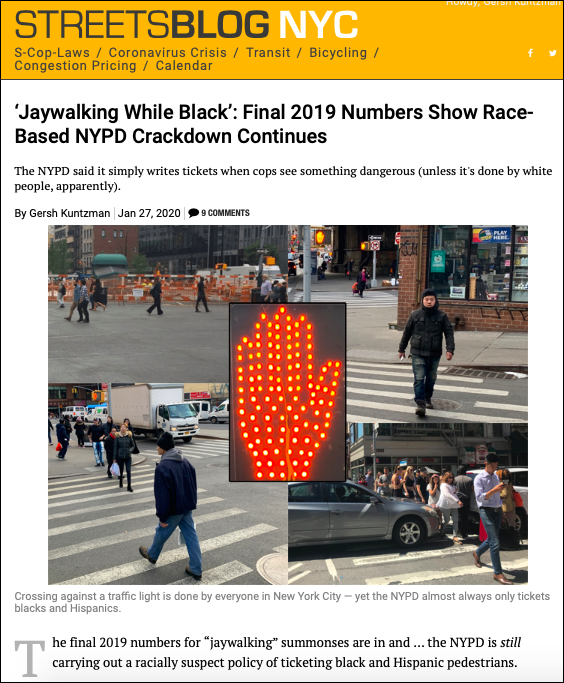
- Crossing against a signal: Even if you are at a crosswalk, if the pedestrian signal is red, or if the “Don’t Walk” symbol is illuminated, crossing the street would be considered illegal.
- Disobeying traffic control signals: This extends beyond just pedestrian signals. If a traffic light is red for vehicles, pedestrians should not begin crossing even if they perceive an opportunity, as it could still be a violation.
The New York State Department of Motor Vehicles (DMV) and the New York City Department of Transportation (DOT) both provide guidance and resources that reinforce these principles. Their publications often emphasize pedestrian safety and the importance of adhering to traffic laws, including crossing at designated areas.
The Legal Basis: Vehicle and Traffic Law
While specific statutes might be numerous and complex, the overarching principle is that pedestrians must yield to vehicular traffic when not in a crosswalk. New York Vehicle and Traffic Law Section 1152(a), for instance, typically states that pedestrians shall not “suddenly leave a curb or other place of safety and walk or run into the path of a vehicle which is so close as to constitute an immediate hazard.” This wording underscores the expectation that pedestrians will exercise caution and cross at points where their presence is anticipated by drivers.
Furthermore, Section 1151 of the Vehicle and Traffic Law generally addresses pedestrians’ right of way at crosswalks, implying that the right of way is granted at these specific locations and not elsewhere. When a pedestrian is outside of a crosswalk, the burden of ensuring their safety falls heavily on the pedestrian themselves, and any collision is likely to be viewed through the lens of the pedestrian being in violation of traffic laws.
Enforcement and Practical Realities
While the law clearly defines jaywalking as illegal in New York, the practical application and enforcement of these regulations can be a subject of much discussion. New York City, with its dense population and fast-paced urban life, has historically seen varying levels of enforcement regarding jaywalking.

The “Broken Windows” Theory and Jaywalking
In the past, under former Mayor Bill de Blasio, there was a shift in the city’s approach to minor offenses, including jaywalking. Influenced by the “broken windows” theory, which posits that addressing minor crimes can prevent more serious ones, there was a period where enforcement of infractions like jaywalking was more stringent. The rationale was that these minor violations could contribute to a perception of disorder and potentially embolden more serious criminal activity.
However, this approach also drew criticism, with some arguing that it disproportionately affected minority communities and that focusing on minor infractions detracted from addressing more pressing public safety concerns.
Current Enforcement Trends
In more recent times, the focus of law enforcement in New York City has often been directed towards more serious offenses. While jaywalking is still technically illegal and can result in a ticket or fine, active enforcement can fluctuate. This means that while you might see people jaywalking with relative impunity on a daily basis, it does not negate the fact that it is a violation of the law.
The New York City Police Department (NYPD) has the authority to issue summonses for violations of the Vehicle and Traffic Law, including those related to pedestrian conduct. However, their priorities can shift based on departmental directives, public safety concerns, and resource allocation. It is not uncommon for officers to prioritize issues that pose a more immediate threat to public safety.
Despite this, it is crucial for visitors and residents alike not to rely on the assumption that jaywalking will go unpunished. A moment of inattention from a driver, a sudden braking maneuver, or an unexpected situation can turn a seemingly harmless dash across the street into a serious accident. The potential consequences, which can range from a minor citation and fine to severe injury or even fatality, far outweigh any perceived convenience of avoiding a crosswalk.
Safety First: Tips for Pedestrians in New York City
Regardless of the current enforcement trends, prioritizing safety is paramount when navigating New York City. The sheer volume of traffic, both vehicular and pedestrian, demands a heightened sense of awareness. Here are some essential tips for pedestrians to ensure their safety and to comply with the law:
Be Present and Aware
- Put away distractions: This is perhaps the most critical piece of advice. Avoid using your phone, listening to loud music with headphones, or engaging in conversations that distract you from your surroundings.
- Make eye contact: Before stepping into the street, try to make eye contact with drivers of approaching vehicles. This helps ensure they see you and are aware of your intention to cross.
- Look left, right, and left again: Even at a crosswalk with a walk signal, it is wise to remain vigilant. Drivers may run red lights, or vehicles turning right may not see pedestrians.
Utilize Crosswalks and Signals
- Always use designated crosswalks: Whether they are marked with painted lines or are at an intersection, these are the safest places to cross.
- Obey pedestrian signals: Wait for the “Walk” signal before stepping off the curb. If there is no pedestrian signal, be particularly cautious and yield to traffic.
- Be aware of turning vehicles: Even when the pedestrian signal is in your favor, be mindful of vehicles turning into or crossing the street you are traversing.
Understand the Environment
- Know your surroundings: In areas with heavy traffic, such as Times Square or near major transportation hubs like Grand Central Terminal, visibility can be challenging. Be extra cautious in these high-traffic zones.
- Watch out for cyclists and e-scooters: New York City has a growing number of cyclists and e-scooter riders. They often travel at considerable speeds and may not always adhere to traffic laws, so be aware of them as well.
- Consider visibility: During dawn, dusk, or nighttime, visibility decreases significantly. Wear lighter-colored clothing if possible and be even more attentive to your surroundings.
The Legal Ramifications
While enforcement might vary, remember that jaywalking is technically illegal in New York. A ticket for jaywalking can result in a fine, which, while perhaps not crippling, is an unnecessary expense and hassle, especially for tourists. More importantly, the risk of injury or worse is a constant and serious concern.
For travelers planning a trip to New York, whether staying in a luxury suite at the Plaza Hotel or a more budget-friendly apartment rental, understanding these pedestrian rules is a vital part of experiencing the city safely. Embracing the local culture includes respecting its traffic laws, ensuring your adventure in the Empire State is memorable for all the right reasons. Whether you’re exploring iconic landmarks or enjoying local food and activities, a little caution goes a long way. Remember, a beautiful resort in Montauk or a charming villa in the Catskills are destinations to relax in, but navigating the vibrant streets of New York City requires a proactive approach to safety. When planning your family trip or business stay, integrating these safety practices into your routine will contribute to a more enjoyable and worry-free exploration of the city’s countless attractions.