
When exploring the vibrant streets and iconic landmarks of New York, understanding your rights and the boundaries of law enforcement interaction is paramount. This is especially true when encountering police officers who may request you to “stop and identify.” The question of whether New York is a “stop and identify” state is a crucial one for residents and visitors alike, impacting daily life and travel experiences. This article delves into the legal framework, practical implications, and common scenarios surrounding police encounters in the Empire State, offering clarity and guidance.
Understanding “Stop and Identify” Laws
The concept of “stop and identify” refers to the authority of a law enforcement officer to briefly detain an individual and request their identification under specific circumstances. These laws vary significantly by jurisdiction, and their interpretation and application can be nuanced. In the United States, the landmark Supreme Court case Terry v. Ohio (1968) established the legal basis for “stop and frisk” encounters. The Court ruled that police officers can stop and briefly detain individuals if they have a reasonable suspicion that the person has committed, is committing, or is about to commit a crime. During such a stop, officers may also conduct a pat-down search for weapons if they have a reasonable suspicion that the person is armed and dangerous.

The “Reasonable Suspicion” Standard
The crux of the matter in “stop and identify” scenarios lies in the “reasonable suspicion” standard. This is a lower threshold than “probable cause,” which is required for an arrest. Reasonable suspicion is defined as specific and articulable facts that, taken together with rational inferences from those facts, reasonably warrant an intrusion. It’s not enough for an officer to have a hunch or a gut feeling. The suspicion must be based on objective facts, such as the individual’s appearance, behavior, proximity to a crime scene, or a report from a credible source.
For example, if an officer observes someone matching the description of a suspect in a recent robbery loitering near the scene of the crime at an odd hour, this might constitute reasonable suspicion for a stop. Similarly, if an individual is observed attempting to break into a car, this would likely provide reasonable suspicion for a stop and identification request. The legality of the stop and the subsequent identification request hinges on whether the officer can articulate specific, objective facts that led to their suspicion.
Identification in “Stop and Identify” Contexts
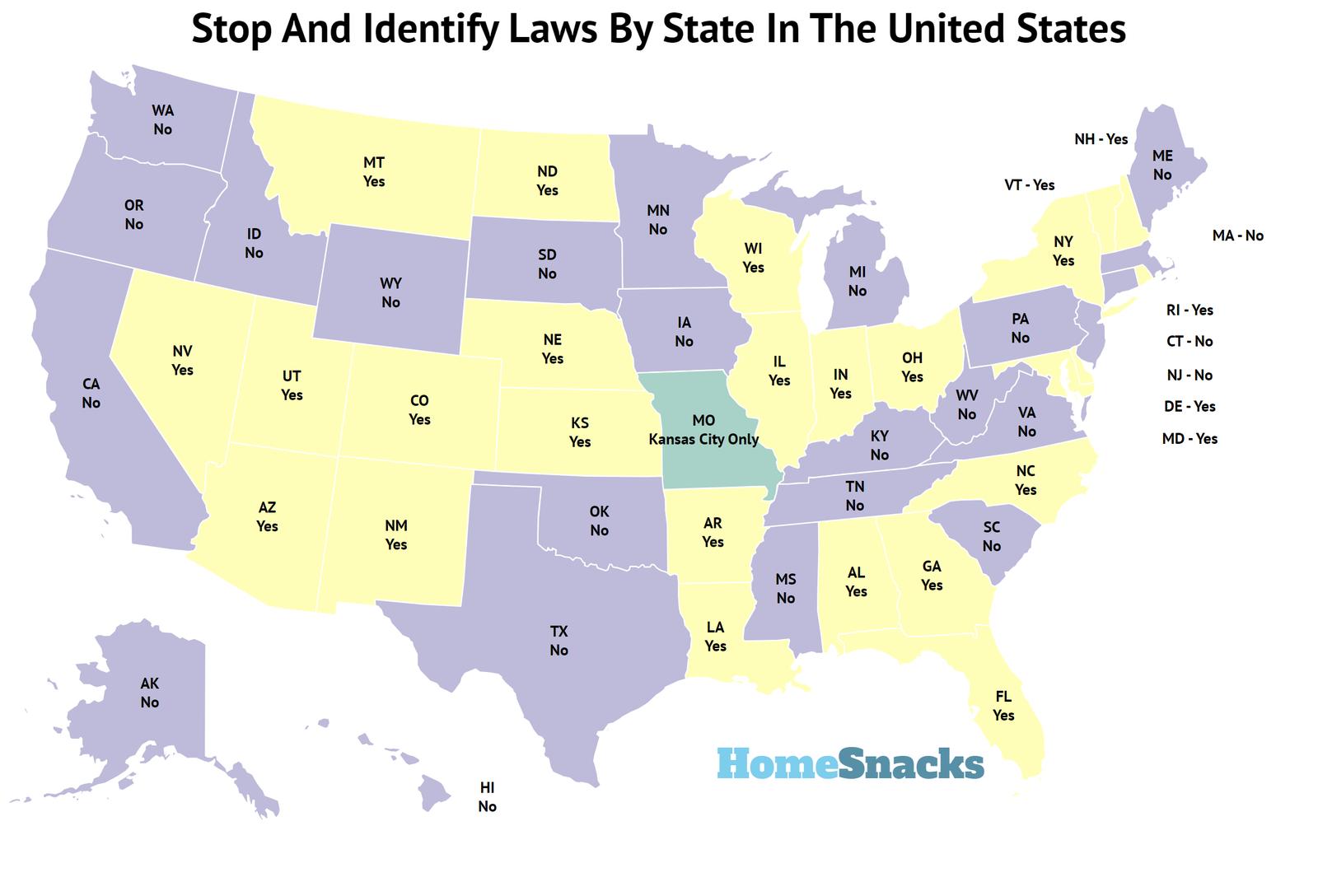
Once a lawful stop has been made based on reasonable suspicion, officers may have the authority to ask for identification. However, the extent of this authority, and whether an individual can be compelled to provide it, is where New York‘s legal landscape becomes particularly interesting. Unlike some states that have explicit “stop and identify” statutes mandating that individuals provide identification when lawfully detained, New York does not have such a broad, overarching statute.
Instead, New York law, particularly New York Penal Law § 240.25 (requiring obstruction of governmental administration), can be interpreted to require individuals to identify themselves when lawfully stopped by police if such identification is necessary for the officer to perform their duties. However, this is not an unfettered right for officers. The identification request must be directly related to the lawful purpose of the stop. If the police have a legitimate reason to believe you are involved in criminal activity or possess information about a crime, they may have the authority to ask for identification. Refusal to identify oneself under such circumstances could potentially lead to charges of obstruction of governmental administration.
It is crucial to distinguish this from a situation where an officer approaches you on the street with no reasonable suspicion of criminal activity and demands your identification. In such a scenario, you generally are not legally obligated to provide it. However, the practical realities of such an encounter, especially in a busy environment like New York City, can be complex.
Navigating Police Encounters in New York
Understanding the nuances of New York‘s legal framework is essential for anyone traveling through or residing in the state. Whether you’re enjoying the tourist attractions of Times Square, exploring the history of the Statue of Liberty, or seeking accommodation at a hotel like the Grand Hyatt Hotel, encountering law enforcement is a possibility.
Your Rights During a Stop
If you are stopped by a police officer in New York, it is important to remain calm and respectful. You have the right to ask the officer if you are free to leave. If the officer states that you are free to leave, you can do so. If the officer states that you are being detained, you have the right to remain silent. You are not required to answer questions beyond providing your name if lawfully requested.
What to Do If Stopped
- Remain Calm and Polite: Even if you believe the stop is unjustified, escalating the situation is rarely beneficial.
- Ask if You Are Free to Leave: This is a key question. If the answer is yes, you can depart.
- Do Not Resist: If you are being detained, do not physically resist.
- You Have the Right to Remain Silent: You are not obligated to answer questions beyond identifying yourself if lawfully requested.
- Do Not Consent to Searches: If an officer asks to search you or your belongings, you have the right to refuse consent. However, if the officer has probable cause or a warrant, they may still conduct a search.
- Consider Legal Counsel: If you are unsure about your rights or the situation escalates, consider seeking legal advice.
Common Scenarios and Misconceptions
Many people have a general understanding of “stop and identify” laws, often influenced by media portrayals. However, the reality in New York is less straightforward than a blanket requirement to identify yourself to any officer who asks.
One common misconception is that officers can stop and identify anyone they wish, at any time, simply because they are police officers. This is not accurate. The stop must be based on reasonable suspicion.
Another area of confusion arises when the stop is for something minor, like a traffic violation. In such cases, drivers are typically required to provide their driver’s license, vehicle registration, and proof of insurance. This is a lawful requirement related to operating a vehicle.
For pedestrians, the situation is more dependent on the specific circumstances. If you are in a high-crime area, behaving suspiciously, or appear to be involved in a crime, the threshold for reasonable suspicion may be met more easily.
Travel and Legal Considerations in the Empire State
When planning a trip to New York, whether it’s for a business stay in Manhattan, a family vacation visiting the Niagara Falls, or a leisurely exploration of the Adirondack Mountains, being aware of your legal rights can enhance your experience and provide peace of mind.
Legal Frameworks Beyond “Stop and Identify”
While “stop and identify” laws are a significant aspect of police-citizen interactions, they are not the only legal considerations. New York has various laws pertaining to public order, disorderly conduct, and resisting arrest, all of which can come into play during encounters with law enforcement.
For instance, New York Penal Law § 240.20 defines disorderly conduct, which can include actions like making unreasonable noise, fighting or violent behavior, or using offensive language in a public place. Officers can arrest individuals for disorderly conduct if they witness such behavior.

The Impact on Tourism and Lifestyle
The perception of safety and the clarity of legal interactions can significantly influence a tourist’s experience. A New York vacation to a luxurious resort or a budget-friendly apartment should ideally be free from undue anxiety regarding encounters with law enforcement. Understanding that police actions must be grounded in reasonable suspicion, and that identification is not always mandatory, can demystify these interactions.
For those considering longer-term stays or business travel, familiarity with these legal boundaries is even more critical. The lifestyle associated with New York – from its bustling urban centers to its serene natural landscapes – should be accessible without the constant worry of unwarranted police stops.
In conclusion, while New York does not have a blanket “stop and identify” statute that requires all individuals to produce identification upon demand by any police officer, the state’s laws, particularly through the interpretation of obstruction of governmental administration, allow for lawful identification requests under specific circumstances where reasonable suspicion of criminal activity exists. For travelers and residents, remaining informed about these legal standards and your rights is key to navigating New York with confidence.