
When planning a trip to the vibrant state of Louisiana, a crucial aspect of your itinerary, especially if you are a firearms owner, involves understanding the local regulations concerning the carrying of weapons. The question, “Is Open Carry Legal in Louisiana?” is a common one for those who wish to exercise their Second Amendment rights while traveling. This article aims to provide a comprehensive overview of Louisiana’s open carry laws, helping you navigate this complex legal landscape responsibly and with peace of mind, ensuring your visit to the Bayou State is both enjoyable and compliant.
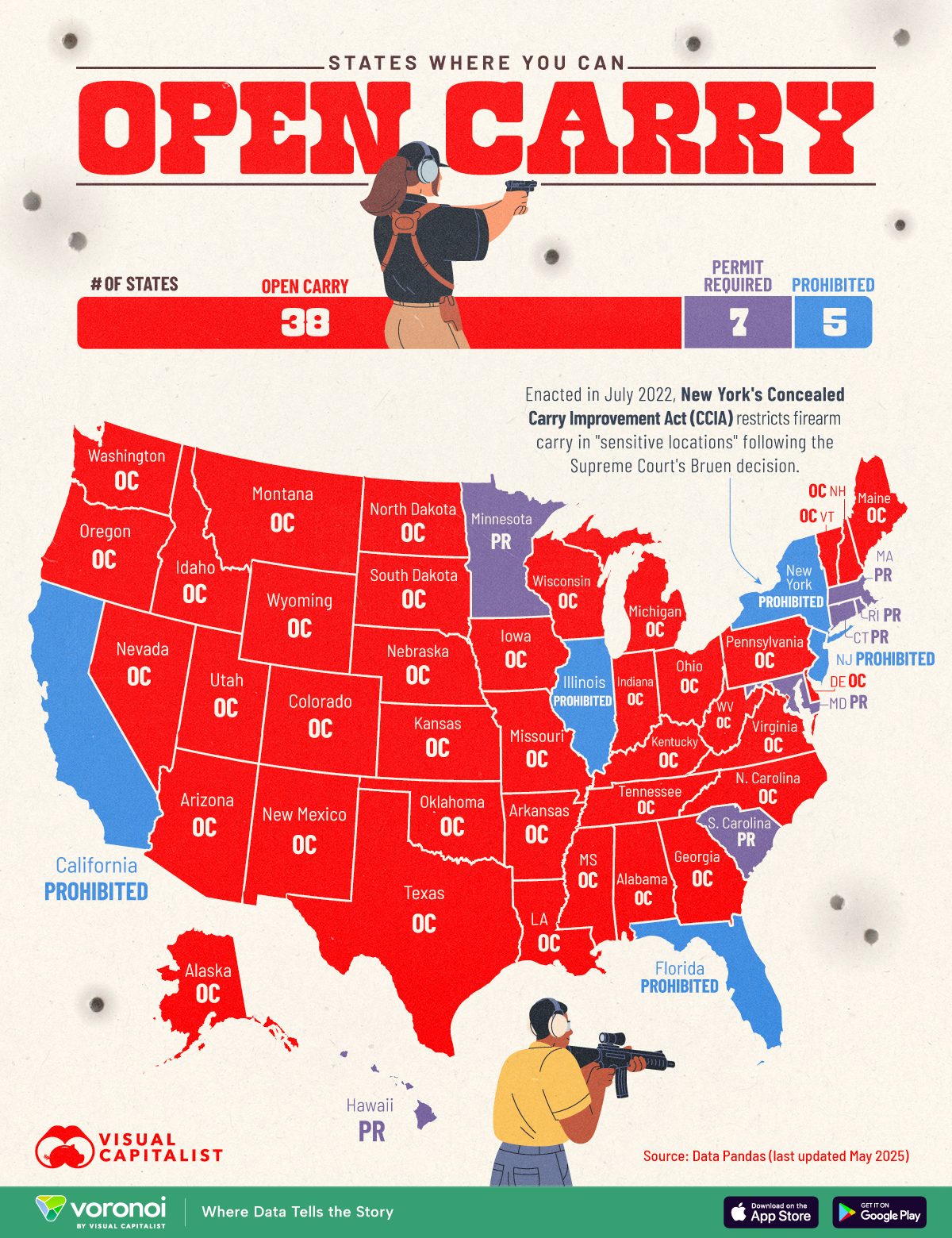
Louisiana, a state steeped in rich history and diverse culture, from the jazz-filled streets of New Orleans to the historic plantations along the Mississippi River, welcomes millions of tourists each year. While exploring its unique attractions, such as the French Quarter or the natural beauty of the Atchafalaya Basin, understanding firearm laws is paramount for responsible citizens. This guide will delve into the specifics of open carry in Louisiana, addressing key questions and providing practical information for travelers.
The legal framework surrounding firearms in the United States is a patchwork of federal and state laws, and Louisiana is no exception. For travelers, especially those coming from states with different firearm regulations, it is essential to be well-informed. This article will break down the nuances of Louisiana’s open carry laws, distinguishing between constitutional carry and permit requirements, and outlining important restrictions and considerations.
Understanding Louisiana’s Open Carry Laws: Key Provisions
Louisiana’s approach to open carry has evolved over time, reflecting ongoing debates and legislative changes. Understanding these nuances is critical for anyone considering carrying a firearm openly within the state.
Constitutional Carry in Louisiana
Louisiana is indeed a “constitutional carry” state. This means that as of recent legislative changes, eligible individuals can carry a handgun, openly or concealed, without needing a concealed handgun permit (CHP). However, eligibility is not universal and hinges on several key factors, primarily age and legal status.
To legally carry a handgun under constitutional carry in Louisiana, you must:
- Be at least 21 years of age.
- Be a legal resident of Louisiana or be legally present in Louisiana.
- Be legally eligible to possess a firearm under both federal and Louisiana law. This means you must not be prohibited from owning a firearm due to felony convictions, domestic violence restraining orders, or other disqualifying factors.
It is crucial to remember that even with constitutional carry, there are still places where carrying firearms is prohibited. Ignorance of these restrictions is not a valid legal defense. Therefore, thorough research and adherence to posted signage are imperative.
Open Carry vs. Concealed Carry
While Louisiana has moved towards constitutional carry, the distinction between open carry and concealed carry remains relevant.
- Open Carry: This refers to carrying a handgun in plain view, typically in a holster on your hip or shoulder. In Louisiana, as a constitutionally permitted carrier, you can open carry a handgun provided you meet the eligibility requirements and are not in a prohibited location.
- Concealed Carry: This involves carrying a handgun in a manner that is not readily visible to others. Prior to the implementation of constitutional carry, a Concealed Handgun Permit (CHP) was required for concealed carry. While a CHP is no longer mandatory for carrying a handgun (open or concealed) for eligible individuals, it can still offer certain benefits, such as reciprocity with other states that recognize Louisiana’s CHP for concealed carry purposes.
For travelers, understanding this distinction is important, especially when considering which method of carry is most appropriate and legal for their specific situation and destination within Louisiana.
Where Can You Legally Open Carry? Understanding Prohibited Locations
Even in a constitutional carry state like Louisiana, there are specific locations where carrying firearms, whether openly or concealed, is strictly prohibited. These restrictions are in place to ensure public safety and maintain order in sensitive areas. Awareness of these prohibited zones is vital for responsible gun ownership and legal compliance.
Federal and State Prohibited Areas
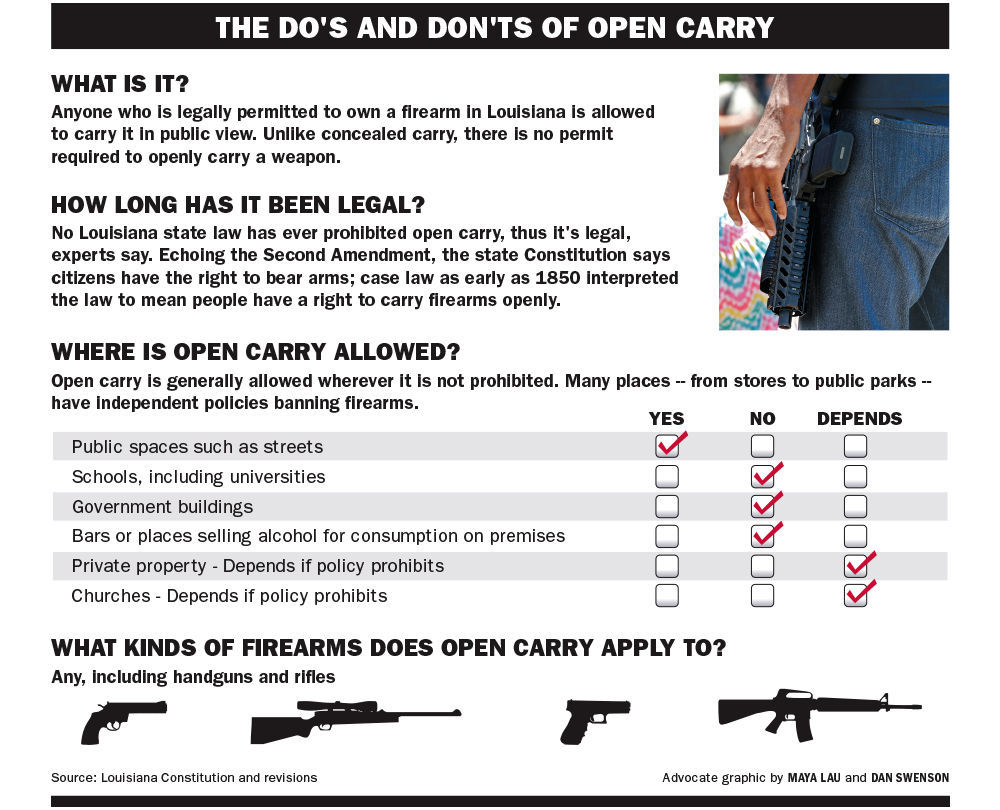
Louisiana law designates several places where carrying firearms is generally forbidden. These include:
- Federal Buildings and Property: This encompasses post offices, federal courthouses, and any other property owned or leased by the U.S. government.
- Courts and Correctional Facilities: Carrying firearms is prohibited within courthouses, jails, and other correctional institutions.
- Polling Places on Election Day: To ensure the integrity of the electoral process, firearms are not permitted at polling places during an election.
- Schools: This is a critical area of restriction. Generally, firearms are prohibited on school property, including K-12 schools and universities, unless specific exceptions apply (e.g., authorized personnel).
- Churches and Places of Worship: While some religious institutions may have specific policies allowing firearms, carrying in them is generally restricted unless explicitly permitted by the governing body.
- Places Where Notice is Given: Many establishments, such as businesses or restaurants, can legally prohibit firearms by posting clear signage. Louisiana law requires these signs to be conspicuous and meet specific dimensions and wording requirements to be legally binding. It is your responsibility as a carrier to look for and respect these notices.
- Law Enforcement Offices: Carrying firearms within police stations or sheriff’s offices is typically prohibited.
Understanding “No Gun” Signs
In Louisiana, as in many other states, private property owners and businesses have the right to prohibit firearms on their premises. This is usually done by posting “No Gun” signs. These signs must be specific and follow legal guidelines to be enforceable. Typically, they need to be clearly visible and of a certain size and design.
If you are carrying a firearm, it is your responsibility to be aware of these signs and comply with them. Entering a business that has clearly posted a “No Gun” sign while carrying a firearm can result in trespassing charges or other legal ramifications. This is particularly important when visiting popular tourist destinations, hotels, or dining establishments. Always be observant of your surroundings and any posted regulations.
Additional Considerations for Travelers and Open Carriers
Beyond the fundamental laws of open carry, there are several other important aspects that travelers in Louisiana should be aware of. These include specific nuances for non-residents, the importance of responsible gun ownership, and how to handle interactions with law enforcement.
Non-Resident Firearm Laws
For visitors to Louisiana, understanding how your home state’s firearm laws interact with Louisiana’s is crucial. While Louisiana’s constitutional carry law applies to eligible individuals within the state, non-residents must still ensure they are legally permitted to possess and carry firearms under their own state’s laws and federal law.
Louisiana does have reciprocity agreements for concealed handgun permits with many other states. However, with the advent of constitutional carry, the primary focus shifts to whether you are legally allowed to carry a handgun in Louisiana as an individual, regardless of whether you are a resident or non-resident, provided you meet the age and eligibility criteria. If you are from a state that does not recognize Louisiana’s constitutional carry, or if you are carrying a firearm that is not permitted in your home state, you could face legal issues.
It is advisable for non-residents to verify their specific situation by consulting with the Louisiana State Police or a legal professional knowledgeable in firearms law to ensure full compliance. This is especially true if you plan to travel through other states on your way to or from Louisiana, as each state has its own unique set of regulations.
Responsible Gun Ownership and Safety
Responsible gun ownership extends beyond legal compliance. It involves a commitment to safety, training, and ethical conduct. When carrying a firearm, especially in unfamiliar environments or while engaging in tourist activities, always prioritize safety.
- Training: While Louisiana’s constitutional carry may not mandate a permit, undergoing a firearms safety course is highly recommended. This can enhance your skills and knowledge of safe handling, storage, and legal responsibilities.
- Awareness: Maintain situational awareness at all times. Be mindful of your surroundings, especially in crowded tourist areas like the French Quarter or during festivals like Mardi Gras.
- Secure Storage: If you are staying in a hotel, such as the Roosevelt New Orleans, or a rental property, ensure your firearm is stored securely when not in your possession. Many hotels offer in-room safes.
- De-escalation: In any situation, strive for de-escalation. Your firearm is a tool for self-defense, not for confrontation.

Interacting with Law Enforcement
Should you find yourself in a situation where you need to interact with law enforcement officers while carrying a firearm, it is crucial to remain calm, cooperative, and transparent.
- Notification: If a law enforcement officer initiates a traffic stop or approaches you, it is generally advisable to inform the officer that you are lawfully carrying a firearm. Do this calmly and clearly when asked if you have any weapons on your person or in your vehicle.
- Follow Instructions: Follow the officer’s instructions precisely. Avoid sudden movements. Keep your hands visible.
- No Admission of Guilt: Do not volunteer unnecessary information or admit to any wrongdoing. If you are unsure about a question, it is permissible to state that you wish to speak with an attorney.
By understanding and adhering to Louisiana’s open carry laws, respecting prohibited locations, and practicing responsible gun ownership, travelers can enjoy the unique experiences Louisiana has to offer while remaining legally compliant and safe. Whether you are exploring the historic streets of Baton Rouge, enjoying the culinary delights of Lafayette, or seeking adventure in the bayous, a well-informed approach to firearms regulations will contribute to a worry-free journey.