
New Hampshire, often celebrated for its “Live Free or Die” motto and breathtaking natural beauty, presents a unique and somewhat paradoxical stance on cannabis legality. While surrounded by states that have embraced recreational marijuana, the Granite State continues to navigate a complex legislative path. For travelers planning a visit, understanding the current legal landscape is crucial to ensure a smooth and enjoyable experience. This article delves into the specifics of cannabis laws in New Hampshire, exploring its medical program, decriminalization efforts, and the ongoing debate for full legalization, all while considering the broader implications for tourism and lifestyle in this charming corner of New England.
The Current Landscape of Cannabis Legality in the Granite State
New Hampshire’s approach to cannabis stands in stark contrast to many of its neighbors. While the state has made some moves towards reform, it has not yet fully legalized recreational marijuana for adult use. This creates a nuanced environment that can be confusing for both residents and visitors alike, particularly those accustomed to more permissive laws elsewhere.
Decriminalization vs. Full Legalization
It’s essential to distinguish between decriminalization and full legalization. In New Hampshire, the possession of small amounts of cannabis has been decriminalized since 2017. This means that possession of up to three-quarters of an ounce (approximately 21 grams) of marijuana, or up to five grams of hashish, by adults 18 or older is considered a civil violation rather than a criminal offense. Instead of facing arrest or jail time, individuals caught with these amounts typically receive a civil summons and a fine of $100 for a first or second offense, rising to $300 for a third offense within three years. Subsequent offenses may result in misdemeanor charges.
However, decriminalization is not the same as legalization. While a civil penalty is less severe than criminal charges, it still carries consequences and does not permit the legal sale, purchase, or public consumption of cannabis. Growing cannabis at home for personal use also remains illegal, unlike in states where recreational marijuana is fully legal. This means that for travelers, buying, selling, or consuming cannabis in New Hampshire is still against the law outside of the very specific confines of the medical program. Visitors should be particularly aware that public consumption, even of decriminalized amounts, can lead to additional fines or other penalties, affecting their travel experience and potentially their future visits.
Medical Cannabis: A Limited Exception
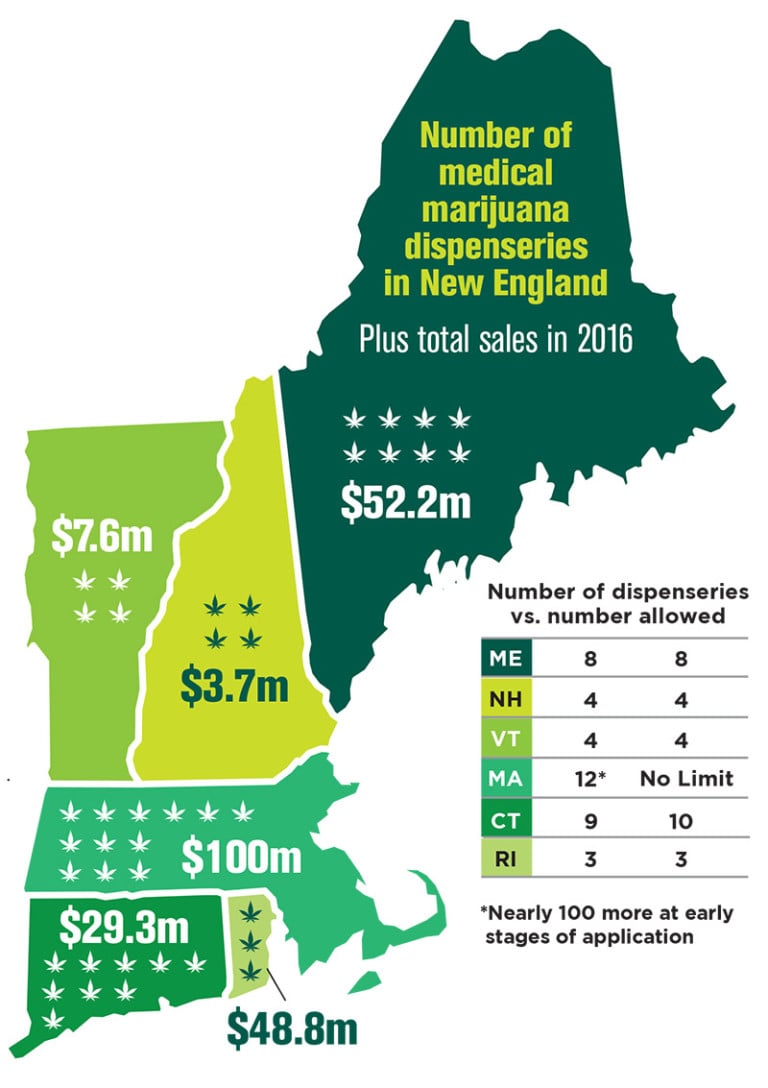
For those with qualifying medical conditions, [New Hampshire](https://lifeoutofthebox.com/new-hampshire] does operate a Therapeutic Cannabis Program (TCP). Established in 2013 and fully operational since 2016, this program allows registered patients with specific debilitating medical conditions to access therapeutic cannabis from state-licensed dispensaries. The list of qualifying conditions is extensive and includes illnesses such as cancer, glaucoma, HIV/AIDS, multiple sclerosis, epilepsy, Crohn’s disease, and severe chronic pain that has not responded to other treatments.
To qualify, patients must be certified by a physician with whom they have a bona fide relationship and must be a resident of New Hampshire. This residency requirement is crucial, as it generally precludes out-of-state visitors from accessing medical cannabis, even if they hold a medical marijuana card from their home state. There are limited exceptions for visiting qualifying patients from other states, but these are highly restrictive and require specific documentation and adherence to New Hampshire’s regulations. Consequently, for the vast majority of tourists, the medical cannabis program does not offer a legal avenue for consumption.
Currently, there are several Alternative Treatment Centers (ATCs), or dispensaries, operating in various locations across the state, including Dover, Merrimack, and Plymouth. These centers provide safe and regulated access to various cannabis products for registered patients. For eligible residents, this program provides significant relief and choice for their healthcare needs, offering a compassionate approach to serious medical conditions. However, the restrictive nature of the program highlights the state’s cautious approach to broader cannabis reform.

New Hampshire’s Position Among Its Cannabis-Friendly Neighbors
The geographical context of New Hampshire plays a significant role in the ongoing cannabis debate. The state is an island surrounded by increasingly cannabis-friendly waters, creating both legislative pressure and economic challenges. Understanding the approaches of neighboring states sheds light on the arguments for and against full legalization within the Granite State.
Lessons from Massachusetts, Maine, and Vermont
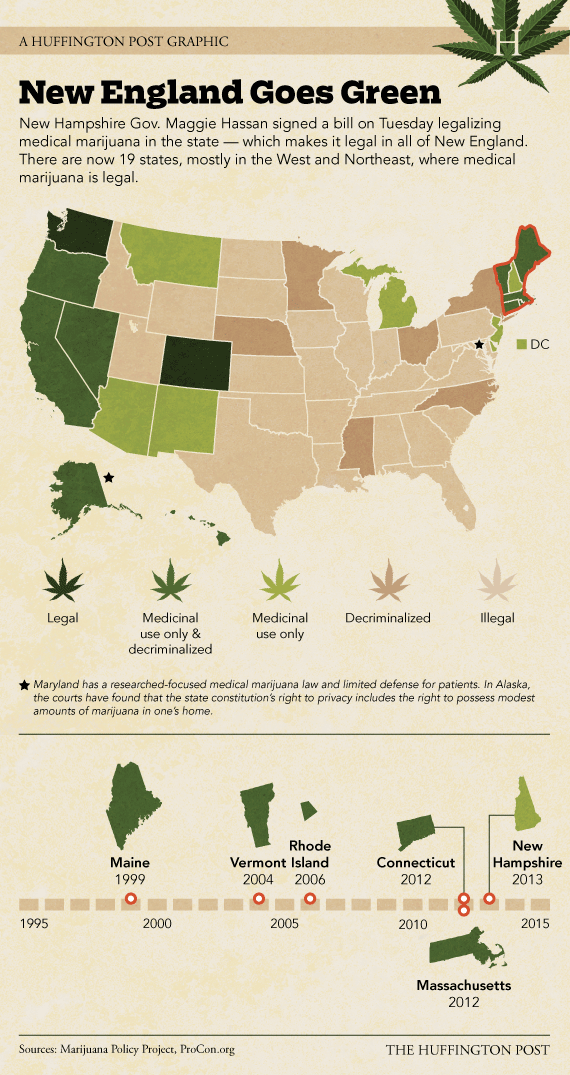
To the south, Massachusetts fully legalized recreational cannabis for adults 21 and over in 2016, with retail sales beginning in 2018. This means that just a short drive from New Hampshire, adults can legally purchase a wide variety of cannabis products from licensed dispensaries. To the east and north, Maine also legalized recreational use and sales, with dispensaries now dotting its landscape. To the west, Vermont followed suit, legalizing possession and home cultivation in 2018, and more recently, establishing a framework for retail sales.
This proximity to fully legal markets has several implications for New Hampshire. Firstly, it means that many New Hampshire residents travel to neighboring states to legally purchase cannabis, bringing it back across state lines. While legal to purchase in Massachusetts or Maine, transporting cannabis into New Hampshire still technically constitutes a civil violation due to the state’s decriminalization laws. This creates a challenging enforcement scenario for law enforcement and potential legal pitfalls for individuals. For tourists, it’s a critical warning: purchasing cannabis legally in Massachusetts or Maine and bringing it into New Hampshire means entering a different legal jurisdiction with different rules.
Secondly, the success of cannabis tourism in these neighboring states offers a compelling case study. Visitors flock to legal states not just for cannabis itself, but for the associated experiences, including specialized hotels, tours, and restaurants. New Hampshire currently misses out on this burgeoning market segment, despite its strong existing tourism industry.
The Economic Argument: Tourism and Tax Revenue
The economic potential of cannabis legalization is a central pillar of the ongoing debate in New Hampshire. Proponents argue that legalizing and taxing recreational cannabis could provide a significant boost to the state’s coffers, alleviating the need for other tax increases and funding essential public services. Massachusetts, for instance, has generated hundreds of millions in tax revenue from cannabis sales, much of which is reinvested into communities.
For a state like New Hampshire, which prides itself on its low-tax environment and lack of a general sales tax or income tax, this potential revenue stream is particularly attractive. The state already relies heavily on its robust tourism industry, drawing millions of visitors each year to iconic landmarks like the White Mountains, the pristine Lakes Region with Lake Winnipesaukee, and its scenic seacoast including Hampton Beach. Integrating a regulated cannabis market could attract a new demographic of tourists and provide an additional draw for existing visitors, enhancing the overall lifestyle offerings.
Beyond direct tax revenue, legalization could also foster job creation in cultivation, processing, retail, and ancillary services, stimulating economic growth across various sectors. The hospitality sector, including hotels, resorts, and local restaurants, could also see increased business as cannabis tourism expands. This could lead to new accommodation options, potentially including cannabis-friendly hotels or unique resort experiences, further diversifying New Hampshire’s travel appeal.
The Road Ahead: Legislative Debates and Future Prospects
The path to full cannabis legalization in New Hampshire has been a protracted and often contentious one. Despite repeated attempts by the state legislature, bills to legalize recreational marijuana have consistently faced hurdles, primarily from the executive branch and some conservative factions.
Ongoing Legislative Efforts
Year after year, bills to legalize adult-use cannabis are introduced in the New Hampshire State House. These legislative efforts often propose various models, ranging from privately run dispensaries similar to those in Massachusetts to a state-controlled model akin to the state’s liquor sales. The arguments supporting these bills typically center on personal liberty, tax revenue generation, and the desire to align New Hampshire with its progressive neighbors.
A significant hurdle has been Governor Chris Sununu, who has historically opposed full legalization. While he has expressed an openness to a state-controlled model in recent years, his general opposition has often led to vetoes or threats of vetoes that have stalled legislative progress. The dynamic between the legislature, which often passes legalization bills with bipartisan support, and the governor’s office, continues to shape the trajectory of cannabis reform.
The proposals often include robust regulatory frameworks designed to address concerns around public safety, youth access, and impaired driving. These frameworks typically outline licensing requirements, cultivation standards, product testing, and advertising restrictions, aiming to create a responsible and controlled market. The debate is not merely about “if” but “how” New Hampshire might approach legalization, with different stakeholders advocating for models that align with the state’s unique political and economic philosophies. The continuous discussion reflects a growing public appetite for change and a recognition of the economic and social shifts occurring across the nation.
Social and Health Considerations
Beyond the economic and legislative angles, the debate around cannabis legalization in New Hampshire also encompasses significant social and health considerations. Opponents often raise concerns about potential increases in impaired driving, youth access, and public health issues associated with cannabis use. These concerns are valid and are typically addressed through comprehensive regulatory frameworks in states where cannabis is legal.
Proponents argue that a regulated market can actually improve public safety and health by providing safe, tested products and by moving sales out of the illicit market. Tax revenues can be allocated to fund public health initiatives, drug education programs, and substance abuse treatment. Furthermore, a regulated market allows for age verification and control over potency and product types, potentially reducing risks compared to unregulated street sales. The discussion also touches upon social justice, as decriminalization, while a step forward, does not fully address historical disparities in drug enforcement. Full legalization with expungement clauses for past minor cannabis offenses could offer a more equitable approach.
For a state that values family travel and healthy, active lifestyles, the impact on communities is a paramount consideration. Any future legislation would likely include strict provisions to protect minors, prevent impaired driving, and ensure that cannabis consumption integrates responsibly into the broader social fabric of New Hampshire’s towns and cities, from Concord to Manchester and Portsmouth.
Navigating Cannabis Laws for Visitors to New Hampshire
For any traveler to New Hampshire, understanding and respecting the local laws is paramount. While the state offers a liberal and welcoming atmosphere in many respects, its stance on cannabis requires careful attention to avoid any legal issues that could spoil a trip.
Understanding the Risks for Travelers
As of now, recreational cannabis is not legal in New Hampshire. This means that for anyone without a valid New Hampshire medical cannabis card, possessing or consuming marijuana, even in small amounts, can result in civil penalties. While decriminalized, a $100 fine for possessing less than three-quarters of an ounce is still a deterrent, and for larger quantities or for sales, criminal charges can apply. Furthermore, driving under the influence of cannabis is illegal and subject to severe penalties, just like alcohol.
Visitors arriving from states like Massachusetts or Maine where cannabis is legal should be particularly cautious. Transporting cannabis across state lines, even if purchased legally, means crossing into a different legal jurisdiction. While the federal government still classifies cannabis as an illegal substance, making interstate transport technically a federal crime, even within state lines, New Hampshire’s laws do not permit bringing it in from elsewhere for recreational use. It is strongly advised not to bring any cannabis products into New Hampshire from other states to avoid potential legal complications. The best advice for travelers is to assume that recreational cannabis is illegal and to plan their trip accordingly, focusing on the many other legitimate attractions New Hampshire has to offer.
Exploring New Hampshire’s Other Attractions
Fortunately, New Hampshire boasts an incredible array of attractions that cater to all interests and lifestyles, making it a fantastic destination regardless of cannabis laws. From the rugged peaks of Mount Washington and the scenic trails of the White Mountains to the pristine waters of Lake Winnipesaukee and the charming coastal towns of Portsmouth and Rye, the state offers unparalleled opportunities for outdoor adventure, relaxation, and cultural exploration.
For nature lovers, hiking, skiing, snowboarding, and kayaking are popular activities. The annual fall foliage display draws visitors from around the globe, creating a vibrant tapestry of reds, oranges, and golds. History buffs can explore charming small towns with covered bridges, historical landmarks, and quaint museums. Foodies will delight in local seafood, farm-to-table restaurants, and traditional New England fare. Cities like Manchester and Nashua offer vibrant arts scenes, diverse dining, and shopping experiences.
Accommodation options abound, from luxury resorts and boutique hotels to cozy bed and breakfasts and family-friendly campgrounds. Whether you’re seeking a romantic getaway, an adventurous family trip, or a peaceful retreat, New Hampshire provides diverse choices to suit every budget and style. The state’s commitment to preserving its natural beauty and unique character ensures a memorable travel experience without the need for cannabis, focusing instead on the authentic charm and “Live Free or Die” spirit that defines the Granite State.
In conclusion, while the question “Is pot legal in New Hampshire?” might elicit a complex answer, the short response for recreational users and most travelers is “no.” While medical cannabis is available to qualifying residents and possession of small amounts has been decriminalized, full recreational legalization remains elusive. The ongoing debate, fueled by economic considerations, legislative efforts, and social discussions, continues to shape the future of cannabis in this unique New England state. For visitors, the best approach is to stay informed, adhere strictly to current laws, and fully immerse themselves in the myriad of other wonderful experiences that New Hampshire so generously offers.
LifeOutOfTheBox is a participant in the Amazon Services LLC Associates Program, an affiliate advertising program designed to provide a means for sites to earn advertising fees by advertising and linking to Amazon.com. Amazon, the Amazon logo, AmazonSupply, and the AmazonSupply logo are trademarks of Amazon.com, Inc. or its affiliates. As an Amazon Associate we earn affiliate commissions from qualifying purchases.