
The allure of Hawaii, a chain of islands sculpted by volcanic fire and cradled by the vast Pacific Ocean, has captivated travelers for generations. Its dramatic landscapes, vibrant culture, and the sheer power of nature on display draw visitors from across the globe. Among the most compelling and awe-inspiring natural phenomena in this paradise are its active volcanoes. For many, the image of Hawaii is inextricably linked with flowing lava and erupting peaks. This raises a perennial question for potential visitors: Is the volcano still erupting in Hawaii?
The answer, as with many natural wonders, is not a simple yes or no. Hawaii is home to several volcanoes, and their activity levels vary significantly. The most famous and frequently erupting volcano is Kīlauea, located on the island of Hawaii (often referred to as the “Big Island”). However, the nature of eruptions can range from spectacular, visible lava flows to more subtle, subterranean activity that might not be immediately apparent to the casual observer. Understanding the current status of Kīlauea and other volcanic sites is crucial for anyone planning a trip focused on experiencing these geological marvels.

Understanding Volcanic Activity in Hawaii
Hawaii‘s volcanic landscape is a dynamic and ever-changing canvas. The islands are formed by a “hotspot” in the Earth’s mantle, which allows magma to erupt through the oceanic crust. This process has created a volcanic archipelago that stretches for hundreds of miles. The age of the islands generally increases as you travel northwest from the Island of Hawaii. This means that while the younger islands, like Hawaii, are volcanically active, the older islands in the chain, such as Oʻahu or Kauai, are long dormant and have been significantly eroded by time and weather.
Kīlauea: The Island of Hawaii’s Fiery Heart
When people ask about volcanic eruptions in Hawaii, they are most often referring to Kīlauea. Situated within Hawaiʻi Volcanoes National Park on the southeastern flank of Mauna Loa, Kīlauea is one of the world’s most active volcanoes. Its eruptive history is characterized by frequent and sometimes prolonged periods of activity. For decades, Kīlauea has provided dramatic displays of nature’s power, with lava flowing from its summit caldera or along its rift zones.
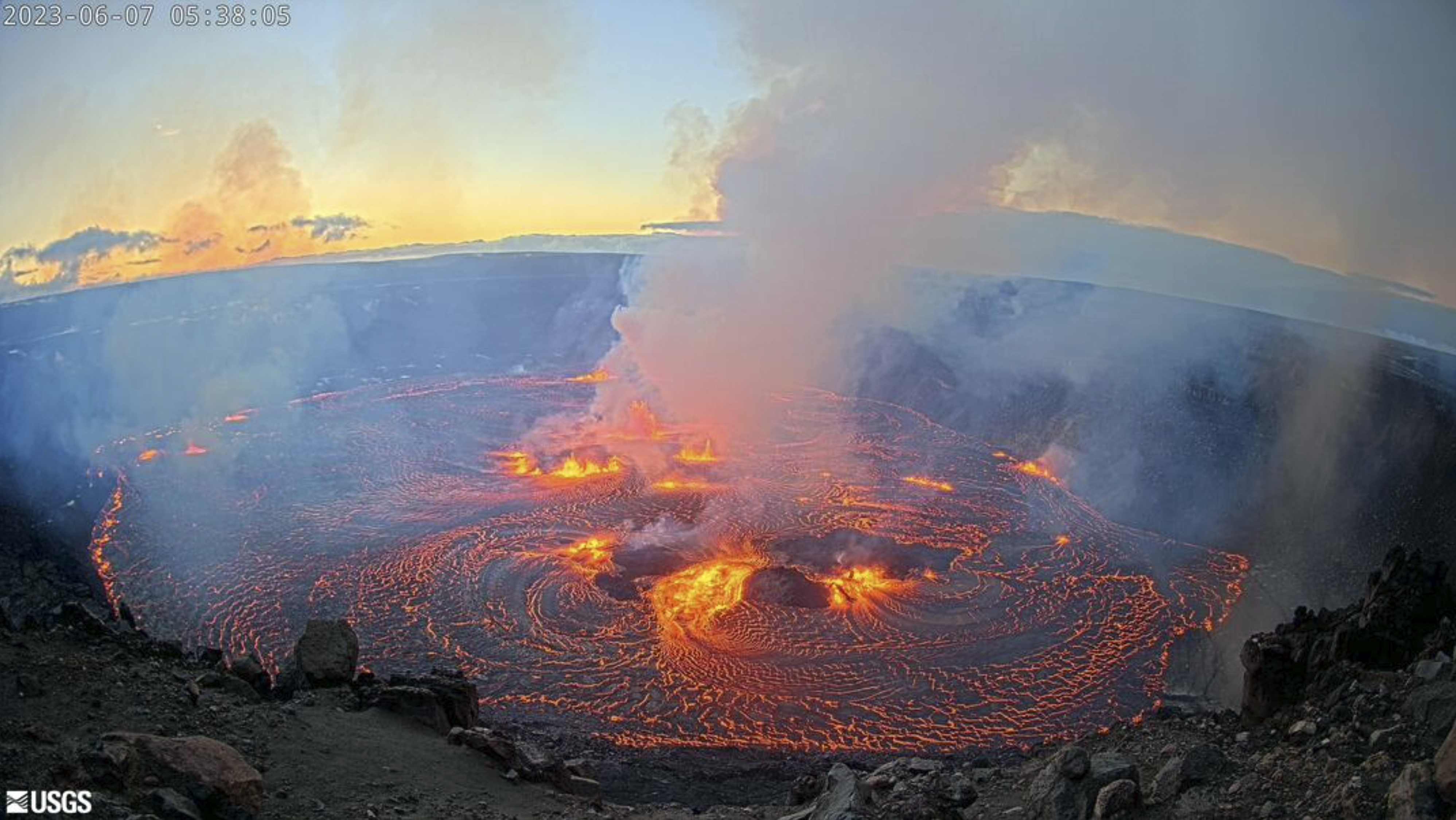
The nature of Kīlauea‘s eruptions has varied. At times, lava has flowed relatively gently, creating mesmerizing rivers of molten rock visible from safe viewing points. During these periods, parts of Hawaiʻi Volcanoes National Park might be closed to protect visitors, but the spectacle of active lava remains a significant draw. Other eruptions have been more explosive, involving ash plumes and potentially hazardous gases. The most recent significant eruption activity at Kīlauea‘s summit caldera, within Halemaʻumaʻu crater, has seen periods of intense lava lake formation and collapse, interspersed with pauses.
The U.S. Geological Survey’s Hawaiian Volcano Observatory (HVO) is the primary source for up-to-date information on volcanic activity in Hawaii. They continuously monitor seismic activity, ground deformation, gas emissions, and visual observations to assess the current state of Kīlauea and other volcanoes. This data is crucial for informing the public and park officials about safety precautions and potential viewing opportunities.
Mauna Loa: Hawaii’s Sleeping Giant
While Kīlauea often steals the spotlight due to its frequent eruptions, Mauna Loa, the massive shield volcano that forms the central part of the Island of Hawaii, is also a significant geological feature. Mauna Loa is the largest active volcano on Earth by volume and mass. Although its eruptions are less frequent than Kīlauea‘s, they can be much more voluminous and potentially pose a broader threat due to the extent of its slopes.
Mauna Loa last erupted in late 2022, ending a 38-year period of repose. This eruption was characterized by lava flows that moved down the volcano’s northeast rift zone. While the flows did not threaten populated areas, they were a stark reminder of the immense power contained within this geological giant. Like Kīlauea, Mauna Loa is closely monitored by the HVO, and any signs of unrest are communicated promptly. Its status is crucial for regional planning and safety.
Other Hawaiian Islands: Dormant Giants and Past Activity
Beyond the Island of Hawaii, the other Hawaiian islands are largely characterized by dormant or extinct volcanoes. Haleakalā, the dormant volcano that forms most of the island of Maui, offers breathtaking sunrises and sunsets from its summit. While it is not currently erupting, its majestic crater and volcanic landscape are a significant tourist attraction, showcasing the dramatic geological history of the islands.

On Oʻahu, the island is home to volcanic remnants like Diamond Head (Lēʻahi), a tuff cone crater that offers iconic views of Waikīkī and Honolulu. These features are geological landmarks that tell the story of ancient volcanic activity that shaped the island. While they are not active volcanoes in the traditional sense, they are vital to Hawaii‘s identity and natural heritage.
Planning Your Hawaiian Adventure: Volcanoes and Travel
For travelers interested in witnessing volcanic activity, the Island of Hawaii is the primary destination. Hawaiʻi Volcanoes National Park is the epicenter of this experience. The park offers numerous viewpoints, hiking trails, and educational programs that allow visitors to learn about volcanology and experience the raw power of nature.
Visiting Hawaiʻi Volcanoes National Park
The ability to see active lava flows from Kīlauea is not a constant guarantee. Eruptions can be intermittent, with periods of high activity followed by lulls. Therefore, it is essential to check the official park website and the HVO’s updates before your visit. When eruptions are occurring and deemed safe to view, designated areas within the park offer incredible perspectives. These can include overlooks of the summit caldera, where Halemaʻumaʻu crater has been a focal point for recent activity, or areas where lava might be flowing down the slopes.
Safety is paramount when visiting any active volcanic area. Visitors are advised to stay on marked trails, heed all warning signs, and be aware of potential hazards such as volcanic gases, unstable ground, and sudden changes in eruptive activity. The park rangers and HVO provide crucial guidance to ensure a safe and memorable experience.
Even if there isn’t a visible lava flow during your visit, Hawaiʻi Volcanoes National Park remains an extraordinary destination. The landscape itself is a testament to volcanic power, with vast lava fields, steam vents, lava tubes, and unique ecosystems adapted to this environment. The Kīlauea Visitor Center offers extensive exhibits and information, and ranger-led programs provide valuable insights into the volcano’s history and current state.
Accommodation and Experiences on the Big Island
For those planning a trip to the Island of Hawaii with a focus on its volcanic wonders, choosing the right accommodation is key. The area around Hawaiʻi Volcanoes National Park offers a range of options, from charming bed and breakfasts and vacation rentals to more established hotels. Staying in towns like Volcano Village provides convenient access to the park entrance.
For a broader Hawaii experience, cities like Hilo, on the eastern side of the Island of Hawaii, offer a gateway to the Hawaii Tropical Bioreserve & Garden and the city’s historic downtown. Further afield, islands like Maui provide opportunities to explore the dormant Haleakalā volcano, with many luxury resorts and boutique hotels in areas like Wailea and Kaʻanapali offering stunning ocean views and access to diverse activities.
When booking your stay, consider the proximity to desired attractions. If seeing volcanic activity is your top priority, booking accommodations closer to Hawaiʻi Volcanoes National Park is advisable. If you’re looking for a blend of relaxation, adventure, and natural beauty, options across the islands, from the bustling streets of Waikīkī on Oʻahu to the serene beaches of Kauai, cater to every travel style and budget.
The Ever-Changing Nature of Volcanic Tourism
The dynamic nature of volcanic eruptions means that the Hawaii tourism landscape is also in constant flux. What might be a spectacular lava viewing opportunity one month could be a quiet period the next. This unpredictability adds a unique element to planning a trip focused on active volcanoes.
Travelers should embrace the spirit of exploration and be prepared for the possibility that visible lava may not be present during their visit. The sheer geological spectacle of Hawaii‘s volcanoes, whether erupting or dormant, offers a profound connection to the Earth’s power. From the steaming craters of Kīlauea to the majestic slopes of Mauna Loa and the ancient volcanic formations on other islands, Hawaii provides an unforgettable journey into the heart of volcanic creation. Always rely on official sources like the HVO and Hawaiʻi Volcanoes National Park for the most accurate and up-to-date information regarding volcanic activity and visitor safety.
LifeOutOfTheBox is a participant in the Amazon Services LLC Associates Program, an affiliate advertising program designed to provide a means for sites to earn advertising fees by advertising and linking to Amazon.com. Amazon, the Amazon logo, AmazonSupply, and the AmazonSupply logo are trademarks of Amazon.com, Inc. or its affiliates. As an Amazon Associate we earn affiliate commissions from qualifying purchases.