
Navigating the Sunshine State’s roadways can be an exhilarating experience, whether you’re embarking on a scenic road trip to explore the vibrant cities or heading to a world-renowned theme park. From the bustling streets of Miami to the historic charm of St. Augustine, or the natural wonders of the Everglades National Park, Florida offers an unparalleled travel adventure. Many visitors choose to rent a car, allowing them the freedom to discover hidden gems and enjoy spontaneous detours. However, before you hit the road, it’s crucial to understand Florida’s unique auto insurance requirements, especially concerning uninsured motorist (UM) coverage. This guide will delve into the intricacies of Florida’s insurance laws, focusing on whether uninsured motorist coverage is a mandatory component of your policy.
Florida’s approach to auto insurance is distinct from many other states. It operates under a no-fault system, which fundamentally alters how accident claims are handled. In a no-fault state, your own insurance policy is primarily responsible for covering your medical expenses and lost wages after an accident, regardless of who was at fault. This system is designed to expedite the claims process and reduce the burden on the courts for minor to moderate injuries. However, understanding the nuances of this system, particularly when it comes to drivers who lack adequate insurance, is paramount for ensuring your financial protection and peace of mind while enjoying your travels in the Sunshine State.
Understanding Florida’s Auto Insurance Landscape
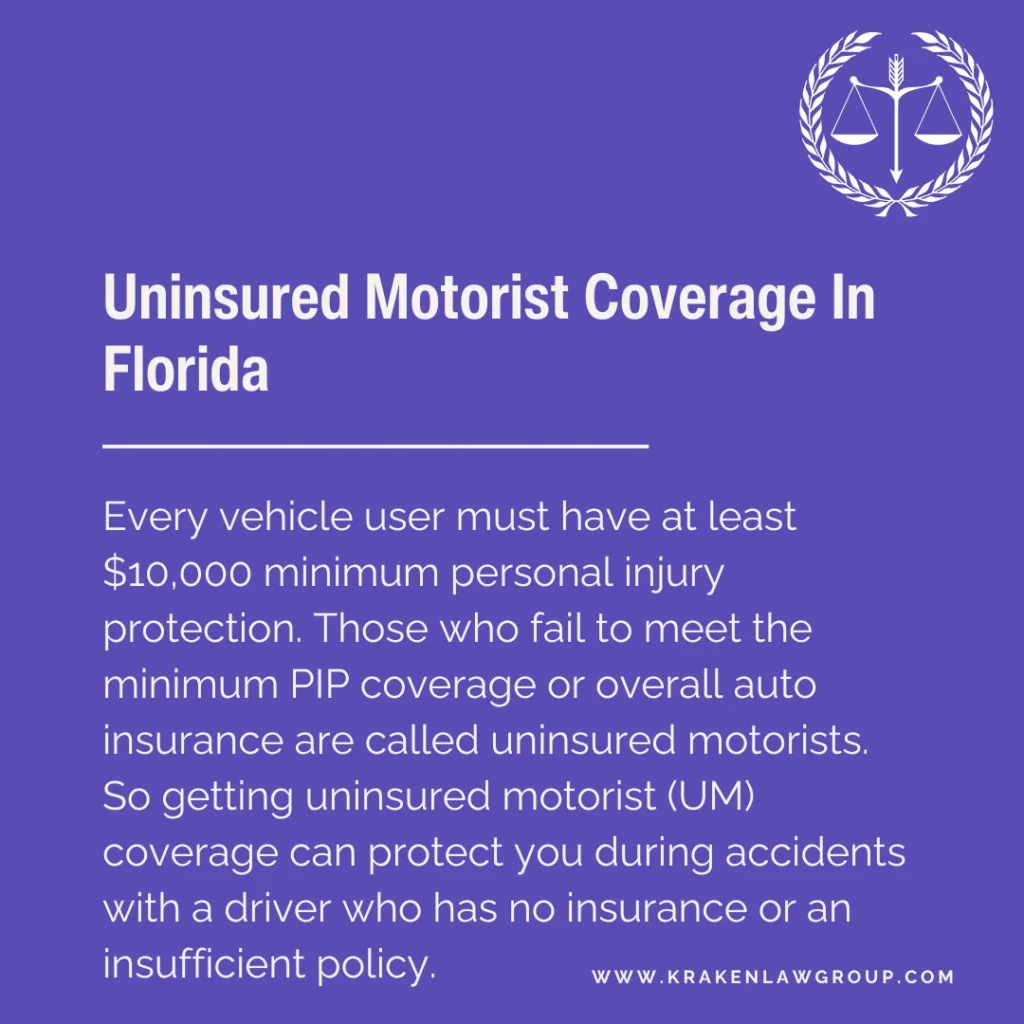
Florida’s mandatory insurance laws are the bedrock of its no-fault system. Every registered vehicle in the state must carry a minimum level of liability coverage. This coverage is designed to protect others on the road if you are deemed at fault for an accident. Specifically, Florida requires drivers to maintain $10,000 in Personal Injury Protection (PIP) and $10,000 in Property Damage Liability (PDL). PIP coverage is the cornerstone of the no-fault system, covering a portion of your medical bills and lost wages up to $10,000, regardless of who caused the accident. PDL covers damage to other people’s property, such as their vehicles, up to $10,000.
However, the “no-fault” aspect primarily addresses your own injuries and, to a lesser extent, property damage. It does not inherently protect you from the financial repercussions of encountering drivers who are operating vehicles without the legally required insurance. This is where the concept of uninsured and underinsured motorists becomes critically important. In Florida, the reality is that a significant number of drivers may not have the necessary insurance to cover damages and injuries they cause, or they may have insufficient coverage to adequately compensate victims. This unfortunate statistic underscores the need to explore additional layers of protection.
The core question of whether uninsured motorist coverage is required in Florida requires a nuanced answer. While Florida mandates PIP and PDL coverage, it does not strictly mandate uninsured motorist (UM) or underinsured motorist (UIM) coverage for all drivers. However, this is a crucial distinction, as the law makes it very easy for drivers to waive this coverage. Insurers are legally obligated to offer UM/UIM coverage to their policyholders, and if the policyholder chooses to reject it, they must do so in writing. This written rejection is often referred to as a UM waiver. The emphasis on this written waiver highlights the state’s intention to ensure that drivers are making a conscious decision to forgo this protection, rather than it being overlooked.
The Significance of Uninsured Motorist Coverage
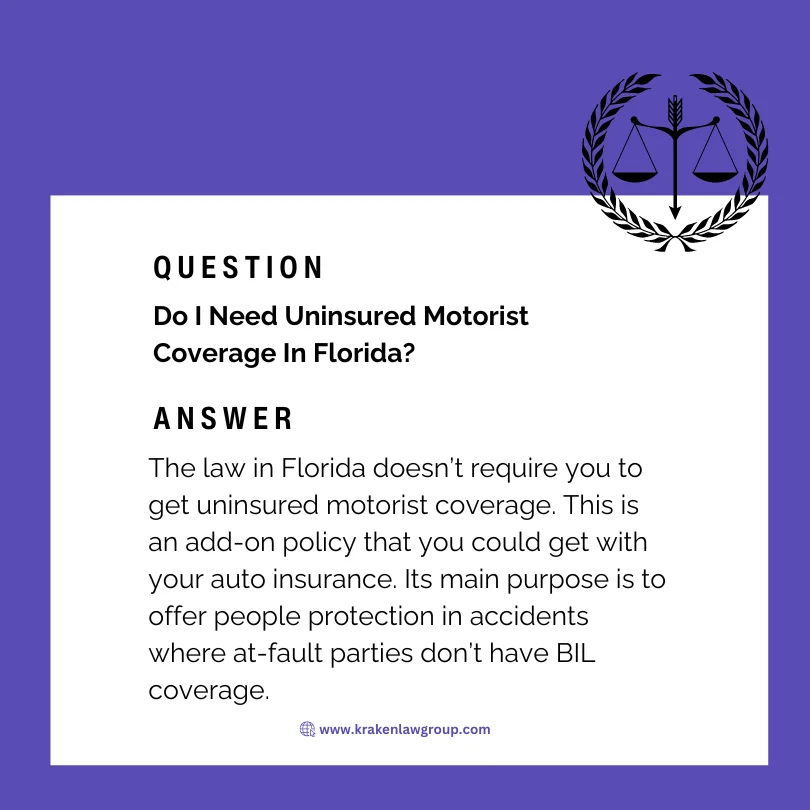
Uninsured Motorist (UM) coverage is designed to protect you if you are involved in an accident with a driver who has no auto insurance whatsoever. This coverage can help pay for your medical expenses, lost wages, and pain and suffering if the at-fault driver is uninsured. Underinsured Motorist (UIM) coverage, which is often bundled with UM coverage, provides protection when the at-fault driver has insurance, but their liability limits are too low to cover all of your damages. For instance, if the at-fault driver only has the minimum required liability limits, and your medical bills and other damages far exceed that amount, UIM coverage can bridge the gap.
The absence of UM/UIM coverage in Florida means that if you are injured by an uninsured or underinsured driver, you would be responsible for your own medical expenses and lost wages beyond what your PIP coverage can cover. This could lead to significant financial hardship, especially in the event of severe injuries that require extensive medical treatment and long-term rehabilitation. Imagine a scenario where you’re enjoying a leisurely drive through the picturesque coastline of the Florida Keys, and an accident occurs due to another driver’s negligence. If that driver is uninsured, your PIP coverage will kick in, but if your medical bills surpass the $10,000 PIP limit, you could be left to pay the rest out of pocket without UM/UIM coverage.
This is particularly relevant for tourists and visitors who may not be fully aware of Florida’s specific insurance regulations. When renting a vehicle in a city like Orlando or Tampa, the rental company will offer various insurance options. While it might seem like an additional expense, opting for comprehensive coverage that includes UM/UIM can be a wise investment to ensure you are protected against the financial risks associated with uninsured drivers. The peace of mind that comes with knowing you are covered, especially when traveling far from home, is invaluable.
Options and Waivers: Making Informed Choices
Given that UM/UIM coverage is not automatically included in every Florida auto insurance policy, understanding your options and the implications of waiving this coverage is crucial. Insurance companies are required by law to offer you UM/UIM coverage. They must provide you with information about this coverage and present you with a clear option to either accept it or reject it. As previously mentioned, rejecting UM/UIM coverage typically requires a written waiver signed by the policyholder. This written acknowledgment serves as proof that you were informed of the coverage and made a deliberate choice not to purchase it.
The amount of UM/UIM coverage you choose should be carefully considered and ideally should align with your personal assets and potential liabilities. Many insurance experts recommend carrying UM/UIM coverage that matches your bodily injury liability limits. This ensures that you have protection that is commensurate with the amount of coverage you provide to others. For example, if you have bodily injury liability limits of $100,000 per person/$300,000 per accident, it would be prudent to consider UM/UIM coverage in similar amounts. This provides a more robust safety net in case of a serious accident involving an uninsured or underinsured driver.
Furthermore, it’s important to note that Florida law specifies the minimum amounts of UM/UIM coverage that must be offered. These are typically $10,000 per person/$20,000 per accident for uninsured motorist bodily injury (UMBI) and $10,000 for property damage (UMPD). However, you have the option to purchase higher limits, which is highly recommended for more comprehensive protection. The cost of UM/UIM coverage is generally considered affordable relative to the financial protection it offers, especially when compared to the potential costs of being uninsured or underinsured yourself.
When you are renting a car in Florida, whether for a family vacation to visit Walt Disney World or for a business trip to Jacksonville, the rental company will offer you their own insurance options. These often include a Collision Damage Waiver (CDW) or Loss Damage Waiver (LDW), which covers damage to the rental car, and various liability coverages. It is essential to inquire specifically about uninsured and underinsured motorist coverage within the rental agreement. Many rental agreements will include or offer UM/UIM coverage as an add-on. While the cost might seem high, it’s crucial to weigh it against the potential out-of-pocket expenses you could face if you decline it and are involved in an accident with an uninsured driver.
In conclusion, while Florida’s insurance laws mandate PIP and PDL, they do not explicitly require uninsured motorist coverage. However, the state’s legal framework necessitates that this coverage be offered, and its rejection must be a conscious, written decision. For anyone driving in Florida, whether a resident or a visitor enjoying the state’s attractions like Key West or the Art Deco Historic District in South Beach, understanding this distinction is paramount. Opting for UM/UIM coverage is not just a recommendation; it’s a vital step in safeguarding yourself from the financial risks associated with encountering drivers who fail to meet their legal obligations on the road, ensuring your travels through the Sunshine State remain enjoyable and worry-free.
LifeOutOfTheBox is a participant in the Amazon Services LLC Associates Program, an affiliate advertising program designed to provide a means for sites to earn advertising fees by advertising and linking to Amazon.com. Amazon, the Amazon logo, AmazonSupply, and the AmazonSupply logo are trademarks of Amazon.com, Inc. or its affiliates. As an Amazon Associate we earn affiliate commissions from qualifying purchases.