
Understanding the legal framework surrounding youth employment in California is crucial for both young individuals eager to gain work experience and for employers looking to hire. The Golden State has specific regulations designed to protect minors while also allowing them opportunities to develop valuable skills and contribute to the workforce. These regulations encompass the minimum age for employment, the types of jobs permitted, and the limitations on hours and working conditions. Navigating these rules ensures compliance and fosters a safe and productive environment for young workers.
Minimum Age Requirements and Exceptions
California’s child labor laws set a baseline for when individuals can begin their professional journeys. These laws are designed to safeguard the well-being and educational pursuits of minors.
General Minimum Age
In California, the general minimum age to begin working is 14 years old. However, this age is not a free pass to any type of employment. Children under 18 are subject to specific restrictions and requirements, primarily centered around obtaining a work permit and adhering to limitations on the hours and types of jobs they can undertake. This age threshold ensures that most of a child’s formative years are dedicated to education and development before entering the workforce.
Exceptions for Specific Industries and Roles
While 14 is the general starting point, there are some notable exceptions and nuances. For instance, individuals aged 12 and 13 may be permitted to work in specific, limited capacities under strict conditions. These exceptions often involve agricultural work during school vacations, or roles that are considered light and do not interfere with schooling or pose a safety risk. The intent behind these exceptions is to allow for very early exposure to work in safe environments, often within family businesses or during specific non-school periods. It is important to note that even in these exceptional cases, a work permit is still typically required.
Work Permits and School Attendance
A cornerstone of child labor laws in California is the requirement for work permits, particularly for minors under 18. These permits serve as a mechanism to ensure that employment does not jeopardize a young person’s education.
The Role of the Work Permit
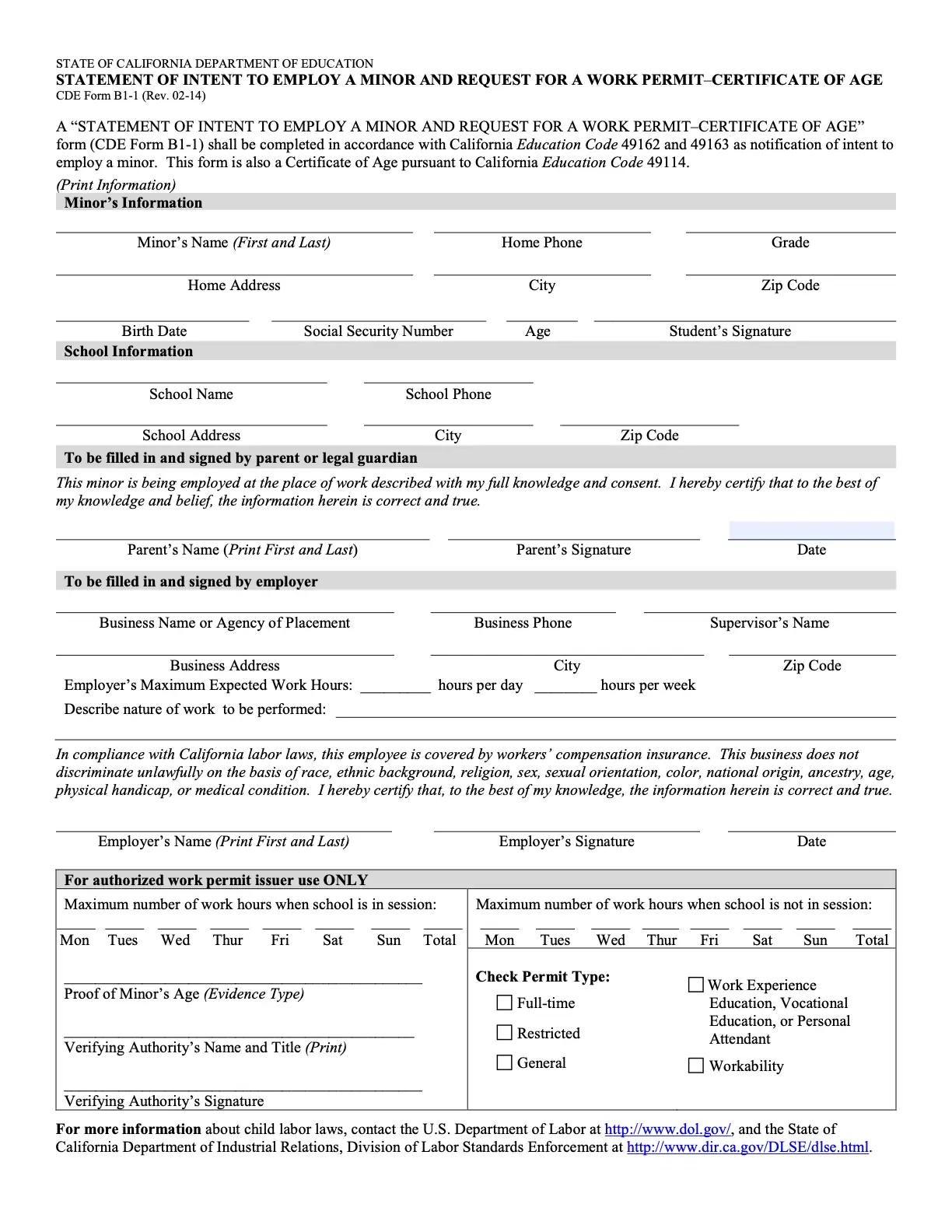
To legally work in California, individuals under 18 years of age must obtain a “Permit to Employ and Work.” This permit is issued by the student’s local school district or the school principal. The process typically involves the employer, the parent or guardian, and the minor signing an application. The school then reviews the application to ensure that the proposed employment will not be detrimental to the minor’s schooling, health, or welfare. The permit specifies the name and address of the employer, the nature of the work, and the number of hours the minor may be employed. This system acts as a gatekeeper, ensuring that work opportunities are compatible with educational responsibilities.
School Attendance Requirements
A crucial aspect of obtaining and maintaining a work permit is demonstrating satisfactory school attendance and academic progress. California law mandates that minors required to attend school must be enrolled and making satisfactory progress. If a minor’s school performance declines due to work, their work permit can be revoked. Employers are obligated to ensure that their minor employees are attending school and have the necessary permits. This emphasis on education underscores the state’s commitment to ensuring that work experiences supplement, rather than detract from, a young person’s academic development. The system is designed to encourage a balance between learning and earning.
Limitations on Hours and Types of Work
Even with a work permit, minors in California are subject to strict limitations on the number of hours they can work and the types of jobs they are permitted to do. These restrictions are tailored to different age groups and vary significantly depending on whether school is in session.
Hours of Work Restrictions
California law places specific limits on the number of hours minors can work to protect their health, safety, and educational needs.

During School Sessions
When school is in session, the restrictions are most stringent. Minors aged 14 and 15 are generally limited to working no more than 3 hours per school day, and no more than 18 hours per school week. On days when school is not in session (weekends, holidays, vacations), they can work up to 8 hours per day and 40 hours per week, but still with limitations on when they can work.
Minors aged 16 and 17 have slightly more flexibility but are still restricted. They can work no more than 4 hours on a school day and no more than 20 hours per school week when school is in session. On non-school days, they can work up to 8 hours per day and 40 hours per week.
Outside of School Sessions
During school vacations or when school is not in session, the daily and weekly hour limits for all minors aged 14-17 increase to 8 hours per day and 40 hours per week. However, it’s important to note that even during these periods, there are restrictions on the hours of the day during which minors can work. For example, minors under 16 cannot work between 7 p.m. and 7 a.m. The hours for 16 and 17-year-olds extend slightly, usually allowing work until 10 p.m. on non-school nights.
Restricted Occupations and Hazardous Duties
California law also prohibits minors from working in occupations that are deemed hazardous or detrimental to their health, safety, or morals. These restrictions are designed to prevent young workers from being exposed to dangerous machinery, toxic substances, or other high-risk environments.
Prohibited Jobs
Specific industries and tasks are off-limits for minors. This includes, but is not limited to, operating dangerous power-driven machinery, working in mines or quarries, handling explosives, and working in occupations involving exposure to radioactive materials. There are also restrictions on working in places where alcoholic beverages are sold for consumption on the premises. The list of prohibited occupations is extensive and detailed in the California Labor Code. Employers are responsible for ensuring that any work assigned to a minor does not fall into these restricted categories.
Age-Specific Prohibitions
Some occupations have specific age prohibitions beyond the general hazardous work restrictions. For example, while 16 and 17-year-olds may have more employment opportunities than younger minors, they are still barred from certain high-risk jobs. The aim is to gradually introduce young people to the workforce in roles that are appropriate for their age, maturity, and physical capabilities, ensuring a safe and beneficial work experience as they grow. The focus remains on protecting their developing bodies and minds.
Record Keeping and Employer Responsibilities
Employers who hire minors in California bear significant responsibilities to ensure compliance with child labor laws. Proper record-keeping and adherence to regulations are paramount.
Documentation Requirements
Employers must maintain accurate and up-to-date records for all minor employees. This includes:
- Proof of Age: Employers must verify the age of any minor employee by examining a certified copy of the minor’s birth certificate, a passport, or other reliable documentation.
- Work Permits: Employers must keep copies of the “Permit to Employ and Work” for each minor they hire. This permit must be available for inspection by the Labor Commissioner or any authorized representative.
- Hours Worked: Detailed records of the exact hours worked by each minor employee, including start and end times, must be meticulously maintained. This is crucial for verifying compliance with daily and weekly hour limitations.
Compliance and Penalties
Failure to comply with California’s child labor laws can result in serious penalties for employers. These penalties can include:
- Fines: Significant fines can be levied for each violation, with penalties increasing for repeat offenses.
- Legal Action: Employers may face legal action, including civil lawsuits from affected minors or their guardians.
- Revocation of Business Licenses: In severe cases, repeated violations could lead to the suspension or revocation of business operating licenses.
The California Labor Commissioner’s office actively enforces these laws to protect young workers. Employers are strongly encouraged to familiarize themselves thoroughly with all applicable regulations and to seek legal counsel if they have any doubts about their compliance obligations. Prioritizing compliance ensures a safe and legal working environment for young individuals entering the workforce and protects the employer from legal and financial repercussions.
LifeOutOfTheBox is a participant in the Amazon Services LLC Associates Program, an affiliate advertising program designed to provide a means for sites to earn advertising fees by advertising and linking to Amazon.com. Amazon, the Amazon logo, AmazonSupply, and the AmazonSupply logo are trademarks of Amazon.com, Inc. or its affiliates. As an Amazon Associate we earn affiliate commissions from qualifying purchases.