
Florida, renowned globally as the “Sunshine State,” beckons millions of visitors each year with its pristine beaches, vibrant cities, and world-class attractions. From the enchanting theme parks of Orlando and the lively nightlife of Miami to the serene natural beauty of the Everglades National Park and the historic charm of St. Augustine, Florida offers an unparalleled travel experience. For those considering a temporary visit, a long-term stay, or even a permanent relocation, understanding the local laws and regulations is paramount, especially regarding firearms. Whether you’re a seasoned traveler exploring diverse destinations or someone contemplating a new lifestyle in this dynamic state, being informed about gun laws is a crucial aspect of responsible tourism and residency. This comprehensive guide aims to illuminate the nuances of Florida’s gun laws, providing clarity for visitors, residents, and anyone planning to spend time in the state, ensuring peace of mind and compliance with legal requirements.
Understanding Florida’s Stance on Firearms
Florida has a robust legal framework governing firearms, reflecting both state constitutional provisions and legislative enactments. It’s a state that values the right to bear arms while also implementing specific regulations to ensure public safety. For anyone stepping foot in the Sunshine State, whether for a relaxing beach vacation or a business trip, knowing these foundational principles is the first step toward a hassle-free experience.
Constitutional Carry and the Right to Bear Arms
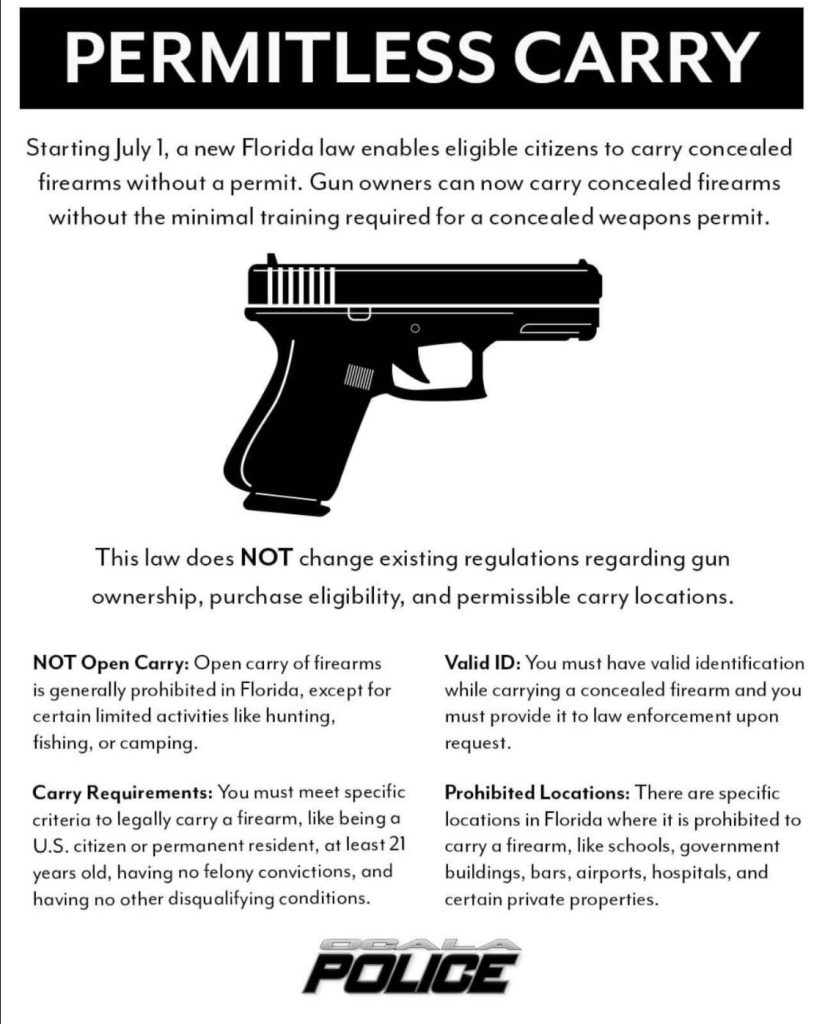
A significant shift in Florida’s gun laws came into effect on July 1, 2023, with the implementation of “Constitutional Carry.” This landmark legislation fundamentally changed how eligible individuals can carry firearms in the state. Prior to this, a concealed weapon or firearm license (CWFL) was mandatory for carrying a concealed weapon. Now, under the new law, eligible individuals are permitted to carry a concealed firearm without needing to obtain a state-issued permit.
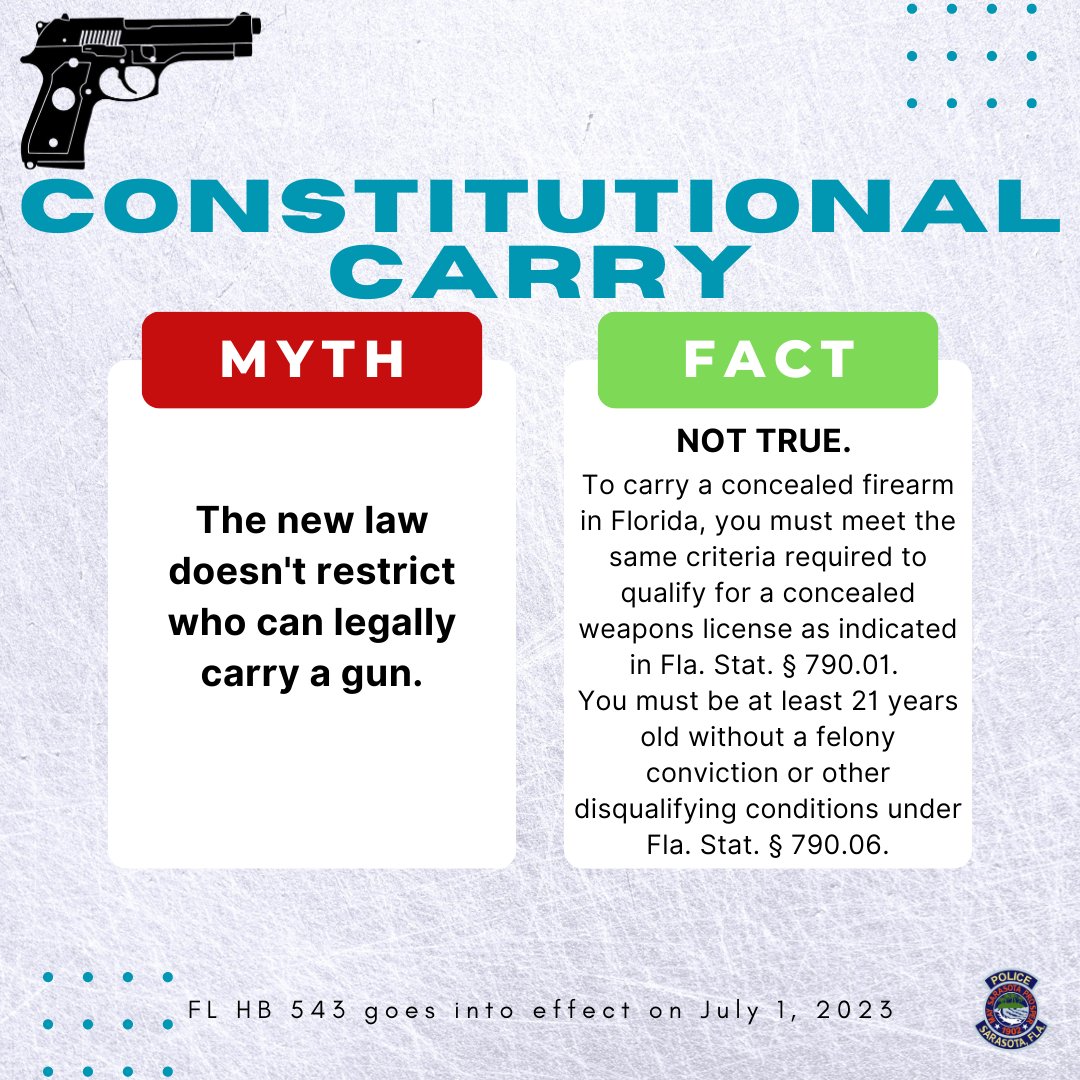
This move aligns Florida with a growing number of United States states that recognize the right to bear arms without requiring a specific permit for concealed carry. However, it’s critical to understand that “Constitutional Carry” does not mean “unrestricted carry.” All other existing laws regarding firearm possession, use, and prohibited places remain in effect. To be eligible for permitless concealed carry, an individual must meet the same criteria that were previously required for obtaining a CWFL. This generally includes being 21 years of age or older, not having a disqualifying felony conviction, and not being prohibited from possessing a firearm under state or federal law (e.g., due to certain domestic violence convictions or mental health adjudications). For a family planning a trip to a resort like JW Marriott Orlando, Grande Lakes or a long-term stay in an Airbnb in Fort Lauderdale, these eligibility details are crucial to understand.
Open Carry vs. Concealed Carry
When discussing firearm carry laws in Florida, the distinction between open carry and concealed carry is paramount. Despite the advent of permitless concealed carry, Florida generally prohibits the open carrying of handguns. This means that, with very limited exceptions, openly displaying a firearm in public is illegal.
The exceptions to the open carry ban are specific and typically relate to situations such as:
- Engaging in or traveling to and from hunting, fishing, or camping activities.
- Traveling to and from a shooting range or gun shop.
- When a person is protecting themselves or their property from an attacker, or in other self-defense scenarios where there is an imminent threat.
- Law enforcement officers or those authorized by law.
Conversely, concealed carry refers to carrying a firearm in a manner that is not openly visible to the public. With the 2023 law change, eligible individuals no longer need a permit to carry a firearm in this manner. This means that if you meet the eligibility requirements, you can carry a handgun or other specified weapon hidden from plain view, whether in a holster under a jacket, in a purse, or another discreet location. However, it’s vital to remember that even with permitless concealed carry, all other restrictions on where firearms can be carried (prohibited places) still apply. This distinction is critical for anyone visiting tourist hotspots like Busch Gardens Tampa Bay or simply enjoying a walk along South Beach in Miami.
Key Regulations for Firearm Ownership and Use
Beyond the fundamental aspects of carrying, Florida implements a series of regulations concerning the purchase, possession, and storage of firearms. These rules are designed to ensure responsible gun ownership and are essential knowledge for anyone residing in or frequently visiting the state.
Eligibility and Purchase Requirements
Acquiring a firearm in Florida is subject to specific federal and state regulations.
- Age Restrictions: To purchase a handgun from a licensed firearms dealer (FFL), you must be 21 years old. For long guns (rifles and shotguns), the minimum age to purchase from an FFL is also 21. However, private sales of long guns to individuals 18 years or older are generally permissible, provided the transaction adheres to all other legal requirements and the recipient is not otherwise prohibited from possessing a firearm.
- Background Checks: When purchasing any firearm from a licensed dealer, a federal background check (NICS check) is required. This process screens individuals for disqualifying factors, such as felony convictions, certain domestic violence offenses, or specific mental health adjudications. Private sales between individuals generally do not require a background check in Florida, but it remains illegal to sell a firearm to someone you know or reasonably suspect is prohibited from possessing one.
- Waiting Periods: Florida typically imposes a mandatory three-day waiting period between the purchase and delivery of a firearm. This period can be waived if the purchaser holds a valid concealed weapon or firearm license issued by Florida, or if they are exchanging one firearm for another. Some counties and municipalities may also have local waiting periods that extend beyond the state’s minimum, so it’s wise to check local ordinances if you plan to make a purchase in areas like Tampa or Jacksonville.
Prohibited Places for Firearms
Even with permitless concealed carry, there are numerous locations where carrying a firearm is strictly prohibited, regardless of eligibility. These “gun-free zones” are critical for all individuals to be aware of, as violations can lead to serious legal consequences. These places generally include:
- Any place of nuisance as defined in Florida Statute 823.05.
- Any police station, sheriff’s office, or detention facility.
- Any courthouse.
- Any polling place during an election.
- Any meeting of the governing body of a county, public school district, municipality, or special district.
- Any meeting of the Legislature or a committee thereof.
- Any school, college, or university facility (this includes K-12 schools, colleges, and university campuses, although there can be specific exceptions for securely stored firearms in vehicles on campus).
- Any portion of an establishment licensed to dispense alcoholic beverages for consumption on the premises (e.g., bars), with some exceptions for restaurants that primarily serve food.
- Any airport passenger terminal, beyond the point where passengers are screened.
- Any federal building or property.
- Private property where the owner has explicitly prohibited firearms through signage or direct notification.
For tourists visiting world-renowned attractions such as Walt Disney World Resort, Universal Orlando Resort, or the Kennedy Space Center, it is imperative to remember that these private entities have their own strict policies prohibiting firearms, even if you are otherwise legally allowed to carry. Ignoring such signage can result in trespass charges and removal from the property. When booking accommodation, such as at a Hilton Worldwide or Hyatt Hotels Corporation property, it is also advisable to check their specific firearm policies.
Storage Requirements
Florida’s laws emphasize responsible firearm storage, particularly concerning the prevention of access by minors. The state has “child access prevention” laws, making it a criminal offense for a firearm owner to store or leave a loaded firearm in such a manner that a minor (under 18) could gain access to it, if the minor subsequently uses it to inflict injury or death. This typically means firearms should be stored in a securely locked box or container, or equipped with a trigger lock, especially if children are present in the home or accommodation.
For travelers staying in hotels, vacation rentals booked through platforms like VRBO, or even long-term residents, secure storage is not just a legal requirement but a crucial safety measure. Leaving a firearm unsecured in a hotel room, even if you believe children won’t be present, can pose risks. Many hotels may offer safes, but these are often not designed for firearm security. If you are traveling with a firearm, consider bringing your own secure storage device to comply with laws and ensure safety.
Special Considerations for Travelers and Visitors
Navigating gun laws can be particularly complex for travelers crossing state lines. Florida’s unique position as a major tourist destination means many visitors arrive from states with different firearm regulations. Understanding how Florida laws apply to non-residents is critical for a smooth trip.
Interstate Travel and Reciprocity
For individuals traveling through Florida with a firearm, federal law provides certain protections under the Firearm Owners’ Protection Act (FOPA). This act allows individuals to transport an unloaded, inaccessible firearm and ammunition from one state where it is legal to possess to another state where it is legal, provided the firearm is not readily accessible from the passenger compartment and is stored in a locked container. However, FOPA applies only to transport through a state; it does not grant the right to carry a firearm within Florida if you are not otherwise compliant with state law.
Regarding carrying a firearm in Florida for out-of-state residents, the implementation of permitless concealed carry on July 1, 2023, simplified matters in some respects. Now, if an out-of-state resident meets Florida’s eligibility criteria for concealed carry (age 21+, no disqualifying factors), they can carry a concealed firearm in Florida without a Florida-issued permit. This means that out-of-state carry permits or reciprocity agreements, while historically important, are less of a factor for concealed carry within Florida for those who meet Florida’s permitless carry requirements. Nevertheless, possessing a valid concealed carry permit from another state might still offer certain benefits, such as waiving the waiting period for firearm purchases from an FFL, if that permit is recognized by Florida. The golden rule remains: when in Florida, you must adhere to Florida’s firearm laws, regardless of your home state’s regulations.
Firearms in Hotels and Rental Accommodations
Accommodation is a key element of any trip, and understanding the rules regarding firearms in hotels, resorts, and rental properties is vital. Generally, Florida law permits individuals to possess firearms in their hotel rooms or rented accommodations. This is typically considered an extension of private dwelling for the duration of the stay.
However, private establishments, including hotels, vacation rentals, and resorts (like those managed by Marriott International or Accor Hotels), have the right to set their own policies regarding firearms on their premises. Many major hotel chains, especially those catering to families or business travelers, may have policies that prohibit or restrict firearms in public areas or even within guest rooms. It is always prudent to check with the specific hotel or property manager before booking or arrival to understand their policies.
For vacation rentals through platforms like Airbnb or VRBO, the property owner or host has the discretion to set house rules that may prohibit firearms. Always review the listing’s rules or communicate directly with the host to avoid any misunderstandings or potential legal issues. Regardless of the specific policy, secure storage within your temporary accommodation is highly recommended, especially if you have children or guests.

Self-Defense and “Stand Your Ground”
Florida is widely known for its “Stand Your Ground” law, a key aspect of its self-defense statutes. This law grants individuals the right to use deadly force, if necessary, without a duty to retreat, when faced with a reasonable belief of an imminent threat of death or great bodily harm.
Under Florida’s “Stand Your Ground” law (codified in Florida Statute 776.012), if a person is in a place where they have a legal right to be, and they are not engaged in criminal activity, they are not required to retreat from a perceived threat before using force, including deadly force, to defend themselves or others. This extends to defending oneself in a home, vehicle, or any other place where one is lawfully present. The use of force must be objectively reasonable given the circumstances. While this law empowers individuals to defend themselves, it is also a complex legal area. The determination of whether force was justified is made on a case-by-case basis by law enforcement and potentially the courts.
For residents and visitors alike, understanding “Stand Your Ground” is important for comprehending the context of self-defense within the state. However, it should never be interpreted as a license for indiscriminate use of force. Any use of a firearm in self-defense carries significant legal and personal consequences, and the situation will be thoroughly investigated. Seeking legal counsel for specific scenarios or questions related to self-defense is always advisable.
In conclusion, Florida’s gun laws, particularly with the implementation of permitless concealed carry, aim to balance the constitutional right to bear arms with the imperative of public safety. For anyone visiting the state’s vibrant cities like Sarasota, enjoying its tranquil beaches, exploring its unique natural landmarks, or considering a lifestyle change, a clear understanding of these regulations is essential. Responsible tourism and residency hinge on being well-informed, ensuring that your time in the Sunshine State is both enjoyable and compliant with the law. Always consult official sources or legal professionals for the most current and specific advice, as laws can change, and individual circumstances vary.
LifeOutOfTheBox is a participant in the Amazon Services LLC Associates Program, an affiliate advertising program designed to provide a means for sites to earn advertising fees by advertising and linking to Amazon.com. Amazon, the Amazon logo, AmazonSupply, and the AmazonSupply logo are trademarks of Amazon.com, Inc. or its affiliates. As an Amazon Associate we earn affiliate commissions from qualifying purchases.