
Hawaii, a breathtaking archipelago nestled in the vast expanse of the Pacific Ocean, is globally celebrated for its unparalleled natural beauty, vibrant cultural traditions, and legendary hospitality. More than just a collection of pristine beaches and lush volcanic landscapes, this premier destination for travel, tourism, and unforgettable accommodation experiences offers a profound journey into a unique linguistic tapestry. This intricate weave of words has been shaped by centuries of migration, cultural exchange, and a deep reverence for heritage, serving as a gateway to understanding the islands’ soul. For any discerning traveler, grasping the linguistic landscape of Hawaii is not merely a matter of practical communication; it is the key to unlocking a deeper appreciation of its local culture, fostering genuine connections with its people, and truly immersing oneself in the enduring spirit of Aloha.
From the dynamic energy of Honolulu on the island of Oahu to the tranquil, verdant valleys of Maui, the dramatic, untouched wilderness of Kauai, and the awe-inspiring volcanic majesty of the Big Island (officially known as Hawaii Island), visitors will discover a rich and diverse linguistic environment. While English remains the primary language for most daily interactions, particularly within the bustling tourism sector, the resonant echoes of ‘Ōlelo Hawai‘i – the indigenous Hawaiian language – permeate every corner of the islands, from the names of towns and geographical features to traditional chants and ceremonial greetings. Adding another layer of distinct charm and complexity is Hawaiian Pidgin, a unique creole that beautifully embodies the islands’ multicultural “melting pot” identity. Beyond these dominant forms of communication, a fascinating array of immigrant languages further enriches the state’s vibrant social fabric, mirroring its storied history as a pivotal crossroads of the Pacific. For any traveler meticulously planning their dream Hawaiian getaway, even a foundational understanding of this linguistic mosaic not only elevates their journey but also cultivates a more respectful and profoundly enriching engagement with the islands’ diverse and welcoming population.

A Legacy of Words: Delving into Hawaii’s Primary Languages
The linguistic bedrock of Hawaii is firmly established upon two official languages, English and ‘Ōlelo Hawai‘i, alongside the widely spoken and culturally significant Hawaiian Pidgin. Each of these languages assumes a distinct yet interconnected role in daily life, public discourse, and the overarching cultural identity of the Aloha State. For visitors seeking to navigate the islands with confidence and curiosity, whether they are booking luxurious hotel suites in Waikiki, exploring iconic historical landmarks like Pearl Harbor, embarking on a budget travel adventure through bustling local markets, or seeking guidance on the best local food experiences, an understanding of these primary forms of communication is not just helpful—it’s invaluable. It opens doors to more authentic interactions and a deeper understanding of the unique lifestyle that defines Hawaii.
English: The Lingua Franca of the Islands
As an integral part of the United States, English naturally stands as the predominant and most widely used language across the Hawaiian islands. It serves as the primary language of government administration, the education system, commercial transactions, and, crucially, it is the overwhelmingly dominant language of the extensive tourism industry. Whether you are checking into a lavish resort on Maui, confidently ordering a plate of delicious local food at a charming beachfront café in Kona, or seeking precise directions to a renowned attraction such as the mesmerizing Volcanoes National Park, you will find that communication in English is consistently seamless and highly efficient.
For international travelers, the pervasive presence of English makes Hawaii an exceptionally accessible and welcoming destination. All official signage, detailed menus, comprehensive informational brochures, and expertly guided tours are meticulously presented in English. Staff members across a wide spectrum of accommodations, from grand hotels and cozy apartments to sprawling villas, are proficient in English, ensuring smooth booking processes, effortless communication regarding amenities, and ultimately, a comfortable and stress-free stay. This inherent ease of communication is a pivotal factor in Hawaii’s enduring appeal as a top global destination, enabling visitors to fully concentrate on reveling in the breathtaking natural beauty and diverse experiences without the impediment of a language barrier. However, while English undoubtedly offers convenience, venturing beyond its boundaries truly opens doors to a much richer and more profound cultural understanding.
‘Ōlelo Hawai’i: The Enduring Spirit of the Hawaiian Language
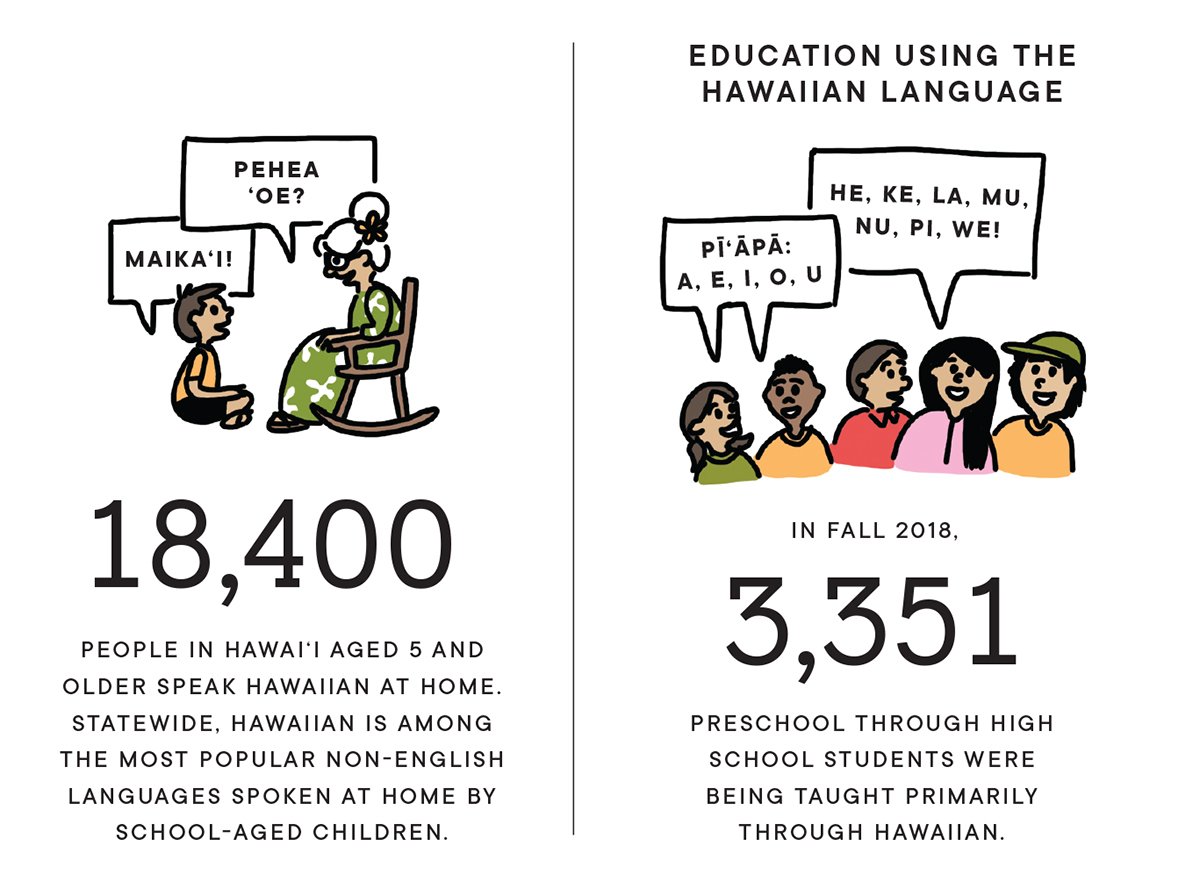
The indigenous language of the native Hawaiian people, ‘Ōlelo Hawai‘i, holds the distinguished status as one of the two official languages of the state. Its melodious sounds, lyrical intonation, and unique grammatical structures eloquently reflect the deep, spiritual connection that ancient Hawaiians forged with their natural environment, along with their rich and sophisticated oral traditions. Though it faced the dire brink of near extinction following the overthrow of the Hawaiian Kingdom in the late 19th century and the subsequent systematic suppression of its use in public life and education, a powerful and inspiring cultural renaissance began to emerge in the 1970s. Today, ‘Ōlelo Hawai‘i is undergoing a remarkable and ongoing revitalization, enthusiastically celebrated and actively promoted through numerous dedicated initiatives and community efforts.
Travelers visiting Hawaii will encounter ‘Ōlelo Hawai‘i extensively, primarily in the naming of places (such as Kailua, Hana), street names, and the descriptive titles of countless attractions and landmarks across the islands. Many common and beautiful terms, including Aloha (encompassing hello, goodbye, and profound love), Mahalo (thank you), Ohana (family), and Lei (a revered flower garland), have gracefully permeated the everyday English usage in Hawaii and are now widely understood and appreciated by both visitors and long-time residents alike. The Hawaii Tourism Authority actively champions the use and encourages the learning of basic Hawaiian phrases, recognizing their power to significantly enhance visitors’ cultural immersion and overall travel experience.
Educational institutions across the state, ranging from pioneering Hawaiian immersion preschools to comprehensive high schools and the esteemed University of Hawaii system, play an absolutely crucial role in the teaching, preservation, and proliferation of ‘Ōlelo Hawai‘i. Efforts extend robustly into various forms of media, with dedicated Hawaiian language radio stations and television programs ensuring its continued vibrant presence in the modern Hawaiian lifestyle. Learning even just a few phrases of ‘Ōlelo Hawai‘i not only serves as a meaningful gesture of respect for the local culture but also profoundly deepens your connection to the islands’ rich history and their indomitable indigenous spirit. It is an utterly integral component of what makes a Hawaiian experience truly authentic and unforgettable.
Hawaiian Pidgin: A Unique Island Dialect
Beyond the established official languages lies Hawaiian Pidgin, formally recognized as Hawaii Creole English. This vibrant, expressive, and often playful creole language originated and flourished in the late 19th and early 20th centuries on the islands’ extensive sugar plantations. It emerged as an essential means of communication among the remarkably diverse immigrant laborers who hailed from China, Japan, the Philippines, Portugal, and numerous other distant lands, alongside native Hawaiians and English-speaking Americans. Hawaiian Pidgin ingeniously blends elements of English with a rich tapestry of vocabulary and distinctive grammatical structures borrowed from ‘Ōlelo Hawai‘i, Japanese, Tagalog, Portuguese, and various other languages, creating a truly unique linguistic fusion.
While not officially recognized as a state language, Hawaiian Pidgin is widely spoken by a significant segment of the local population, particularly in informal social settings and among close family and friends. It serves as a powerful and cherished marker of local identity and an deeply ingrained aspect of Hawaiian culture. Visitors who venture beyond the most tourist-centric areas, perhaps engaging with local vendors at vibrant farmers’ markets or simply observing everyday conversations, will undoubtedly overhear Pidgin spoken with natural ease. Phrases such as “Howzit?” (meaning “How is it?” or “How are you?”), “Brah” (a friendly term for “Brother” or “friend”), “Grinds” (referring to food), and “Slippahs” (the local term for flip-flops) are common and beautifully reflect the relaxed, friendly, and community-oriented lifestyle prevalent on the islands.
Developing a rudimentary understanding of Hawaiian Pidgin can offer a much deeper and more nuanced insight into the local community and its distinctive social dynamics. While tourists are certainly not expected to speak it fluently, recognizing a few common phrases can be a genuinely fun and rewarding way to connect with locals, demonstrating an authentic appreciation for the island’s unique and multifaceted character. It stands as a fascinating, living example of linguistic evolution, profoundly shaped by the singular historical and cultural pressures of Hawaii, contributing significantly to the islands’ overall appeal as an exceptionally diverse and culturally rich travel destination.
A Melting Pot of Tongues: Other Languages in Hawaii
Hawaii’s profound history as a pivotal global crossroads, particularly during the transformative plantation era, has nurtured an incredibly rich and diverse linguistic landscape that extends far beyond the prevalence of English, the cultural depth of ‘Ōlelo Hawai‘i, and the distinctive charm of Hawaiian Pidgin. Successive waves of immigration brought diverse populations from various corners of Asia, the Pacific, and indeed, from further afield. Each immigrant group proudly contributed their native languages, enriching the already vibrant tapestry of the islands. This profound multicultural heritage is visibly evident in the faces, beautifully preserved traditions, and, naturally, the rich array of languages heard across the state. This diversity adds an immense depth to Hawaii’s local culture, significantly enriching the tourism experience for those discerning visitors who choose to delve deeper beneath the surface.
Echoes from Asia: Japanese, Tagalog, and Korean
Given its geographical proximity and profound historical ties to Asia, it comes as no surprise that several Asian languages maintain a strong and palpable presence throughout Hawaii.
-
Japanese: As the largest Asian ancestry group in Hawaii, the Japanese community has undeniably left an indelible mark on the islands. Japanese is widely spoken, particularly by older generations and within tightly-knit communities that actively uphold strong cultural ties to Japan. Many official signs and informational displays in major tourist areas, such as the bustling heart of Waikiki, are often bilingual, frequently including Japanese translations. It is commonplace to encounter Japanese-speaking staff in numerous hotels, retail shops, and restaurants, catering attentively to the substantial number of Japanese tourists and long-term residents. This linguistic provision makes Hawaii an exceptionally welcoming and comfortable destination for visitors from Japan, offering a remarkably seamless travel experience.
-
Tagalog and Ilocano: As the largest immigrant group to Hawaii during the 20th century, Filipinos have firmly established Tagalog (the national language of the Philippines) and Ilocano (a prominent regional language originating from the Philippines) as widely spoken languages, especially on the densely populated island of Oahu and the popular destination of Maui. You might frequently hear these languages spoken in vibrant local markets, active community centers, and even among staff members within the extensive service industry. Their significant contributions to Hawaiian cuisine and the islands’ vibrant calendar of community events are undeniable, and a deeper dive into the local food scene might introduce you to fascinating conversations conducted in these dynamic languages.
-
Korean: With a steadily growing Korean population residing in Hawaii and a consistent influx of Korean tourists, Korean is another visibly present language, particularly concentrated in urban centers like Honolulu and its surrounding areas. Korean businesses, authentic restaurants, and thriving cultural centers actively contribute to the vibrant linguistic and cultural diversity of the islands. Certain hotels and major attractions will often provide Korean-speaking guides or readily available information, a clear reflection of Hawaii’s global appeal as a premier tourism hub for visitors worldwide.
Voices from Europe and Beyond: Spanish, Samoan, and Chinese
The intricate linguistic mosaic of Hawaii is further enriched by the inclusion of several other significant languages, each contributing its unique historical and cultural resonance:
-
Chinese (Cantonese and Mandarin): Chinese immigrants were among the earliest non-Polynesian settlers to arrive in Hawaii, playing a pivotal role in the islands’ development. Today, various Chinese dialects, primarily Cantonese and Mandarin, are spoken by segments of the population, particularly within the historical Chinatown districts in Honolulu and other areas. Chinese cultural festivals and traditional practices remain remarkably vibrant and deeply cherished, and glimpses of these languages can be caught in specialist stores, traditional restaurants, or during celebratory cultural events, offering a unique and authentic facet of Hawaii’s diverse lifestyle.
-
Samoan: As a vital hub for Pacific Islanders, Hawaii boasts a substantial Samoan community, with a particularly strong presence on Oahu. Samoan is actively spoken in homes and cherished within church communities, contributing significantly to the broader Polynesian identity and cultural landscape of the islands. Its continued presence reinforces Hawaii’s profound role as a cultural and linguistic bridge connecting various Pacific cultures.
-
Spanish and Portuguese: Historically, Portuguese immigrants arrived in Hawaii in considerable numbers to work on the burgeoning plantations, bringing with them their distinct language and rich culture. Their linguistic contributions significantly influenced the vocabulary and even some grammatical structures of Hawaiian Pidgin, leaving an undeniable historical impact. While Portuguese is less prevalent as a widely spoken language today, its legacy is enduring. Spanish is also present, albeit to a lesser extent, largely influenced by connections to the mainland United States and a small but steadily growing Hispanic population. These languages collectively represent vital layers of immigration and extensive cultural exchange, offering a fascinating and multifaceted dimension to the islands’ exceptionally rich history and local culture.
The Cultural Tapestry: Language’s Role in Hawaiian Tourism and Lifestyle
The truly unique linguistic environment of Hawaii is far more than a mere compilation of words; it is a vibrant, living testament to the islands’ profound history, an eloquent reflection of its diverse people, and an utterly integral component of the overall travel and tourism experience. Engaging thoughtfully with the diverse languages of Hawaii empowers visitors to transcend the role of mere observers and become active, appreciative participants in the local culture, profoundly enriching their lifestyle choices and overall understanding during their stay. From the initial moment you begin researching accommodation options to the thrill of exploring iconic landmarks or the contemplation of choosing between luxury travel and budget-friendly stays, language subtly yet significantly influences every nuanced aspect of your Hawaiian adventure.
Enhancing Your Travel Experience: Practical Tips for Visitors
For travelers making their way to Hawaii, consciously embracing and acknowledging the linguistic diversity can profoundly enhance their entire trip, transforming a simple vacation into a deeper cultural immersion:
- Learn Basic Hawaiian Phrases: Even a few well-chosen words of ‘Ōlelo Hawai‘i are deeply appreciated by locals. Simple greetings like Aloha (hello/goodbye/love), Mahalo (thank you), E Komo Mai (welcome), and A Hui Hou (until we meet again) are powerful gestures. This simple act of learning demonstrates genuine respect for the indigenous culture and fosters significantly warmer and more memorable interactions, whether you’re at a hotel reception desk, a local market stall, or simply passing someone on the street.
- Decipher Place Names: Many of Hawaii’s most significant attractions and landmarks proudly bear Hawaiian names. Understanding their meanings can deepen your connection to the geography and rich history of the islands. For instance, Mauna Kea translates to “White Mountain,” Diamond Head is known as Lēʻahi, and Ka’anapali refers to “rolling cliffs.” Knowing these meanings adds a layer of appreciation to your exploration.
- Engage with Local Culture: Actively seek out opportunities to experience the language firsthand. This could involve attending a mesmerizing hula performance, participating in a traditional luau, or visiting a dedicated cultural center. Many knowledgeable guides deftly incorporate Hawaiian phrases and captivating stories into their tours, particularly those focusing on history, mythology, or the islands’ abundant nature, such as a scenic journey along Maui’s Road to Hana or a breathtaking boat tour of the majestic Na Pali Coast on Kauai.
- Be Aware of Pidgin: While there is absolutely no expectation for tourists to speak Hawaiian Pidgin, understanding its pervasive presence and recognizing some common phrases can help you appreciate local conversations and the unique lifestyle it so perfectly represents. Overhearing or understanding a snippet of Pidgin is often a delightful sign of a truly local experience that extends beyond the typical tourist traps.
- Utilize Multilingual Services: In major tourist areas, especially around the vibrant hubs of Honolulu and Waikiki, you will frequently discover multilingual staff in high-end hotels, resorts, and prominent retail outlets. This is particularly true in establishments catering to a large influx of Japanese, Korean, or Chinese visitors. Do not hesitate to inquire if you prefer to communicate in one of these languages; it is a common and welcomed request.
Preserving Linguistic Heritage: Efforts and Impact
The revitalization of ‘Ōlelo Hawai‘i stands as a truly remarkable success story, driven by the unwavering dedication of passionate individuals, committed community groups, and strategic support from the Department of Education. Groundbreaking immersion schools, spanning from preschools all the way through high schools, teach all academic subjects entirely in Hawaiian, thereby nurturing a vibrant new generation of fluent speakers. The esteemed University of Hawaii system offers extensive Hawaiian language and studies programs, consistently producing highly qualified scholars and educators who further expand the language’s reach and ensure its continued vitality.
This profound dedication to linguistic preservation is not simply about safeguarding a collection of words; it is fundamentally about preserving a unique worldview, a rich and complex history, and a distinctive way of understanding the world. The language itself is intrinsically linked to the land (ʻāina), the culture (moʻomeheu), and the spiritual beliefs (mana) of the Hawaiian people. For the tourism sector, this commitment translates into an authentic and unparalleled cultural offering that distinctly differentiates Hawaii from other popular destinations. It allows visitors to experience something truly special and deeply meaningful, moving beyond generic travel experiences to a more profound, respectful, and genuine engagement with a living, breathing culture. This emphasis on heritage aligns perfectly with a lifestyle that values cultural richness, authenticity, and profound connection, whether one is seeking the epitome of luxury travel or an immersive, enriching adventure.
Conclusion
Hawaii’s linguistic landscape is as breathtakingly diverse and exquisitely beautiful as its physical one. From the universally understood convenience of English to the deep cultural resonance of ‘Ōlelo Hawai‘i and the unique, local flavor of Hawaiian Pidgin, further enriched by a vibrant tapestry of immigrant languages, the islands offer a fascinating and immersive journey for both the ears and the mind. This remarkable linguistic blend is a living testament to Hawaii’s storied history as a true melting pot of cultures and its enduring, welcoming spirit of Aloha.
For any visitor meticulously planning their travel to this incredible destination, understanding and profoundly respecting the languages spoken here is far more than a mere matter of practical communication. It represents an unparalleled opportunity for genuine cultural immersion, a cherished chance to connect deeply with the local culture, and a powerful way to deepen one’s appreciation for the islands’ unique and irreplaceable heritage. So, as you thoughtfully prepare for your Hawaiian adventure – whether it involves relaxing at a luxury hotel, embarking on explorations of ancient landmarks, or indulging in the exquisite local food – remember that the languages of Hawaii offer a profound and rewarding pathway to truly understanding the authentic spirit of Paradise. Mahalo nui loa (Thank you very much) for exploring the diverse and captivating voices of Hawaii.