
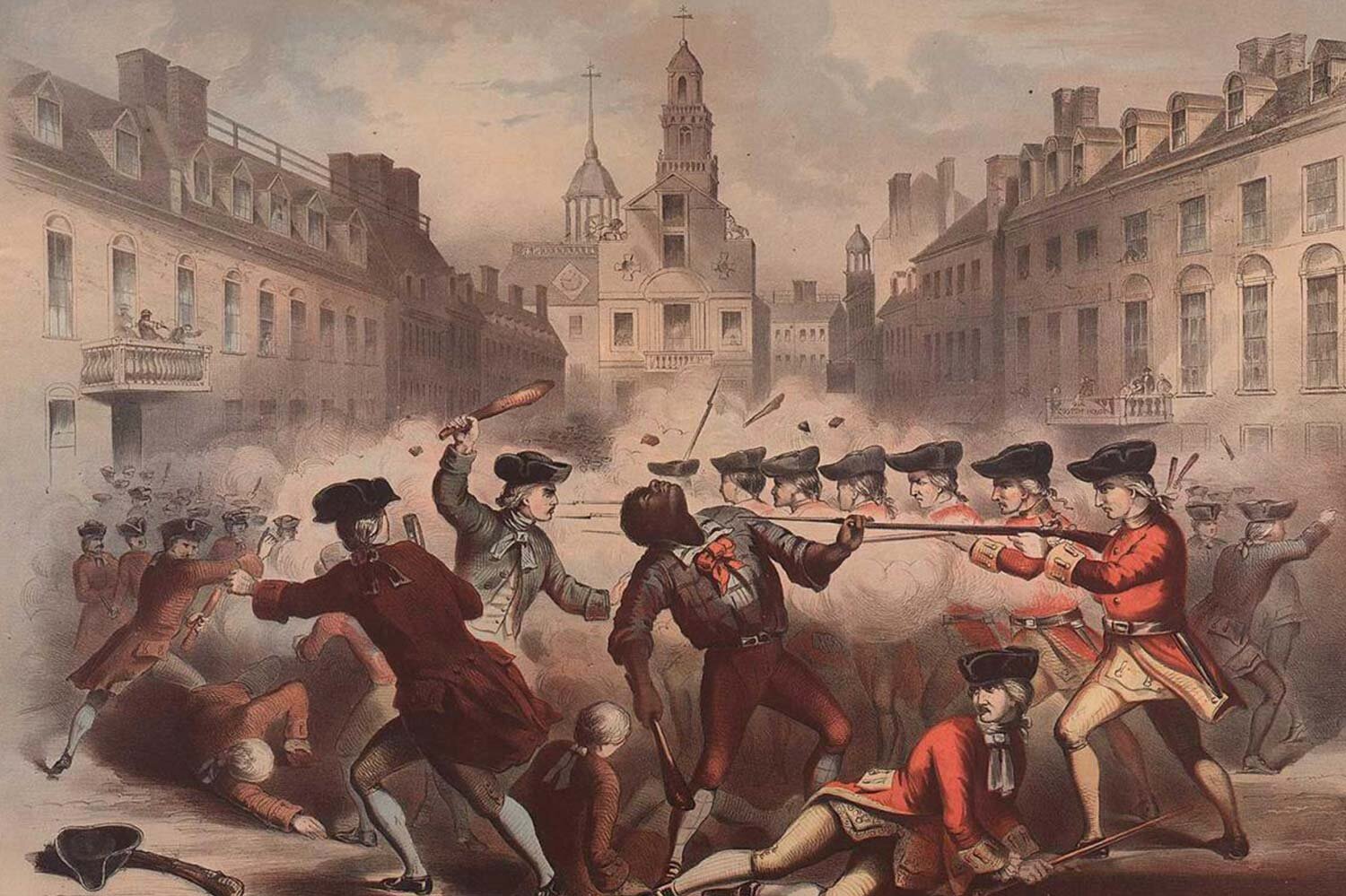
The crisp evening air of March 5, 1770, in Boston, Massachusetts, was shattered by musket fire. What began as a tense confrontation between British soldiers and a crowd of colonists quickly escalated into a bloody tragedy, leaving five civilians dead, including Crispus Attucks, a former slave and a symbol of early American resistance. This event, famously dubbed the Boston Massacre by patriot leaders, sent shockwaves through the colonies, igniting a fervent debate about liberty, governance, and the very future of British North America. Far from being an isolated incident, the Boston Massacre served as a pivotal moment, accelerating the colonies’ journey toward independence and forever altering the landscape of American history. For travelers seeking to delve into the genesis of the United States, understanding its intricate aftermath is crucial, transforming a mere historical date into a vibrant narrative of courage, conviction, and conflict, best explored through the very landmarks and cultural sites that witnessed these epochal changes.

The Immediate Aftermath: A City on Edge
The immediate hours and days following the Boston Massacre were fraught with tension, grief, and an explosive cocktail of outrage and fear. The streets of Boston, typically bustling with trade, became a somber tableau of a community reeling from violence inflicted by those sworn to protect the Crown. This period represents a critical juncture for anyone looking to understand colonial sentiment, offering a poignant lens into the raw emotions that fueled the burgeoning revolutionary spirit. Modern travelers can connect with this deeply human story by visiting the very places where these powerful events unfolded.
A Community in Mourning and Outrage
The initial response to the massacre was immediate and profound. News spread like wildfire, fanned by the impassioned rhetoric of patriot leaders. The image of innocent colonists shot down by British regulars was a powerful tool, skillfully wielded to galvanize public opinion against British rule. Samuel Adams, a master propagandist, and Paul Revere, whose iconic engraving of the event became a widespread and influential piece of anti-British propaganda, were central to shaping the narrative. Revere’s depiction, though historically inaccurate in many details, perfectly captured the emotional outrage of the colonists, portraying the British soldiers as aggressors and the colonists as helpless victims.
The funerals of the victims, held on March 8, 1770, transformed into a massive public demonstration of defiance and sorrow. Thousands of mourners, an unprecedented number for the time, processed through the streets of Boston, their collective grief forging a powerful bond of solidarity against perceived British tyranny. This event underscored the deep communal ties that characterized colonial Boston and demonstrated the extraordinary capacity of its citizens to organize and express dissent. For those interested in historical travel, visiting the Old Granary Burying Ground offers a tangible connection to this mournful procession, as it is the final resting place for several of the massacre victims, alongside other prominent figures of the American Revolution. Walking among the weathered headstones provides a reflective experience, transporting visitors back to a time of profound national awakening.

The Withdrawal of Troops and Calls for Justice
In the face of overwhelming public anger, Massachusetts Acting Governor Thomas Hutchinson made a crucial decision that temporarily quelled the immediate unrest: he ordered the removal of British troops from the heart of Boston to Castle William, an island fort in Boston Harbor. This concession, a significant victory for the colonists, demonstrated the power of united public outcry. It also highlighted the precarious position of British authority in a city seething with revolutionary fervor. The withdrawal, while temporary, offered a glimpse into the potential for colonial resistance to effect change.
However, the demand for justice did not end with the troops’ removal. The colonists insisted on holding the soldiers accountable for their actions. Eight soldiers and their commanding officer, Captain Preston, were arrested and charged with murder. This swift action showcased the colonial commitment to the rule of law, even as they challenged the legitimacy of British rule. For history enthusiasts, tracing these early legal battles in Boston provides unique insights into the evolution of American jurisprudence and the unwavering commitment to fair trials that would later become a cornerstone of the nation’s legal system. Exploring Boston’s historical courthouses and legal districts offers a journey through the very fabric of American justice.
The Trials and Their Unforeseen Consequences
The subsequent trials of the British soldiers were not merely legal proceedings; they were a profound reflection of the era’s complex political landscape, public sentiment, and the nascent ideals of justice that would eventually define the United States. These trials, often overlooked in the broader narrative of the American Revolution, were critical in shaping public perception and demonstrating the colonial commitment to due process, even for their adversaries. For travelers, understanding these events enriches a visit to Boston, offering a deeper appreciation of the city’s role as a crucible of American legal and political thought.
A Quest for Justice: The Role of John Adams
In a surprising turn of events, John Adams, a staunch patriot and future second President of the United States, agreed to defend Captain Preston and his men. Adams, alongside Josiah Quincy II, took on this unpopular cause, believing firmly that every person, regardless of their actions or public opinion, deserved a fair trial. His decision was a testament to his deeply held convictions about justice and the rule of law. Adams famously stated that “the law… shall be no respector of persons.” His meticulous defense focused on the soldiers’ right to self-defense, arguing that they were provoked by a hostile crowd throwing projectiles.
The trials, which took place in the autumn of 1770, were a public spectacle, drawing immense attention. Adams’s defense was both masterful and courageous, requiring him to stand against the very public sentiment he often championed. He carefully selected the jury and presented evidence that painted a picture of confused soldiers acting under extreme duress. This moment in history showcases the very foundational principles of American law and justice. Travelers interested in legal history can explore the areas around the Old State House and the former colonial courts in Boston, imagining the tense atmosphere of these pivotal proceedings. Educational tours often highlight Adams’s commitment to justice, making it a compelling narrative for visitors of all ages.
Verdict and Public Perception
The verdicts of the trials had significant, albeit complex, implications. Captain Preston was acquitted, primarily due to Adams’s success in arguing that Preston had not ordered his men to fire. In the subsequent trial for the soldiers, two British soldiers were found guilty of manslaughter and branded on their thumbs as punishment, while the other six were acquitted. This outcome, though not a full conviction for murder, was a remarkable feat given the intense public pressure and anti-British sentiment prevalent in Boston.
The immediate public reaction was mixed. Some patriots were outraged, viewing the verdicts as too lenient and a sign of British bias. Others, including many moderates, saw it as an affirmation that justice could, indeed, be served under the British legal system, even for those accused of killing colonists. However, the long-term impact was far more profound. The trials, regardless of their specific verdicts, kept the memory of the Boston Massacre alive in the public consciousness. They underscored the deep division between the colonies and Great Britain, fostering a growing distrust of British authority and reinforcing the narrative of a tyrannical government. The events solidified the massacre as a potent symbol of British oppression, a rallying cry for those advocating for greater colonial autonomy. For those engaging in educational tourism, exploring this period offers a nuanced understanding of how seemingly contradictory events can collectively push a society towards revolutionary change.
The Escalation of Colonial Resistance
The Boston Massacre, its vivid imagery, and the contentious trials that followed, became indelible elements in the evolving narrative of colonial grievance against Great Britain. Far from being an isolated incident that faded from memory, it served as a powerful catalyst, propelling the colonies further down the path toward revolution. For history enthusiasts and travelers alike, this phase of escalating resistance illuminates how a single tragedy can ignite a national movement, transforming ordinary citizens into revolutionaries.
From Massacre to Revolution: A Turning Point
The years immediately following the Boston Massacre were marked by an uneasy calm, often referred to as the “Quiet Period.” However, beneath this surface tranquility, the seeds of revolution continued to germinate. The massacre had stripped away any lingering illusions among many colonists about the benevolence of British rule and fueled a deeper resolve for self-governance. It became a powerful piece of propaganda, consistently invoked by patriot leaders to remind colonists of British brutality and the need for unified action.
One of the most significant developments during this period was the establishment and expansion of the Committees of Correspondence. Initiated by Samuel Adams in Massachusetts and quickly adopted by other colonies, these committees formed an intercolonial network for sharing information and coordinating resistance efforts. They ensured that events like the Boston Massacre and other British actions were widely publicized, fostering a shared sense of grievance and a collective identity among the disparate colonies. This vital communication network laid the groundwork for the future Continental Congress and ultimately, the unified front necessary for the American Revolution. A historical road trip along the Freedom Trail in Boston is an exceptional way to trace these revolutionary connections, visiting sites where these committees met and organized.
The Tea Act and the Boston Tea Party
The fragile peace was irrevocably shattered in 1773 with the passage of the Tea Act by the British Parliament. While intended to save the struggling British East India Company by granting it a monopoly on tea sales in the colonies and lowering the price of tea, the act was perceived by colonists as yet another insidious attempt to assert British Parliament’s right to tax them without their consent. The principle of “no taxation without representation” had become a non-negotiable demand, and the Tea Act was seen as a direct affront to colonial liberty.
The colonial response was swift and decisive, particularly in Boston. On December 16, 1773, a group of Sons of Liberty, thinly disguised as Native Americans, boarded three British tea ships docked in Boston Harbor and dumped 342 chests of tea into the water. This audacious act, known as the Boston Tea Party, was a direct consequence of the escalating tensions fueled by events like the Boston Massacre. It symbolized a new level of direct action and defiance against British authority.
The British Parliament responded with the punitive Coercive Acts (dubbed the “Intolerable Acts” by the colonists), which, among other things, closed Boston Harbor and placed Massachusetts under direct military rule. These acts, intended to punish Boston and suppress colonial dissent, instead galvanized the other colonies, who saw them as a threat to their own liberties. The path to armed conflict at Lexington and Concord in 1775 was now clear, with the Boston Massacre standing as a grim harbinger of the bloodshed to come. For an immersive experience, the Boston Tea Party Ships & Museum offers interactive exhibits and reenactments that bring this pivotal moment to life, making it a must-visit attraction for anyone interested in the origins of American liberty.
Legacy and Modern Exploration: Tracing History in Boston
The echo of the musket shots on King Street (now State Street) in 1770 reverberates through the streets of modern Boston, a city that meticulously preserves its revolutionary heritage. The Boston Massacre isn’t just a paragraph in a textbook; it’s a living, breathing part of the city’s identity, inviting travelers to step back in time and experience the palpable tension and enduring spirit of liberty. For those planning a trip, exploring Boston’s historical landmarks offers an unparalleled opportunity for educational tourism, blending profound historical insights with vibrant urban exploration.
Preserving the Past: Landmarks and Museums
Boston has done an exceptional job of preserving the sites associated with the Boston Massacre and the broader American Revolution, transforming them into accessible and engaging landmarks. The most iconic way to experience this history is by walking the Freedom Trail, a 2.5-mile red-lined path that winds through the city, connecting 16 historically significant sites.
At the heart of this experience lies the very site of the Boston Massacre, marked by a cobblestone circle in front of the Old State House. Standing at this spot, visitors can envision the confrontation, the desperate struggle, and the ultimate tragedy that unfolded. The Old State House itself, Massachusetts’s oldest surviving public building, played a crucial role, serving as the seat of British government and later as a meeting place for colonial leaders. Inside, a museum houses artifacts and exhibits that contextualize the massacre and its aftermath, including historical accounts and vivid illustrations. This landmark is not merely a building; it’s a direct portal to the political and social climate of colonial Boston.
Beyond the massacre site, the Freedom Trail guides visitors to other pivotal locations, such as Faneuil Hall, often called the “Cradle of Liberty” for hosting numerous fiery town meetings where colonists debated their grievances. The Old South Meeting House, where thousands gathered before embarking on the Boston Tea Party, also stands as a testament to colonial assembly and defiance. Further along, sites like the Old North Church, famous for Paul Revere’s signal lanterns, and the Paul Revere House, offer intimate glimpses into the lives of the patriots who spearheaded the revolution. Each stop provides a layered understanding of the events that followed the Boston Massacre, demonstrating how interconnected they truly were.
Experiencing Revolutionary History Today
For today’s traveler, immersing oneself in Boston’s revolutionary history extends beyond simply visiting sites. It’s about experiencing the city with a historical lens, understanding the motivations of its early inhabitants, and appreciating the sacrifices made for liberty. Guided tours, led by knowledgeable historians and re-enactors, provide vibrant narratives and anecdotes that bring the past to life, often recreating the fervor of the colonial era. For a deeper dive, visitors can also explore the various specialized museums dedicated to specific aspects of the revolution.
When planning an itinerary focused on historical immersion, consider accommodation options that complement the experience. Boutique hotels in historic districts often blend modern comfort with architectural charm, placing guests within walking distance of key landmarks. Many luxurious hotels or cozy bed and breakfasts located along or near the Freedom Trail offer not just a place to stay, but a base for unparalleled exploration. Beyond the historical sites, Boston offers a rich culinary scene, allowing travelers to savor traditional New England fare that might have been familiar to colonists, alongside modern gastronomic delights. From charming cafes perfect for reflecting on the day’s historical discoveries to upscale dining experiences, Boston caters to all tastes.
Whether opting for a family trip focused on engaging history lessons, a solo journey of reflective discovery, or a luxurious escape blending cultural immersion with urban sophistication, Boston provides an unforgettable travel experience. The city encourages visitors not just to observe history, but to participate in it, walking the same streets as John Adams and Samuel Adams, and truly understanding what happened after the fateful night of the Boston Massacre. It’s an adventure that reminds us of the profound impact of individual acts and collective courage in shaping the destiny of nations.
The Boston Massacre was more than just a tragic incident; it was a watershed moment that irrevocably altered the relationship between Great Britain and its American colonies. From the immediate outpouring of grief and calls for justice to the subsequent trials that tested the limits of colonial law, and finally, to its role in igniting the broader American Revolution, the massacre served as a potent symbol and a powerful catalyst. Today, Boston stands as a testament to this enduring legacy, offering travelers an unparalleled opportunity to walk in the footsteps of history. By exploring its meticulously preserved landmarks, engaging with its rich narrative, and immersing oneself in its vibrant culture, visitors can gain a profound appreciation for the courage and convictions that laid the foundation for the United States. A journey to Boston is not just a trip; it’s an education in the very essence of American liberty.
LifeOutOfTheBox is a participant in the Amazon Services LLC Associates Program, an affiliate advertising program designed to provide a means for sites to earn advertising fees by advertising and linking to Amazon.com. Amazon, the Amazon logo, AmazonSupply, and the AmazonSupply logo are trademarks of Amazon.com, Inc. or its affiliates. As an Amazon Associate we earn affiliate commissions from qualifying purchases.