
Few songs in music history have captured the imagination quite like the Eagles’ iconic “Hotel California.” Released in 1976, this masterpiece of rock music has transcended its genre to become a cultural phenomenon, its enigmatic lyrics fueling decades of speculation, debate, and fervent fan theories. While the song paints a vivid, almost cinematic picture of a mysterious, luxurious, yet subtly sinister establishment, the persistent question remains: what hotel, if any, is “Hotel California” actually about? For travelers, hotel aficionados, and those captivated by the allure of unique destinations, unraveling this mystery intertwines with the very essence of travel, accommodation, and the stories places tell.
The website’s focus on hotels, destinations, landmarks, and lifestyle makes this quest particularly pertinent. Is “Hotel California” a tangible place one can visit, a grand resort with a dark secret, or something far more abstract? This article delves into the enduring mystique of the song, exploring the leading theories, the metaphorical depths, and how its legend inspires us to look beyond the brochure when seeking our next unforgettable stay.
The Enduring Mystery and Metaphorical Depths
At its core, “Hotel California” is not a simple narrative about a specific building, but rather a profound allegory. Don Henley, one of the song’s primary writers, has consistently stated that the lyrics are a metaphor for the excesses of the American dream, particularly the dark underbelly of the Los Angeles music industry and the decadent lifestyle it often entailed. It’s a cautionary tale about materialism, self-indulgence, and the potentially irreversible traps of seeking paradise.
A Critique of the American Dream
The Eagles, having risen to immense fame in the 1970s, witnessed firsthand the intoxicating allure and corrosive effects of Hollywood and the broader California experience. The “Hotel California” served as their chosen symbol for this critique – a place of opulent beauty that slowly reveals its darker, more permanent aspects. The lyrics “You can check out any time you like, but you can never leave” famously encapsulate this feeling of being entrapped by a dream that has turned sour. It speaks to the seductive nature of success and wealth, which, once attained, can become a gilded cage. This is a far cry from the serene boutique hotels or peaceful villas many travelers seek, yet its profound message resonates universally.
The Allure of a Fictional Masterpiece
Despite the band’s clarifications, the human inclination to attach tangible reality to powerful art persists. The vivid imagery – “warm smell of colitas,” “pink champagne on ice,” “mirrors on the ceiling,” “the beast that never slept” – is so evocative that it almost demands a real-world counterpart. This desire to find the physical embodiment of the song is what drives so many to search for “the” Hotel California. It’s a testament to the power of storytelling and how a well-crafted narrative can inspire journeys, both literal and imaginative, connecting the song to broader themes of tourism and the search for authentic experiences, even if the authenticity lies in a shared myth. The legend surrounding the song itself has become a landmark in cultural discourse, inspiring countless discussions in travel guides and forums.
Unpacking the Real-World Candidates and Urban Legends
While the Eagles have consistently maintained that “Hotel California” is purely allegorical, several real-world establishments have become intertwined with the song’s legend. These connections range from plausible inspirations to opportunistic branding, adding layers to the song’s mystique and appealing to the segment of travelers who love chasing myths.
The Beverly Hills Hotel: A Leading Contender
Perhaps the most frequently cited inspiration for the exterior imagery is The Beverly Hills Hotel, often referred to as the “Pink Palace.” Located on Sunset Boulevard in Beverly Hills, California, this iconic establishment has long been a playground for Hollywood’s elite, offering lavish suites, opulent amenities, and an undeniable air of old-school glamour and discretion. The distinctive Spanish Colonial Revival architecture and pink stucco exterior align with the visual on the album cover of Hotel California, which prominently features the hotel’s façade, albeit with some artistic adjustments.
The idea that the Eagles might have drawn inspiration from this landmark is compelling. Its history is steeped in tales of celebrity excess and hidden dramas, mirroring the thematic undercurrents of the song. The “pink champagne on ice” lyric certainly resonates with the luxurious offerings of such an establishment. For many, The Beverly Hills Hotel represents the pinnacle of Hollywood indulgence, making it a fitting symbol for the band’s critique. Visiting this hotel today offers a glimpse into a bygone era of glamour, connecting visitors to a significant piece of Los Angeles’s cultural history and the very lifestyle the song both celebrated and critiqued.
The Todos Santos Connection: A Famous Misconception
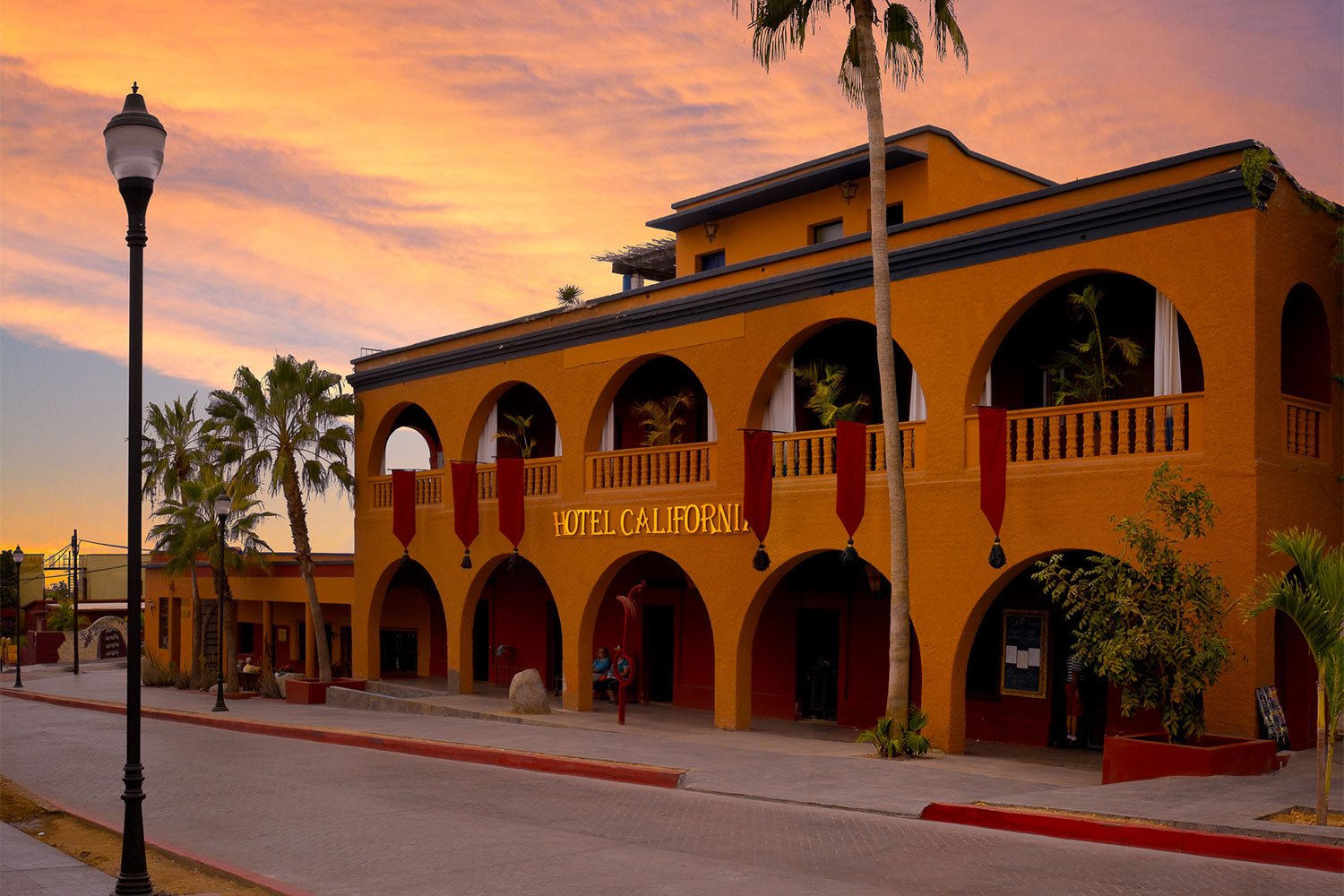
Further south, in Baja California Sur, Mexico, lies a different “Hotel California” in the picturesque town of Todos Santos. This hotel, originally named the Hotel California, was built in 1947 by a Chinese immigrant. For decades, local legend (and clever marketing) fueled the belief that this was the hotel from the song. Its remote location, bohemian vibe, and unique charm made it an appealing candidate for fans seeking to experience the song’s mystique firsthand.
However, the Eagles have emphatically debunked this connection. They clarified that they had no knowledge of the Todos Santos hotel when writing the song. Despite the lack of an official link, the Hotel California in Todos Santos has fully embraced its legendary, albeit unfounded, status. It now operates as a charming, upscale boutique hotel that playfully leans into the myth, offering a unique destination for travelers drawn by its name and the serene beauty of Todos Santos. While it’s not the inspiration, it has certainly become a tourist attraction because of the song, illustrating the powerful intersection of music, tourism, and local culture. It’s an example of how a narrative can create its own reality, driving experiences and contributing to the local economy.
Other Notable Mentions
Other less prominent theories have also circulated. Some point to the Aztec Hotel in Monrovia, California, known for its distinctive Mayan Revival architecture and somewhat eerie history. Its unique, somewhat foreboding appearance might lend itself to the song’s atmosphere, but direct connections are tenuous. Ultimately, these various theories underscore the public’s fascination with finding a tangible anchor for a concept that was intended to be fluid and metaphorical. Each proposed “Hotel California” contributes to the mosaic of speculation, transforming the song into a dynamic narrative that continues to evolve with every new theory and every new generation of listeners.
“Hotel California” as a Paradigm for Travel and Accommodation
Beyond the specific theories, the song “Hotel California” serves as a powerful paradigm for understanding the broader themes of travel, accommodation, and the pursuit of unique experiences. Its enigmatic nature forces us to think deeper about the places we visit and the stories they tell.
The Allure of Iconic Stays and Storytelling Destinations
The song taps into a fundamental human desire for exceptional stays – places that are more than just a room, but a destination in themselves. Whether it’s a luxury resort promising unparalleled comfort, a historic city hotel steeped in tales of the past, or a remote villa offering an escape from the everyday, travelers are always seeking that “something extra.” “Hotel California” embodies this quest for a place that leaves an indelible mark, for better or worse. It highlights the importance of ambiance, architecture, and the intangible feeling a place evokes.
This concept is central to the modern hospitality industry, where hotels strive to create unique brand identities and unforgettable guest experiences. From elaborate themed resorts in Las Vegas to charming boutique hotels nestled in historic European cities, each aims to be a destination, a story waiting to unfold. The song, in its mysterious glory, has inadvertently become a benchmark for what an “iconic stay” could feel like – complex, memorable, and utterly captivating.
Navigating Expectations: From Luxury to Local Culture
The “Hotel California” narrative also subtly encourages a critical approach to travel. It reminds us that appearances can be deceiving, and that true immersion in a destination often requires looking beyond the superficial gloss. For instance, when planning a trip to a vibrant city like San Francisco or New York, travelers might be drawn to lavish hotels. However, engaging with local culture, exploring lesser-known neighborhoods, and experiencing daily life can offer a richer, more authentic perspective than simply staying in a five-star suite.
The song’s themes of illusion and reality resonate with the modern traveler who increasingly seeks genuine encounters over mere spectacle. This applies whether one is searching for budget travel options or embarking on a luxury trip; the desire for authenticity transcends price points. It compels us to consider how much research we do, how many reviews we read, and how carefully we compare accommodation options to ensure our chosen stay aligns with our expectations, rather than leading us into an experience we “can never leave.”
Planning Your Own Unforgettable Californian Journey
While the “Hotel California” itself remains a mythical construct, the spirit of its inspiration — the diverse, captivating, and sometimes bewildering landscape of California — is very real and incredibly appealing to travelers. From its bustling cities to its serene coastlines, California offers an array of destinations and experiences that resonate with the song’s evocative imagery, without the allegorical trap.
Discovering California’s Diverse Accommodations
When planning a trip to California, consider the breadth of accommodation options available. You might seek the luxury travel experience suggested by the song’s opulence, perhaps indulging in a stay at a grand hotel in Beverly Hills, or a beachfront resort in Santa Monica or Malibu. For those who appreciate history and unique architecture, exploring boutique hotels in San Francisco or older establishments in Los Angeles can provide a rich cultural immersion.
Utilize resources for booking accommodation, reading detailed reviews, and employing comparison sites to find the perfect fit for your specific travel lifestyle — be it a family trip, a business stay, or a romantic getaway. Look for hotels that boast strong local culture connections, offer unique amenities, and provide exceptional service, transforming a mere stay into a memorable part of your journey.
Iconic California Landmarks and Attractions
Instead of chasing a phantom hotel, immerse yourself in California’s genuine landmarks and attractions. In Los Angeles, walk the Hollywood Walk of Fame, explore the vibrant districts, or perhaps even take a tour that highlights the historic hotels that once housed the very celebrities the Eagles observed. Drive down the scenic Pacific Coast Highway, visiting charming coastal towns, or venture north to San Francisco to marvel at the Golden Gate Bridge and the Palace of Fine Arts.
California is a state of contrasts, offering everything from desert landscapes and national parks to bustling urban centers and pristine beaches. Each region provides a distinct flavor of the American experience, offering countless opportunities for discovery and authentic experiences that transcend any single song’s metaphor. Embrace the journey of exploration, allowing the state’s natural beauty, rich history, and diverse culture to captivate you.
Ultimately, the question “What hotel is Hotel California about?” leads us down a fascinating path that bridges music, mythology, and the practicalities of travel. While no single physical hotel fully embodies the Eagles’ complex vision, the song has undeniably shaped our perception of luxury, destination, and the deeper meanings behind our chosen accommodations. It reminds us that sometimes, the most unforgettable places are not just bricks and mortar, but concepts, dreams, or even cautionary tales, forever etched in the cultural landscape, inviting us to explore, question, and discover for ourselves.
LifeOutOfTheBox is a participant in the Amazon Services LLC Associates Program, an affiliate advertising program designed to provide a means for sites to earn advertising fees by advertising and linking to Amazon.com. Amazon, the Amazon logo, AmazonSupply, and the AmazonSupply logo are trademarks of Amazon.com, Inc. or its affiliates. As an Amazon Associate we earn affiliate commissions from qualifying purchases.