
The pursuit of a Boston Marathon qualifying time, affectionately known as a “BQ,” is more than just a running goal; it’s a profound journey that intertwines athletic ambition with the dream of an iconic travel experience. For distance runners worldwide, the Boston Marathon stands as a beacon of achievement, a testament to endurance, speed, and unwavering dedication. It is the world’s oldest annual marathon and one of the most prestigious, captivating both participants and spectators alike with its rich history, challenging course, and vibrant atmosphere.
However, unlike many other major marathons that are open to anyone who can pay the entry fee, the Boston Marathon maintains its elite status through a stringent qualification process. To even be considered for entry, a runner must first prove their mettle by achieving a specific finishing time in another certified marathon within a defined qualification window. This requirement elevates the race from a mere competition to an exclusive club, making the quest for a BQ a central theme in the lives of aspiring Boston runners.
This article delves deep into what a Boston Marathon qualifying time entails, exploring the standards, the dedication required, and how this ultimate running goal translates into an unforgettable travel and tourism experience. From the rigorous training on the roads to the careful planning of accommodation and exploration of Boston’s historic landmarks, achieving a BQ opens the door to a truly unique lifestyle adventure.
Understanding the Boston Marathon Qualification Standards
The core of the Boston Marathon’s prestige lies in its qualification system, which ensures a field of highly committed and capable athletes. Administered by the Boston Athletic Association (B.A.A.), these standards are meticulously reviewed and updated periodically to maintain the integrity and competitive nature of the race.
The Basics of BQ Times
At its heart, a BQ is a specific marathon finish time that an individual must achieve based on their age and gender on race day. The primary reason for these strict standards is to manage the immense popularity of the event. With tens of thousands of runners vying for limited spots, qualifying times serve as a fair and objective mechanism to select the most prepared athletes. This system not only ensures a high level of competition but also contributes to the safety and logistical efficiency of the event, allowing the B.A.A. to manage the course and resources effectively.
To be considered valid, a qualifying race must meet several criteria:
- Certification: The marathon course must be certified by a national governing body such as USA Track & Field (USATF) in the United States or the Association of International Marathons and Distance Races (AIMS) internationally. This certification guarantees that the course distance is accurate.
- Timeframe: The qualifying marathon must have been run within a specific window of time, usually starting approximately 18-24 months prior to the Boston Marathon itself. This ensures that the qualifying performance is recent and indicative of current fitness levels.
- Official Results: Results must be verifiable, usually through an official race website or database, clearly showing the runner’s name, age, gender, finish time, and the race’s date and location.
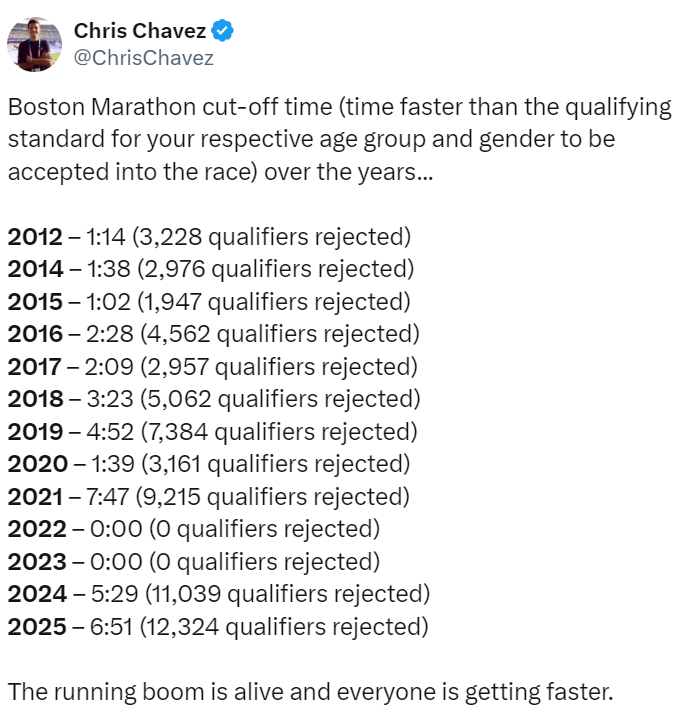
It’s crucial to understand that simply achieving the qualifying time does not guarantee entry. The Boston Marathon has a limited field size, and often, more runners meet the BQ standard than there are available spots. In such cases, the B.A.A. employs a rolling admission process, prioritizing runners who have exceeded their age group’s qualifying time by the largest margin. This means that achieving a “buffer” time – running faster than the published standard – significantly increases the chances of acceptance.
Age Group and Gender Categories
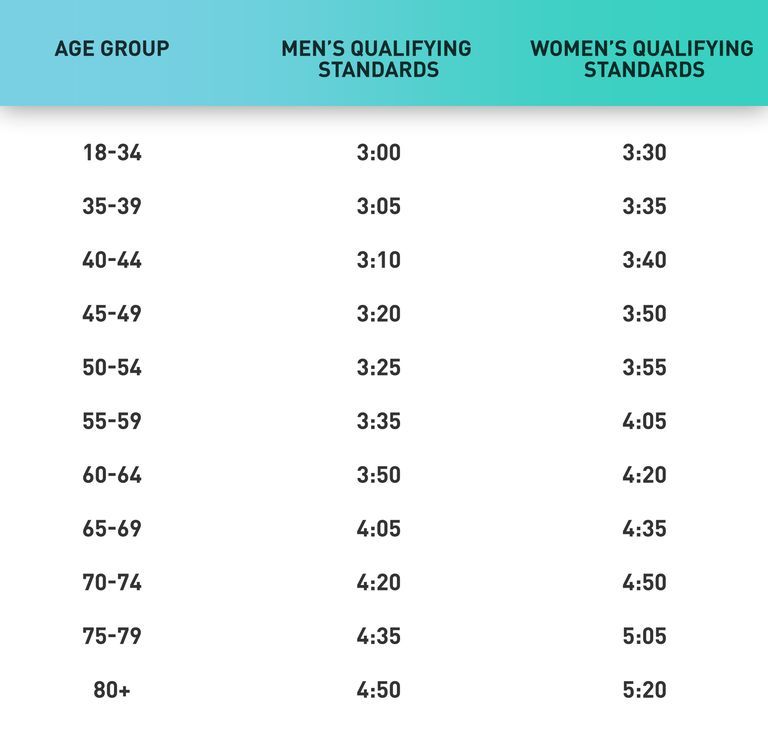
The qualifying times are stratified across various age groups, typically in five-year increments, and are different for men and women, reflecting physiological differences in athletic performance. This ensures fairness across the diverse range of athletes participating. The tables below illustrate the general framework for current Boston Marathon qualifying standards, though it’s important to always check the official B.A.A. website for the most up-to-date information, as these times can be adjusted annually based on application trends and course capacity.
Men’s Qualifying Times (Example for 2024 Boston Marathon)
| Age on Race Day | Qualifying Time |
|---|---|
| 18-34 | 3 hours 00 minutes 00 seconds |
| 35-39 | 3 hours 05 minutes 00 seconds |
| 40-44 | 3 hours 10 minutes 00 seconds |
| 45-49 | 3 hours 20 minutes 00 seconds |
| 50-54 | 3 hours 25 minutes 00 seconds |
| 55-59 | 3 hours 35 minutes 00 seconds |
| 60-64 | 3 hours 50 minutes 00 seconds |
| 65-69 | 4 hours 05 minutes 00 seconds |
| 70-74 | 4 hours 20 minutes 00 seconds |
| 75-79 | 4 hours 35 minutes 00 seconds |
| 80 and over | 4 hours 50 minutes 00 seconds |
Women’s Qualifying Times (Example for 2024 Boston Marathon)
| Age on Race Day | Qualifying Time |
|---|---|
| 18-34 | 3 hours 30 minutes 00 seconds |
| 35-39 | 3 hours 35 minutes 00 seconds |
| 40-44 | 3 hours 40 minutes 00 seconds |
| 45-49 | 3 hours 50 minutes 00 seconds |
| 50-54 | 3 hours 55 minutes 00 seconds |
| 55-59 | 4 hours 05 minutes 00 seconds |
| 60-64 | 4 hours 20 minutes 00 seconds |
| 65-69 | 4 hours 35 minutes 00 seconds |
| 70-74 | 4 hours 50 minutes 00 seconds |
| 75-79 | 5 hours 05 minutes 00 seconds |
| 80 and over | 5 hours 20 minutes 00 seconds |
These times represent a significant challenge, requiring consistent training, strategic race planning, and often, multiple attempts to achieve. They are designed to push athletes to their limits, ensuring that those who stand at the starting line in Hopkinton are truly prepared for the 26.2-mile journey to Boston’s Boylston Street.
The Journey to Boston: More Than Just a Time
The path to securing a Boston Marathon qualifying time is an epic in itself, a narrative of dedication, resilience, and meticulous planning that extends far beyond crossing a finish line. It embodies a significant lifestyle commitment that often transforms individuals and their approach to travel and experiences.
Training and Race Strategy
Achieving a BQ is the culmination of months, if not years, of disciplined training. Runners typically follow structured plans that involve high mileage, speed work, long runs, and recovery periods. This intense regimen requires significant personal sacrifice and a deep understanding of one’s body and its limits. Finding the right coach, joining a running club, and adhering to a strict nutritional plan are often part of this rigorous process.
A crucial component is selecting the right qualifying race. Not all marathons are created equal when it comes to BQ potential. Runners often seek out flat, fast courses known for favorable weather conditions and strong competition, which can help pull them to a faster time. Popular BQ races are found across the globe, from the Chicago Marathon and New York City Marathon in the United States to events in Europe and Asia. Each of these events also presents an opportunity for travel, allowing runners to explore new destinations while pursuing their goal. The logistics of travel, accommodation, and pre-race nutrition become integral parts of the BQ strategy.

Mental preparation is just as vital as physical conditioning. The pressure to hit a specific time can be immense, and developing mental fortitude to push through discomfort and maintain pace is critical. Many runners will attempt multiple marathons before finally achieving their BQ, learning valuable lessons with each race.
The Application Process
Once a runner successfully achieves a qualifying time in a certified marathon, the next step is the application to the Boston Marathon. This process typically opens in early to mid-September for the following year’s race. The application window is usually open for about a week, but runners are encouraged to apply as soon as possible.
As mentioned, the entry process is not first-come, first-served for all qualifiers. The B.A.A. reviews applications by submitting the fastest qualifiers first. This means that runners who beat their age group standard by the largest margin are accepted initially. If the race capacity isn’t reached, they then move to the next fastest group of qualifiers, continuing this process until all spots are filled or all applications are reviewed. In recent years, due to overwhelming demand, many runners needed to run several minutes faster than their official BQ standard to guarantee entry. This phenomenon underscores the race’s desirability and the intense competition to participate.
The application requires detailed information about the qualifying race, including the official finish time, race name, date, and location. The B.A.A. verifies all submitted times, and any discrepancies or false information can lead to disqualification. Once accepted, the runner then pays the entry fee, and the true excitement of planning the trip to Boston begins.
Experiencing Boston: A Runner’s Travel Guide
For those who successfully achieve their BQ and secure an entry, the Boston Marathon transforms from a running goal into an immersive travel and tourism experience. Boston, Massachusetts, offers a captivating backdrop for this monumental event, blending historical charm with modern vibrancy.
Planning Your Trip to the Cradle of Liberty
Successfully navigating race week logistics is as important as the race itself. Careful planning ensures a stress-free experience, allowing runners to focus on their performance and enjoy the city.
-
Travel to Boston: Most international and domestic travelers will arrive at Logan International Airport (BOS). From there, public transportation (the “T”), ride-shares, or taxis provide easy access to downtown Boston and surrounding neighborhoods. For those traveling by car, be aware of road closures during race weekend, especially around the finish line area near Copley Square and Boylston Street.
-
Accommodation: Boston offers a wide array of hotels, suites, and apartments to suit various budgets and preferences. Booking well in advance is paramount, as hotels fill up quickly and prices surge during marathon weekend.
- Luxury Options: For those seeking premium comfort and amenities, hotels in the Back Bay area, such as the Fairmont Copley Plaza or Mandarin Oriental, Boston, offer proximity to the finish line and upscale services. The Seaport District also boasts modern hotels like the Omni Boston Hotel at the Seaport, providing scenic waterfront views.
- Mid-Range & Budget-Friendly: Areas like Downtown Crossing, the Theater District, or even neighboring Cambridge (easily accessible via the T) offer more affordable options. Consider hotels like the Courtyard by Marriott Boston Downtown or vacation rentals for a more local experience. Look for properties with good reviews and convenient access to public transport, especially the subway lines that will take you to the expo and the buses to the start line.
-
Logistics:
- Race Packet Pickup: The Boston Marathon Expo, typically held at the Hynes Convention Center, is where runners collect their bibs and gear. It’s also a fantastic opportunity to immerse oneself in the marathon culture, browse running gear, and listen to motivational speakers.
- Race Day Transportation: On race morning, runners are bused from designated pick-up points, primarily Boston Common, to the starting line in Hopkinton. Plan to arrive early to avoid stress and allow ample time for pre-race routines.
Exploring Boston’s Rich Culture and Landmarks
Beyond the marathon itself, Boston offers an incredible array of tourist attractions and experiences that cater to history buffs, foodies, and culture enthusiasts alike. For runners and their families, extending the trip to explore the city is highly recommended.
- History & Landmarks: Boston is a city steeped in American history. The Freedom Trail is a must-do, a 2.5-mile red-lined path that winds through 16 historically significant sites, including the Massachusetts State House, Paul Revere House, and Bunker Hill Monument. Other iconic landmarks include Fenway Park, home of the Boston Red Sox, and the Museum of Fine Arts, one of the largest art museums in the United States.
- Nature & Relaxation: For a serene escape, the Boston Public Garden and Boston Common offer beautiful green spaces perfect for a leisurely stroll or a post-race recovery walk. Take a swan boat ride or simply enjoy the urban oasis. The scenic paths along the Charles River also provide excellent opportunities for light jogging or cycling.
- Local Culture & Food: Immerse yourself in Boston’s vibrant neighborhoods. Explore the charming cobblestone streets of Beacon Hill with its historic brownstones, or discover the bustling shops and eateries around Faneuil Hall Marketplace. No visit to Boston is complete without indulging in the local cuisine. Savor fresh New England clam chowder, lobster rolls, Boston cream pie, and diverse ethnic foods in areas like the North End (Little Italy).
Lifestyle Considerations for Your Boston Marathon Journey
The Boston Marathon experience can be tailored to various travel lifestyles, whether you’re planning a luxurious celebratory trip or a more budget-conscious adventure.
- Luxury Travel: Opt for high-end hotels, fine dining experiences in Back Bay or the Seaport District, private car services, and exclusive tours. Consider spa treatments for post-race recovery, and enjoy world-class shopping on Newbury Street.
- Budget Travel: Look for hostels or guesthouses, utilize Boston’s excellent public transportation, and explore free attractions like the Freedom Trail. Enjoy casual eateries and picnic in the city’s beautiful parks. Booking flights and accommodation several months in advance can also yield significant savings.
- Family Trips: Boston is a fantastic city for families. Beyond the marathon, consider visiting the New England Aquarium, the Boston Children’s Museum, or taking a whale watching tour. Spectating the marathon itself is an exciting activity, with various viewing spots along the course, particularly in Newton for Heartbreak Hill or near the finish line in Copley Square (though access there can be crowded).
- Business Stays: For those combining the marathon with professional commitments, Boston’s convention centers and business districts are well-connected. Many hotels cater to business travelers, offering amenities like executive lounges and meeting facilities.
The pre-race days involve managing taper anxiety, race packet pickup, and staying off your feet as much as possible, perhaps enjoying a low-key meal in the North End. Post-race, the celebration is truly earned. After conquering the historic course, indulging in Boston’s culinary delights, exploring its vibrant neighborhoods, and soaking in the atmosphere of fellow finishers with their coveted medals becomes the ultimate reward.
The Reward of Dedication
The journey to achieving a Boston Marathon qualifying time is an extraordinary testament to human endurance and determination. It is a goal that shapes training regimes, influences lifestyle choices, and ultimately leads to an unparalleled travel experience. Beyond the raw numbers of miles run and minutes shaved off, the BQ represents a commitment to excellence and a passion for the sport.
For those who earn their place on Boylston Street, the Boston Marathon is far more than just a race; it’s a celebration of personal triumph, a deep dive into Boston’s rich history, and an unforgettable immersion into a global community of dedicated runners. It’s an adventure that begins with a challenging time standard and culminates in a travel story worth telling for a lifetime.
LifeOutOfTheBox is a participant in the Amazon Services LLC Associates Program, an affiliate advertising program designed to provide a means for sites to earn advertising fees by advertising and linking to Amazon.com. Amazon, the Amazon logo, AmazonSupply, and the AmazonSupply logo are trademarks of Amazon.com, Inc. or its affiliates. As an Amazon Associate we earn affiliate commissions from qualifying purchases.