
Chicago, a city synonymous with architectural innovation and breathtaking skylines, has long been a global leader in skyscraper construction. For decades, its towering structures have not only defined its urban landscape but have also served as iconic landmarks, drawing millions of tourists eager to witness their grandeur. When pondering the question, “What is Chicago’s tallest building?”, it’s not just about a singular statistic; it’s about understanding the evolution of architecture in this dynamic metropolis and appreciating the engineering marvels that pierce the clouds.
The city’s pursuit of vertical dominance is a story etched in steel and glass, a testament to human ambition and the constant push to reach new heights. From early pioneers of the skyscraper to contemporary masterpieces, Chicago has consistently set benchmarks in building design and construction. This article delves into the current holder of the tallest building title in Chicago, exploring its significance, architectural features, and its place within the broader context of the city’s renowned architectural heritage.
The Reigning Champion: Willis Tower
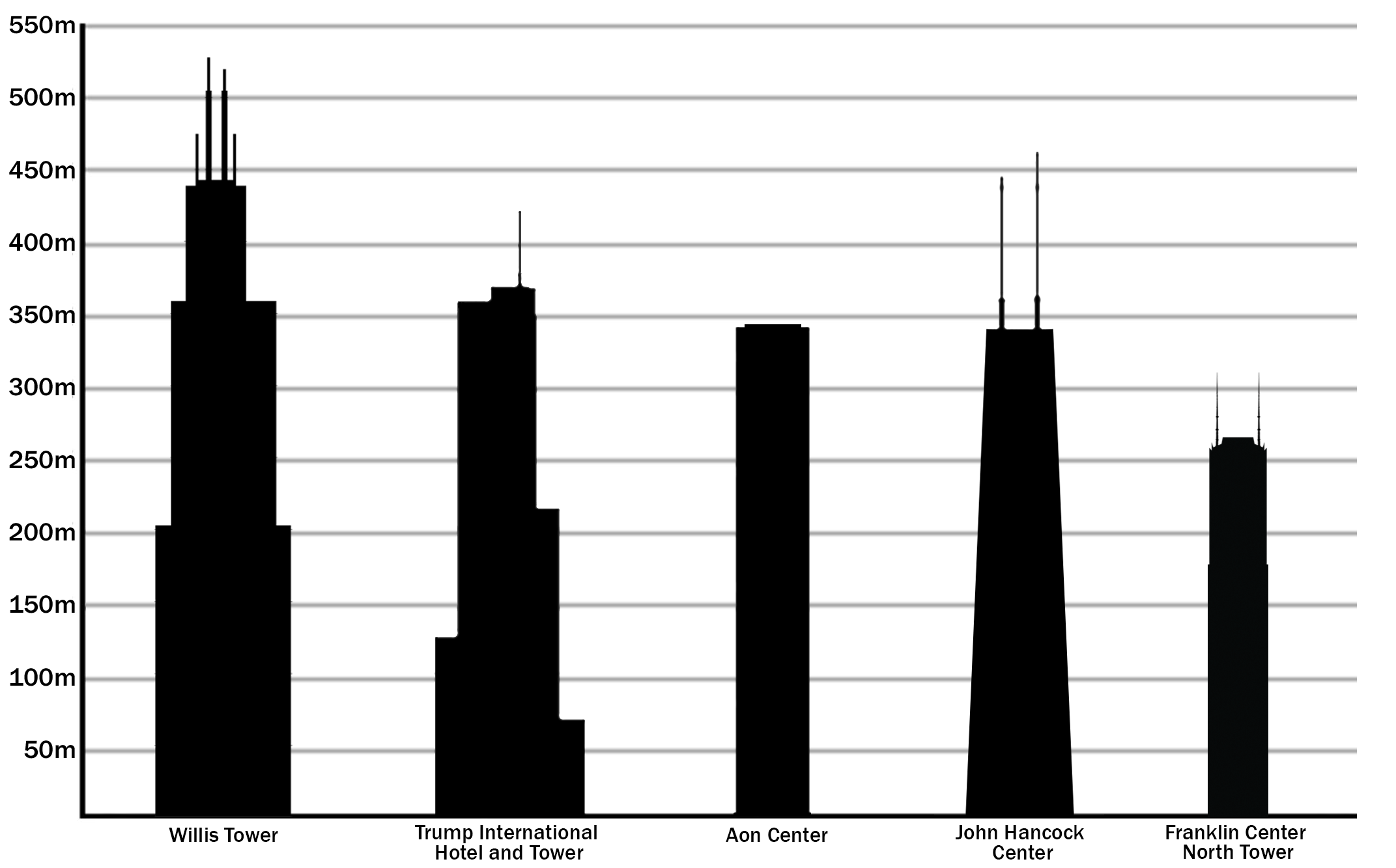
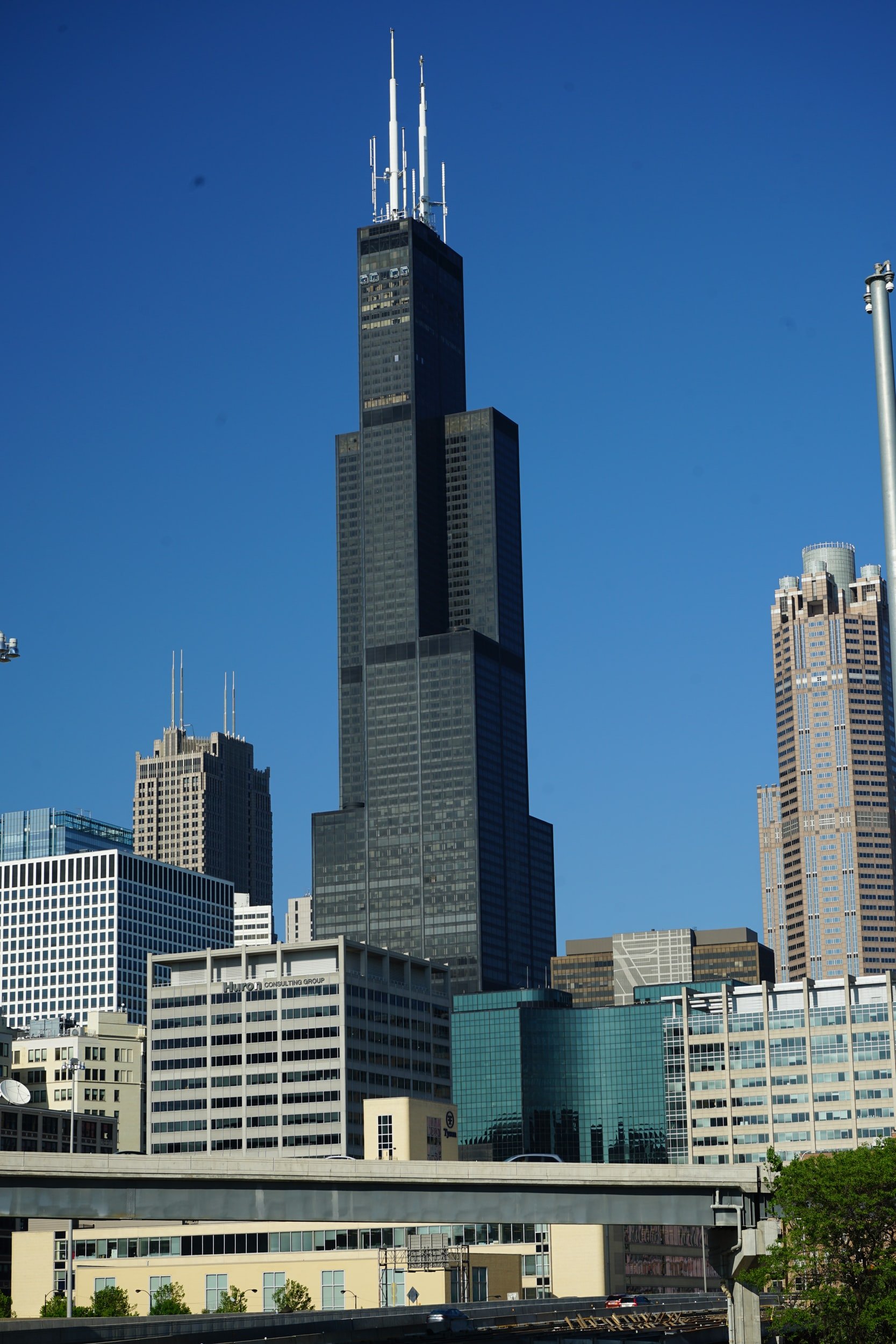
Currently, the undisputed tallest building in Chicago is the Willis Tower, formerly known as the Sears Tower. This colossal structure, a beacon of architectural prowess, has held the title since its completion in 1973. Standing at an impressive height of 1,450 feet (442 meters) to the roof, and a staggering 1,729 feet (527 meters) including its antennae, the Willis Tower is not merely a building; it is an icon. Its presence dominates the Chicago skyline, visible from miles away and serving as a constant reminder of the city’s enduring spirit.
The Willis Tower was a revolutionary design for its time, conceived by the architectural firm Skidmore, Owings & Merrill (SOM). Lead architect Bruce Graham and structural engineer Fazlur Khan were instrumental in creating a building that was not only exceptionally tall but also structurally sound and aesthetically striking. The building’s distinctive bundled tube design, consisting of nine square tubes of varying heights, was a groundbreaking innovation that allowed for its immense scale while minimizing the need for internal supports. This design allows the building to sway slightly in high winds, a natural and safe phenomenon for structures of this magnitude.
Architectural Significance and Innovations
The Willis Tower’s architectural significance cannot be overstated. It was the tallest building in the world for nearly 25 years after its completion, a title it held until the construction of the Petronas Towers in Kuala Lumpur, Malaysia. Its innovative design, particularly the bundled tube system, became a blueprint for future supertall skyscrapers around the globe. This system effectively distributes wind loads across the building’s exterior, allowing for greater height and stability. The distinct visual appearance of the bundled tubes creates a stepped profile, making the building recognizable from afar.
The choice of materials was also crucial to its success. The tower is clad in over 16,000 precast concrete panels and features over 35,000 windows, offering panoramic views of Chicago and, on clear days, extending to four states. The sheer scale of construction required immense logistical planning and engineering expertise, solidifying Chicago’s reputation as a hub for groundbreaking architectural projects.
Beyond its structural ingenuity, the Willis Tower was designed with functionality in mind. It was initially conceived as a headquarters for Sears, Roebuck and Co., one of the largest retailers in the world at the time, and it served that purpose for many years. Its mixed-use design includes office spaces, retail areas, and, most famously, a public observation deck.
Experiencing the Tallest Building: Skydeck Chicago
For visitors and residents alike, the most popular way to experience the Willis Tower is through the Skydeck Chicago, located on the 103rd floor. This observation deck offers unparalleled, 360-degree views of the city, the vastness of Lake Michigan, and the surrounding landscape. It’s an essential stop for anyone visiting Chicago, providing a bird’s-eye perspective of the city’s intricate layout and its numerous architectural treasures.
A standout feature of the Skydeck Chicago is The Ledge, a series of glass boxes extending 4.3 feet out from the building. Stepping onto The Ledge offers a thrilling, stomach-dropping sensation, allowing visitors to gaze straight down at the streets below. It’s a truly unique and unforgettable experience that highlights the immense height of the Willis Tower. The views from the Skydeck are particularly spectacular at sunset, when the city lights begin to twinkle, transforming the urban panorama into a dazzling spectacle. Many tourists plan their visit around this magical time, capturing breathtaking photographs and creating lasting memories.
The Skydeck is more than just an observation deck; it’s a gateway to understanding Chicago‘s scale and its position as a major global city. The interactive exhibits within the Skydeck area also provide insights into the city’s history, its architectural development, and the engineering behind the Willis Tower itself. This immersive experience makes it a top attraction for families, couples, and solo travelers seeking adventure and a deeper appreciation for urban design.
The History of Chicago’s Tallest Buildings
The journey to the Willis Tower’s reign is a fascinating narrative of Chicago’s architectural evolution. The city has a rich history of pushing boundaries in vertical construction, often holding the title of the world’s tallest building. This constant striving for height has shaped its identity and cemented its status as an architectural capital.
Early Skyscrapers and the Birth of the Skyscraper
The late 19th and early 20th centuries were a period of rapid growth and innovation in Chicago. Following the Great Chicago Fire of 1871, the city underwent a massive reconstruction, embracing new technologies and materials. This era saw the birth of the modern skyscraper, and Chicago was at the forefront. Buildings like the Home Insurance Building (1885), often credited as the first skyscraper, and the Monadnock Building (1891), which demonstrated the structural limits of load-bearing masonry for tall buildings, were pioneering achievements.
The development of steel-frame construction, pioneered by Chicago architects and engineers, was a pivotal moment. This allowed for buildings to be constructed much taller than was possible with traditional materials. The use of elevators, also a key innovation of the time, made these tall buildings practical for human occupation. This period laid the foundation for Chicago‘s enduring legacy in skyscraper design.
The Mid-Century Giants
As the 20th century progressed, Chicago continued to produce impressive tall buildings. The Wrigley Building (1924) and the Tribune Tower (1925) are iconic examples of early 20th-century architecture, showcasing various styles and intricate detailing. However, it was the mid-century that saw the emergence of buildings that would challenge and eventually surpass the height records.
The Marina City towers (1964), with their distinctive corncob shape, and the 875 North Michigan Avenue building, formerly the John Hancock Center (1969), were significant milestones. The John Hancock Center, also designed by SOM, was a marvel of its time, employing a unique X-braced exoskeleton that allowed for greater height and a distinctive, powerful aesthetic. Its construction was a testament to the engineering capabilities that Chicago had cultivated.
These buildings not only added to the city’s vertical grandeur but also demonstrated evolving design philosophies. They showcased how tall buildings could integrate residential, commercial, and office spaces, contributing to vibrant urban living. The competition for height and architectural innovation fueled further advancements in engineering and design, paving the way for the next generation of skyscrapers.

The Future of Chicago’s Skyline
While the Willis Tower currently stands as Chicago’s tallest building, the city’s architectural landscape is ever-evolving. Developers and architects continue to propose and construct new, ambitious projects that promise to reshape the skyline once again. The pursuit of verticality remains a defining characteristic of Chicago, reflecting its dynamic growth and its continuous commitment to architectural excellence.
The city’s robust economy and its status as a major global hub provide a fertile ground for these large-scale developments. Future skyscrapers are likely to incorporate even more advanced sustainable design principles, smart building technologies, and mixed-use functionalities. The competition to build higher and more innovatively is a constant, driven by both commercial demand and the sheer desire to create iconic structures that capture the imagination.
Chicago’s skyline is a living testament to the city’s history, its ingenuity, and its forward-looking vision. Each new towering structure adds another chapter to the ongoing story of this architectural marvel, ensuring that Chicago will continue to be a city that reaches for the sky, inspiring awe and wonder for generations to come. The continuous development of its vertical landscape ensures that the answer to “What is Chicago’s tallest building?” might one day change, reflecting the city’s unwavering ambition.