
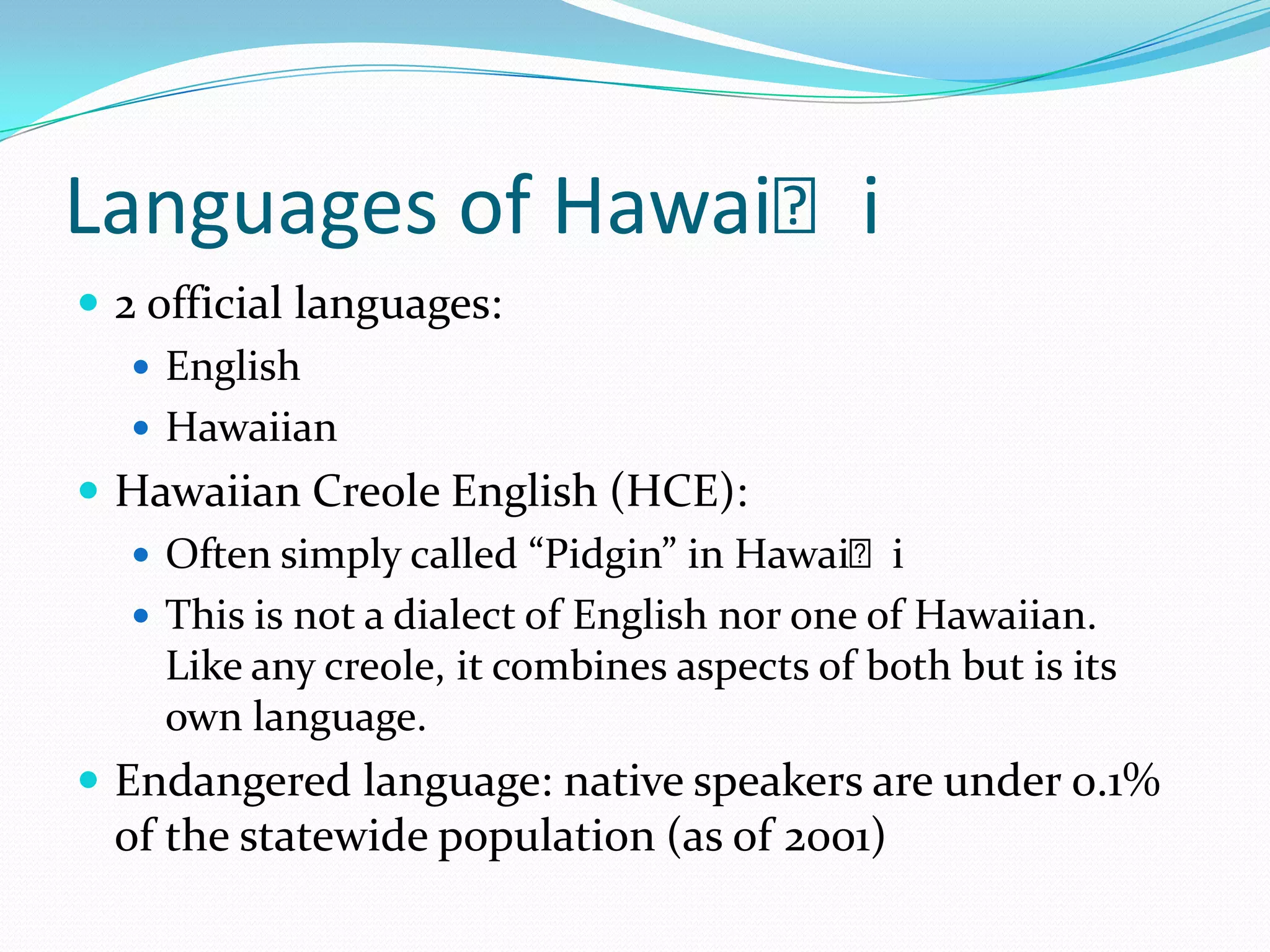
Aloha! The word “aloha” itself is a profound introduction to the vibrant and rich cultural tapestry of the Hawaiian Islands. When you plan a trip to this Pacific paradise, you’ll encounter a unique linguistic heritage that echoes through the streets, the songs, and the spirit of the place. So, what is Hawaii language called? It’s known as ʻŌlelo Hawaiʻi, or Hawaiian. More than just a language, it’s a cornerstone of Hawaiian identity and a vital part of the cultural experiences awaiting you, whether you’re exploring the breathtaking landscapes of Maui, seeking adventure on the Big Island, or relaxing on the shores of Oahu.

The Hawaiian language has a fascinating history, intricately woven with the arrival of Polynesian voyagers who settled these islands centuries ago. It belongs to the Polynesian language family, sharing roots with languages spoken across Micronesia and Melanesia. For generations, ʻŌlelo Hawaiʻi was the primary language of the Hawaiian people, used in oral traditions, chants, governance, and daily life. It was a language deeply connected to the land, the ocean, and the spiritual beliefs of the indigenous population.
The Resilience and Revival of ʻŌlelo Hawaiʻi
Despite the profound impact of Western contact and subsequent suppression, ʻŌlelo Hawaiʻi has demonstrated remarkable resilience. For a period, its use declined significantly, particularly after Hawaii became a U.S. territory and later a state. English became the dominant language, and children were often discouraged from speaking ʻŌlelo Hawaiʻi in schools. However, a powerful renaissance began in the late 20th century, driven by dedicated scholars, cultural practitioners, and community leaders determined to preserve and revitalize their ancestral tongue.
This revival movement has been instrumental in bringing ʻŌlelo Hawaiʻi back into everyday use. Today, you’ll find immersion schools, university programs, and community-based language initiatives dedicated to teaching and fostering the language. This resurgence directly enriches the tourism experience for visitors, offering a deeper connection to the local culture and the spirit of aloha. Understanding even a few basic phrases can open doors to more meaningful interactions and a more authentic appreciation of Hawaiian life.
Exploring the Nuances of Hawaiian Language
The beauty of ʻŌlelo Hawaiʻi lies not only in its sound but also in its intricate structure and the depth of its vocabulary. The language is known for its melodic quality, characterized by vowels and a limited set of consonants. The inclusion of the ʻokina (glottal stop) and the kahakō (macron indicating a long vowel) are crucial for correct pronunciation and meaning. For instance, the difference between “pau” (finished) and “paʻu” (soot) is distinguished by the ʻokina.
The vocabulary of ʻŌlelo Hawaiʻi is rich with words that describe the natural world, reflecting a deep understanding and reverence for the environment. Words for specific types of waves, winds, plants, and geological formations demonstrate a precise and intimate knowledge of the islands’ ecosystems. When you visit places like the Road to Hana on Maui, you’ll see how the language is interwoven with the very landscape.
Practical Hawaiian Phrases for Travelers
Embarking on a journey to Hawaii is an opportunity to immerse yourself in a culture where language plays a central role. While English is widely spoken and understood in tourist areas, making an effort to learn and use a few basic ʻŌlelo Hawaiʻi phrases will not only be appreciated by locals but will also significantly enhance your travel experience. It shows respect for the heritage and opens doors to more authentic interactions.
Here are some essential phrases that can make your visit even more special:
- Aloha: This is the quintessential Hawaiian greeting, used for hello, goodbye, and to express love and affection. It embodies the spirit of welcome and goodwill that defines the islands.
- Mahalo: Meaning “thank you,” this is a vital phrase to express gratitude. A sincere “Mahalo” goes a long way in fostering positive connections.
- E komo mai: This translates to “welcome.” You’ll often see this displayed at hotels, restaurants, and cultural centers, inviting you to enter and experience their offerings.
- ʻAʻole pilikia: This phrase means “no problem” or “you’re welcome.” It’s a friendly and common response to expressions of gratitude.
- Pehea ʻoe? This means “How are you?” It’s a polite way to inquire about someone’s well-being.
- Maikaʻi nō au: This is the response to “Pehea ʻoe?” meaning “I am fine.”
- ʻO wau ʻo [your name]: This means “I am [your name].” It’s a simple way to introduce yourself.
- ʻAe: This means “yes.”
- ʻAʻole: This means “no.”
- Kāu/Wāwahi: These terms relate to food and drink, essential for experiencing Hawaiian cuisine.
Learning these phrases is just the beginning. Many resorts and hotels, like the luxurious Four Seasons Resort Maui at Wailea or the family-friendly Aulani, A Disney Resort & Spa, offer cultural programs that delve deeper into the language and traditions of Hawaii. You might find yourself learning about the history of the Iolani Palace in Honolulu, the only royal palace in the United States, and how ʻŌlelo Hawaiʻi was spoken by Hawaiian royalty.
The integration of ʻŌlelo Hawaiʻi into modern tourism is a testament to its enduring spirit. When you visit historical sites like Pearl Harbor or natural wonders such as Volcanoes National Park on the Big Island, you’ll often find interpretive signs and guides that incorporate Hawaiian terms, providing a richer historical and cultural context. Even something as simple as ordering food at a local eatery can become an opportunity to practice your newfound language skills. Trying to pronounce the names of local dishes like poi or laulau in their original context adds an extra layer of authenticity to your culinary journey.
Understanding what Hawaii language is called, and making a conscious effort to engage with it, transforms a typical vacation into a deeply enriching cultural immersion. It’s about more than just seeing the sights; it’s about connecting with the soul of the islands and honoring the legacy of the Hawaiian people. So, as you plan your escape to paradise, remember to pack your sense of adventure and a desire to learn. The melodies of ʻŌlelo Hawaiʻi are waiting to welcome you. Whether you’re staying in a charming villa in Kailua-Kona or a bustling resort in Waikiki, the spirit of Aloha, deeply embedded in the language, will surely find you.
LifeOutOfTheBox is a participant in the Amazon Services LLC Associates Program, an affiliate advertising program designed to provide a means for sites to earn advertising fees by advertising and linking to Amazon.com. Amazon, the Amazon logo, AmazonSupply, and the AmazonSupply logo are trademarks of Amazon.com, Inc. or its affiliates. As an Amazon Associate we earn affiliate commissions from qualifying purchases.