
Florida, often dubbed the “Sunshine State,” beckons millions with its pristine beaches, vibrant theme parks, and a lifestyle that many associate with warmth, relaxation, and opportunity. From the bustling metropolis of Miami to the historic charm of St. Augustine, and the world-renowned attractions of Orlando, the state offers a diverse tapestry of experiences for residents and visitors alike. For those considering a move, planning a long-term stay, or simply curious about the economic landscape of this popular destination, understanding the average income in Florida is a crucial piece of the puzzle. This exploration delves into the financial realities of living in the Sunshine State, considering various factors that influence income levels across its diverse regions and industries.
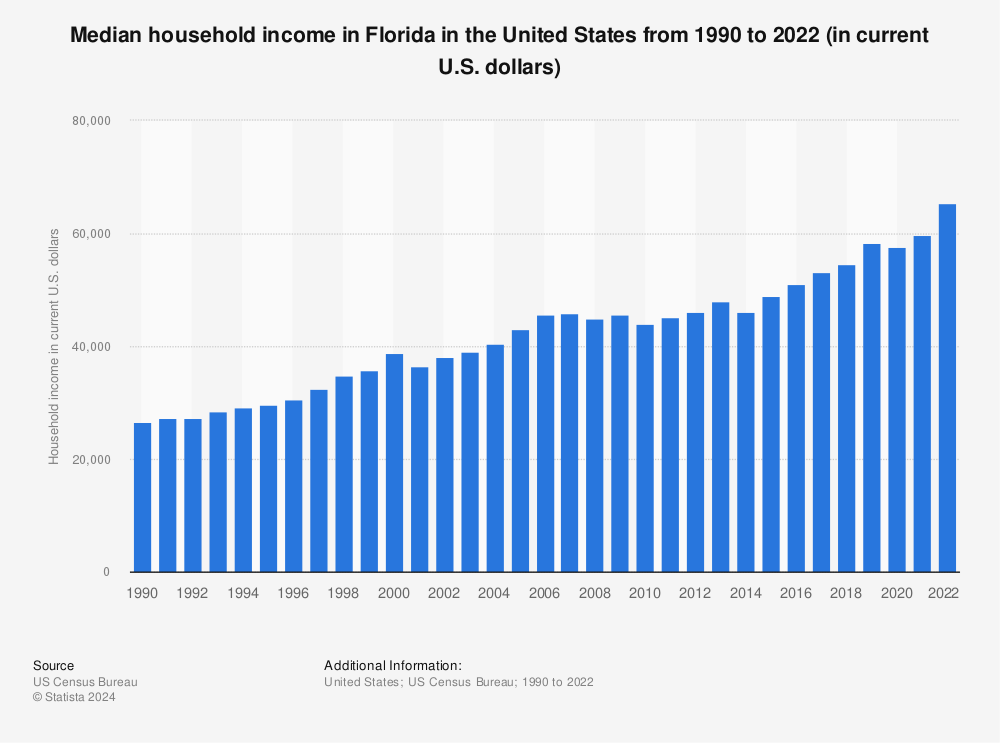
Understanding Average Income Metrics in Florida
When we talk about average income, it’s important to clarify what metrics are being used. The most common figures you’ll encounter are median household income and per capita income.
Median Household Income
Median household income represents the income level that divides the population into two equal halves: half of the households earn more than this amount, and half earn less. This metric is often considered more representative of the typical household’s financial situation because it’s less susceptible to extreme outliers (very high or very low incomes) compared to the average (mean) income. For Florida, this figure provides a valuable snapshot of the financial well-being of a significant portion of its residents.
Per Capita Income
Per Capita income is calculated by dividing the total income of a population by the total number of people in that population. It gives an average income per person, regardless of age or employment status. While useful for broad economic comparisons, it doesn’t necessarily reflect the income of the working population or the actual income received by individual households.
Factors Influencing Income in Florida
Several elements contribute to the variations in income observed across Florida. These include the dominant industries in different regions, the cost of living, the prevalence of tourism and its associated jobs, and the presence of high-growth sectors.
The Dominance of Tourism and Hospitality
Florida’s economy is heavily influenced by its thriving tourism and hospitality sector. Cities like Orlando are global hubs for theme parks such as Walt Disney World Resort and Universal Orlando Resort, attracting millions of visitors annually. This translates into a vast number of jobs in hotels, resorts, restaurants, and entertainment venues. However, many of these positions, particularly entry-level roles, tend to have lower wage scales.
While tourism creates a significant number of jobs, the average income in areas heavily reliant on this industry might appear lower when considering the entire workforce. For instance, in towns that primarily cater to seasonal tourists, wages can be suppressed due to the seasonal nature of the work and the high competition for available positions. Nevertheless, the sheer volume of tourism ensures a consistent demand for labor, making it a cornerstone of Florida’s employment landscape. Travelers seeking accommodation in these popular destinations often find a wide array of options, from budget-friendly apartments to luxurious resorts, reflecting the diverse economic strata of those who work in and visit the state.
Growing Industries and Higher Wages
Beyond tourism, Florida boasts a diverse and expanding economy. Sectors like aerospace, healthcare, technology, and finance are increasingly contributing to the state’s economic growth and offering higher-paying opportunities. Areas like Tampa Bay and South Florida are seeing significant investment and job creation in these fields.
For example, the presence of research institutions and burgeoning tech hubs can lead to a higher concentration of skilled professionals and, consequently, higher average incomes in those specific metropolitan areas. The healthcare industry, with its numerous hospitals and medical facilities, also provides a steady stream of well-compensated jobs for doctors, nurses, and other medical professionals. These higher-paying sectors help to balance out the lower wages found in some of the more traditional industries. This economic diversification is crucial for the long-term prosperity of the state and contributes to a more robust financial picture for many Floridians.
Regional Income Disparities

Just as Florida offers a kaleidoscope of landscapes and lifestyles, its income levels exhibit considerable regional disparities. These differences are shaped by the predominant industries, the cost of living, and the concentration of higher-paying jobs in urban centers.
South Florida: A Hub of Economic Activity
South Florida, encompassing cities like Miami, Fort Lauderdale, and West Palm Beach, is a major economic engine for the state. This region benefits from a diverse economy that includes finance, international trade, technology, and a robust real estate market, alongside its significant tourism sector. Consequently, South Florida generally reports higher median household incomes and per capita incomes compared to other parts of the state. The influx of professionals and the presence of corporate headquarters contribute to a higher earning potential for many residents. The demand for upscale accommodation and luxury travel experiences is also high in this region, reflecting the economic standing of its population.
Central Florida: Tourism and Beyond
Central Florida, with Orlando as its nucleus, is undeniably dominated by the tourism and entertainment industry. While this sector provides a wealth of employment opportunities, the average income here can be moderated by the prevalence of service-oriented jobs. However, the region is also experiencing growth in sectors like aerospace and advanced manufacturing, which are starting to contribute to higher income levels in certain areas. The constant flow of tourists fuels a vibrant market for hotels, resorts, and vacation rentals, creating a unique economic ecosystem.
North Florida: A Mix of Government and Industry
North Florida, including cities like Jacksonville and the state capital, Tallahassee, presents a different economic profile. Jacksonville, with its major port and significant financial services sector, tends to have higher incomes. Tallahassee, as the seat of state government, benefits from stable employment in public administration and related fields. This region often experiences a more moderate cost of living compared to the southern parts of the state, which can make incomes stretch further.
Coastal vs. Inland Areas
Generally, coastal communities, especially those with established tourism and a higher cost of living, tend to have higher average incomes. Cities on the Atlantic and Gulf coasts often attract affluent residents and second-home owners, influencing the economic landscape. Inland areas, particularly those less directly involved in major economic hubs or tourism, might see more modest income levels.
The Impact of Cost of Living on Income
It’s impossible to discuss average income without considering the cost of living. Florida offers a wide spectrum of living expenses, from the high-end desirability of areas like Miami Beach to more affordable inland communities.
Housing Costs
Housing is often the largest expense for any resident, and it varies dramatically across Florida. Major metropolitan areas and popular coastal destinations typically command higher housing prices, both for rent and for purchase. This means that while incomes might be higher in these areas, a larger portion of that income may be allocated to housing costs. Conversely, in more affordable regions, lower housing expenses can make a seemingly lower income go further, improving the overall quality of life. For travelers, this translates into vastly different accommodation costs, from luxury suites in Miami to more budget-friendly apartments in smaller towns.
Everyday Expenses
Beyond housing, everyday expenses such as groceries, transportation, utilities, and entertainment also contribute to the overall cost of living. These costs can fluctuate based on local market conditions and economic factors. While Florida does not have a state income tax, sales tax and property taxes can add to the financial burden. Understanding these costs is crucial for anyone assessing their financial well-being in the Sunshine State. For those planning a trip, factoring in the cost of activities, dining, and accommodation is essential for a realistic travel budget.

Conclusion: A Dynamic Economic Landscape
In conclusion, the question “What Is The Average Income In Florida?” doesn’t yield a single, simple answer. It’s a dynamic landscape shaped by a multifaceted economy, diverse regional characteristics, and varying costs of living. While the state benefits immensely from tourism and hospitality, it is also home to burgeoning sectors that offer higher earning potential. From the vibrant cultural scene and luxury resorts of South Florida to the family-friendly attractions and vacation rentals of Central Florida, each region presents its own unique economic narrative.
For potential residents, understanding these nuances is vital for making informed decisions about where to live and what career paths to pursue. For visitors and those seeking short-term stays or accommodation, grasping the economic context can help in budgeting for travel and understanding the local lifestyle. Ultimately, Florida offers a wide array of opportunities and experiences, catering to a diverse range of income levels and lifestyles, making it a perpetually fascinating place to explore, whether for a fleeting visit or a permanent residence. The Sunshine State continues to evolve, with its economic outlook as bright and varied as its famed coastlines.