
Nestled within the vibrant heart of Chicago‘s iconic Millennium Park stands a colossal, gleaming sculpture that has captivated the imaginations of millions. Affectionately known worldwide as “The Bean,” this monumental piece of public art is officially titled Cloud Gate. More than just a sculpture, The Bean has become an inseparable part of Chicago’s identity, a must-see landmark for travelers, and a symbol of the city’s innovative spirit. For anyone planning a visit to this magnificent United States metropolis, understanding what The Bean is, its origins, and how it transforms the urban landscape is key to unlocking a truly unforgettable Chicago experience.
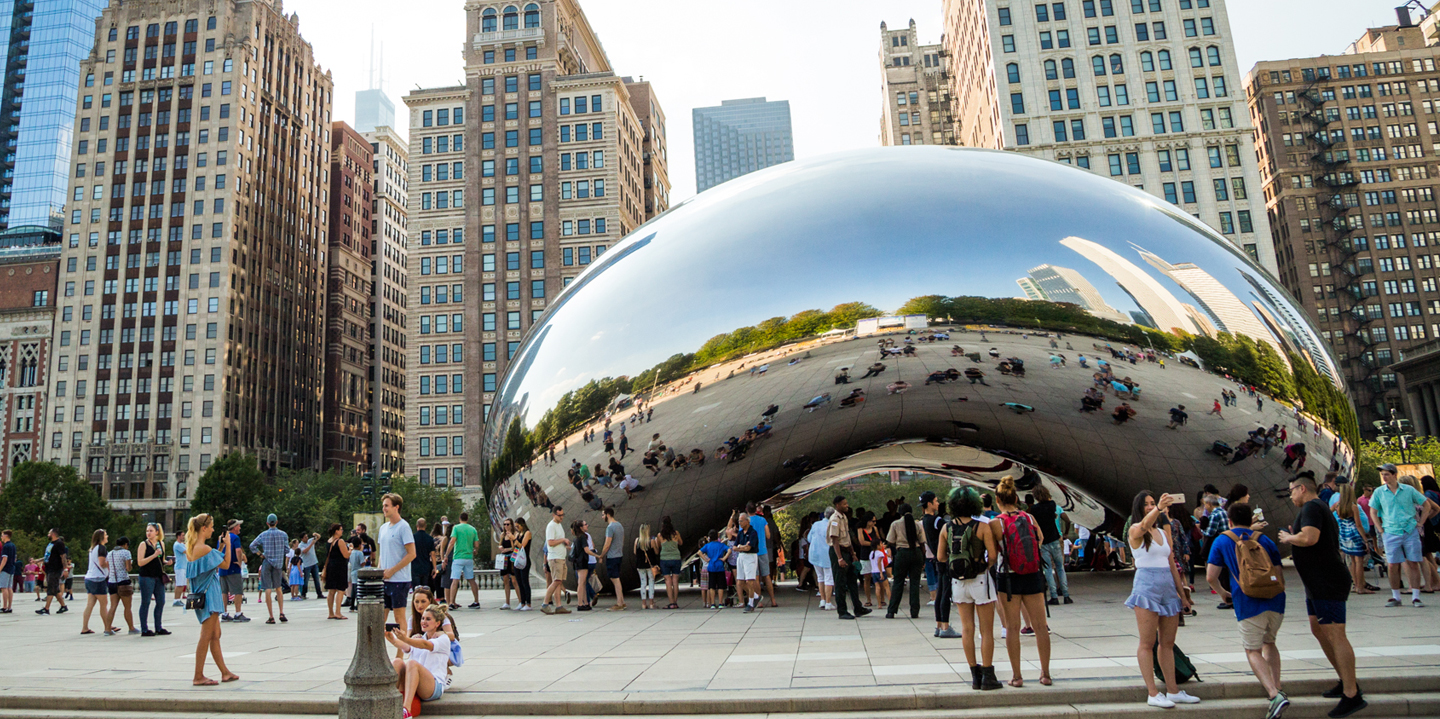
The Bean is not merely a static monument; it’s an interactive experience, a reflective canvas that mirrors the bustling city life, the ever-changing sky, and the faces of countless onlookers. Its smooth, polished surface distorts and magnifies, creating a funhouse mirror effect that draws visitors into its reflective embrace. As a prime example of modern public art, it merges seamlessly with its surroundings, yet stands out as a unique attraction that beckons tourists from across North America and beyond. For those seeking unique destinations and memorable experiences, The Bean in Chicago offers a compelling fusion of art, architecture, and tourism that embodies the city’s dynamic lifestyle.
Unveiling Cloud Gate: A Modern Masterpiece
At first glance, Cloud Gate mesmerizes with its seamless, mercury-like exterior. Weighing approximately 110 tons, measuring 33 feet high, 42 feet wide, and 66 feet long, it is an awe-inspiring feat of engineering and artistic vision. Its sheer scale and flawless finish make it a compelling focal point within Millennium Park, inviting visitors to approach, touch, and photograph its gleaming surface. The beauty of The Bean lies not just in its physical presence but in the way it constantly reinterprets its environment, offering a fresh perspective with every angle and every change in light.
The Visionary Behind The Bean
The brainchild behind this iconic structure is renowned British artist Anish Kapoor. His vision for Cloud Gate was to create a sculpture that would draw inspiration from liquid mercury, capturing the city skyline and the sky in its reflective surface. Kapoor famously stated that he wanted visitors to the park to “see the sky and themselves in it.” The sculpture’s form is simple yet profound – an ovoid shape that appears to be both weighty and weightless, grounded yet ethereal.
Kapoor’s work often explores the concept of the void, reflection, and material transformation, and Cloud Gate is a masterful embodiment of these themes. Commissioned as part of the ambitious Millennium Park project, which aimed to transform a former rail yard into a vibrant public space, The Bean was inaugurated in 2004. It quickly surpassed expectations, becoming an instant classic and a magnet for both locals and tourists seeking unique attractions and cultural experiences.
Engineering a Reflection: Design and Construction
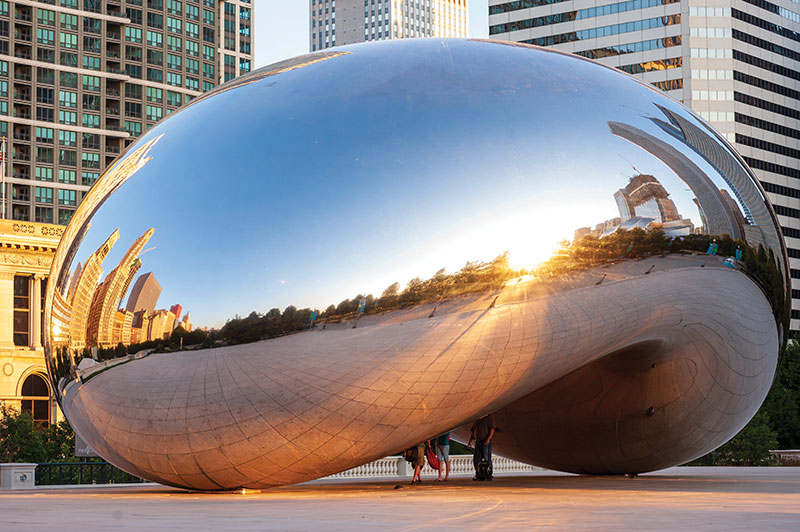
The construction of Cloud Gate was a monumental challenge, pushing the boundaries of architectural and engineering innovation. It consists of 168 highly polished stainless steel plates seamlessly welded together. The meticulous fabrication process involved shaping each plate with extreme precision before assembling them on site. The true marvel is the absence of visible seams, giving the sculpture its smooth, fluid appearance, as if molded from a single, giant droplet of liquid metal.
The internal structure, a complex network of steel frames, supports the massive weight and maintains the sculpture’s unique form. The design allows for an “omphalos” (Greek for navel) – a concave chamber on the underside of The Bean that creates mesmerizing, multi-directional reflections, pulling viewers into a vortex of their own distorted images and the surrounding urban panorama. This intricate design and flawless execution firmly establish The Bean as a landmark of modern architectural and artistic achievement, reflecting Chicago’s legacy as a city of innovation.

The Interactive Art Experience: Engaging with The Bean
What truly sets The Bean apart from many other landmarks is its inherent interactivity. It’s not just something to observe from a distance; it invites engagement. Visitors are encouraged to walk around it, beneath it, and even touch its cool, smooth surface. This tactile and visual interaction transforms a simple viewing into a memorable personal experience, making it a highlight for any Chicago itinerary.
A Playground of Perspectives and Photography
For photographers, Cloud Gate is a dream come true. Its reflective properties offer endless opportunities for creative shots. The city skyline, including iconic skyscrapers like the Willis Tower and the John Hancock Center, is mirrored and distorted, creating surreal urban landscapes within the sculpture’s surface. The ever-changing light of day and the glow of evening city lights cast different hues and moods upon The Bean, ensuring that no two photographs are ever quite the same. The concave underside, in particular, is a magnet for selfie-takers, as it creates a kaleidoscopic reflection that multiplies and distorts faces in playful ways.
Beyond photography, the sculpture encourages introspection and wonder. Standing beneath the “omphalos,” one can gaze upwards into a swirling vortex of reflections, a truly unique sensation. The way the sculpture distorts scale and perspective makes adults feel like children again, playing with their own reflections and the grandeur of the city around them. This playful interaction makes The Bean not just a tourist attraction but a genuine experience that caters to all ages and travel styles, from family trips to solo adventures.
The Bean’s Place in Chicago’s Cultural Tapestry
Cloud Gate has become synonymous with modern Chicago. It embodies the city’s forward-thinking approach to urban planning and its commitment to public art. Its location in Millennium Park, surrounded by other contemporary art installations like the Crown Fountain and the Pritzker Pavilion, positions it as a centerpiece of Chicago’s vibrant cultural scene. The park itself is a testament to Chicago’s dedication to providing green spaces and cultural amenities for its residents and visitors, reinforcing its appeal as a top travel destination.
The sculpture also plays a significant role in the local tourism economy. It draws millions of visitors annually, boosting local businesses, hotels, and restaurants. It’s a landmark frequently featured in films, television shows, and travel guides, further solidifying its status as an internationally recognized icon. For many, a trip to Chicago isn’t complete without a photograph with The Bean, making it an essential part of the city’s brand and a powerful driver for tourism.
Planning Your Visit: Maximizing Your Chicago Adventure
A visit to The Bean is incredibly accessible, making it an easy addition to any Chicago itinerary. Located in the heart of downtown, within Millennium Park, it’s within walking distance of many major hotels, transportation hubs, and other key attractions. Whether you’re planning a luxury travel experience or a budget-friendly trip, incorporating The Bean into your plans is straightforward.
Beyond The Bean: Exploring Millennium Park and Beyond
While The Bean is undoubtedly a star attraction, Millennium Park itself offers a wealth of other experiences. You can stroll through the beautiful Lurie Garden, catch a free concert at the Jay Pritzker Pavilion, or marvel at the interactive video art of the Crown Fountain. Just across Millennium Park lies the renowned Art Institute of Chicago, housing a world-class collection of art spanning centuries. To the north, Maggie Daley Park offers recreational activities, including a popular climbing wall and ice-skating ribbon in winter.
Adjacent to Millennium Park is Grant Park, often called “Chicago’s front yard,” home to Buckingham Fountain and vast green spaces perfect for a leisurely stroll. The historic Chicago Cultural Center, with its stunning Tiffany dome, is also just a short walk away, offering free art exhibitions and cultural events. Exploring these nearby landmarks and attractions allows visitors to fully immerse themselves in Chicago’s rich cultural scene and diverse offerings.
For those looking to explore more of Chicago’s iconic architecture, walking tours often depart from this area, taking you along Michigan Avenue and past architectural marvels. A short trip can take you to Navy Pier for rides and lake views, or you can embark on an architectural boat tour along the Riverwalk. Other notable Chicago attractions include the Lincoln Park Zoo, the Museum of Science and Industry, the Field Museum, the Shedd Aquarium, and the Adler Planetarium – all fantastic options to round out your travel experiences in the city.
Where to Stay and Dine Near Millennium Park
Given its central location, the area around Millennium Park is a prime spot for accommodation, offering a wide array of hotels and suites to suit every preference and budget. Luxury options like the Four Seasons, The Peninsula Chicago, or Ritz-Carlton provide unparalleled amenities and stunning city views, particularly along the Magnificent Mile and Gold Coast neighborhoods. Reputable hotel brands such as Hyatt, Marriott, and Hilton also have numerous properties in the vicinity, offering a range of price points and services, from comfortable business stays to family-friendly resorts. Boutique hotels like the W Hotel or Thompson Chicago offer unique styles and personalized experiences, often catering to a more lifestyle-oriented traveler.
When booking accommodation, consider neighborhoods like the Loop (where Millennium Park is situated), River North for nightlife and dining, or the South Loop for proximity to museums. For those interested in culinary adventures, the West Loop and Fulton Market districts are celebrated for their world-class restaurants and vibrant food scene.
Chicago boasts an incredible culinary landscape, and the area around Millennium Park is no exception. From casual eateries and classic deep-dish pizza joints to upscale dining experiences, there’s something for every palate. Exploring local culture through its food is a key part of any tourism experience, and Chicago offers everything from gourmet meals to iconic street food. Many restaurants offer outdoor seating, allowing you to enjoy your meal with views of the park or the bustling city streets, enhancing your overall lifestyle and travel experience.
Why The Bean Defines Chicago’s Modern Appeal
The Bean in Chicago transcends its definition as mere public art; it is a cultural phenomenon that encapsulates the city’s dynamic spirit. It represents a bold step in urban design, an embrace of contemporary art, and an understanding of how public spaces can foster community and wonder. Its enduring popularity stems from its universal appeal—it’s visually striking, playfully interactive, and deeply reflective (literally and figuratively) of the city it inhabits.
Chicago: A Hub of Art, Architecture, and Lifestyle
The Bean serves as a perfect gateway to understanding Chicago’s broader identity as a world-class destination. This city is celebrated globally for its groundbreaking architecture, from the pioneering skyscrapers of the late 19th century to its continuous innovation in modern design. It’s a city that values art, evident in its numerous museums, galleries, and public installations like Cloud Gate.
Beyond its artistic and architectural marvels, Chicago offers a diverse lifestyle for both residents and visitors. From its lively music scene and world-renowned theaters to its beautiful waterfront along Lake Michigan, there are endless activities and experiences. Whether you’re interested in luxury travel, exploring local culture, or simply enjoying a family trip, Chicago delivers. The Bean stands as a testament to this vibrancy, inviting everyone to step into its reflective surface and become a part of Chicago’s ongoing story.
In conclusion, “The Bean” is far more than an unusually shaped sculpture; it is Cloud Gate, a truly iconic landmark that embodies the heart and soul of modern Chicago. It’s a testament to artistic vision, engineering prowess, and the power of public art to transform a city. For travelers planning their next destination, a visit to The Bean is not just a photo opportunity but an immersive experience that will leave a lasting impression, reflecting the vibrant energy and cultural richness that makes Chicago one of the world’s most compelling cities.
LifeOutOfTheBox is a participant in the Amazon Services LLC Associates Program, an affiliate advertising program designed to provide a means for sites to earn advertising fees by advertising and linking to Amazon.com. Amazon, the Amazon logo, AmazonSupply, and the AmazonSupply logo are trademarks of Amazon.com, Inc. or its affiliates. As an Amazon Associate we earn affiliate commissions from qualifying purchases.