
Texas, the second-largest state in the United States, is a land of vast plains, bustling metropolises, stunning natural beauty, and a rich, distinct culture. From the historic battlegrounds of San Antonio to the futuristic skylines of Houston and Dallas, the Lone Star State offers an incredible array of experiences for every type of traveler. Whether you’re planning a corporate business trip, a family vacation filled with exciting attractions, an adventurous outdoor escape, or a leisurely dive into local cuisine and culture, Texas has something for everyone.
However, given its sheer size, one crucial detail often overlooked by travelers is its time zones. Understanding the current time in Texas is not merely a matter of curiosity; it’s a fundamental aspect of seamless travel planning, from coordinating flight schedules and hotel check-ins to making dinner reservations and attending business meetings. A misstep in time calculations can lead to missed connections, forfeited bookings, or even a late arrival for that once-in-a-lifetime attraction. This comprehensive guide will help you navigate the intricacies of Texas time zones, ensuring your journey through this magnificent state is as smooth and enjoyable as possible.
Navigating the Lone Star State: Understanding Texas Time Zones
The grandeur of Texas extends across multiple longitudes, necessitating the adoption of more than one time zone to maintain uniformity and practical scheduling across its diverse regions. While the vast majority of the state adheres to one primary time zone, a significant western portion operates on another, creating a unique dynamic that travelers must be aware of.
Central Time vs. Mountain Time: A Tale of Two Zones
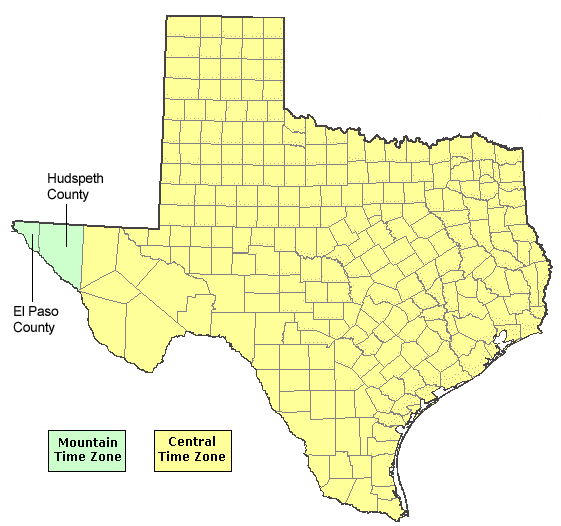
The predominant time zone observed across most of Texas is the Central Time Zone, often abbreviated as CT. During the standard time period, this is known as Central Standard Time (CST), which is 6 hours behind Coordinated Universal Time (UTC-6). When Daylight Saving Time is in effect, it shifts to Central Daylight Time (CDT), placing it 5 hours behind UTC (UTC-5). All of Texas’s major metropolitan areas and iconic destinations, including Houston, Dallas, Austin, San Antonio, and Fort Worth, fall within this zone. This means that whether you’re exploring the live music scene in Austin or visiting The Alamo in San Antonio, you’ll be operating on Central Time.
However, the far western parts of Texas adhere to the Mountain Time Zone (MT). This includes the vibrant city of El Paso and the entirety of Hudspeth County. During standard time, this region observes Mountain Standard Time (MST), which is 7 hours behind UTC (UTC-7). With the onset of Daylight Saving Time, it shifts to Mountain Daylight Time (MDT), making it 6 hours behind UTC (UTC-6). This difference of one hour between the majority of Texas and its westernmost tip is critical, particularly for those planning cross-state road trips or business engagements spanning these two regions. For example, a flight arriving in El Paso from Dallas will effectively “gain” an hour, even though the travel time passes.
The Rhythms of Daylight Saving Time in Texas
Like most of the United States, Texas fully observes Daylight Saving Time (DST). This annual practice of advancing clocks by one hour during warmer months and setting them back as autumn approaches has implications for both residents and visitors. Clocks in Texas “spring forward” one hour on the second Sunday in March, marking the beginning of DST. They then “fall back” one hour on the first Sunday in November, returning to standard time.
This means that if you are traveling to Texas around these dates, or if your visit spans these transitions, you’ll need to adjust your internal clock and external planning accordingly. For leisure travelers, it might mean an extra hour of daylight for evening activities or a slightly earlier sunrise. For business travelers, it could impact schedules for meetings with national or international partners who may or may not observe DST. Always confirm the current local time when making arrangements, especially for events scheduled around the March and November shifts.
A Brief History of Time Zones: From Railroads to Regulation
The concept of standardized time zones in the [United States](https://lifeoutofthebox.com/united states) is a relatively modern invention, born out of necessity in the late 19th century. Before this, each locality kept its own “local time,” usually based on the sun’s position, leading to widespread confusion and scheduling nightmares, particularly for the burgeoning railroad industry. Railroad companies, struggling with thousands of different local times, were the primary proponents of a uniform time system.
In 1883, the major railroads voluntarily adopted a system of four standard time zones across the continent. This system was later codified by the Standard Time Act of 1918, which officially established the standard time zones that largely remain in use today. Daylight Saving Time was also introduced around this period, with its observance varying over the decades until the Uniform Time Act of 1966 set the current dates for its implementation, ensuring consistency across most of the nation, including Texas. This historical context underscores the practical importance of time zones, transforming what might seem like a simple concept into a cornerstone of modern travel and commerce.
Seamless Travel: Practical Implications for Your Texas Itinerary
For any traveler, whether venturing to Texas for leisure or business, a firm grasp of the state’s time zones is paramount for a stress-free and efficient journey. The details of time can significantly impact everything from your arrival experience to your daily activities and crucial appointments.

Planning Flights, Accommodations, and Attractions
When booking flights to or within Texas, always pay close attention to the arrival and departure times, noting the local time zone of each airport. For example, a flight from Dallas/Fort Worth International Airport (DFW) (Central Time) to El Paso International Airport (ELP) (Mountain Time) might show an arrival time that is numerically earlier than the departure time, even with a multi-hour flight, due to the time zone change. This can be misleading if not accounted for, potentially causing confusion for connecting flights or ground transportation.
Accommodation bookings also require careful time consideration. Most hotels, resorts, apartments, and villas adhere to strict check-in and check-out times. Arriving at your luxury resort in Austin an hour late because you miscalculated the time difference from El Paso could mean an unexpected wait or even a missed night if your booking is not flexible. Similarly, confirming amenity availability – whether it’s the spa at your boutique hotel or the pool at your family-friendly resort – often requires adherence to their local operating hours. Always confirm the specific time zone used by your accommodation provider to avoid any discrepancies.
Furthermore, scheduling activities and visiting attractions across the state demands time zone awareness. Imagine booking a guided tour of the Space Center Houston at 9:00 AM CDT, but thinking it’s 9:00 AM MDT. You would arrive an hour late, potentially missing the tour or disrupting your entire day’s itinerary. The same applies to restaurant reservations in San Antonio’s River Walk, concert start times in Austin’s famed music venues, or timed entry tickets to museums in Dallas. Utilizing online tools and smartphone apps that automatically adjust for local time zones is highly recommended to keep your schedule perfectly aligned with local clocks.
Communicating Across Time: Business and Personal Connections
For business travelers, understanding Texas’s time zones is non-negotiable. Coordinating conference calls, virtual meetings, or in-person appointments with clients or colleagues in different parts of the state or across the country can be complex. A meeting scheduled for 10:00 AM CST means a 9:00 AM start for someone in El Paso observing MST, and potentially a different time entirely for those located outside of Texas. Precision in time zone clarification can prevent missed opportunities and ensure smooth business operations. For corporate stays or those involved in international business, this level of detail is critical for maintaining professional relationships.
Even for personal connections, such as calling family or friends back home or coordinating meet-ups with fellow travelers, being mindful of the current time in Texas versus their location is helpful. A thoughtful traveler ensures their communications are timely and considerate, avoiding inconvenient interruptions due to a simple time zone oversight.
Beyond the Clock: Experiencing Texas’s Diverse Attractions
While understanding the current time in Texas is a crucial logistical detail, it merely serves as the framework for experiencing the rich tapestry of destinations and activities the state offers. Once you’ve mastered the nuances of Central and Mountain Time, you’re free to immerse yourself in the vibrant local culture, explore historical landmarks, and indulge in unforgettable travel experiences.
Iconic Cities and Their Unique Charms
Texas boasts an impressive collection of cities, each with its own distinct personality and attractions:
- Houston: As the state’s largest city, Houston is a global hub for space exploration, energy, and a remarkably diverse culinary scene. Visitors flock to Space Center Houston, a gateway to NASA Johnson Space Center, along with its world-class museums in the Museum District. The city offers everything from luxurious accommodations to vibrant nightlife, making it a compelling destination for both business and leisure.
- Dallas and Fort Worth: These twin cities offer a blend of modern sophistication and classic Western heritage. Dallas shines with its Arts District, upscale shopping, and historical sites like the JFK Memorial. Just a short drive away, Fort Worth transports visitors back to the Old West at the famous Stockyards National Historic District, complete with cattle drives and rodeo shows.
- Austin: The state capital, Austin, is renowned as the “Live Music Capital of the World.” Its vibrant, eccentric atmosphere, delicious food trucks, and numerous outdoor activities along Lady Bird Lake make it a favorite for those seeking a laid-back yet lively experience. Don’t miss a visit to the majestic Texas State Capitol building.
- San Antonio: Steeped in history, San Antonio is home to The Alamo, a symbol of Texas’s fight for independence. The picturesque San Antonio River Walk, lined with shops, restaurants, and charming hotels, offers a unique urban oasis. The city also boasts several Spanish colonial missions, designated as a UNESCO World Heritage Site.
- El Paso: Located in the Mountain Time Zone, El Paso offers a unique blend of American and Mexican culture, set against a stunning desert backdrop. Explore the rugged beauty of Franklin Mountains State Park, delve into rich history, and enjoy authentic Tex-Mex cuisine. Its distinct time zone and geographical location make it a fascinating point of interest for travelers.

Accommodation for Every Traveler’s Lifestyle
Texas offers an extensive range of accommodation options to suit every preference and budget, from opulent luxury hotels and sprawling resorts to charming boutique stays, cozy apartments, and budget-friendly motels. Whether you’re seeking a family-friendly resort with all the amenities in Galveston, a sophisticated downtown hotel for a business stay in Dallas, or a rustic cabin for a nature retreat in the Hill Country, Texas delivers.
When planning your accommodation, remember to leverage online booking platforms, read reviews, and compare options to find the perfect fit. Most importantly, double-check the check-in and check-out times, especially if you’re arriving from a different time zone or traveling between the Central and Mountain Time regions within Texas. A little preparation in understanding the local clock will ensure your stay starts and ends without a hitch, allowing you to fully enjoy the comfort and convenience of your chosen lodging.
In conclusion, knowing the current time in Texas involves understanding its primary observance of Central Time Zone and the Mountain Time Zone in its western reaches, alongside the annual shift for Daylight Saving Time. This awareness is more than just a trivial detail; it’s an essential tool for any traveler hoping to seamlessly navigate the state’s vast landscapes and diverse offerings. By incorporating time zone considerations into your travel planning, you unlock the full potential of your Texas adventure, allowing you to focus on creating unforgettable memories amidst its rich history, vibrant cities, and legendary hospitality. So, set your watch, plan your itinerary, and get ready to experience the Lone Star State to the fullest!
LifeOutOfTheBox is a participant in the Amazon Services LLC Associates Program, an affiliate advertising program designed to provide a means for sites to earn advertising fees by advertising and linking to Amazon.com. Amazon, the Amazon logo, AmazonSupply, and the AmazonSupply logo are trademarks of Amazon.com, Inc. or its affiliates. As an Amazon Associate we earn affiliate commissions from qualifying purchases.