
When planning a trip, one of the first decisions travelers face is choosing the right accommodation. For many, the terms “hotel” and “motel” are often used interchangeably, yet they represent distinct categories of lodging, each with its own history, design, services, and target audience. Understanding these differences is key to ensuring your stay perfectly complements your travel style and budget, whether you’re embarking on an elaborate luxury vacation, a spontaneous road trip, or a focused business stay. This comprehensive guide will unravel the nuances between hotels and motels, offering insights into their evolution, characteristics, and how to select the ideal option for your next adventure.
The Hotel: A Legacy of Grandeur and Full-Service Hospitality
The word “hotel” originates from the French hôtel, which historically referred to a large townhouse or mansion, often used for public purposes or as a residence for a nobleman. Over centuries, the concept evolved to denote an establishment providing lodging, meals, and other services for travelers. Hotels, in their essence, are designed to be destinations in themselves, offering a holistic hospitality experience.
Defining Characteristics of a Hotel:
- Architecture and Layout: Hotels are typically multi-story buildings, often towering structures, especially in urban centers like New York City, London, or Tokyo. They feature internal corridors connecting rooms, which are accessed through a central lobby. This design emphasizes security, privacy, and a more controlled environment. The lobby itself is often a grand, welcoming space, serving as a social hub and the first point of contact for guests.
- Location: Hotels are predominantly found in prime urban locations, city centers, tourist hotspots, near major attractions like the Eiffel Tower in Paris, business districts, or as part of large resorts in popular destinations such as Las Vegas or Dubai. Their strategic placement caters to travelers who arrive by air, train, or public transport, or those seeking proximity to cultural experiences, business meetings, or entertainment venues.
- Amenities and Services: This is where hotels truly shine, embodying the concept of full-service accommodation. They typically offer a wide array of amenities that go far beyond just a room for the night. These can include:
- Dining: Multiple restaurants, bars, cafes, and extensive room service options.
- Recreation: Swimming pools (indoor and outdoor), fitness centers, spas, saunas, and sometimes even golf courses or tennis courts, particularly in resort hotels.
- Business Facilities: Conference rooms, meeting spaces, business centers, and concierge services catering to corporate travelers.
- Guest Services: 24-hour front desk, concierge, bellhops, valet parking, laundry service, turndown service, and more personalized assistance.
- Room Features: Rooms are often more luxuriously appointed, featuring a wider range of comforts like mini-bars, coffee makers, high-end toiletries, robes, slippers, and sophisticated entertainment systems. Suites offer separate living areas, often with multiple bedrooms.
- Target Audience and Stay Duration: Hotels cater to a diverse clientele, including leisure travelers seeking an immersive vacation experience, business professionals attending conferences or meetings, families on holiday, and couples looking for romantic getaways. Stays can range from a single night to extended periods, especially in apartment-style hotels or residential resorts. The emphasis is often on the experience rather than just a place to sleep.
- Pricing and Brand: Due to their extensive services, prime locations, and often opulent designs, hotels generally command higher prices than motels. They range from mid-range options like Hilton and Marriott to ultra-luxury brands such as The Ritz Paris, Four Seasons Hotel, or Waldorf Astoria. These brands often signify a consistent level of quality and service across their global portfolio, attracting travelers who value reliability and a certain lifestyle.

Hotels are integral to the tourism landscape, contributing significantly to a traveler’s overall experience, whether it’s the cultural immersion of a boutique hotel in Rome, the family-friendly fun of a resort near Walt Disney World Resort, or the seamless efficiency of a business hotel in Singapore.
The Motel: The Quintessential Roadside Companion
The term “motel” is a portmanteau of “motor” and “hotel,” a linguistic innovation that perfectly encapsulates its purpose. Motels emerged in the USA during the 1920s and saw their boom after World War II, coinciding with the rise of automobile travel and the interstate highway system. They were specifically designed to cater to motorists who needed convenient, affordable, and easily accessible lodging along their routes.
Defining Characteristics of a Motel:
- Architecture and Layout: Motels are typically low-rise structures, often single or two-story buildings. Their hallmark design feature is exterior room access, meaning guests park their vehicles directly outside their room door or in a nearby parking lot and enter their room from the outside corridor or walkway. This “drive-up” convenience is central to the motel concept.
- Location: As their name suggests, motels are primarily situated alongside highways, major roads, and interstates, often on the outskirts of towns or cities. They are strategically placed for easy access for drivers, providing a convenient stopover point for long journeys. You’ll find them scattered along historic routes like Route 66 or newer interstate highways across Canada and Australia.
- Amenities and Services: Motels prioritize functionality and basic comfort over extensive luxury. The amenities are usually limited but sufficient for a short stay:
- Basic Comforts: A clean bed, private bathroom with shower, television, and perhaps a small desk.
- Limited Public Spaces: A small reception area, often shared with the owner/manager’s residence.
- Shared Facilities: A swimming pool (seasonal), vending machines, and occasionally a very basic continental breakfast area.
- Parking: Ample, free, and easily accessible parking is a standard and crucial amenity.
- No Bellhops or Room Service: The self-service nature is part of the appeal for transient travelers.
- Target Audience and Stay Duration: Motels primarily serve transient travelers – road trippers, truckers, sales representatives, and budget-conscious tourists who need a place to rest for a night or two before continuing their journey. The emphasis is on convenience, affordability, and a quick, hassle-free check-in and check-out process.
- Pricing and Brand: Motels are generally more affordable than hotels, reflecting their simpler services and often less prominent locations. They are ideal for budget travel and offer good value for money for those who just need a clean, safe place to sleep. Popular motel chains include Motel 6, Super 8, Quality Inn, and Comfort Inn, which offer consistent no-frills accommodation across vast networks.
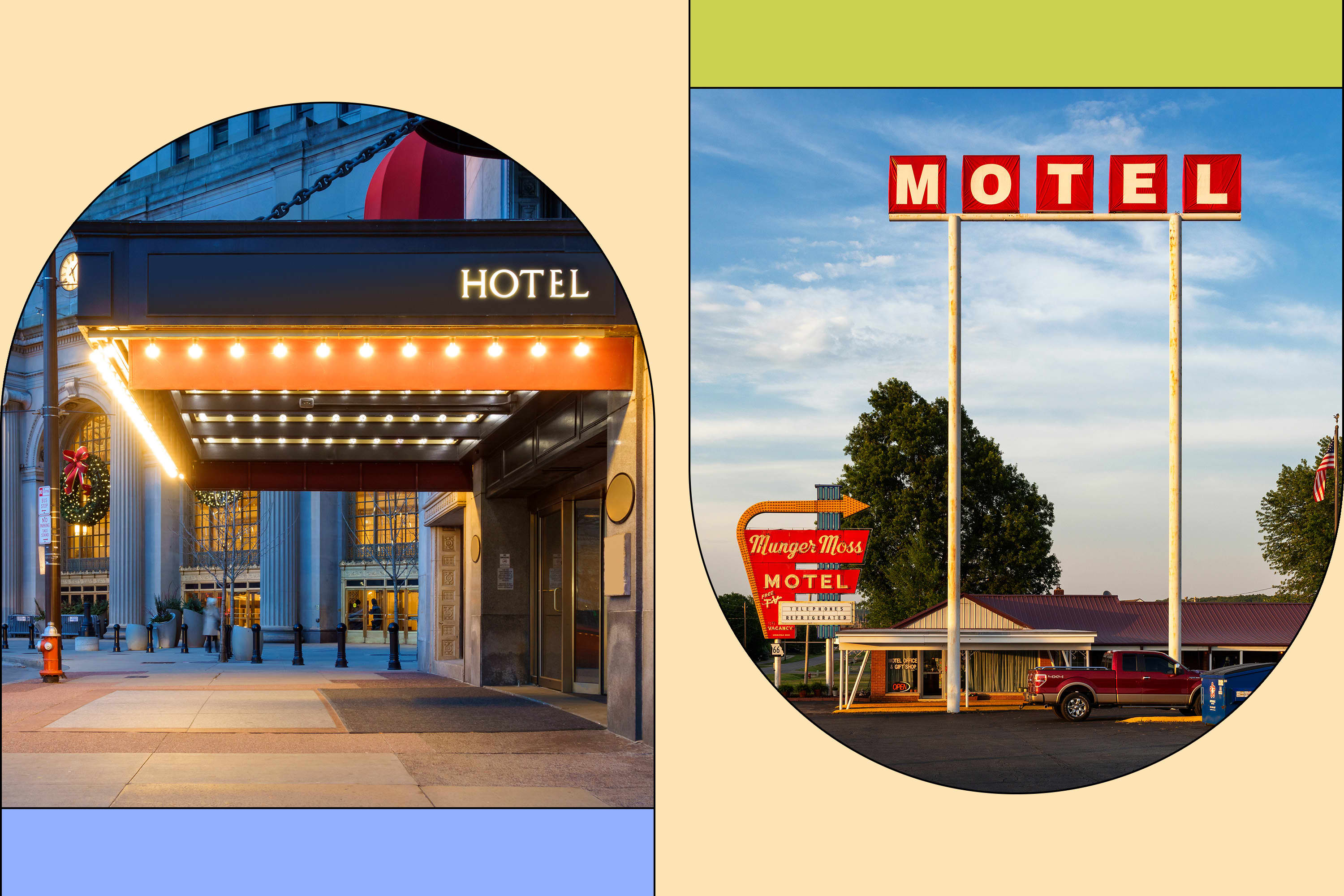
Motels are synonymous with the spirit of the open road, providing essential pit stops that enable epic cross-country journeys and spontaneous exploration of diverse destinations.
Key Distinctions: A Side-by-Side Comparison
While both hotels and motels offer lodging, their fundamental differences shape the guest experience. Understanding these categories through a comparative lens illuminates why one might be more suitable than the other depending on your travel plans.
Architectural Design and Room Access
- Hotels: Characterized by multi-story buildings with rooms accessed via internal corridors, creating a secure, enclosed environment. A central lobby acts as the welcoming hub.
- Motels: Typically low-rise structures (one or two stories) with rooms opening directly to the outside parking lot or an exterior walkway. This design facilitates direct car-to-door access.
Location and Accessibility
- Hotels: Primarily located in urban cores, business districts, and popular tourist destinations, often integrated into the city’s infrastructure. Accessibility is geared towards pedestrians, public transport, or taxis.
- Motels: Strategically placed along highways, interstates, and major roads, designed for easy access for motorists. Ample parking is a priority and usually free.
Range of Amenities and Services
- Hotels: Offer a comprehensive suite of services, including multiple dining options, fitness centers, spas, concierge, business centers, conference facilities, bell service, and more. They aim to provide a complete “home away from home” or even an upgraded experience.
- Motels: Provide essential amenities focusing on basic comfort: a clean room, a bed, a private bathroom, and often a television. Supplemental services are minimal, such as vending machines or a very basic continental breakfast.
Target Audience and Purpose of Stay
- Hotels: Cater to a broad spectrum of travelers including leisure tourists, business professionals, families, and couples seeking extended stays, a destination experience, or a base for exploring a city’s attractions.
- Motels: Predominantly serve transient travelers, road trippers, and those on a budget who need a convenient overnight stop. Stays are typically short, focused on rest before continuing a journey.
Pricing and Overall Experience
- Hotels: Generally more expensive, reflecting their prime locations, extensive services, and higher level of comfort and luxury. The experience often includes curated environments and personalized service.
- Motels: More budget-friendly, offering a cost-effective solution for a place to sleep. The experience is typically functional and straightforward, emphasizing efficiency and convenience.
The Evolving Landscape: Blurring the Lines
In recent decades, the distinct lines between hotels and motels have begun to blur, driven by changing traveler expectations, market demands, and innovative hospitality concepts.
Motels Upgrading: Many newer or renovated motels, especially those in desirable locations or emerging as “boutique motels,” now offer enhanced amenities beyond the basics. Some might feature trendy designs, improved coffee service, more robust Wi-Fi, communal lounge areas, or even small fitness centers. Chains like Holiday Inn Express and Best Western have diversified their offerings, with some properties resembling hotels in their amenities and comfort while retaining the convenient roadside access of a motel. This evolution caters to travelers who appreciate motel-like convenience but desire a step up in quality and comfort without the hotel price tag.
Hotels Adapting for Convenience: Conversely, some hotel concepts, particularly budget or extended-stay brands, have adopted elements traditionally associated with motels. They might offer easier parking solutions, simplified check-in processes, or a more streamlined service model to appeal to convenience-seeking travelers. The rise of lifestyle hotels also sees properties in urban settings embracing unique designs and a more casual atmosphere, sometimes foregoing some of the traditional formal services of a grand hotel.

The digital age has also played a significant role. Online booking platforms, detailed reviews, and comparison tools have made it easier for travelers to assess specific property features rather than relying solely on generic categories. A guest can now easily find a motel with a pool and free breakfast or a hotel with free parking, allowing them to make choices based on their precise needs rather than broad definitions. This contributes to the blurring of lines, as travelers can precisely search for features that matter most to them.
Choosing Your Ideal Accommodation
Deciding between a hotel and a motel ultimately comes down to your individual travel needs, preferences, and budget.
-
For the Immersive City Explorer or Business Traveler: If your trip involves exploring vibrant city centers like New York City or London, attending business conferences, or seeking a luxury experience with extensive amenities, a hotel is likely your best choice. Hotels offer unparalleled convenience to urban attractions, fine dining, and comprehensive services that enhance both leisure and business stays. Think of a stay at a Grand Hyatt in a bustling metropolis or a charming boutique hotel in Venice.
-
For the Road Tripper or Budget-Conscious Traveler: If you’re on a cross-country journey across the USA, planning a spontaneous trip that involves significant driving, or simply need an affordable and straightforward place to rest for the night, a motel will serve you well. Motels excel in providing accessible, no-frills comfort, allowing you to maximize your budget for other travel experiences like visiting national parks like Grand Canyon or enjoying local cuisine. Chains like Travelodge or Knights Inn are perfect examples.
-
For Family Trips: Depending on the destination, either could work. A resort hotel might be ideal for a family trip to Disneyland for its amenities and kid-friendly activities. However, for a multi-day road trip exploring various national parks like Yellowstone National Park, a series of motels might offer the practical, budget-friendly stopovers needed.
-
For Unique Experiences: Today’s market also offers a plethora of specialized accommodations. From luxury villas in Bali or the Maldives to charming bed-and-breakfasts in New Orleans or high-end ski lodges in Aspen, the choices are vast. Always consider the primary purpose of your trip and the desired level of comfort and service.
In conclusion, while the core differences between a hotel and a motel remain rooted in their origins and design philosophies, the modern hospitality landscape offers a spectrum of choices that often defy rigid categorization. By understanding the historical context, key features, and evolving trends of each, you are better equipped to make an informed decision, ensuring your accommodation choice perfectly aligns with your travel aspirations, whether you’re seeking the grandeur of a five-star hotel or the practical comfort of a roadside motel. Happy travels!