
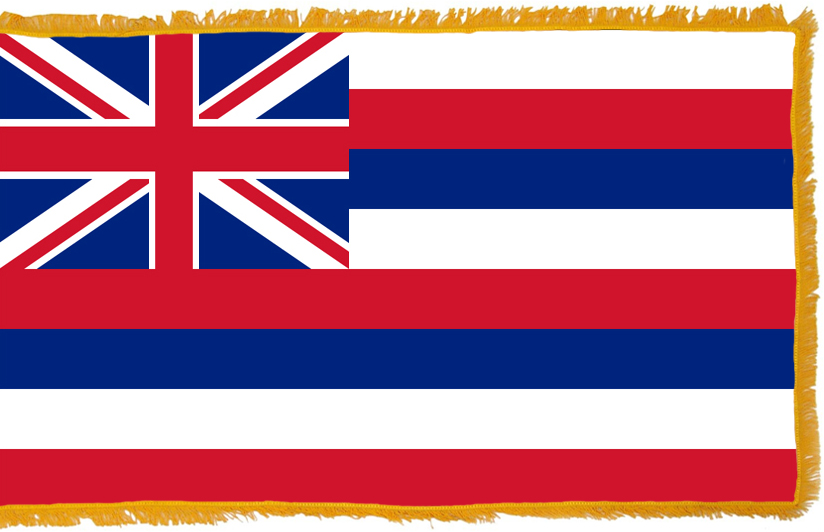
The Hawaii flag, often recognized by its distinctive Union Jack and alternating stripes, is a vibrant symbol steeped in a rich and complex history. More than just a colorful emblem, it tells a story of monarchy, annexation, and the enduring spirit of the Hawaiian people. For travelers visiting the Aloha State, understanding the origins and meaning behind this iconic flag can deepen their appreciation for the islands’ unique heritage and cultural tapestry.
The Hawaii flag is a powerful visual representation of the islands’ journey through various political eras. Its presence evokes images of sun-drenched beaches, lush landscapes, and the warm hospitality that defines Hawaii as a premier travel destination. As visitors explore iconic landmarks, indulge in local cuisine, and immerse themselves in the vibrant tourism scene, the flag serves as a constant reminder of the islands’ past and present.

A Tapestry of History: From Kingdom to Territory
The Hawaii flag’s design is a direct descendant of various historical flags that have flown over the Hawaiian Islands. Its evolution is intrinsically linked to the political shifts and influences that shaped the nation. To truly understand the flag, one must delve into its historical roots, tracing its lineage from the early days of the Hawaiian Kingdom to its eventual status as a U.S. territory.
The Royal Standard and the Union Jack
The most prominent feature of the Hawaii flag is the Union Jack of the United Kingdom. Its inclusion dates back to the early 19th century, a period when King Kamehameha I, the unifier of the Hawaiian Islands, sought alliances and trade with European powers. While the exact circumstances of its adoption are debated, the Union Jack was incorporated into the early royal standards, signifying Hawaii’s diplomatic overtures and its desire to be recognized on the international stage.
Some historical accounts suggest that King Kamehameha I initially adopted a British flag, possibly a variation of the Union Jack, to honor Captain James Cook and the British explorers who had visited the islands. Others propose that it was a strategic move to gain favor with the British Empire. Regardless of the precise reason, the Union Jack became an integral part of Hawaii’s royal insignia.
The Union Jack on the current Hawaii flag represents this historical connection and the period when the Hawaiian Kingdom maintained diplomatic relations with Great Britain. It is a testament to the islands’ early engagement with the outside world and the complex geopolitical landscape of the time.
The Eight Stripes: A Symbol of the Islands
Beneath the Union Jack, the Hawaii flag features eight horizontal stripes, alternating in color: red, white, and blue. These stripes are not merely decorative; they hold a profound symbolic meaning, representing each of the major inhabited islands of the Hawaiian archipelago.
- Hawaii (the Big Island)
- Maui
- Oahu
- Kauai
- Molokai
- Lanai
- Niihau
- Kahoolawe
Each stripe signifies the distinct identity and contribution of these islands to the unified Hawaiian Kingdom. The colors themselves are also imbued with meaning, although interpretations can vary. Traditionally, red is associated with courage and passion, white with purity and peace, and blue with loyalty and truth. Together, these colors and their placement on the flag embody the diverse yet unified spirit of the Hawaiian Islands.
This iconic design, with its striking combination of the Union Jack and the eight stripes, was officially adopted as the national flag of the Kingdom of Hawaii in 1845, solidifying its status as a national symbol. It has endured through significant historical changes, including the overthrow of the monarchy and Hawaii’s eventual annexation by the United States.
The Flag’s Journey Through Political Change
The Hawaii flag, as designed in 1845, has a narrative that extends beyond the Hawaiian Kingdom. Its story is one of resilience and adaptation, witnessing profound shifts in sovereignty and governance. As travelers explore the historical sites and museums across Hawaii, they can connect with the flag’s journey through these pivotal moments.
From Monarchy to Republic to Territory
The Hawaiian Kingdom was a sovereign nation with its own constitution, government, and diplomatic ties. The flag, in its royal form, proudly flew as a symbol of this independent state. However, by the late 19th century, significant economic and political pressures from foreign interests, particularly from American businessmen, began to mount.
In 1893, a group of American and European businessmen, with the support of the U.S. Marines, overthrew Queen Liliuokalani, the last reigning monarch of Hawaii. This event marked the end of the Hawaiian Kingdom and ushered in a period of provisional government, followed by the establishment of the Republic of Hawaii in 1894. During these transitional phases, the Hawaii flag continued to be used, albeit with shifting political contexts.
In 1898, Hawaii was formally annexed by the United States, becoming a U.S. territory. The Stars and Stripes then became the official flag of the islands. However, the Hawaiian flag, with its unique design, did not disappear. It continued to be recognized and used by many Hawaiians as a symbol of their heritage and cultural identity, often flown alongside the American flag. This duality reflected the complex feelings of the Hawaiian people regarding their loss of sovereignty and their enduring connection to their history.
The Modern “State Flag”
When Hawaii was admitted as the 50th state of the United States in 1959, a new official flag was established. This state flag retains the iconic design of the 1845 royal standard: the Union Jack in the canton and the eight alternating stripes. It is this flag that is most commonly seen today, flying proudly across the islands.
The modern Hawaii state flag is a powerful synthesis of its past and present. It acknowledges the islands’ sovereign history as a kingdom while also representing its current status as an integral part of the United States. For tourists, seeing the flag evokes a sense of place and provides a visual cue to the rich historical narrative of Hawaii. Many visitors might encounter the flag while visiting historical landmarks like Iolani Palace, the former royal residence, or during cultural festivals and events that celebrate Hawaiian traditions.
The enduring presence of the Hawaii flag, despite the political upheavals, speaks volumes about the resilience of Hawaiian culture and the deep pride its people have in their heritage. It serves as a constant reminder of the islands’ unique journey and the spirit that has defined them throughout history.
The Flag’s Significance in Tourism and Culture
The Hawaii flag is more than just a piece of fabric; it is a potent symbol that resonates deeply with both residents and visitors. Its presence enriches the travel experience, offering a tangible connection to the islands’ history, culture, and unique identity. As travelers explore the diverse attractions Hawaii has to offer, from bustling city centers like Honolulu to tranquil beaches and volcanic landscapes, the flag is a ubiquitous and meaningful sight.
A Beacon of Aloha Spirit
The flag is inextricably linked to the Aloha Spirit, the Hawaiian concept of love, peace, compassion, and mutual respect. It embodies the warmth and welcoming nature that draws millions of tourists to Hawaii each year. When visitors see the flag flying outside hotels, resorts, and local businesses, it reinforces the sense of arriving in a special place, a destination that cherishes its heritage and its visitors.
For those seeking authentic Hawaiian experiences, the flag serves as an indicator of cultural authenticity. It might be seen at hula performances, luaus, or community gatherings, signifying events that celebrate Hawaiian traditions. Understanding the flag’s history allows travelers to engage more meaningfully with these cultural expressions, appreciating the deeper layers of meaning behind the vibrant festivities.

Cultural and Historical Immersion
The flag’s historical narrative is a key element of Hawaii’s allure as a destination. Travelers interested in history can explore sites that were central to the Hawaiian Kingdom, such as Iolani Palace in Honolulu, where the flag once flew as the banner of a sovereign nation. Visiting these landmarks offers a profound connection to the past and a better understanding of the flag’s significance.
The Hawaii state flag is a constant reminder of the islands’ unique journey. Its presence at airports, government buildings, and even private residences across all the islands—from the bustling shores of Waikiki to the serene valleys of Kauai—reinforces the distinct identity of Hawaii. It’s a symbol that travelers will encounter repeatedly, weaving itself into their memories of their Hawaiian adventure.
For those planning a trip, understanding the flag’s context can enhance the entire experience. It adds depth to the appreciation of Hawaiian art, music, and storytelling. The flag is a quiet yet powerful ambassador, inviting visitors to learn, respect, and connect with the soul of Hawaii. Whether one is enjoying the luxurious amenities of a five-star resort or the simple beauty of a remote coastline, the Hawaii flag stands as a testament to the enduring spirit and rich legacy of these magnificent islands.