
Stepping onto the shores of Hawaii, visitors are immediately enveloped by an atmosphere unlike anywhere else in the United States. Beyond the stunning natural beauty, the warm aloha spirit, and the vibrant cultural tapestry, one might wonder about the linguistic landscape of this remote Polynesian archipelago in the middle of the Pacific Ocean. While the official languages are English and Hawaiian, the reality is far more nuanced and fascinating, reflecting centuries of diverse influences, a rich indigenous heritage, and a unique local identity. For travelers seeking a deeper understanding of this paradise, delving into its languages offers invaluable insights into the heart and soul of the islands.
The Official Tongues: English and Hawaiian
At first glance, communication in Hawaii presents no significant barrier for English-speaking visitors. As a state of the United States, English is universally spoken and understood across the islands, from the bustling streets of Honolulu to the serene landscapes of Kauai. Street signs, menus in restaurants and hotels, official documents, and all forms of media are primarily in English. This ensures that navigating the islands, booking accommodation, enjoying local attractions, and interacting with hotel staff or tour guides is seamless for the vast majority of international and domestic tourists.
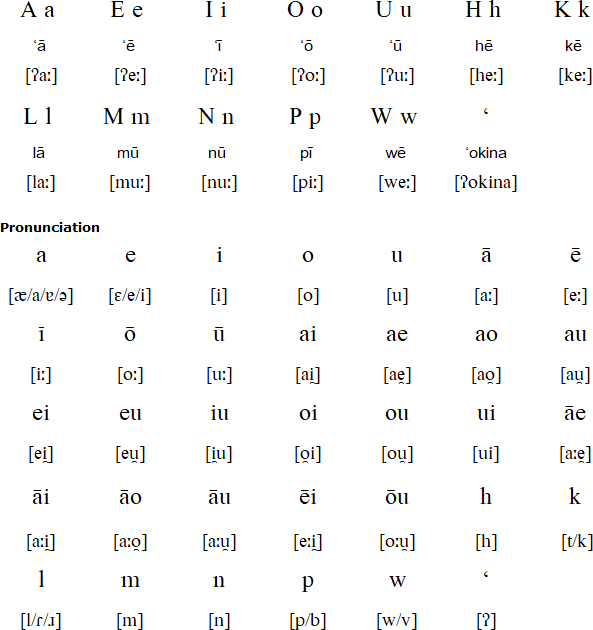
However, to truly appreciate the unique cultural fabric of Hawaii, one must acknowledge its other official language: Hawaiian or ʻŌlelo Hawaii. This melodious and ancient language is an integral part of the islands’ identity, deeply connected to its history, traditions, and the very land itself. While not as widely spoken in daily interactions as English, its presence is undeniable and growing, reflecting a powerful cultural revival. Understanding its history and significance enriches any travel experience to this extraordinary destination.
The Rise, Fall, and Resurgence of the Hawaiian Language
The story of the Hawaiian language is one of resilience and profound cultural importance. Before the arrival of Captain James Cook in 1778, ʻŌlelo Hawaii was the sole language of the archipelago, spoken by all inhabitants. It was the medium for epic chants, oral histories, religious ceremonies, and daily communication. The written form of the language was developed by Protestant missionaries in the early 19th century, who translated the Bible and established schools. By the mid-19th century, Hawaii boasted one of the highest literacy rates in the world, with a thriving press printing newspapers and books entirely in Hawaiian.
However, the tide began to turn with increasing foreign influence and the eventual overthrow of the Hawaiian monarchy in 1893. In 1896, a law was enacted banning the use of Hawaiian in schools, mandating English as the language of instruction. This severe policy, coupled with demographic shifts and the integration into the United States, led to a dramatic decline in the number of Hawaiian speakers. For decades, the language was on the brink of extinction, primarily spoken only by elders in remote communities, most notably on the island of Niihau.
The late 20th century, specifically the 1970s, marked the beginning of the Hawaiian Renaissance. A grassroots movement spearheaded by passionate advocates sought to revive and reclaim their cultural heritage, with the language at its core. This resurgence led to significant milestones:
- Establishment of Pūnana Leo schools: Hawaiian language immersion preschools were founded in 1983, followed by immersion programs from kindergarten through high school.
- University Programs: The University of Hawaii at Manoa and other campuses developed comprehensive Hawaiian language and studies departments, producing new generations of speakers and scholars.
- Official Language Status: In 1978, Hawaiian was reinstated as an official language of Hawaii alongside English.
Today, while fluency remains relatively low compared to English, the language is thriving. You’ll encounter Hawaiian in place names (Honolulu, Waikiki, Mauna Kea), street names, official state documents, and public signage. Many television and radio programs incorporate Hawaiian words and phrases, and traditional chants and songs are widely performed. For tourists, learning a few basic Hawaiian phrases like “Aloha” (hello/goodbye/love), “Mahalo” (thank you), and “E komo mai” (welcome) is not only a sign of respect but also a wonderful way to connect with the local culture and enhance your travel experience.
The Local Lexicon: Hawaiʻi Creole English (Pidgin)
Beyond the official languages, Hawaii boasts a vibrant and unique linguistic phenomenon known as Hawaiʻi Creole English, or simply “Pidgin.” This distinct local dialect is a testament to the islands’ rich history of immigration and cultural fusion, and it plays a significant role in the everyday lifestyle and identity of many local residents.
Pidgin emerged in the sugar cane and pineapple plantations of the 19th and early 20th centuries. Laborers from diverse backgrounds – including Japan, the Philippines, China, Korea, Portugal, and Spain – needed a common language to communicate. They developed a simplified form of English that incorporated words and grammatical structures from their native tongues, as well as from Hawaiian. Over generations, this creole solidified into a distinct language, passed down from parents to children, becoming a marker of local identity and solidarity.

While English is the primary language used in professional settings, schools, and formal media, Pidgin thrives in casual conversations among friends, family, and within local communities. It’s an expressive language, full of humor and warmth, that often conveys a sense of shared heritage and belonging. For visitors, understanding Pidgin can provide a deeper appreciation of local interactions, though it’s important to remember that it is a complex creole with its own grammar and vocabulary, not simply “broken English.”
Some common Pidgin words and phrases you might hear include:
- “Howzit?”: A common greeting, short for “How is it?”
- “Brah” or “Sistah”: Affectionate terms for friends or acquaintances.
- “Pau”: Finished, done (from Hawaiian).
- “Grindz”: Food, often delicious local cuisine.
- “Choke”: A lot, many.
- “Shaka”: The iconic hand gesture, meaning “hang loose” or “all good.”
While you won’t need to speak Pidgin to enjoy your trip to Hawaii, recognizing its presence and understanding its cultural significance can enhance your experience. It’s a living testament to Hawaii’s diverse population and its unique ability to blend cultures into something entirely new. When engaging with locals, especially outside tourist hubs like Waikiki or Kaanapali, you might hear Pidgin spoken among residents. Observing these interactions offers a glimpse into the authentic local lifestyle and the warm, informal nature of communication on the islands.
A Mosaic of Voices: Other Languages in Hawaii
Hawaii’s position as a crossroads of the Pacific and its history of immigration have resulted in a truly multicultural and multilingual society. Beyond English, Hawaiian, and Pidgin, a myriad of other languages are spoken across the islands, particularly in diverse urban centers like Honolulu on Oahu and Hilo on the Big Island.
The most prominent of these immigrant languages are those brought by the plantation workers and subsequent waves of migration:
- Japanese: Due to a significant and long-standing Japanese population, Japanese is widely spoken, especially among older generations and in areas with strong Japanese cultural ties. Many businesses cater to Japanese tourists, with signs and menus often translated.
- Tagalog and Ilocano: From the Philippines, these languages are spoken by a large segment of Hawaii’s population, making Filipinos one of the largest ethnic groups in the state.
- Korean and Mandarin/Cantonese: Significant communities of Korean and Chinese descent also mean these languages are present, particularly in ethnic enclaves and businesses catering to these communities.
- Samoan and Tongan: As part of Polynesia, Hawaii has natural connections to other Pacific Island nations. Samoan and Tongan are spoken by considerable populations, contributing to the rich Pacific Island cultural tapestry.
- Marshallese and Chuukese: More recent migration from Micronesia has also introduced these languages, particularly on Oahu.
For travelers interested in exploring the deeper facets of Hawaii’s diverse tourism landscape, seeking out ethnic restaurants, cultural centers like the Polynesian Cultural Center, or local festivals can offer unique opportunities to encounter these languages and the vibrant cultures they represent. While you won’t need to speak these languages, the awareness of their presence highlights Hawaii’s role as a true melting pot, a quality that makes it an endlessly fascinating destination for those who appreciate cultural diversity.
Practical Language Tips for Travelers
While the linguistic landscape of Hawaii is rich and varied, tourists can rest assured that communication will be straightforward, primarily in English. However, a little preparation and cultural sensitivity can significantly enhance your travel experience.
Embracing Hawaiian Culture Through Language
- Learn Basic Hawaiian Phrases: As mentioned, “Aloha” (hello, goodbye, love), “Mahalo” (thank you), and “E komo mai” (welcome) are excellent starting points. You’ll hear these frequently, and using them shows respect for the local culture. Other useful phrases include “ʻAʻole pilikia” (no problem/you’re welcome) and “Pehea ʻoe?” (how are you?).
- Understand Place Names: Many of Hawaii’s famous landmarks and geographical features have Hawaiian names. Familiarize yourself with their pronunciations to navigate more easily and avoid miscommunication. For example, Diamond Head is pronounced “Kīlauea” (kee-lah-oo-AY-ah), and Maui is “MAH-oo-ee.”
- Observe and Listen: Pay attention to how locals communicate. You’ll notice the relaxed rhythm of speech, the occasional Pidgin phrase, and the pervasive “aloha spirit” embedded in every interaction.
Communication in Hotels and Tourism Services
- Hotels and Resorts: Staff at hotels, resorts, and apartments across Oahu, Maui, the Big Island, and Kauai are fluent in English. Many larger establishments, especially in popular tourist areas like Waikiki or Lahaina, also have staff who speak Japanese, Korean, or Mandarin to cater to their diverse clientele. Don’t hesitate to inquire about language assistance if needed when booking your accommodation.
- Attractions and Guides: Tour guides, activity operators, and staff at attractions are well-versed in English. Some specialized tours may offer commentary in other languages, particularly Japanese, so check in advance if this is a preference.
- Restaurants and Shopping: Menus are almost always in English, and staff will easily understand your orders. In major shopping centers like Ala Moana Center or on luxury shopping streets like Kalakaua Avenue, you’ll often find multilingual staff, especially for high-end brands.
Respectful Interaction and Cultural Etiquette
- Be Patient and Open-Minded: While most communication will be in clear English, some locals, especially kupuna (elders), might speak with a stronger Pidgin accent or mix in Hawaiian words. A patient and respectful approach will always be appreciated.
- Avoid Mocking Pidgin: Pidgin is a legitimate language and a source of pride for many locals. Attempting to mimic it without genuine understanding can be seen as disrespectful. It’s better to observe and appreciate.
- Embrace “Talk Story”: This Pidgin phrase refers to informal conversation or casual chatting, often a key aspect of building rapport in Hawaii. Be open to spontaneous conversations, as they can lead to memorable experiences and insights into local culture.
In conclusion, the language in Hawaii is a vibrant tapestry woven from multiple threads. While English serves as the primary language for visitors, the soul of the islands resonates with the beautiful sounds of ʻŌlelo Hawaii, the unique rhythm of Pidgin, and the diverse echoes of many immigrant tongues. Engaging with this linguistic diversity, even superficially, provides a deeper appreciation for Hawaii’s profound cultural richness and enhances the overall magic of a Hawaiian vacation. So, as you plan your trip to these enchanting islands, remember to not just see the sights, but also to listen to the voices, for they too tell the story of Aloha.
LifeOutOfTheBox is a participant in the Amazon Services LLC Associates Program, an affiliate advertising program designed to provide a means for sites to earn advertising fees by advertising and linking to Amazon.com. Amazon, the Amazon logo, AmazonSupply, and the AmazonSupply logo are trademarks of Amazon.com, Inc. or its affiliates. As an Amazon Associate we earn affiliate commissions from qualifying purchases.