
The allure of Florida is undeniable. Known as the “Sunshine State,” it draws millions of visitors annually to its pristine beaches, vibrant theme parks, and rich cultural tapestry. From the bustling metropolises of Miami and Orlando to the serene natural beauty of the Everglades, Florida offers a diverse range of experiences that cater to every kind of traveler and resident. But beyond the sun-drenched vacation spots and the dream of a relaxed coastal lifestyle, a fundamental question arises for those considering a move, investing in property, or simply understanding the economic landscape of this popular state: What is the median income in Florida? Understanding this figure is crucial for gauging affordability, lifestyle possibilities, and the overall economic health of this dynamic region.
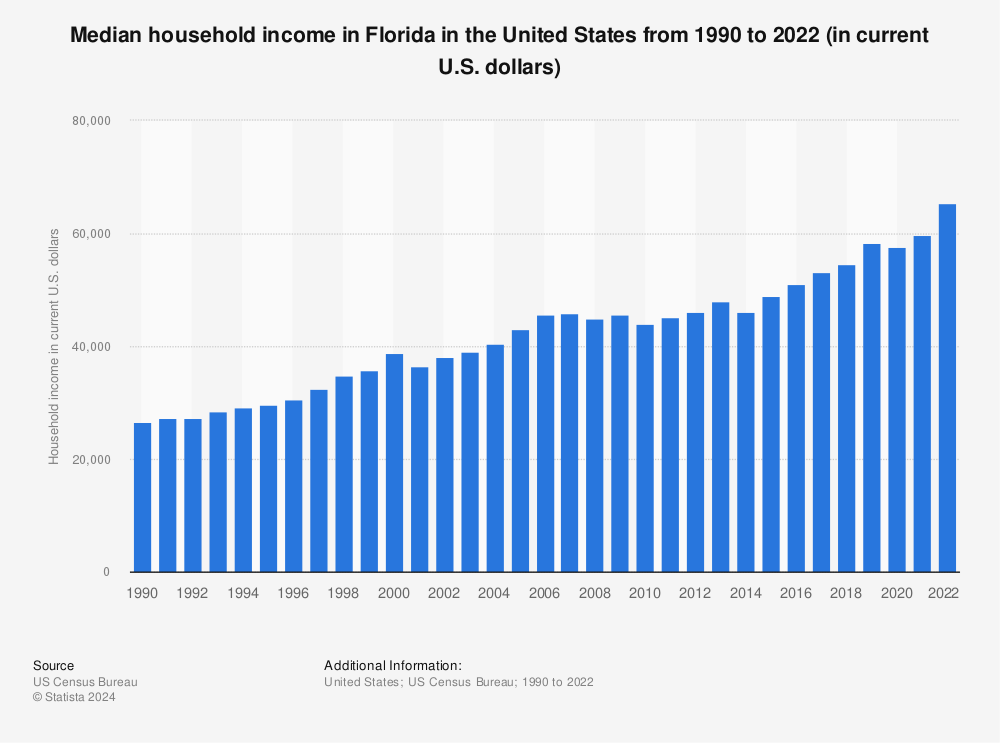
The median income, a key economic indicator, represents the midpoint of a population’s income distribution. In simpler terms, half of the households earn more than this amount, and half earn less. It provides a more accurate picture of the typical household’s financial standing than the average income, which can be skewed by extremely high or low earners. For a state as vast and varied as Florida, the median income is influenced by a complex interplay of factors, including its booming tourism sector, thriving real estate market, diverse industries, and its growing population.
Understanding Florida’s Economic Landscape
Florida‘s economy is a powerhouse, consistently ranking among the top in the United States. Its diverse economic drivers create a unique financial environment, influencing the median income from region to region within the state. The tourism industry, a cornerstone of the Florida economy, generates billions of dollars annually, supporting a vast array of jobs from hotel staff at places like the Ritz-Carlton Orlando, Grande Lakes to theme park employees at Walt Disney World Resort and guides offering experiences in the Florida Keys. This constant influx of visitors fuels demand for accommodation, dining, and entertainment, creating numerous employment opportunities.
Beyond tourism, Florida has seen significant growth in sectors like healthcare, aerospace, technology, and agriculture. The presence of major corporations and research institutions contributes to a higher concentration of skilled jobs, which in turn can drive up median incomes in specific areas. For instance, the tech hubs developing around cities like Tampa and Jacksonville attract highly paid professionals, impacting the overall state median. Furthermore, the real estate market in Florida is a significant economic engine. From luxury condominiums in Miami Beach to family homes in Tampa Bay, property values and rental rates are substantial, influencing the disposable income available to households.
Factors Influencing Median Income Across Florida
The median income in Florida is not a monolithic figure. It varies considerably when examined on a county-by-county or even city-by-city basis. Several factors contribute to this disparity:
- Cost of Living: Areas with a higher cost of living, particularly in major metropolitan areas like Miami-Dade County or popular coastal communities, often see higher median incomes to compensate for increased expenses related to housing, transportation, and daily necessities. For example, the median income in Miami-Dade County will likely be higher than in a more rural, less expensive part of the state.
- Industry Concentration: The dominant industries in a particular region play a crucial role. Areas with a strong presence of high-paying sectors like technology, finance, or specialized healthcare will naturally exhibit higher median incomes compared to regions primarily reliant on lower-wage service industries.
- Population Density and Demographics: Densely populated areas with a significant proportion of working-age adults and higher educational attainment tend to have higher median incomes. Conversely, areas with a larger retired population or a younger demographic may have different income profiles.
- Tourism Impact: While tourism benefits the state broadly, its impact on median income can be localized. Areas heavily reliant on seasonal tourism might see fluctuations and a concentration of jobs with varying wage levels. Popular tourist destinations like Orlando or the Florida Keys will have their own unique income dynamics tied to the ebb and flow of visitors.
- Proximity to Major Economic Hubs: Cities within commuting distance of major economic centers often benefit from job opportunities and higher wages, even if their immediate local economy is less robust.
Comparing Florida’s Median Income to National Averages
To fully appreciate the financial landscape of Florida, it’s essential to compare its median income to the national average. This comparison provides valuable context for understanding whether residents of the Sunshine State are generally earning more, less, or on par with their counterparts across the United States. Historically, Florida has often hovered around or slightly below the national median income. However, this figure is dynamic and can shift year by year based on economic trends, job growth, and inflation.

Several reports and statistical analyses are published annually that track income data for all states. These reports, often compiled by government agencies like the U.S. Census Bureau or private economic research firms, provide the most up-to-date figures. When examining these statistics, it’s important to consider the year of the data and whether it refers to household income, individual income, or family income, as these can have different values. For instance, a report might show that the median household income in Florida is X dollars, while the median individual income is Y dollars. Understanding these distinctions is key to accurate interpretation.
The cost of living plays a significant role in this comparison. Even if Florida‘s median income is slightly lower than the national average, if the cost of living is also lower, residents might still enjoy a comparable or even better standard of living. Conversely, if Florida‘s median income is comparable to the national average but its cost of living is higher, residents might experience less purchasing power. Therefore, while the raw median income figure is important, it must be analyzed in conjunction with other economic indicators to paint a complete picture of financial well-being in Florida.
Lifestyle and Accommodation Considerations Based on Income
Understanding Florida‘s median income has direct implications for lifestyle and accommodation choices. Whether one is planning a vacation, considering a long-term stay, or dreaming of residency, income levels significantly influence what is affordable and feasible. For visitors, knowing the general economic standing of the state can help in budgeting for accommodations, dining, and activities.
Accommodation Options and Affordability
The range of accommodation options in Florida is as diverse as its landscapes, from budget-friendly motels and apartments to luxurious resorts and private villas. The median income of a particular area directly impacts the demand and pricing for these options.
- Budget Travelers: For those with a more modest income, understanding the median income can help manage expectations. Areas with a lower median income might offer more affordable options like guesthouses, budget hotels, or vacation rentals further from prime tourist zones. For example, in the Panhandle region, away from the most popular beachfront towns, one might find more budget-friendly apartments.
- Mid-Range Travelers: A significant portion of Florida‘s visitors and residents fall within the mid-range income bracket. This group can typically afford comfortable hotels, well-appointed resorts, and vacation apartments. The median income in cities like St. Petersburg or parts of Central Florida often supports a robust market for mid-tier hotels and apartment rentals.
- Luxury Travelers: For those with higher incomes, Florida offers unparalleled luxury. Exclusive resorts like the Four Seasons Resort Orlando at Walt Disney World Resort and private villas in areas such as Naples or Palm Beach are readily available. These destinations cater to a clientele for whom median income is less of a constraint.
- Long-Term Stays: For individuals or families considering a longer stay, whether for work or extended vacation, the median income becomes even more critical. Renting an apartment or a villa long-term requires a stable income that can comfortably cover monthly expenses. Areas with a higher median income, such as parts of South Florida, will naturally have higher rental costs for apartments and homes. Conversely, in areas with a lower median income, such as some of the more inland communities, long-term rental options might be more budget-friendly.
The relationship between income and accommodation is cyclical. Higher median incomes in an area can drive up demand for premium accommodations, leading to higher prices. Conversely, the availability of attractive accommodation options, from boutique hotels to serviced apartments, can also influence where people choose to live and work, impacting local income levels.

Lifestyle Choices and Disposable Income
The median income directly correlates with disposable income – the amount of money left after essential living expenses are paid. This disposable income dictates the kinds of lifestyle choices individuals can make, whether it’s dining out at upscale restaurants in Miami, enjoying cultural attractions, or indulging in recreational activities.
- Dining and Entertainment: In areas with a higher median income, there’s typically a greater concentration of fine-dining establishments and a vibrant nightlife. Residents and visitors with more disposable income can frequent places like the award-winning restaurants in Tampa or enjoy the diverse culinary scene in Orlando.
- Travel Experiences: For those with higher incomes, the possibilities for travel experiences within Florida and beyond expand significantly. This could include exploring luxury resorts, chartering boats in the Florida Keys, or taking family trips to theme parks with premium access.
- Luxury and Budget Travel: Florida caters to both ends of the lifestyle spectrum. Luxury travel experiences abound, from spa retreats to private yacht charters. On the other hand, budget travel is also very feasible, especially with careful planning. Understanding the median income helps gauge the prevalence and accessibility of budget-friendly activities and accommodations throughout the state. For instance, exploring the natural beauty of state parks like Myakka River State Park offers affordable experiences accessible to a wider range of incomes.
- Family Trips: For families, the median income of the area where they reside or plan to visit plays a crucial role in budgeting for family-friendly attractions like those found at Universal Orlando Resort or SeaWorld Orlando. Higher median incomes in an area might correlate with more elaborate entertainment options, while lower median incomes might necessitate a focus on free or low-cost activities like beach days or local parks.
Ultimately, understanding the median income in Florida provides a vital lens through which to view the state’s economic realities, influencing everything from where people live and the type of accommodation they can afford, to the lifestyle choices they can embrace. It is a fundamental piece of information for anyone looking to connect with the Sunshine State on a deeper, more informed level.