
Colorado, often referred to as the Centennial State, captivates visitors with its majestic Rocky Mountains, vibrant cities, and unparalleled outdoor adventures. From the bustling streets of Denver to the serene slopes of Aspen and Vail, this diverse state offers a wealth of experiences for every type of traveler. Whether you’re seeking a luxurious resort stay, an immersive cultural experience, or a budget-friendly adventure, Colorado has something unique in store.
However, beneath the picturesque landscapes and thrilling attractions lies an economic landscape that subtly influences every aspect of your visit, from the cost of a gourmet meal to the price of your accommodation. A crucial element of this economic framework is the minimum wage. Understanding what the minimum wage is in Colorado, how it’s determined, and its far-reaching effects on the state’s robust travel and tourism industries can provide valuable insights for both visitors planning their trips and those considering working in its dynamic hospitality sector. This article delves into the specifics of Colorado’s minimum wage, exploring its historical trajectory, current rates, and its profound impact on everything from the daily lives of its residents to the overall travel experience in this beloved western United States destination.
Understanding Colorado’s Minimum Wage Landscape
The concept of a minimum wage is designed to establish a baseline for earnings, ensuring that workers receive a fair compensation for their labor. In Colorado, this benchmark has evolved significantly over the years, reflecting changes in the cost of living, economic conditions, and societal values. The state’s approach to minimum wage is particularly interesting because it not only sets a statewide standard but also allows for local jurisdictions to implement higher rates, recognizing the varying economic realities across its diverse regions.
Historical Context and Current Rates
Colorado’s journey with the minimum wage began much like other states in the United States, often following federal guidelines. However, over time, the state has increasingly taken its own path. A pivotal moment was the passage of Amendment 42 in 2006, which not only raised the minimum wage but also mandated annual adjustments based on the Consumer Price Index for Denver-Boulder-Greeley. This mechanism ensures that the minimum wage keeps pace, to some extent, with inflation, offering some protection to workers against the rising cost of living.
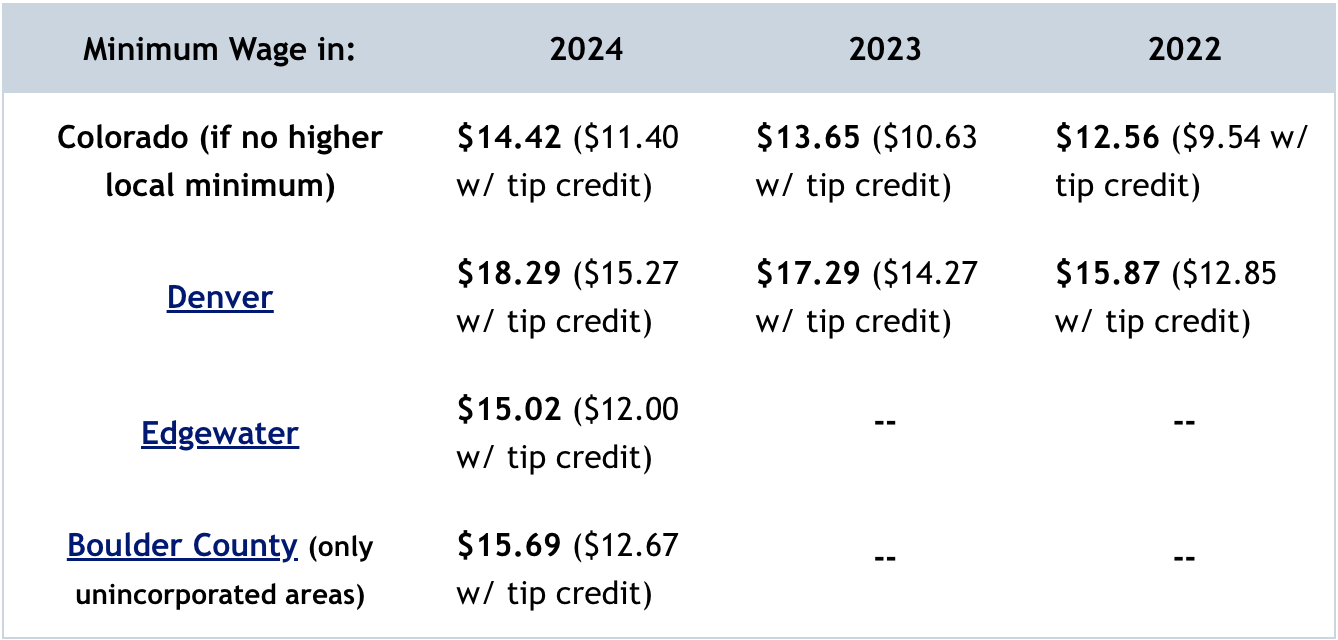
For the year 2024, the statewide minimum wage in Colorado is $14.42 per hour. This rate applies to most employees across the state, with specific provisions for tipped employees, whose minimum cash wage is lower but must still meet the overall minimum wage when tips are included. The Colorado Department of Labor and Employment is responsible for announcing these annual adjustments, typically at the end of each year, to take effect on January 1 of the following year.
Beyond the statewide rate, several cities and counties in Colorado have exercised their right to implement higher local minimum wages to address their unique economic circumstances. Denver, as the state capital and largest city, has a notably higher rate. For 2024, Denver’s minimum wage is $18.29 per hour. Similarly, Boulder has set its minimum wage at $15.69 per hour for 2024. Other municipalities might follow suit or already have their own specific rates, creating a complex but nuanced wage landscape that reflects the diverse economic realities across the state. This localized approach acknowledges that the cost of living in a bustling metropolitan area like Denver is significantly different from that in a rural mountain town.
The Rationale Behind the Wage and Its Economic Implications
The primary rationale behind Colorado’s minimum wage policies, particularly the annual indexing, is to ensure a living wage for workers. Proponents argue that a higher minimum wage helps reduce poverty, stimulate local economies by increasing consumer spending, and improve worker morale and productivity. In a state like Colorado, where tourism plays a vital role in the economy, a living wage can help retain a stable and experienced workforce in the hospitality sector, which directly benefits the quality of service visitors receive.
However, the discussion around minimum wage is not without its complexities. Businesses, particularly small businesses and those in the service industry like hotels and restaurants, sometimes express concerns about increased labor costs. Higher wages can impact operational expenses, potentially leading to adjustments in pricing for goods and services, or even automation of certain tasks. For travelers, this could translate into slightly higher costs for dining out, hotel stays, or local activities. The balance lies in finding a wage that supports workers without unduly burdening businesses, all while maintaining Colorado’s appeal as an affordable and welcoming destination.

The Interplay of Minimum Wage and Travel & Tourism
Colorado’s minimum wage policies have a direct and indirect influence on its thriving travel and tourism sectors. From the employees greeting you at a luxurious downtown Denver hotel like the Grand Hyatt Denver to the guides leading expeditions through Rocky Mountain National Park, the wage structure underpins the operational costs and service quality across the industry.
Impact on Hospitality and Service Industries
The hospitality and service industries are arguably the most directly affected by minimum wage adjustments. A significant portion of the workforce in hotels, resorts, restaurants, attractions, and tour companies earn wages at or near the minimum. When the minimum wage increases, these businesses face higher payroll expenses.
For employees, a higher minimum wage can mean improved quality of life, greater financial stability, and better access to necessities like housing and healthcare. This can lead to reduced employee turnover, higher job satisfaction, and a more experienced and dedicated workforce. For travelers, this often translates into a more pleasant experience. Imagine a concierge at The Broadmoor in Colorado Springs who feels valued and secure in their employment; their level of service and engagement is likely to be exceptional, enriching your stay. Similarly, well-compensated staff at local cafes or adventure outfitters are more likely to provide outstanding service, enhancing the overall tourism experience.
On the other hand, businesses must absorb these increased labor costs. Some might do so through efficiency gains, while others may pass a portion of the cost onto consumers through slight price increases. For instance, the cost of a ski pass at Winter Park Resort or a meal at a popular restaurant in Boulder might see marginal adjustments. It’s a delicate balance to maintain competitive pricing while ensuring fair wages for the hardworking individuals who make Colorado travel so memorable.

Budgeting for Your Colorado Adventure
For visitors planning their Colorado trips, understanding the minimum wage environment can inform their budgeting decisions. While the direct impact on a single traveler might seem negligible, the cumulative effect across various expenditures can add up.
If you’re planning a trip that involves dining out frequently, staying in higher-end hotels like the Ritz-Carlton, Bachelor Gulch near Beaver Creek, or engaging in guided activities, you might find prices slightly higher than in states with lower minimum wages. This is particularly true in popular, high-cost-of-living areas like Aspen, Vail, or Telluride, where local minimum wages might exceed the state average, and operational costs for businesses are already elevated.
Conversely, for those seeking budget travel options, Colorado still offers plenty of opportunities. Utilizing public transportation in cities like Denver, opting for self-catering apartments or more modest hotels, and focusing on free natural attractions like Garden of the Gods or exploring hiking trails in National Parks can help manage costs. Awareness of the minimum wage environment simply means being prepared for potentially higher service-related costs and adjusting your budget accordingly, ensuring a smooth and enjoyable Colorado experience.
Lifestyle and Accommodation in the Centennial State
The minimum wage isn’t just an abstract economic figure; it profoundly shapes the quality of life for residents and the cost structure for various services, especially accommodation, in Colorado. For many, particularly those working in the vibrant hospitality and tourism sectors, it directly determines their ability to afford to live in the very places that attract millions of visitors annually.
Affordability for Residents and Workforce
Colorado boasts some of the most desirable — and expensive — places to live in the United States. Iconic mountain towns like Aspen, Vail, and Telluride, while stunning destinations for travelers, present significant affordability challenges for local workers. Even major cities like Denver and Boulder have seen a rapid escalation in housing costs.
A higher minimum wage, especially in these high-cost-of-living areas, is a critical component in ensuring that the individuals who staff our hotels, prepare our meals, and guide our adventures can actually afford to live within reasonable proximity to their workplaces. Without adequate wages, service industry workers might be forced to commute long distances, or worse, leave the area entirely, leading to labor shortages and a decline in service quality. For example, a housekeeper at the Hotel Jerome in Aspen benefits immensely from a minimum wage that acknowledges the town’s exorbitant cost of living, enabling them to sustain their life there and continue contributing to the town’s renowned hospitality. The state and local minimum wage provisions are, therefore, not just about fairness; they are about sustaining the very communities that make Colorado such an attractive place to visit.
This focus on workforce affordability also ties into the concept of sustainable tourism. A vibrant local community, where workers can thrive, contributes to a more authentic and enriching experience for visitors. When residents are able to afford a decent lifestyle, they are more likely to be invested in their community and proud to share their local culture and knowledge with guests.
Accommodation Costs and Trends
The minimum wage directly impacts the operational costs of hotels, resorts, and other accommodation providers. Staff salaries—from front desk agents and housekeepers to maintenance crews and restaurant personnel—represent a significant portion of these costs. When minimum wages rise, especially in a state like Colorado where labor is already a premium, hotels must adjust.
This adjustment can manifest in several ways. For high-end resorts and luxury hotels, the increase in labor costs might be absorbed into their already premium pricing structure, perhaps leading to minor increases in nightly rates or amenities fees. A stay at the Four Seasons Resort and Residences Vail might reflect these costs in its exquisite service and facilities. For mid-range hotels and boutique stays, the impact could be more noticeable, potentially influencing rates and necessitating careful budgeting from the management.
The broader trend in accommodation often reflects a balance between competitive pricing, overheads, and the desire to offer quality service. While a higher minimum wage is a factor, it’s rarely the sole determinant of room rates. Other elements like seasonality, demand, location (e.g., proximity to landmarks like the Denver Art Museum or Mesa Verde National Park), and the overall economic climate also play crucial roles. However, understanding that a portion of your room rate contributes to a living wage for the staff who make your stay comfortable can add a layer of appreciation to your travel experience. When you book a stay at a charming bed and breakfast in Glenwood Springs or a bustling hotel in downtown Fort Collins, you are indirectly supporting the local economy and its workforce.
The Broader Economic Ripple Effect and Future Outlook
Colorado’s minimum wage policy extends its influence beyond individual paychecks and business ledgers; it creates a ripple effect throughout the state’s entire economy, impacting communities, resource allocation, and future economic planning. For a state so heavily reliant on the visitor economy, these broader implications are particularly significant for maintaining long-term prosperity and appeal.
Local Economies and Sustainable Tourism
The local economies of Colorado’s numerous towns and cities, many of which thrive on tourism, are intricately linked to the minimum wage. When service workers earn a living wage, they have more disposable income to spend within their local communities. This spending stimulates demand for local goods and services, supporting small businesses, restaurants, and shops. In Estes Park, for instance, the income earned by staff at local hotels or shops near Rocky Mountain National Park directly contributes to the vitality of the town, ensuring a diverse and engaging experience for visitors.
This cycle of increased local spending and economic activity contributes to a more robust and resilient local economy, which is a cornerstone of sustainable tourism. Sustainable tourism emphasizes balancing economic growth with social equity and environmental preservation. By ensuring fair wages for its workforce, Colorado takes a step towards social equity, promoting a more balanced distribution of the benefits generated by its thriving tourism industry. This approach helps prevent situations where tourism booms lead to a high cost of living that pushes out the very people who power the industry. It ensures that the charm and local flavor of places like Ouray, the “Switzerland of America,” or the historic mining town of Leadville, are preserved by supporting the residents who call these unique destinations home.
Future Outlook and Considerations
The trajectory of Colorado’s minimum wage is likely to continue its upward trend, driven by the annual indexing to inflation and potential further local initiatives. As the cost of living in popular areas continues to rise, especially for essentials like housing, there will be ongoing pressure to ensure wages keep pace. This presents both opportunities and challenges for the future of Colorado’s travel and tourism.
One consideration is how businesses will continue to adapt. Innovation in service delivery, technology integration, and careful management of operational costs will be key. Hotels and resorts might invest in automation for certain tasks or streamline guest services, while still preserving the human touch that makes Colorado hospitality so renowned. The aim is to maintain profitability while adhering to wage mandates and continuing to attract top talent.
For future travelers, it means being aware that a premium might be placed on certain services, particularly in high-demand periods or ultra-luxurious destinations. However, it also signifies that the people behind your memorable experiences – from the chefs at a farm-to-table restaurant in Fort Collins to the park rangers at Great Sand Dunes National Park – are receiving compensation that helps them live and thrive in this beautiful state. The ongoing debate around minimum wage in Colorado will continue to shape its economic identity, influencing everything from urban development to wilderness experiences, and ultimately, the character of its tourism offering. Staying informed about these economic nuances allows for a more comprehensive understanding and appreciation of the vibrant tapestry that is Colorado.
In conclusion, Colorado’s minimum wage is a dynamic and multifaceted element of its economic structure. From its historical roots and annual adjustments to its differing rates across cities like Denver and Boulder, it plays a crucial role in shaping the state’s lifestyle and the experience of both residents and visitors. While it can influence the cost of travel and accommodation, it fundamentally underpins the ability of the state’s dedicated service workforce to thrive, contributing to the high-quality tourism experience Colorado is famous for. Understanding these economic underpinnings enriches your appreciation for all that the Centennial State has to offer, making your adventures here even more meaningful.