
The question “What is the population in Los Angeles?” is deceptively simple, yet its answer opens a gateway to understanding the sheer scale and vibrant diversity of this iconic Californian metropolis. Los Angeles, often abbreviated as LA, is not just a city; it’s a sprawling urban tapestry woven from countless threads of culture, ambition, and dreams. To truly grasp its population is to begin to understand its dynamism, its challenges, and its unparalleled allure as a global hub for entertainment, innovation, and a unique way of life.
When people inquire about the population of Los Angeles, they are usually referring to the City of Los Angeles itself, which is the administrative entity. However, this often leads to confusion because the Los Angeles metropolitan area, also known as Greater Los Angeles, is a vastly larger and more encompassing region. Understanding the distinction is crucial for appreciating the full scope of human presence and activity in this Southern California powerhouse.

The Core: Population of the City of Los Angeles
The City of Los Angeles is the most populous city in California and the second-most populous city in the United States, trailing only behind New York City. As of recent estimates, the population of the City of Los Angeles hovers around 3.9 million people. This figure, while substantial, only represents a fraction of the total population residing in the broader metropolitan region.
This core population is incredibly diverse, reflecting the city’s status as a global melting pot. People from all corners of the globe have found a home in Los Angeles, bringing with them their languages, traditions, and culinary delights. This diversity is evident in the city’s many neighborhoods, each with its distinct character and community. From the historic barrios of East Los Angeles to the affluent enclaves of Beverly Hills, the population density and demographic makeup shift dramatically, creating a mosaic of urban living.
The City of Los Angeles is a sprawling urban landscape, characterized by its low-density development in many areas, a stark contrast to the more vertically oriented cities of the East Coast. This spread contributes to its immense geographical footprint, covering over 500 square miles. This vastness means that even within the city limits, distinct communities exist, each contributing to the overall population count and the city’s vibrant social fabric.
Demographic Composition of the City
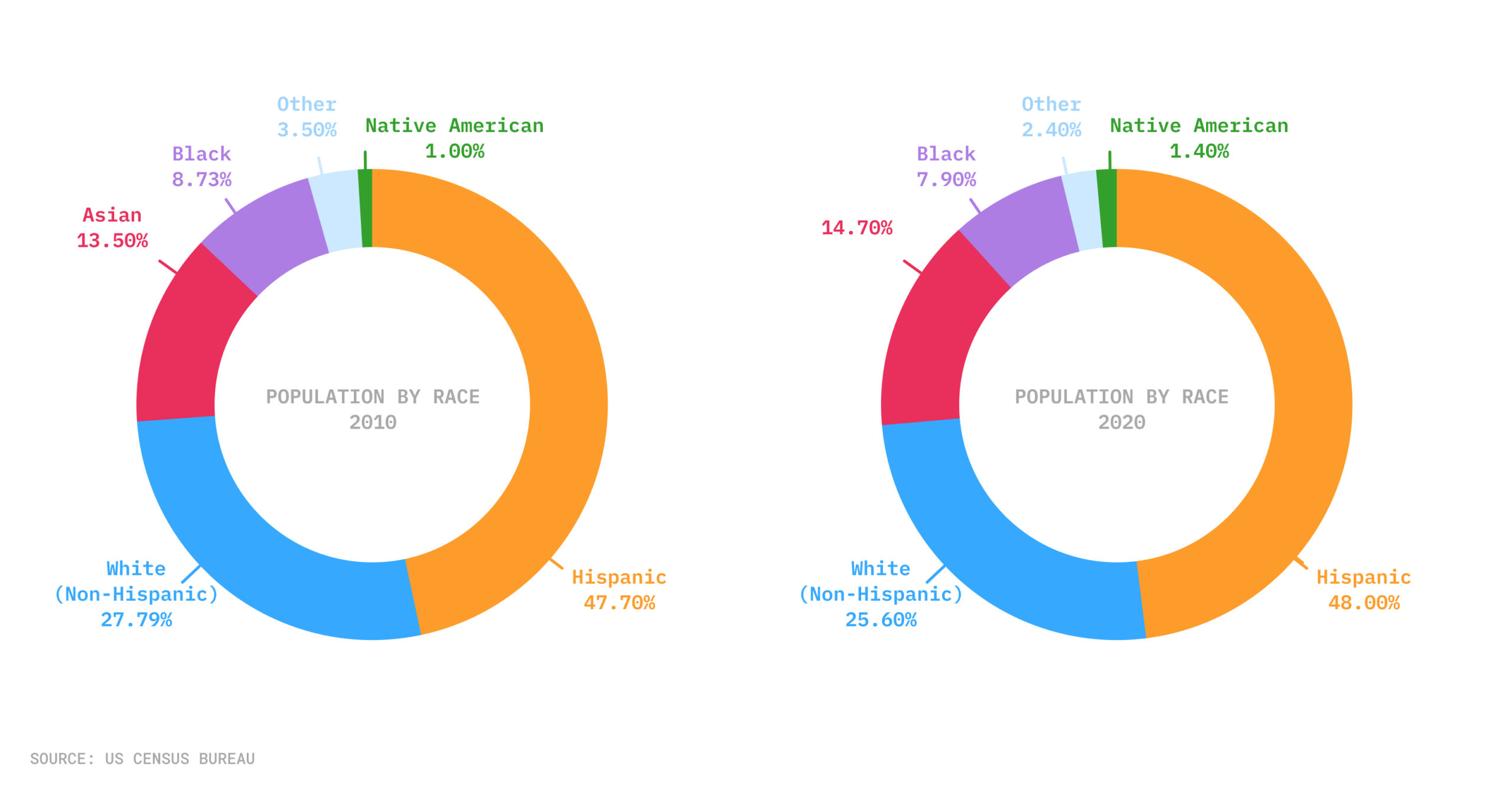
Delving deeper into the demographics of the City of Los Angeles reveals a rich tapestry of ethnicities and backgrounds. While specific numbers fluctuate with each census and ongoing estimation, some key trends are consistently observed:
- Hispanic or Latino: This group constitutes the largest ethnic demographic in the City of Los Angeles, making up a significant portion of the population. Their influence is deeply embedded in the city’s culture, arts, and everyday life.
- White: A substantial portion of the population identifies as White, with a mix of European ancestries.
- Asian: Los Angeles boasts a large and influential Asian population, with significant communities from East Asia (such as Chinese, Korean, and Japanese) and Southeast Asia (including Filipino and Vietnamese communities).
- Black or African American: The city has a historical and ongoing significant Black population, contributing profoundly to its cultural landscape, particularly in areas like music and arts.
- Other Races: A notable percentage of the population identifies with two or more races, further underscoring the city’s diverse makeup.
The age distribution within the City of Los Angeles is also varied, with a substantial working-age population, reflecting its role as an economic engine. The city also attracts young people drawn by the opportunities in its many industries, as well as retirees seeking its pleasant climate and diverse lifestyle options.

The Greater Picture: Population of the Los Angeles Metropolitan Area
To truly understand the human scale of Los Angeles, one must look beyond the city limits and consider the Los Angeles metropolitan area. This vast region, officially designated as the Los Angeles-Long Beach-Anaheim, CA Metropolitan Statistical Area (MSA), is the second-largest MSA in the United States, after the New York metropolitan area.
The population of the Los Angeles metropolitan area is staggering, currently estimated to be well over 13 million people. This massive figure encompasses not only the City of Los Angeles but also a multitude of surrounding cities and counties, each with its own distinct identity and contribution to the region’s overall demographic profile. These include prominent cities like Long Beach, Anaheim, Santa Clarita, and Glendale, as well as the vast expanses of Los Angeles County, Orange County, Riverside County, San Bernardino County, and Ventura County.
This sprawling urban and suburban expanse is a complex ecosystem of interconnected communities. People commute across city and county lines for work, entertainment, and social activities, blurring the lines between individual municipalities. The transportation infrastructure, while often strained, serves as the circulatory system for this immense population, connecting diverse neighborhoods and enabling the daily lives of millions.
The Influence of Greater Los Angeles
The sheer size of the Los Angeles metropolitan area’s population has profound implications. It is a massive consumer market, a significant labor force, and a driving force behind the national and global economy. Its influence is felt in:
- Economic Powerhouse: The region is a hub for diverse industries, including entertainment (Hollywood), aerospace, technology, international trade, and tourism. The vast population provides the talent and the demand that fuel these sectors.
- Cultural Diversity: The immense population is a source of incredible cultural richness. Los Angeles is a global center for music, film, fashion, and culinary innovation, with influences from every continent.
- Lifestyle and Travel: For travelers, the population figures hint at the sheer volume of experiences available. From world-renowned theme parks like Disneyland and Universal Studios Hollywood to the iconic beaches of Santa Monica and the cultural institutions like the Getty Center, the diversity of attractions is directly related to the density and diversity of its inhabitants. Visitors can explore a vast array of hotels, from luxury resorts in Malibu to family-friendly apartments in Burbank, catering to every imaginable travel style and budget.
- Urban Planning and Infrastructure: Managing a population of this magnitude presents significant challenges for urban planners, requiring constant attention to transportation, housing, water resources, and public services. The development of Los Angeles International Airport (LAX), a critical gateway for millions of travelers, is a testament to the region’s global connectivity.
Population Trends and Future Outlook
The population of Los Angeles, both the city and the metropolitan area, has seen consistent growth over the decades, though the pace of growth can vary. Historically, the region has been a magnet for migration, both domestic and international, drawn by economic opportunity, the promise of the entertainment industry, and the desirable climate.
However, like many major global cities, Los Angeles is also grappling with issues related to housing affordability, traffic congestion, and environmental sustainability, which can influence population dynamics. While natural growth and continued migration contribute to the population figures, factors such as the cost of living and job market trends can also shape how many people choose to call Los Angeles home.
The future population outlook for Los Angeles remains a subject of ongoing study and projection. While growth is generally expected to continue, the rate may be moderated by these complex socio-economic and environmental factors. Nevertheless, the fundamental appeal of Los Angeles as a vibrant, dynamic, and opportunity-rich environment ensures that it will remain a densely populated and influential global city for the foreseeable future.
Understanding the population in Los Angeles, therefore, is more than just a number. It is an entry point into comprehending the immense scale, the incredible diversity, and the persistent dynamism that define this legendary West Coast destination. Whether you are planning a trip to explore its famous landmarks, seeking the perfect accommodation, or simply curious about the forces that shape this urban giant, the population is a fundamental aspect of the Los Angeles experience.