
The state of New Mexico, a land of breathtaking landscapes, rich history, and vibrant cultures, proudly bears a floral emblem that encapsulates its unique spirit. While many states have official symbols to represent them, the state flower holds a special place, often reflecting the natural beauty and heritage of the region. For New Mexico, this distinguished honor belongs to the Yucca Flower.
This elegant bloom is more than just a pretty sight; it’s a symbol deeply intertwined with the identity of New Mexico. Its resilience, its striking appearance, and its connection to the indigenous peoples of the Southwest all contribute to its status as the official state flower. Understanding the Yucca Flower‘s significance offers a deeper appreciation for the Land of Enchantment itself.
The Majestic Yucca Flower: A Symbol of Resilience and Beauty
The Yucca Flower is not a singular species but rather represents several related plants belonging to the Yucca genus. These plants are native to arid and semi-arid regions of the Americas, thriving in harsh environments where other flora might falter. This inherent toughness is a key characteristic that resonates with the spirit of New Mexico, a state known for its dramatic deserts and rugged terrain.
Identifying the Yucca Flower
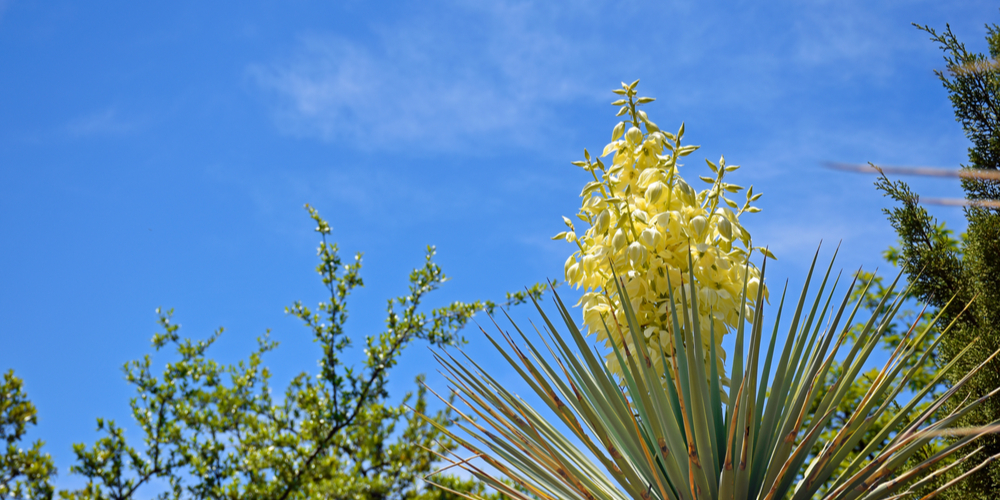
While there are many species of yucca, the one most commonly associated with New Mexico‘s state flower is the Yucca elata, often referred to as the Soaptree Yucca. This particular species is a quintessential desert plant, forming a distinctive silhouette against the vast skies of the Southwest.
- Appearance: The Soaptree Yucca is characterized by its tall, woody stem that can reach impressive heights, sometimes exceeding 30 feet. From this central stalk, a rosette of stiff, sword-like leaves emerges, typically growing to about 2-5 feet in length. These leaves are sharp-edged and pointed, a testament to their adaptation for survival in dry conditions.
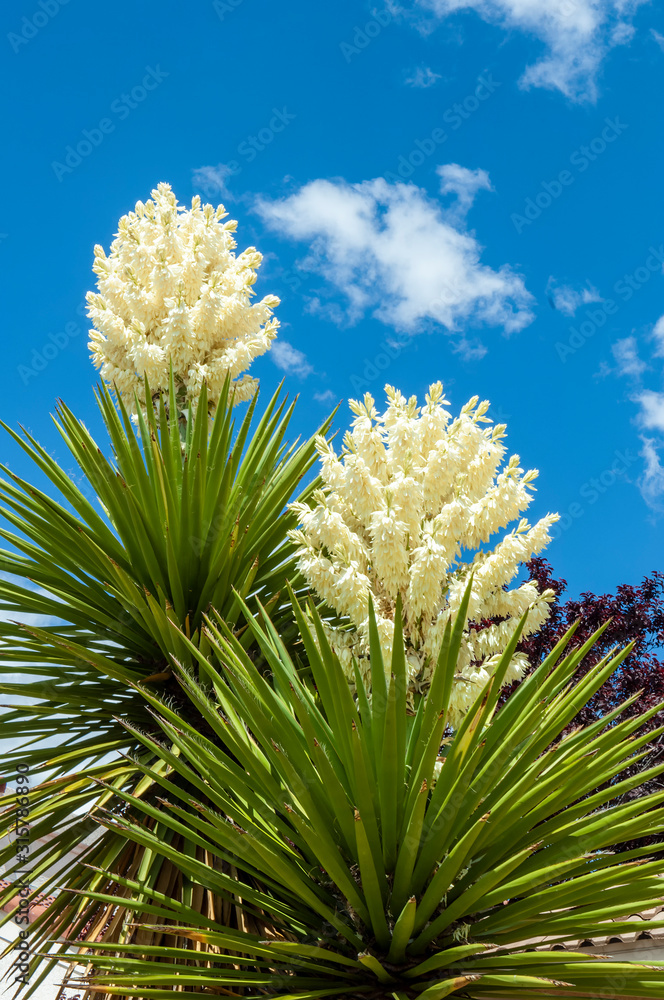
- The Bloom: The real spectacle, however, is the Yucca Flower itself. During the spring and summer months, the Soaptree Yucca produces an impressive, towering stalk adorned with hundreds of creamy white, bell-shaped blossoms. These flowers are often tinged with green or purple and hang gracefully, creating a stunning visual display against the arid backdrop. Each flower typically has six petals and a cluster of stamens in the center.
- Reproduction: A fascinating aspect of the Yucca Flower is its specialized pollination process. Yucca plants rely on the Yucca Moth (genus Tegeticula) for pollination. These moths have a symbiotic relationship with the yucca; the moths collect yucca pollen and intentionally transfer it to the stigma of another yucca flower, thus ensuring cross-pollination. In return, the moths lay their eggs in the flower’s ovary, and the developing larvae feed on a small portion of the seeds. This intricate dance of nature highlights the interconnectedness of the desert ecosystem.
The Significance of the Soaptree Yucca in New Mexico
The choice of the Soaptree Yucca as New Mexico‘s state flower was not arbitrary. It was officially designated as the state flower in 1927 by the New Mexico Legislature. Its selection reflects several important aspects of the state:
- Resilience and Adaptability: The Yucca Flower‘s ability to thrive in the challenging desert climate of New Mexico mirrors the enduring spirit of its people. It symbolizes strength, perseverance, and the capacity to flourish even in arid conditions.
- Native Heritage: Yucca plants have been of immense importance to the indigenous peoples of New Mexico for centuries. Various tribes, including the Navajo and Hopi, have utilized yucca for a variety of purposes, from food and fiber to soap and medicine. The Yucca Flower‘s deep roots in Native American culture make it a fitting symbol for a state that embraces its rich indigenous heritage.
- Iconic Desert Beauty: The striking visual of the Yucca Flower rising from the desert landscape is an iconic image of the Southwest. It evokes a sense of wildness, natural beauty, and the unique allure of the desert environment that draws so many visitors to New Mexico.
Exploring the Yucca Flower’s Presence in New Mexico
The Yucca Flower can be found in various regions and landscapes across New Mexico, adding to the state’s visual tapestry. Whether you’re exploring its vast deserts, its mountainous terrains, or its charming towns, you’re likely to encounter these magnificent blooms.
Where to See the Yucca Flower in Bloom
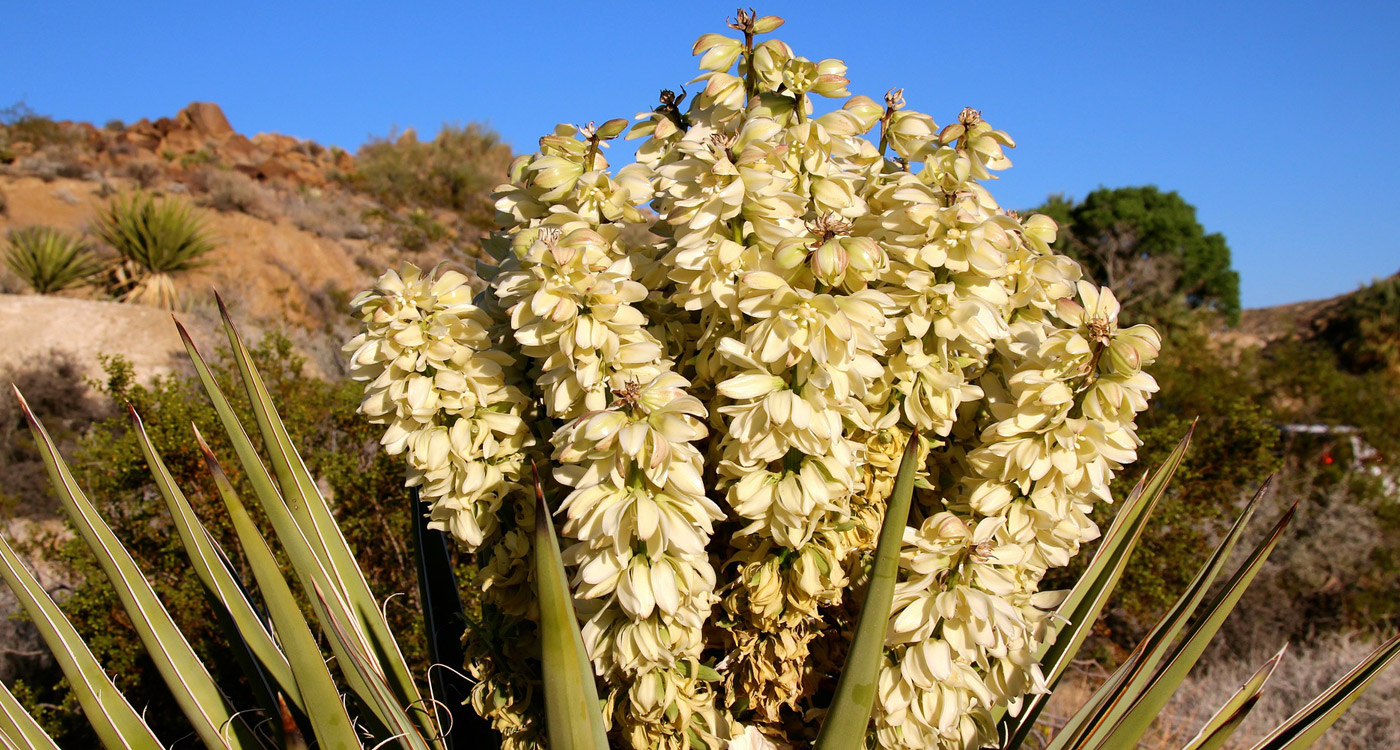
The best time to witness the Yucca Flower in its full glory is typically from late spring through early summer, though blooming periods can vary depending on rainfall and specific microclimates.
- White Sands National Park: This iconic national park, known for its dazzling gypsum dunes, is also home to a variety of desert flora, including the Soaptree Yucca. The sight of these tall plants with their abundant white blossoms set against the stark white sands is truly unforgettable. A visit to White Sands National Park offers a unique opportunity to combine natural wonders with the beauty of the state flower.
- Chihuahuan Desert: Much of southern New Mexico falls within the Chihuahuan Desert, a region where the Yucca Flower is abundant. Driving through areas like the Gila National Forest or venturing off the beaten path in southern counties will likely reward you with sightings of these plants.
- Roadside Attractions: Even during everyday travel through New Mexico, you’ll frequently spot Yucca Flowers along the highways and byways. They are a common sight in fields, along roadsides, and in natural desert scrublands.
- Botanical Gardens and Preserves: For a more curated experience, consider visiting local botanical gardens or nature preserves in New Mexico. These locations often showcase native plants and provide information about their ecological significance.
Beyond the Bloom: The Traditional Uses of Yucca
The Yucca Flower and the yucca plant itself have a long and storied history of practical use by the indigenous peoples of New Mexico and the wider Southwest. This history adds another layer of depth to its symbolism.
- Food Source: The fruits of some yucca species are edible, and the flowers themselves can be eaten, often prepared by boiling or roasting. The starchy roots were also a food source for many tribes.
- Fiber and Textiles: The strong, fibrous leaves of the yucca plant have been used for millennia to create ropes, baskets, mats, and even clothing. The fibers are incredibly durable and resistant to decay, making them ideal for practical applications.
- Soap and Cleaning: The saponins present in the yucca’s roots and leaves create a lather when mixed with water, making them a natural soap substitute. This has been a valuable resource for cleaning and hygiene in arid regions.
- Medicinal Properties: Various parts of the yucca plant have been used in traditional medicine for a range of ailments, from wound healing to digestive issues.
The multifaceted utility of the yucca underscores its importance to the survival and well-being of the people who have long inhabited New Mexico. Its designation as the state flower honors this enduring connection.
Experiencing New Mexico: Nature, Culture, and the Yucca Flower
When planning a trip to New Mexico, understanding its state flower, the Yucca Flower, can enrich your travel experience. It’s a symbol that connects you to the state’s natural beauty, its historical roots, and its vibrant contemporary culture.
Planning Your New Mexico Adventure
Whether you’re seeking adventure in the great outdoors, immersing yourself in local culture, or simply enjoying the scenic vistas, New Mexico offers a diverse range of attractions.
- Destinations: Explore the historic charm of Santa Fe, with its adobe architecture and thriving art scene, or venture to Albuquerque, the largest city, known for its International Balloon Fiesta and the Sandia Mountains. For a unique natural wonder, a visit to White Sands National Park is a must. Other notable destinations include Taos, with its artistic heritage and ancient pueblo, and the scenic drives through the Gila National Forest.
- Activities: Hiking in the Sangre de Cristo Mountains, exploring ancient Pueblo ruins, indulging in New Mexican cuisine, visiting world-class museums, and experiencing the vibrant local festivals are just a few of the many activities available. Don’t forget to look out for the Yucca Flower blooming in its natural habitat as you explore.
- Accommodation: New Mexico offers a wide array of accommodation options to suit every traveler’s needs and budget. From luxurious resorts in Santa Fe and charming boutique hotels in Taos to comfortable lodgings in Albuquerque and rustic cabins in national forests, you’ll find the perfect place to stay. Consider booking in advance, especially during peak seasons or major events.
Connecting with the Essence of New Mexico
The Yucca Flower is more than just a botanical specimen; it’s a living embodiment of New Mexico‘s spirit. As you travel through the state, take a moment to appreciate its presence. Observe its resilience in the desert, learn about its historical significance from local guides, and perhaps even capture its beauty in a photograph.
By understanding and appreciating the Yucca Flower, you gain a deeper insight into the heart of New Mexico. It’s a reminder of the enduring beauty and strength that define this remarkable Land of Enchantment, a place where nature, history, and culture converge in a spectacular display, much like the elegant blooms of the Yucca Flower itself.