
The vast plains of the American Midwest often evoke images of endless horizons, golden wheat fields, and a spirit of rugged resilience. Among these iconic landscapes, the State of Kansas stands out, a place often defined by its agricultural prowess and its central role in the nation’s history. But to reduce Kansas to just its amber waves of grain would be to overlook a rich tapestry of culture, natural beauty, and burgeoning attractions that beckon travelers seeking authentic American experiences. From its pioneering past to its modern-day vibrancy, Kansas offers a compelling destination for a variety of travel styles, whether you’re planning a luxurious escape, a budget-friendly adventure, a family outing, or a historical exploration.
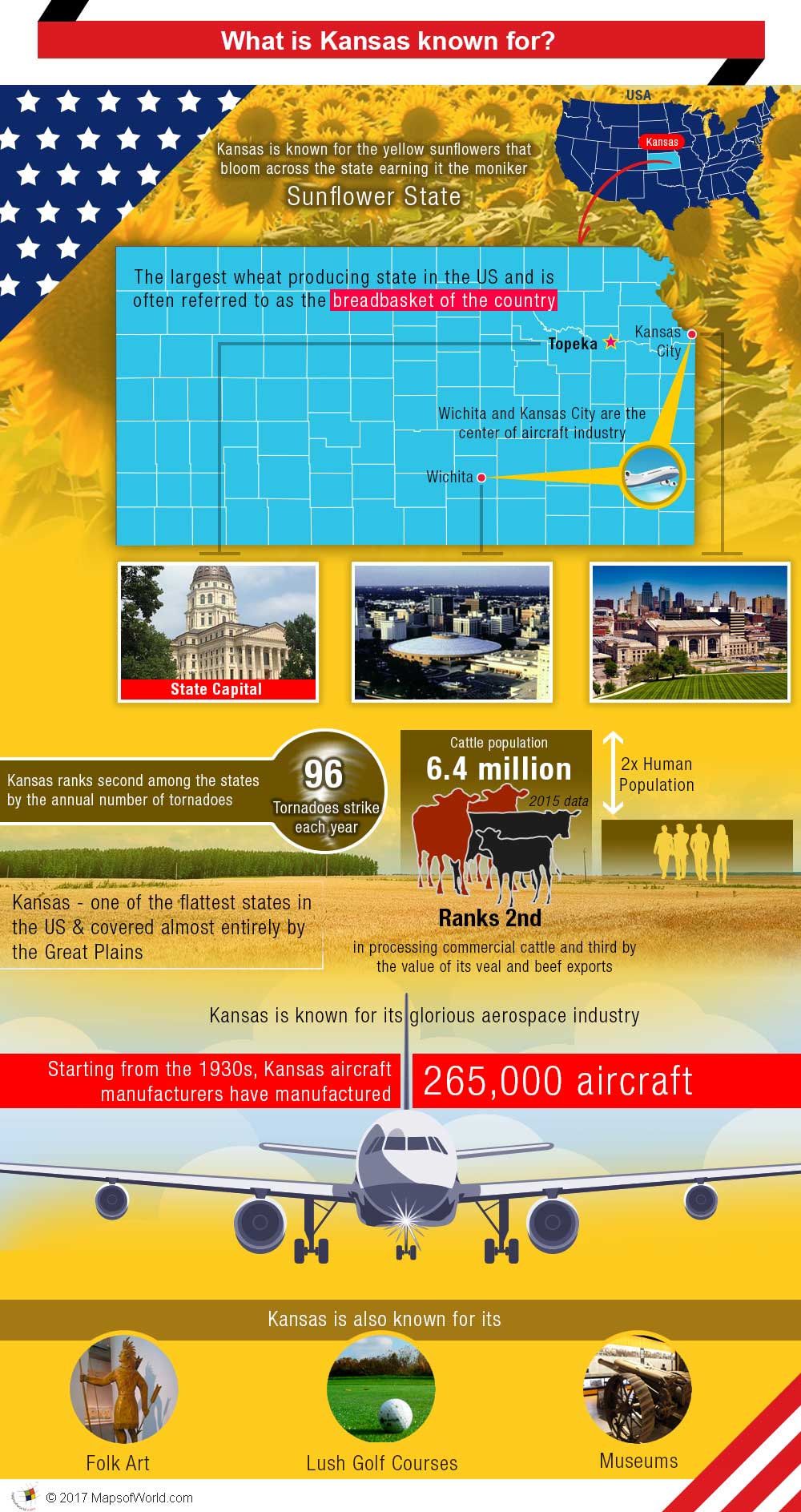
The very name, Kansas, is inextricably linked to the Kansas River, a significant waterway that has shaped settlement and commerce for centuries. Known as the “Sunflower State,” a testament to the vibrant Helianthus annuus that adorns its fields in the summer months, Kansas is a place where natural beauty and human endeavor intertwine. Its geographical position as the “Heart of America” has imbued it with a unique character, fostering a sense of groundedness and a deep connection to the land. Understanding what Kansas is known for involves delving into its agricultural heritage, its pivotal role in westward expansion, its surprising artistic and cultural contributions, and the diverse range of experiences available to visitors.
The Breadbasket of America: Agriculture and Prairie Landscapes
At the heart of Kansas‘s identity lies its profound agricultural significance. For generations, the state has been a leading producer of wheat, earning it the moniker “The Breadbasket of America.” The sight of vast, undulating fields of wheat stretching to the horizon is a quintessential Kansas image, particularly during the harvest season when the landscape transforms into a sea of gold. This agricultural legacy is not merely a backdrop; it’s a living, breathing part of the state’s culture and economy. Farmers in Kansas have honed their craft over decades, utilizing innovative techniques to cultivate this vital crop. This focus on agriculture extends beyond wheat to include corn, soybeans, sorghum, and a growing cattle industry, all contributing to the state’s reputation as a powerhouse of food production.
The landscape itself is a testament to this agricultural heritage. The rolling plains, carved by wind and water, offer a subtle but captivating beauty. While not possessing the dramatic mountains or rugged coastlines found elsewhere, the Kansas prairie possesses a unique serenity and grandeur. The vast open spaces invite contemplation and a deep appreciation for nature’s power and resilience. Visitors can experience this firsthand through various outdoor activities. Exploring state parks like Clinton State Park or Tallgrass Prairie National Preserve allows for immersion in these natural environments. The Tallgrass Prairie National Preserve, in particular, protects one of the last remaining large, intact prairie ecosystems in North America, offering a glimpse into what the Great Plains looked like before widespread settlement. Hiking trails wind through the prairie, revealing a surprising diversity of wildflowers, grasses, and wildlife, including bison herds that roam freely.
Beyond the sheer scale of the agricultural output, Kansas is also known for its commitment to agricultural innovation. The Kansas State University in Manhattan has a renowned agricultural college that has been at the forefront of research and development, contributing significantly to modern farming practices. This blend of tradition and innovation is a recurring theme throughout the state. For travelers interested in understanding the roots of America’s food supply and the enduring connection between land and livelihood, Kansas offers an unparalleled educational and experiential journey. This deep connection to the land can be further explored through visits to local farms, farmers’ markets in cities like Wichita or Kansas City, Kansas, and agricultural museums that chronicle the evolution of farming in the region.
Experiencing the Prairie: Nature and Wildlife
The natural beauty of Kansas is understated yet profound, offering a sanctuary for those seeking peace and quiet away from bustling city life. The vastness of the prairie fosters a unique sense of freedom and tranquility. While the iconic wheat fields dominate the visual landscape, the state also boasts diverse ecosystems, from the rolling hills of the Flint Hills to the striking canyons of western Kansas.
The Flint Hills, a significant portion of which is protected within the Tallgrass Prairie National Preserve, is a truly special region. Unlike many other prairie regions that have been extensively cultivated, the Flint Hills remain largely intact due to the rocky soil, which is difficult to till. This has preserved a rare and beautiful tallgrass prairie ecosystem, characterized by grasses that can grow taller than a person. Exploring this area, perhaps with a guided tour or a scenic drive along the Flint Hills National Scenic Byway, offers a chance to witness the raw, untamed beauty of the American landscape. Wildlife thrives here, with bison herds a prominent sight, alongside deer, coyotes, and a rich variety of bird species.
For those who appreciate geological wonders, western Kansas offers a surprising contrast. Monument Rocks National Natural Landmark and Castle Rock Badlands present dramatic chalk formations that rise majestically from the flat plains, resembling ancient castles and monuments. These formations are the remnants of a shallow inland sea that covered much of North America millions of years ago, offering a tangible connection to the deep geological past. Hiking among these formations provides a unique adventure and stunning photographic opportunities. The Little Jerusalem Badlands State Park is another example of this dramatic geological beauty, offering a chance to explore canyons and hoodoos.

The rivers and lakes of Kansas also provide opportunities for recreation and appreciating nature. Clinton State Park near Lawrence is a popular destination for boating, fishing, and camping, offering a refreshing break from the plains. The Kansas River, flowing through the heart of the state, has a rich history and is a vital artery for both nature and human settlement. Birdwatching is a popular pastime, with numerous species migrating through Kansas each year, particularly along the central flyway. From the subtle beauty of the prairie grasses to the dramatic geological formations, Kansas’s natural landscapes offer a compelling reason to visit and explore its diverse environments.
A Crossroads of History: Pioneering Spirit and Cultural Encounters
Kansas‘s historical narrative is deeply interwoven with the westward expansion of the United States. It served as a crucial gateway, a proving ground for pioneers, and a battleground for conflicting ideologies during a pivotal period in American history. This legacy is palpable in the numerous historical sites and museums scattered throughout the state, offering a rich experience for history buffs and curious travelers alike.
The era of westward expansion is most famously represented by the Santa Fe Trail, a historic 19th-century trade route that passed through Kansas. The trail brought traders, settlers, and adventurers westward, shaping the development of the region. Sites like the Fort Larned National Historic Site, a well-preserved frontier fort that played a significant role in protecting trail traffic, offer a vivid glimpse into the challenges and realities of life on the Santa Fe Trail. Visitors can walk the grounds, explore reconstructed buildings, and imagine the bustling activity of this vital trade artery. The Mid-America All-Indian Center in Wichita provides a crucial perspective on the Native American tribes who inhabited these lands long before westward expansion, shedding light on their rich cultures and their interactions with the arriving settlers.
Kansas was also a focal point in the fierce debate over slavery leading up to the Civil War. The territory became known as “Bleeding Kansas” due to the violent clashes between pro-slavery and anti-slavery factions. The John Brown Museum State Historic Site in Osawatomie commemorates the radical abolitionist John Brown, whose activism played a significant role in this turbulent period. Exploring these historical sites provides a deeper understanding of the forces that shaped the United States and the complex legacy of this era. The Great Plains History Museum in Wichita also offers insights into the broader history of the region, encompassing Native American heritage, frontier life, and early settlement.
Beyond its role in national history, Kansas has also cultivated a vibrant cultural scene, often surprising visitors with its depth and diversity. The arts are well-represented, with cities like Wichita boasting impressive art museums such as the Wichita Art Museum, which houses an extensive collection of American art, including pieces by renowned artists. Kansas City, Kansas, shares a rich cultural heritage with its larger neighbor across the state line, offering a dynamic blend of music, art, and culinary delights. The state also has a thriving live music scene, with venues across the state showcasing local and national talent.

Cities and Culinary Delights: Urban Exploration and Local Flavors
While the image of vast plains might dominate, Kansas‘s urban centers offer vibrant hubs of activity, culture, and culinary exploration. These cities, ranging from the state capital to its largest metropolises, provide a dynamic contrast to the rural landscapes and are essential stops for anyone seeking to understand the modern face of Kansas.
Wichita, the largest city in Kansas, is a dynamic urban center with a strong aerospace industry and a growing cultural landscape. The Old Town district is a revitalized area filled with boutiques, restaurants, and entertainment venues, perfect for an evening out. The Exploration Place science and discovery center offers interactive exhibits for all ages, making it a great family destination. For art lovers, the Wichita Art Museum is a must-visit, showcasing a diverse collection of American art. The city also has a burgeoning culinary scene, with restaurants offering everything from classic American comfort food to international cuisine.
Kansas City, Kansas, while sharing a name with its famous Missouri counterpart, possesses its own distinct identity and attractions. Located on the border with Missouri, this city is a hub for the food industry and offers a rich tapestry of cultural experiences. The Kansas Speedway is a major draw for racing enthusiasts, hosting popular NASCAR events. Beyond the speedway, Kansas City, Kansas is celebrated for its barbecue. The smoky, slow-cooked ribs, brisket, and burnt ends are a culinary pilgrimage for many. Exploring the numerous barbecue joints, from local favorites to renowned establishments, is an essential Kansas experience. The City Market in Kansas City, Missouri, though technically on the other side of the state line, is a popular destination for both residents and visitors from Kansas, offering a vibrant marketplace with diverse food vendors and artisanal goods.
Beyond these larger cities, numerous charming small towns across Kansas offer a glimpse into small-town American life. Towns like Lawrence, home to the prestigious University of Kansas, exude a youthful, artistic energy with its bookstores, cafes, and live music venues. Abilene is known as the home of President Dwight D. Eisenhower and features the Dwight D. Eisenhower Presidential Library, Museum, and Boyhood Home, a significant historical landmark. Exploring these smaller communities often reveals hidden gems, from antique shops to local diners serving up hearty Kansas fare.
The culinary landscape of Kansas is deeply rooted in its agricultural bounty. Beyond barbecue, visitors can savor fresh produce, locally raised meats, and classic Midwestern dishes. Farmers’ markets are abundant, offering a direct connection to the source of the state’s food. The emphasis on fresh, local ingredients translates into delicious and satisfying meals, whether you’re dining in a bustling city restaurant or a cozy country cafe. From the plains to the cities, Kansas offers a compelling blend of history, culture, and gastronomy, making it a destination worth exploring for its unique contributions to the American experience.