
New York City, a global epicenter of culture, finance, and innovation, is perpetually defined by its majestic skyline. For travelers and urban enthusiasts alike, the towering structures that pierce the clouds are not merely buildings; they are landmarks, symbols of human ambition, and testaments to architectural prowess. When considering a visit to this vibrant metropolis, one question frequently arises: What is the tallest building in [New York City]? The answer, while seemingly straightforward, carries layers of history, architectural debate, and evolving urban development. Today, the undisputed champion of the New York City skyline, and indeed, of the entire United States, is One World Trade Center. However, understanding its significance requires a journey through time, exploring the giants that preceded it and the new contenders that continue to redefine what it means to be tall in the Big Apple.
This exploration is particularly relevant for those planning their New York City travel itineraries. From choosing accommodations that offer unparalleled views to identifying key attractions for an immersive tourism experience, knowing the city’s architectural titans is crucial. These buildings are not just for looking at; many offer world-class observation decks, luxurious lifestyle experiences, and profound insights into the city’s spirit. Whether you’re interested in the historical narratives embedded in their foundations, the cutting-edge design, or simply securing the best panoramic views, understanding New York City’s vertical landscape is an essential part of the journey.
One World Trade Center: A Beacon of Resilience and Unrivaled Height
Standing proudly at a symbolic 1,776 feet (541 meters), One World Trade Center dominates the Lower Manhattan skyline. Its height, deliberately chosen to commemorate the year of the signing of the United States Declaration of Independence, is measured to the tip of its spire, making it the tallest building in the Western Hemisphere and the sixth tallest in the world. Completed in 2014, this magnificent structure is more than just a skyscraper; it’s a powerful symbol of resilience, remembrance, and rebirth, rising from the ashes of the tragic events of September 11, 2001.
The journey to its completion was a complex one, steeped in emotional and architectural significance. Originally known as the Freedom Tower, the design underwent several iterations, with architects Daniel Libeskind and David Childs of Skidmore, Owings & Merrill playing pivotal roles. The building’s design features a robust, redundant steel frame, reinforced concrete core, and a facade clad in glass panels, reflecting the sky and the surrounding city. Its distinctive tapered form culminates in a soaring spire, which controversially became the focal point of its height classification. The Council on Tall Buildings and Urban Habitat (CTBUH), the arbiter of skyscraper height, confirmed One World Trade Center’s height based on its permanent spire, cementing its status.

For travelers, One World Trade Center offers a profound and inspiring experience. The One World Observatory, located on floors 100-102, provides breathtaking 360-degree views of New York City, New Jersey, and Connecticut. Beyond the spectacular vistas, visitors can engage with interactive exhibits detailing the city’s history and the building’s construction. The observatory is an essential stop for anyone wanting to truly grasp the scale and beauty of Manhattan. Adjacent to the tower is the National September 11 Memorial & Museum, offering a solemn yet crucial counterpoint to the celebratory heights of the observatory. This combination of remembrance and aspiration makes the World Trade Center complex a compelling destination for both tourism and reflection. Booking tickets in advance for the observatory is highly recommended, especially during peak travel seasons, to ensure a seamless experience.
The Golden Age of Skyscrapers: Iconic Pre-War Giants
Before the modern marvels of glass and steel, New York City was home to a different breed of supertalls, giants that captured the world’s imagination and defined the very concept of the skyscraper. These pre-war titans, built during the exuberant Art Deco era, still stand as beloved landmarks and continue to shape the city’s iconic silhouette.
The Enduring Majesty of the Empire State Building
For decades, the Empire State Building was synonymous with New York City’s architectural might. Completed in a staggering 410 days in 1931, it held the title of the world’s tallest building for nearly 40 years, until the completion of the original World Trade Center towers in 1970. Standing at 1,250 feet (381 meters) to its roof, and 1,454 feet (443 meters) including its antenna, the Empire State Building is a masterpiece of Art Deco design, instantly recognizable worldwide. Its enduring popularity makes it a cornerstone of New York City tourism.
Visitors can ascend to its famous 86th-floor outdoor observation deck or the more exclusive 102nd-floor observatory for breathtaking views. The experience offers a nostalgic journey through the building’s history, showcasing its engineering marvels and cultural impact. For families and history buffs, the Empire State Building is an unmissable attraction, embodying the optimism and innovation of its era. Nearby hotels in Midtown Manhattan often boast rooms with direct views of this landmark, offering a truly immersive lifestyle experience for guests.
The Elegant Crown of the Chrysler Building
Just a short distance away, the Chrysler Building, completed in 1930, stands as another quintessential Art Deco icon. At 1,046 feet (319 meters), it briefly held the title of the world’s tallest building before being surpassed by the Empire State Building less than a year later. Its distinctive terraced crown, adorned with gleaming stainless steel eagles and gargoyles, makes it one of the most beloved and visually stunning buildings in the city.
While the Chrysler Building does not have a public observation deck, its exterior is a landmark in itself, captivating architecture enthusiasts and photographers. Its lobby, a lavish display of polished marble, Art Deco murals, and intricate metalwork, offers a glimpse into its opulent past. For those seeking an appreciation of architectural history and aesthetic beauty, a stroll past the Chrysler Building is a must, perhaps combined with a visit to the nearby Grand Central Terminal, another Art Deco masterpiece.
The New Breed of Supertalls: Residential Towers Redefining the Skyline
In recent years, New York City has witnessed a new wave of supertall construction, particularly in the residential sector. These slender, extraordinarily tall towers, often found along “Billionaires’ Row” near Central Park, are reshaping the skyline with a focus on luxury living and unparalleled views. While not challenging One World Trade Center’s overall height, they often surpass older landmarks in terms of roof height and structural innovation.
Central Park Tower: The Tallest Residential Building
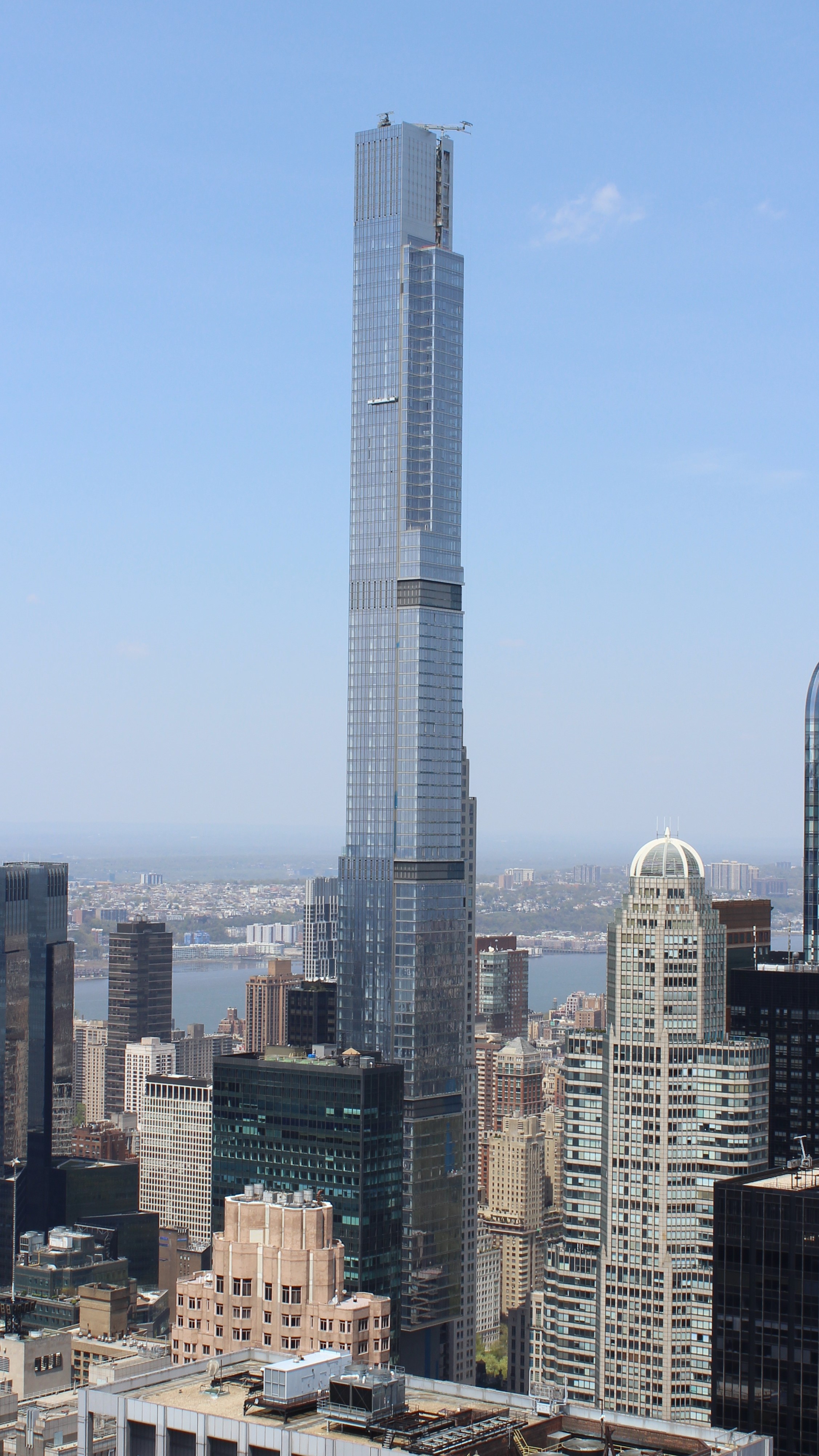
Completed in 2021, Central Park Tower currently holds the distinction of being the tallest residential building in the world and the second tallest building in New York City by roof height. Soaring to 1,550 feet (472 meters), its imposing stature offers its residents breathtaking panoramic views of Central Park, the Hudson and East Rivers, and the entire metropolitan area.
This skyscraper embodies a specific lifestyle choice: ultra-luxury accommodation. Featuring some of the most expensive apartments in the world, along with a Nordstrom flagship store at its base, Central Park Tower caters to a discerning clientele seeking not just a home, but a statement of opulent urban living. While not accessible to the general public for observation, its sheer presence on the skyline is a powerful symbol of modern New York City wealth and architectural ambition, influencing how travelers perceive the city’s evolving identity.

Other Notable Billionaires’ Row Giants
The phenomenon of residential supertalls extends beyond Central Park Tower. Billionaires’ Row, a cluster of ultra-luxury residential skyscrapers along 57th Street and nearby avenues, includes other notable towers like 111 West 57th Street (also known as Steinway Tower) and 432 Park Avenue.
- 111 West 57th Street: Reaching 1,428 feet (435 meters), this tower is remarkably slender, boasting an extreme height-to-width ratio that makes it one of the most distinctive additions to the skyline. Its design elegantly incorporates the historic Steinway Hall at its base, blending old and new New York architecture.
- 432 Park Avenue: At 1,396 feet (426 meters), 432 Park Avenue is known for its minimalist, grid-like facade and perfectly square windows, offering a stark contrast to its more ornate neighbors. It exemplifies the current trend towards super-slender residential towers that maximize views and exclusivity.
These buildings, while primarily residential, are crucial to understanding the dynamics of New York City’s real estate market and the aspirations of global luxury lifestyles. For travelers, they represent a new frontier of architectural exploration, best appreciated from a distance, perhaps from Central Park itself or from one of the public observation decks, offering a panorama of these modern marvels.
Experiencing NYC’s Vertiginous Heights: Observation Decks and Panoramic Views
For many visitors, the ultimate New York City experience involves ascending to the heavens to witness the city sprawl out beneath them. Beyond just knowing which building is tallest, understanding the unique perspectives offered by each observation deck is key to planning an unforgettable visit. Each deck provides a distinct vantage point, catering to different preferences and offering varying experiences.
- One World Observatory: As mentioned, this is a state-of-the-art indoor observatory at the city’s tallest building. It offers unparalleled views of Lower Manhattan, the Statue of Liberty, Ellis Island, and beyond. The “See Forever” theater and SkyPod elevators add to the immersive experience, making it a compelling choice for those seeking cutting-edge technology and profound vistas.
- Empire State Building Observation Decks: Offering both an outdoor 86th-floor deck and a smaller, glass-enclosed 102nd-floor summit, the Empire State Building provides a classic New York City experience. The ability to step outside and feel the city air, coupled with its central Midtown Manhattan location, makes it ideal for capturing iconic views including Central Park, the Chrysler Building, and the One World Trade Center itself.
- Top of the Rock (Rockefeller Center): Located atop 30 Rockefeller Plaza, Top of the Rock is beloved for its unobstructed views of Central Park to the north and the Empire State Building to the south. With multiple outdoor viewing levels and clear glass panels, it’s perfect for photographers and those who want to see the Empire State Building in their skyline photos rather than from it.
- The Edge (Hudson Yards): For a truly thrilling experience, The Edge offers the highest outdoor sky deck in the Western Hemisphere. Located at 30 Hudson Yards, it features a unique glass floor section where visitors can look straight down 100 stories. The angled glass walls add to the sensation of floating above the city, providing a fresh perspective of the Hudson River and western Manhattan.
- Summit One Vanderbilt: This relatively new attraction near Grand Central Terminal offers a multi-sensory art installation combined with stunning views. Its immersive mirrored rooms create infinite reflections of the cityscape, blurring the lines between art and observation. It’s a fantastic option for those seeking an artistic and avant-garde approach to experiencing New York City’s heights.
When planning your tourism, consider visiting at different times of day – morning for clear visibility, sunset for breathtaking colors, or night for the sparkling city lights. Each observation deck offers unique photo opportunities and a memorable travel experience. Combining a visit with nearby attractions, such as the World Trade Center Transportation Hub (the Oculus) near One World Observatory, or exploring the vibrant shopping and dining options at Hudson Yards after visiting The Edge, can enhance your overall New York City adventure.
Beyond the Pinnacle: The Enduring Allure of New York City’s Architecture
The question of “What is the tallest building in [New York City]?” is more than a simple fact; it’s an entry point into understanding the city’s dynamic character, its architectural evolution, and its unwavering appeal as a travel destination. While One World Trade Center currently holds the crown, the narrative of New York City’s skyline is one of constant change, innovation, and competition. From the Art Deco elegance of the Empire State Building and Chrysler Building to the sleek, super-slender residential towers of Billionaires’ Row, each structure tells a story of its time, its purpose, and the visionaries who brought it to life.
For travelers, these towering landmarks offer not just impressive views but also deep dives into history, culture, and lifestyle. They serve as pivotal attractions, influencing decisions about where to stay (perhaps a hotel with a skyline view), what guided tours to take, and how to allocate precious time in a city that truly never sleeps. New York City’s architectural landscape is a living museum, constantly expanding upwards and outwards, reflecting the city’s boundless energy and ambition. Exploring these vertical marvels is an essential part of any New York City experience, offering perspectives that are as diverse and captivating as the city itself. Whether you’re a first-time visitor or a seasoned explorer, the allure of New York City’s tallest buildings continues to inspire awe and draw millions upwards, year after year.